Mary Cargill

Corps Values

Corps Values


"Dancers' Choice"
New York City Ballet
David H. Koch Theater
New York, NY
June 14, 2009, evening


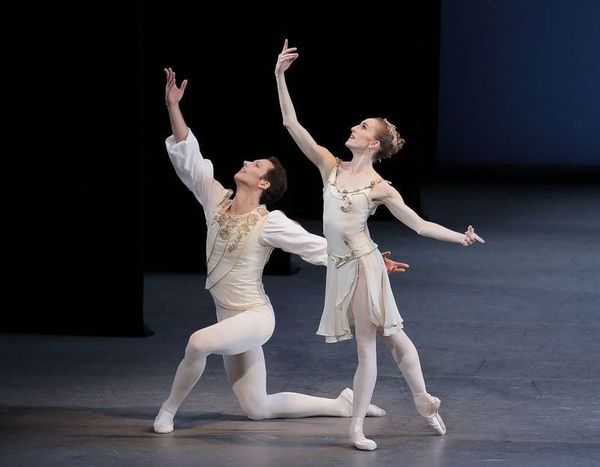
The title of the Dancers' Emergency Fund Benefit had a somewhat confusing apostrophe, since there was only one dancer who made the choice, Jenifer Ringer, who served as the gracious hostess.  She explained that she wanted to give dancers, especially those in the corps, new opportunities, so there were a number of intriguing debuts.  The amount of work to put this
By Mary Cargill
Back to Basics

Back to Basics


"Giselle"
American Ballet Theatre
Metropolitan Opera House
New York, NY
June 8, 2009


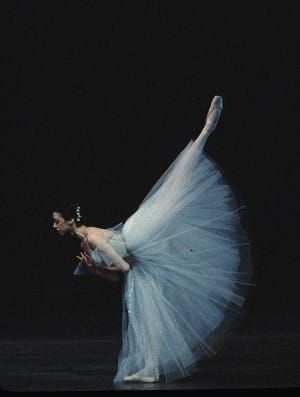
ABT's "Giselle" is their most traditional classical production; some might say "old-fashioned" but I say "timeless".  There are no extraneous interpretive layers between the simple, tragic story and the audience, no unnecessary updating or exposition--fortunately it hasn't seemed necessary to explain exactly how Albrecht met Giselle or why Myrta really hates men.  The opening night Giselle was Nina Ananiashvili, in one

By Mary Cargill
Dancing Ahoy

Dancing Ahoy


"Le Corsaire"
American Ballet Theatre
Metropolitan Opera House
New York, NY
May 27, 2009


"Le Corsaire" made its ABT debut in 1998, along with another ballet in the continuing full-length sweepstakes, Ben Stevenson's long-forgotten "The Snowmaiden", a completely unmemorable stab at a fairy tale, remarkable only for its stunning sets and the limpid performance of Nina Ananiashvili.  "Le Corsaire", while its story is even less resonant than the poor Snowmaiden's, does have pockets of

By Mary Cargill
Sylphs and Others

Sylphs and Others


"Scotch Symphony", "Quasi Una Fantasia", "Concerto DSCH"
New York City Ballet
David H. Koch Theater
New York, NY
May 22, 2009


Balanchine's "Scotch Symphony" is a somewhat haphazard take on "La Sylphide", and despite some true romantic choreography, it lacks emotional logic.  Why does the sylph, who has spent most of her time gesturing up to the sky, where she belongs, suddenly become earthbound and perfectly happy as a bravura classical dancer?  Why do the village

By Mary Cargill
Spring Awakening

Spring Awakening


ABT Gala
Metropolitan Opera House
Lincoln Center
New York, NY
May 18, 2009


ABT began its traditional Spring season at the Met with a flourish, capped by the gracious speech of First Lady Michelle Obama, stressing her support for the arts.  She was greeted by a spontaneous standing ovation (and lots of flashing cameras which added to the occasion), and the buzz generated by her presence was infectious.  The gala program was crafted carefully, to give all

By Mary Cargill
One for the Ages

One for the Ages


"Concerto Barocco", "La Valse", "The Four Temperaments"
New York City Ballet
David H. Koch Theater
New York, NY
May 9, 2009


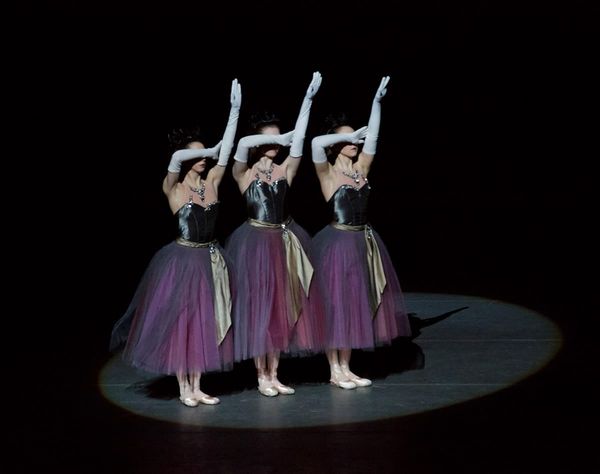
The program, and indeed, possibly this season and several to come, was dominated by Janie Taylor's haunted and haunting performance as the doomed heroine in Balanchine's surrealistic "La Valse".  This was beyond dancing, almost beyond theater--the stage seemed to disappear as the audience itself was absorbed, with the other dancers on the stage, in watching,

By Mary Cargill
This and That

This and That


"Divertimento No. 15", "After the Rain", "Firebird"
New York City Ballet
David H. Koch Theater
New York, NY
May 6, 2009


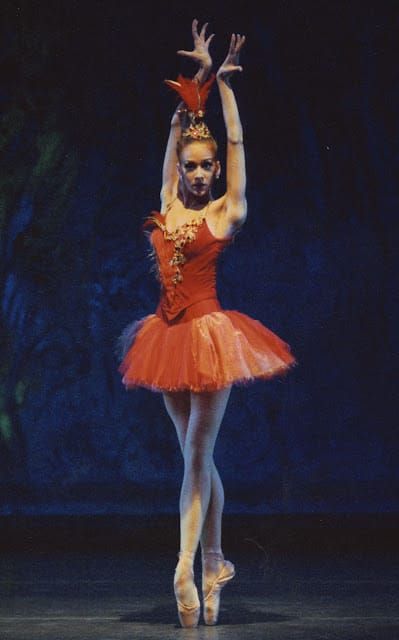
This diverse and somewhat disjointed program opened with Balanchine's exquisite, and exquisitely difficult, salute to Mozart and classical dancing, "Divertimento No. 15".  The Emperor Joseph II is usually help up as the prime example of a philistine for his comment "too many notes, Mr. Mozart", but the solos in Divertimento do seem to be a case of

By Mary Cargill
Opening Night Feast

Opening Night Feast


"Concerto Barocco", "Tschaikovsky Pas de Deux", "La Valse", "Symphony in Three Movements"
New York City Ballet
David H. Koch Theater
New York, NY
April 28, 2009


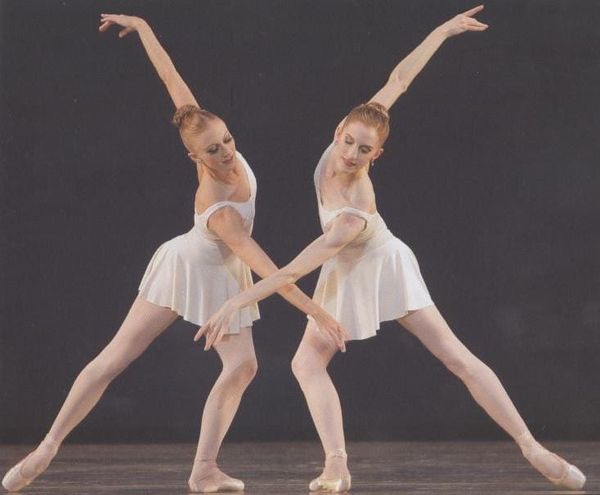
The New York City Ballet opened it Spring season in grand style with four Balanchine ballets, including some of his absolute best.  Ballet doesn't come any better than the opening "Concerto Barocco", with its everchanging, always new choreographic patterns.  Wendy Whelan with the dignified and elegant Albert Evans danced the central

By Mary Cargill
Anniversary Party

Anniversary Party


"Dance/Speak: The Life of Agnes De Mille"
New York Theatre Ballet
Florence Gould Hall
New York, NY
April 17, 2009


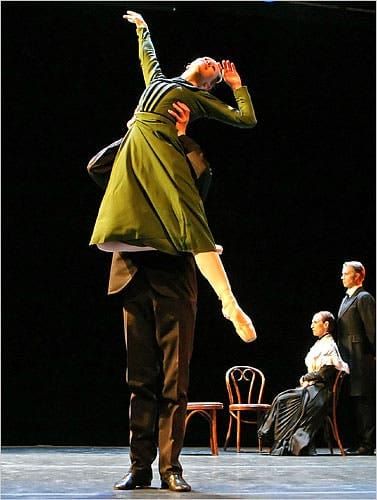
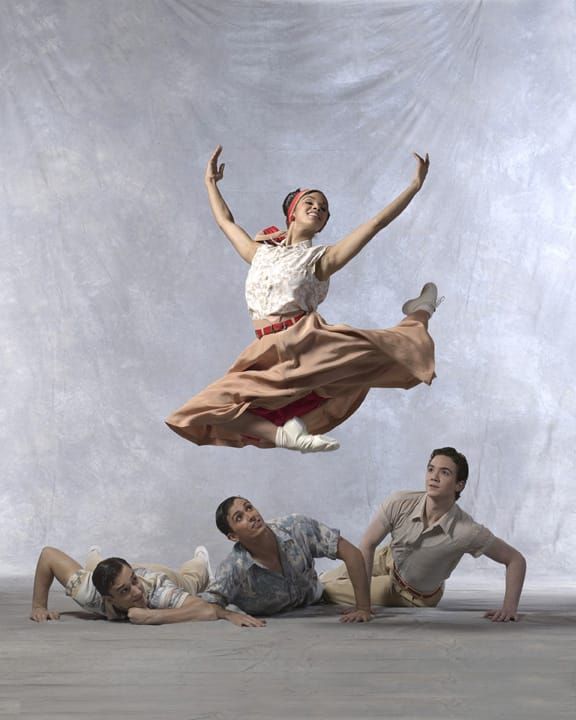
The small and innovative company celebrated its 30th anniversary Broadway style, with a play about the life of the American choreographer Agnes de Mille.  There was plenty of dancing, carefully reproduced and immaculately rehearsed, but the acerbic, fierce, independent spirit of de Mille was front and center.  The work was written by the novelist Anderson Ferrell, a

By Mary Cargill
Muddy Waters

Muddy Waters


Tradition and Innovation
"Concerto Barocco", "Oltremare", "Tschaikovsky Suite No. 3"
New York City Ballet 
David H. Koch Theater, New York 
February 6, 2009


In the effort to come up with titles for their programs, the marketing department has reused the "Tradition and Innovation" idea several times for various collections, presumably to mean Tradition=Balanchine and Innovation=A Newish Ballet.  However, genius will always equal innovation, and unfortunately, newish ballets tend not to be choreographed by geniuses nowadays.

By Mary Cargill
Trumpets Blazing

Trumpets Blazing


"All Balanchine"
"Chaconne", "The Four Temperaments", "Vienna Waltzes"
New York City Ballet
Lincoln Center, New York
January 6, 2009


 The first night after "Nutcracker" always has a gala feeling, the start of some real dancing.  This was doubled by the glorious programming, three of Balanchine's finest and most diverse works.  "Chaconne" is one of his iridescent hymns to women, and more specifically to Suzanne Farrell.  Wendy Whelan does not resemble Farrell in any way, except

By Mary Cargill
Company A

Company A


"Theme and Variations", "Romeo and Juliet", "Time","Overgrown Path", "Don Quixote",
"Company B"
American Ballet Theatre
City Center
New York, NY
October 21, 2008


ABT's gala was more substantial and more varied than the usual fouette fest, and two great and very different works sandwiched a group of generally interesting shorter pieces.  "Theme and Variations", even with the somewhat kitchy costumes and black backdrop, remains one of Balanchine's jewels, an intricate and facinating synopsis of Petipa. 

By Mary Cargill