Steps Toward the Infinite
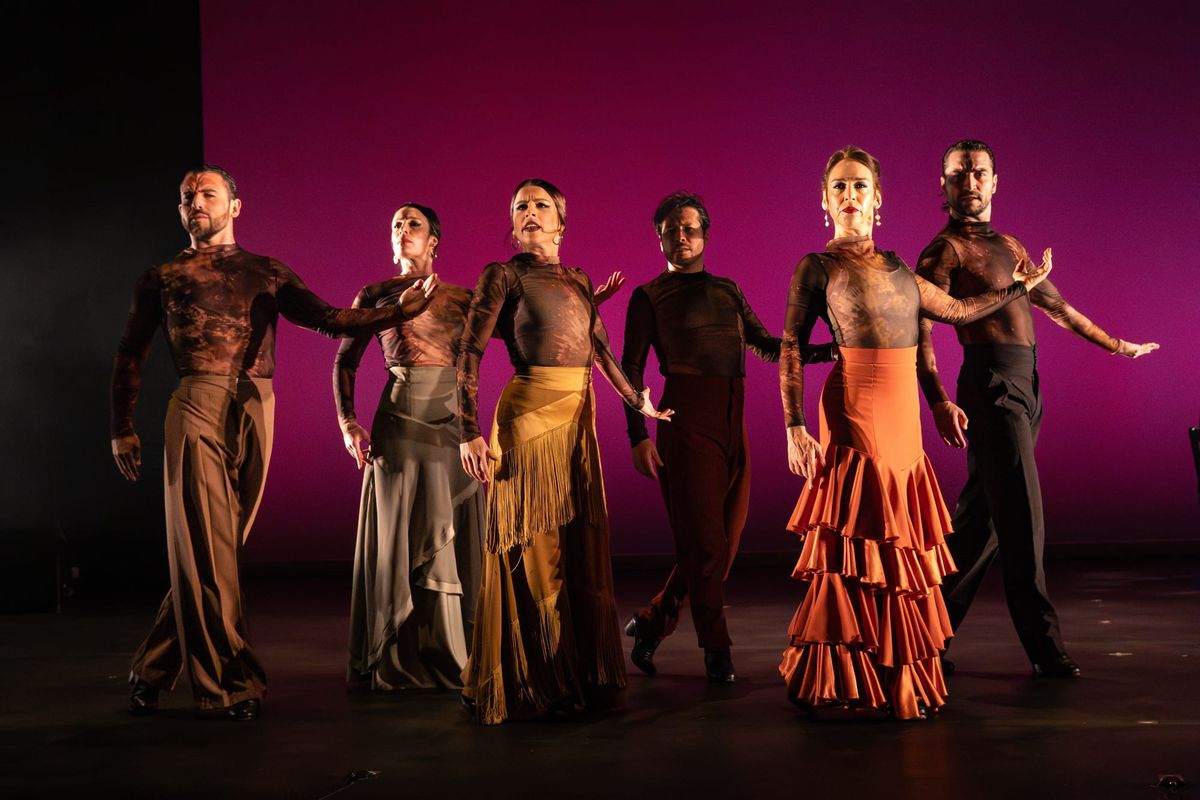
“Quinto Elemento: The Fifth Element”
Flamenco Vivo Carlota Santana
The Joyce Theater
New York, NY
April 21, 2026
The program presented by Flamenco Vivo Carlota Santana at The Joyce Theater was no doubt not intended to coincide with humanity's historic return to the Moon — NASA's Artemis II lunar flyby, which carried astronauts farther into space than any humans had traveled in over fifty years, completed just weeks before opening night — but its celestial themes resonated all the more powerfully within that cultural moment. Making its New York City premiere after debuting at Saratoga Performing Arts Center in 2025, "Quinto Elemento" arrived at precisely the right time: a work born of cosmic imagination, landing in a city still caught up in the wonder of the skies.
The evening, as is common with this wonderful company's productions, inadvertently posed and answered an artistic question, this time of what flamenco can accomplish with steps alone, stripped of theatrical scaffolding, in this modern dance world. In that quest, Patricia Guerrero, winner of Spain's National Dance Award and director of the Ballet Flamenco de Andalucía, working alongside composer Francis Gómez proved just the right architects to do so. With just six dancers, two singers, and two guitarists, despite being devoid of any real props or scenery, or complex lighting, the dance arrived not as a story told, but as a picture painted.
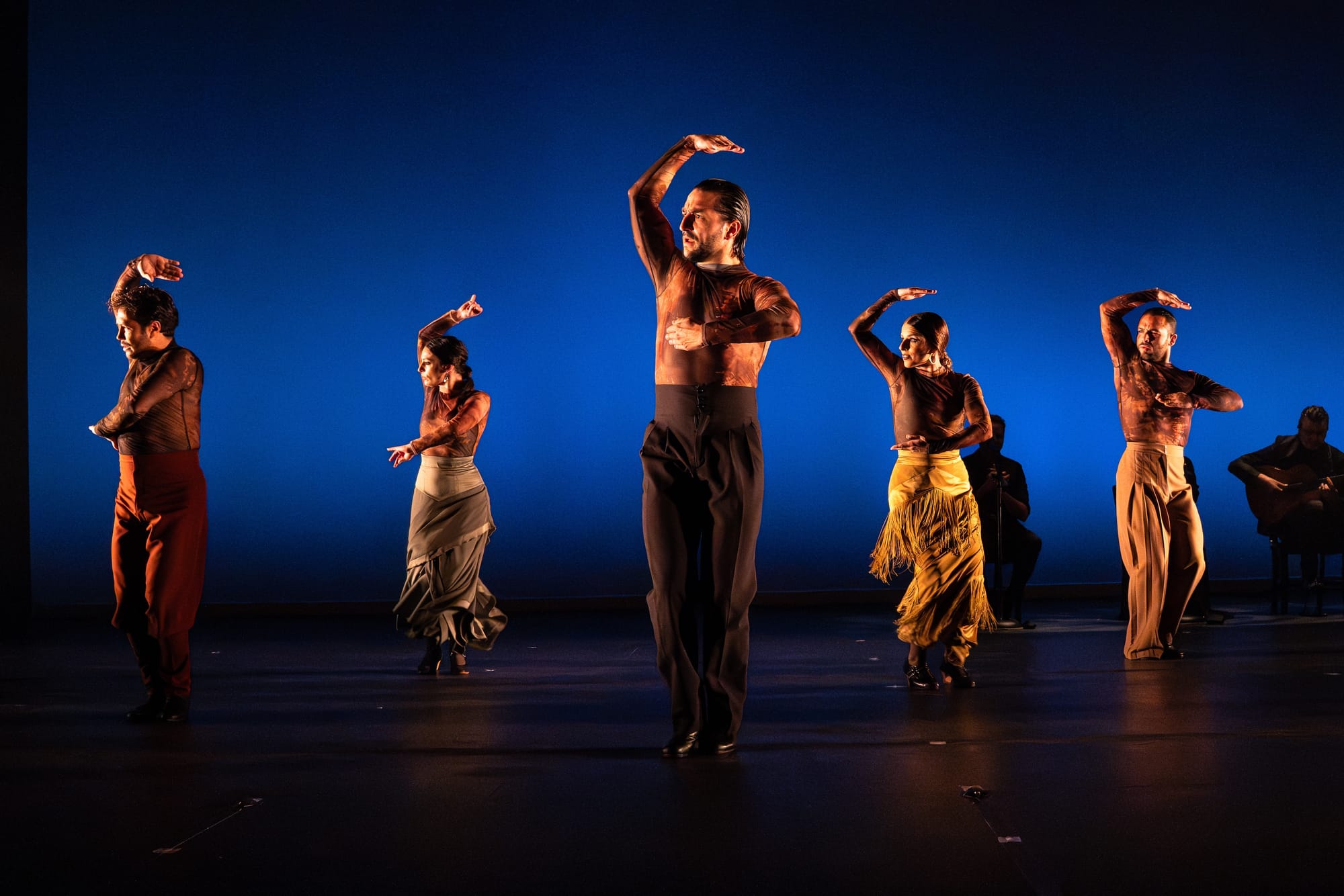
Opening with a darkened stage and celestial stillness, the work began with an evocation of the birth of the cosmos — the very moment when matter stirred into existence. Accompanied by an eerie hum throughout the hall, the dancers — Emilio Ochando, Lorena Franco, Fanny Ara, Rebecca Tomas, José Montes, and Jesús Perona — slowly came into focus and began allowing movements to escape in bursts. Energy flowed through their bodies in the gentle touch of women's fingers and quick snaps of men's footwork barely making a sound. They seemed not so much to move as to allow energy to pulse through them — a cosmos of different frequencies that ultimately harmonized into a perfect whole as they began to clap collectively, in interlocking rhythms. Throughout, Gómez's score gave the dancing both its atmosphere and its structure: guitarists Daniel Jurado and Pau Vallet sustained long harmonic textures, while the two singers, Manuel Soto and Loreto de Diego, punctuated the layered silences with sudden, searing cante.
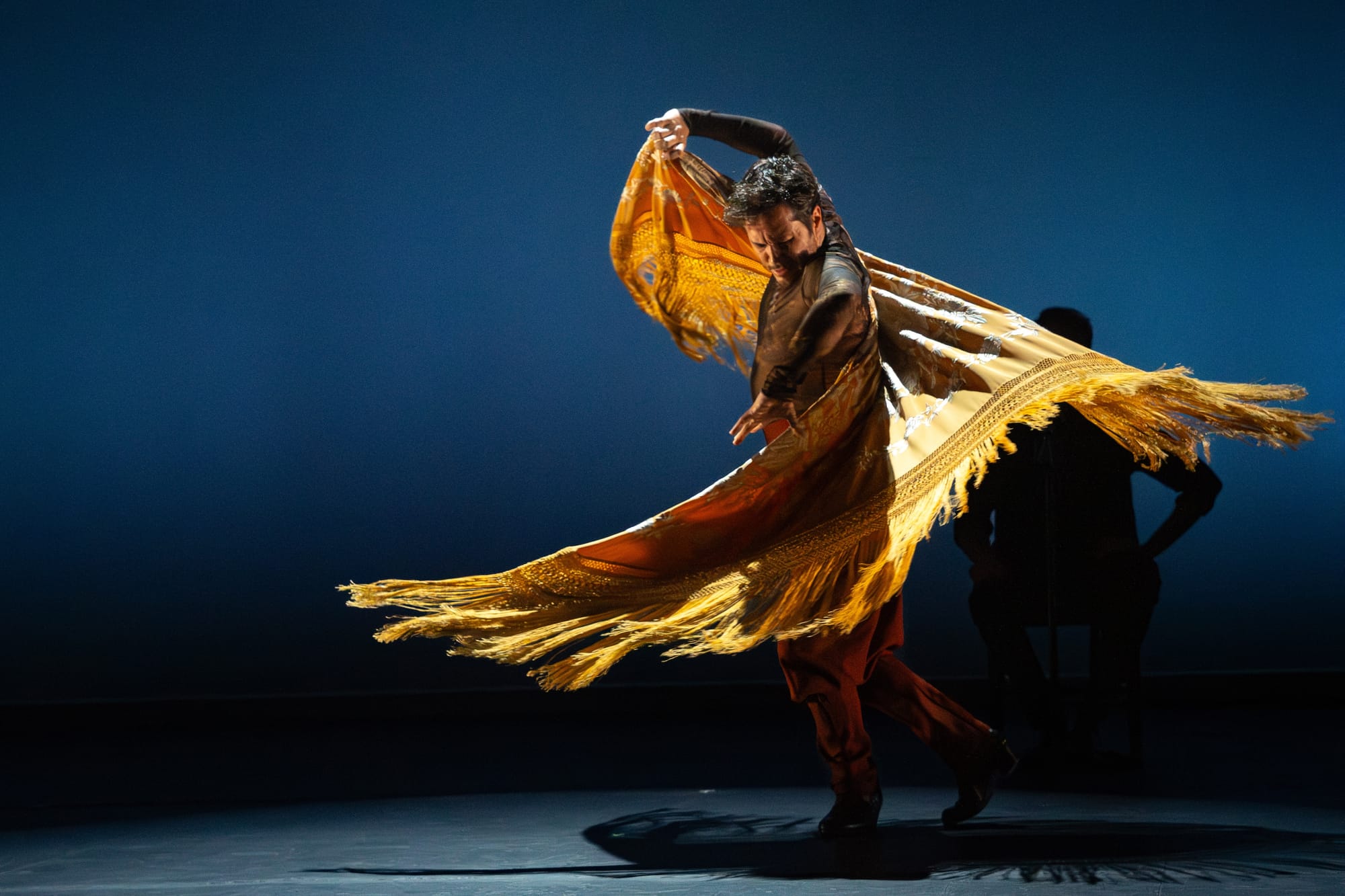
With the introduction having set the scene, the dance launched into a section called "The Fifth Essence." Evoking the ordering of the universe, the dancers moved across the stage with sudden footwork, turns fixed to single spots, and traversals of its full dimensions, as though arranging themselves into some unspoken symmetry. In the next section, "Orbit," Ochando danced a solo with a mantón, transforming this traditional prop into a rhythmic tool and an extension of his own body. At moments it made him look commanding, almost like a torero; at others it swirled with such speed that the line between the dancer and the object dissolved, making the interaction of the living and the inanimate feel like a single being. It was the first time that traditional elements would transform into an inventive tool of storytelling.
In "Hypothetical," Guerrero's choreography deconstructed a bulería, with dancers entering in patterns: first a trio of two women and one man from stage left, tracing a geometric shape, then echoed by the other trio from the opposite wings, mirroring and answering the first. Despite traces of individuality within each grouping, it was only when they converged into a cohesive whole that their dancing became most powerful — a power that lingered as the music faded and all that was left was the dancers sharp, intentional breathing.
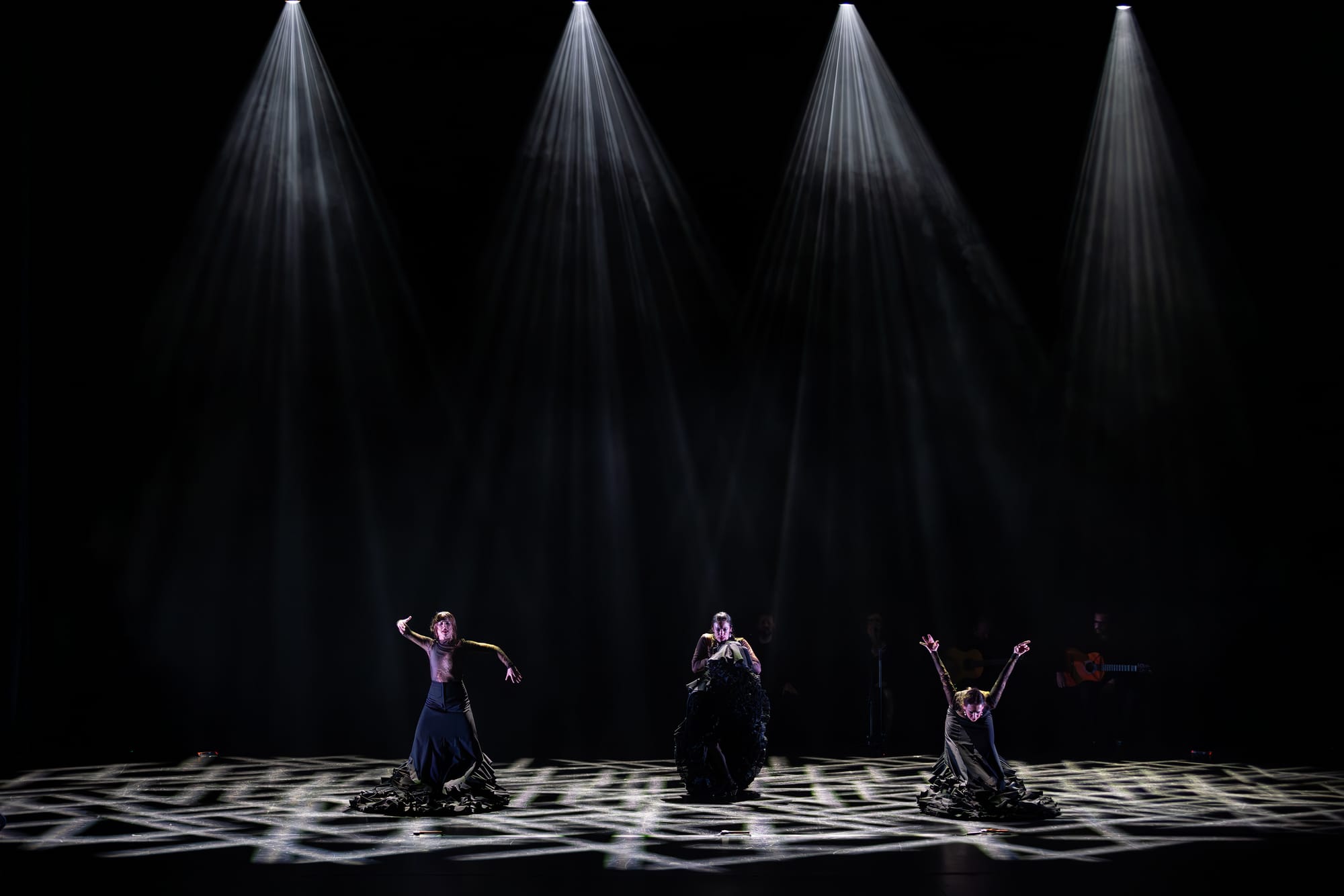
Then, sections later, the evening came upon the work's most visually stunning moments in "Eternities." Here, the three women danced lifting black batas de cola with the trains worn to the front. Leading them was Fanny Ara, one of flamenco's most versatile and sought-after performers, celebrated for excelling across the full spectrum of the art form, from the most traditional to the avant-garde. Her, and the other women's inventive manipulation of the dresses were transformative: though meant to evoke black holes, in their movement the shapes transgressed into a variety of imagery — black roses, clouds of gentle dark smoke as the dancers turned, sharp arrow-like forms when the dresses were released to the ground. The women descended to the floor, moving up and down, disappearing and reemerging from the fabric as though rising from storm clouds. Ara's upper body in these moments was extraordinary — her arms reaching and receding with an authority that made the movements feel not like steps being executed but like forces being summoned.
To end the night, the program went back to the beginning. Reprising a rendition of "The Fifth Essence" with the full ensemble on the stage, the effect was circular in the most satisfying ways. There was no conclusion, but a return, ready to begin again and to bring forward newer iterations of being and this dance form. In the end, Guerrero's thesis — that the elusive fifth element connecting all things might be found not in the heavens but in the bodies moving beneath them — felt more than just merely argued.
copyright © 2026 by Marianne Adams



