"Lady Macbeth" Is Relentlessly Haunting

"Lady Macbeth"
The Royal Danish Ballet
The Royal Theatre, The Opera
Copenhagen, Denmark
April 24, 2026
Friday night renowned choreographer Akram Khan fulfilled his promise to former artistic director of the Royal Danish Ballet Nikolaj Hübbe to create a new full-length work for the company.
Khan and his team have spent the past four months working with the dancers in the studio perfecting his take on the Shakespeare drama “Macbeth,” transforming the dramatic material of power, betrayal and downfall into “Lady Macbeth” – a work that speaks to our time.
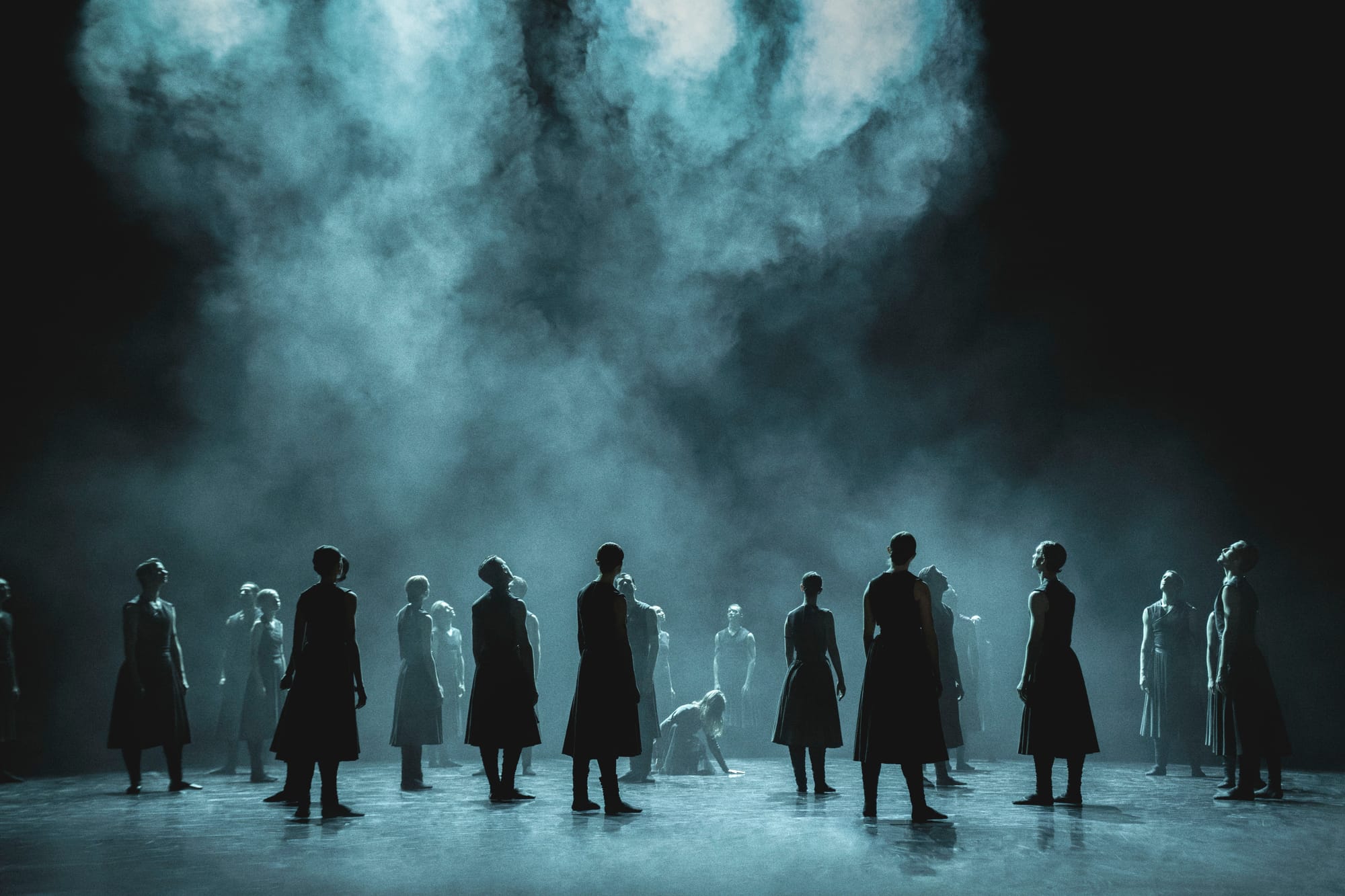
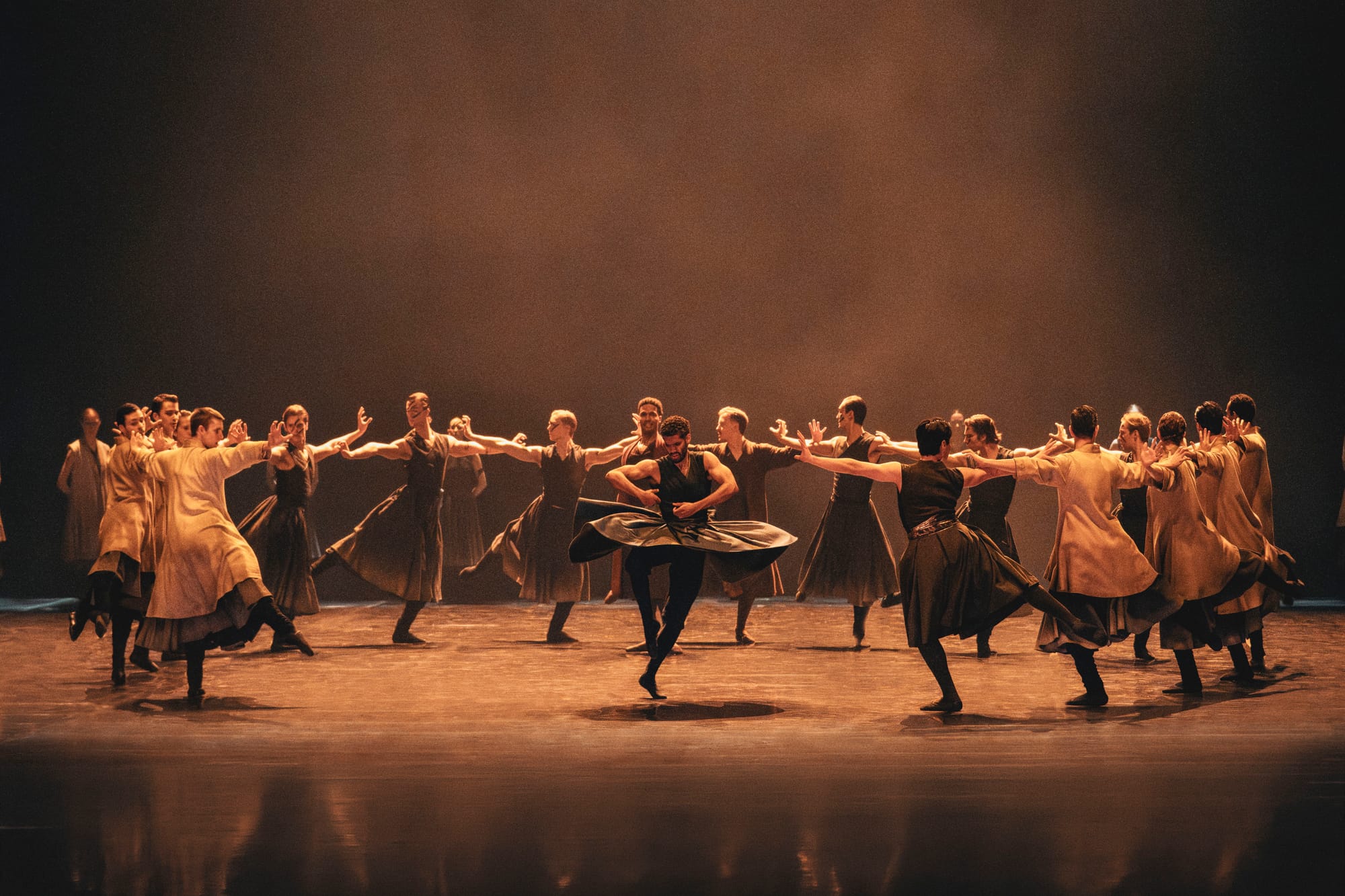
The jurassic sound of a tree trunk breaking cut through the quiet anticipation of the audience, foreshadowing the fall of even the mightiest of kings. In the prologue the stage was dimly lit and smoky. 30 dancers stood quietly in formation as the initial relationship between Lady Macbeth and Macbeth was laid out in a beautiful pas des deux. The air soft between them as they gently swayed with a shared tenderness imagining their ascend to power, then left to sit empty handed with no heir.
In “Lady Macbeth” Akram Khan wants to tell the tragic story through the eyes of Lady Macbeth. Though carrying the title role, this priority left principal Astrid Elbo – who is otherwise known to be a dramatic powerhouse – without the dangerous edge of the ruthless ambitions of power that Lady Macbeth displays in Shakespeare’s original story. And thus, Lady Macbeth was minimized to mainly be the bystander who observed the moral corruption and inevitable downfall of her husband, though she did let herself be swept up in sufi-like twirls in the arms of Macbeth. She then fell in line with the seers and her subsequent attempts to wash the blood from her hands after Macbeth had killed King Duncan were chilling.
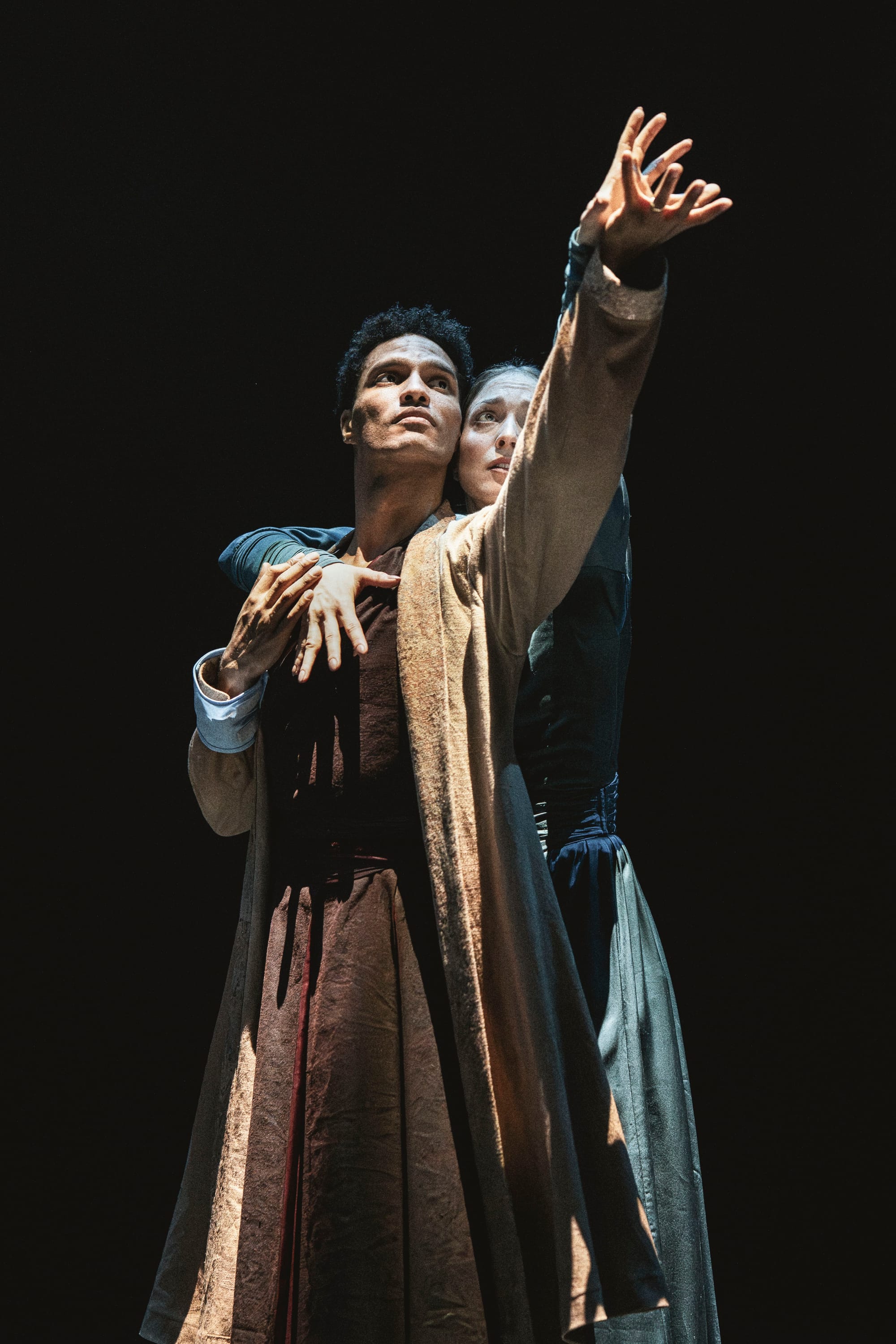
Macbeth was danced by soloist Sebastian Pico Haynes. He moved with ease in the steps of Akram Khan proving once again that he will command the stage with such natural unassuming authority, dramatic power and innate sense of the material, that it is a wonder that he has still not been promoted to the ranks of principal. He can do it all, and he was the focal point of the performance alongside Lady Macduff/First seer danced by principal Emma Riis-Kofoed. She portrayed a different kind of character from the classical roles that she usually inhabits and she was mesmerizing.
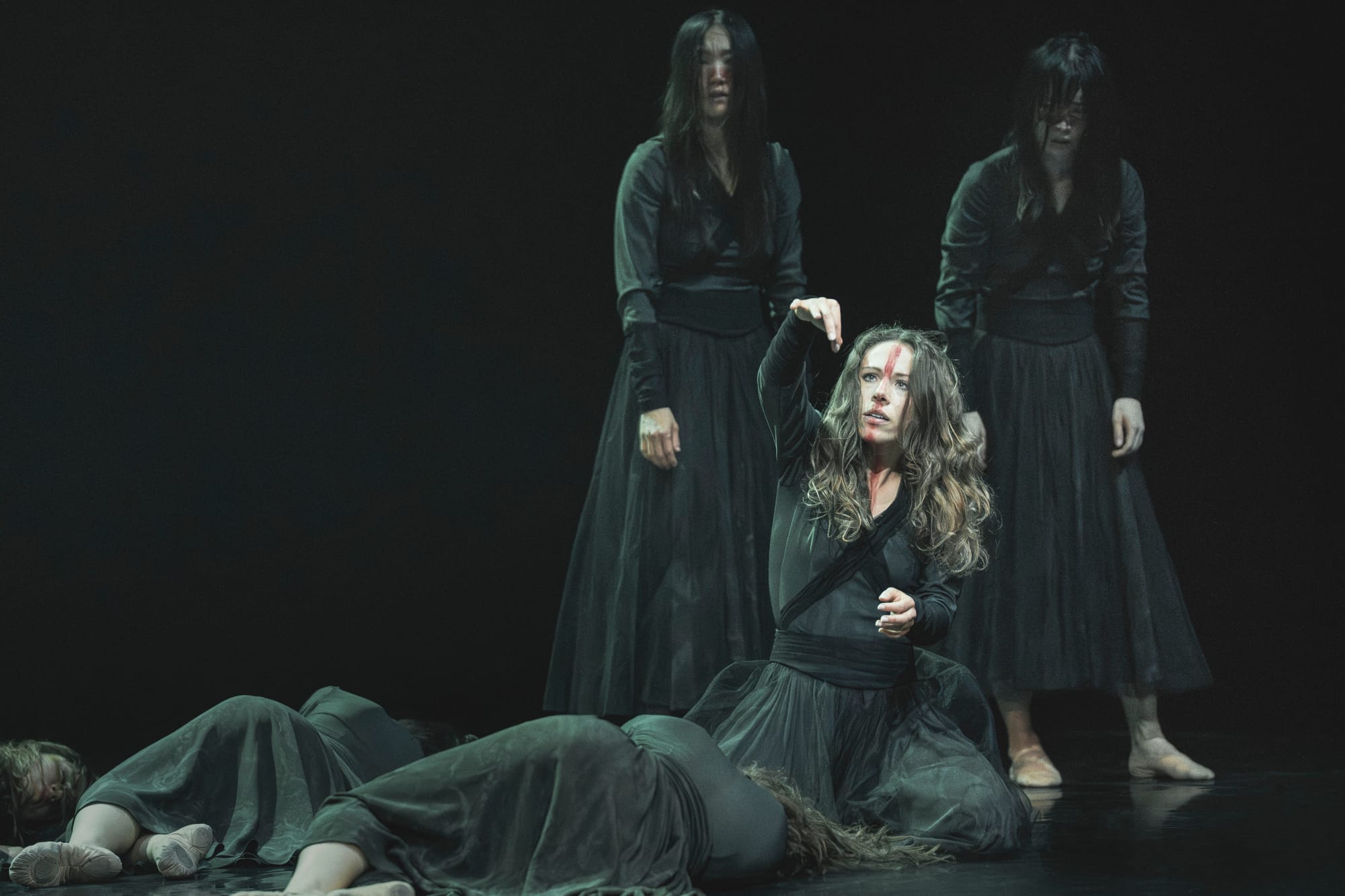
Akram Khan had renamed the witches from Shakespeare’s original tragedy 'seers'. They had loose hair that were flicked around, covering their faces, only to be slung back in place or pulled into shapes as the seers made human waves on stage in hypnotic patterns. Their faces were interchangeably locked in quiet screams or facial expressions that mimicked butoh or a Maori Haka that some will know from the New Zealand All Blacks’ (the national rugby team) pre-game rituals on the pitch. Sans pointe shoes they remained close to the ground symbolic of their close connection to nature. Only later as ghosts did they re-enter on pointe.
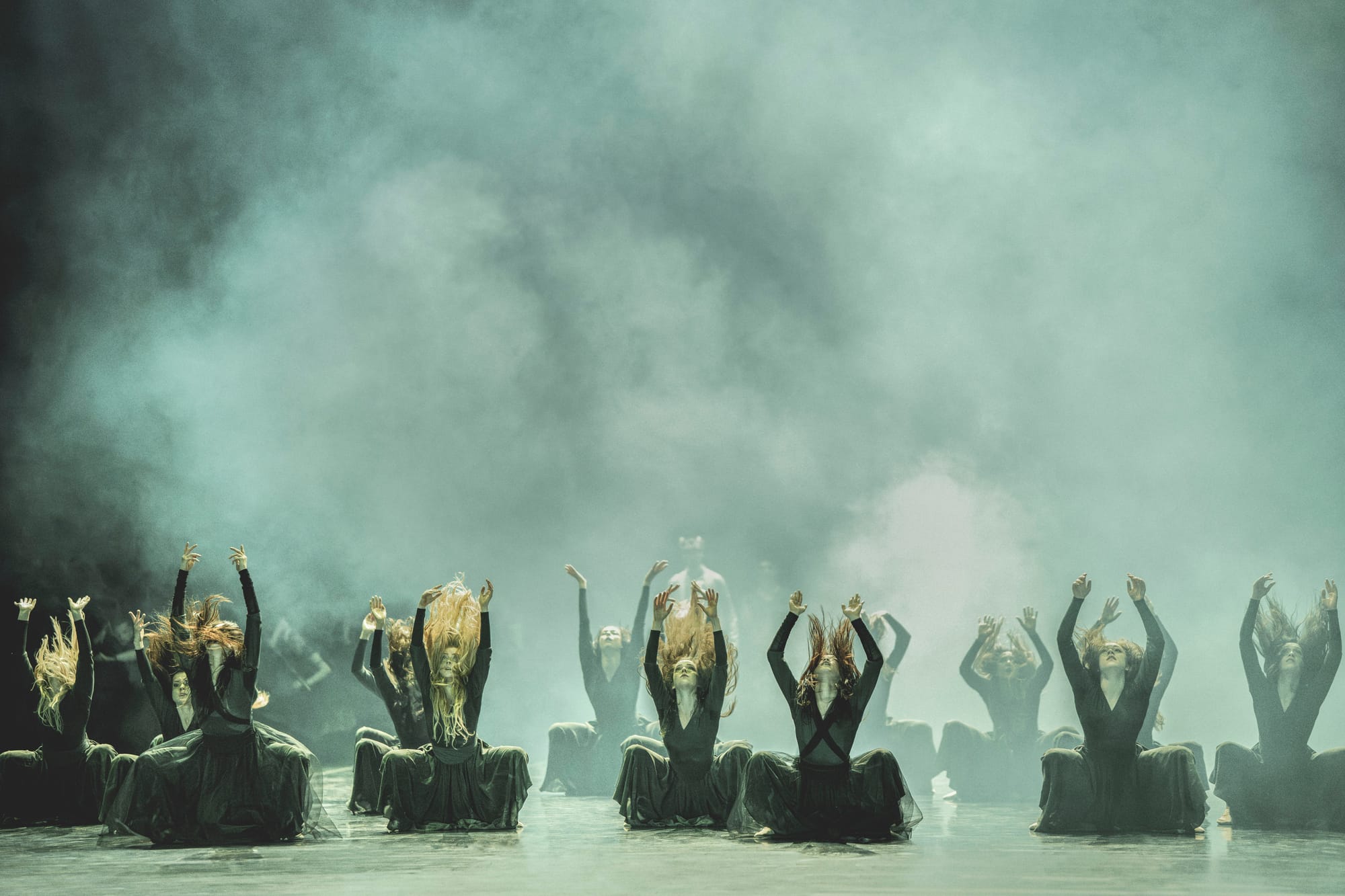
With earthy tones in the simple costumes that followed the movements of the dancers beautifully and a giant tree trunk with its roots stretched far and wide that moved in on the stage, Tim Yip’s scenography suggested an underworld where those striving for power no matter the cost were doomed to reside, soulless and imprisoned by their own ambitions symbolized by the brown bars of light (light design by Michael Hulls and Ryan Joseph Stafford).
The result was a work that was cinematic in quality. Each of the 10 scenes in "Lady Macbeth" seemed without pauses as the dancers pulled the audience to the brink of the moral abyss as Macbeth grabbed the crown blind to his fate drawing closer.
Composer Vincenzo Lamagna, a long-time collaborator of Akram Khan, had created a sound design and score that was dense and unrelenting. The sound was menacing and extremely loud rising in intensity throughout. String sequences repeated over and over pushing the drama forward, leaving the audience with no breathing room. Metallic sounds of sword slashes. An otherworldly female vocal present, underscoring the intensifying power struggles with a heavy use of bass and percussion/timpani only broken by the whispering cacophony of the seers.
“Lady Macbeth” was insistent in demanding that the audience looked in the mirror held up before them even when it felt easier to look away. Much like the world of today there was no escape from the brutality.
Copyright © 2026 by Signe Ravn



