Avast, Me Hearties
"Le Corsaire"
American Ballet Theatre
Metropolitan Opera House
New York, NY
May 24, 2008, Matinee
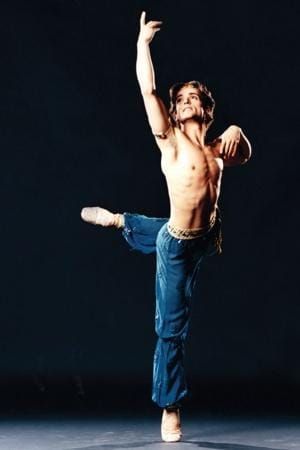
Memorial Day weekend seemed to turn into the Forth of July with a spirited and invigorated version of the pirate caper. In the recent past, this ballet has appeared to be danced, not just with tongue in cheek, but with a finger holding the nose, as if the company were barely enduring the admittedly mishmash of styles and confusing story. Though Le Corsaire will never have the emotional richness or dramatic cohesion of some of the other Russian classics, it does have enough brilliant choreography to be treated as respectfully as it was for the lucky matinee audience. The highlight was Angel Corella's Ali. From the opening tableaux, with the pirate ship tossing on the waves, Corella was magnetic, his body tense with eagerness to serve his master. His quick, sharp nod of understanding when given an order, his pride in his servility, his generous worship of his master's beautiful partner created a true character; even his back seemed to emote. Corella has always been a charmer, but some of that charm came from a rueful grin when his technical tricks didn't quite come off--"well, I tried my best because I wanted to entertain you" he seemed to be signaling to the audience. In this performance, there was no need for that, because his technique was rock solid, and he made the most amazing spins and jumps seem easy and almost natural. He seems to be at that miraculous point when phenomenal technique and theatrical integrity and understanding merge; it was a magnificently complete performance.
The other men didn't quite reach those heights, in part, I expect, because the production, in an attempt to beef up the dancing, has skimped on the character. Conrad, the pirate hero, has lots of jumping, which makes it seem as if he is competing with his slave. Birbanto, his pirate cohort and ultimate nemesis, is equally active, fomenting mutiny with his pirouettes, but the role is all energy and no menace. The very young corps dancer Cory Stearns could have used a bit more derring do as Conrad; he was at his best in the romantic pas de deux, which showed off his beautiful line and generous presence. Mikhail Ilyin scowled nicely as Birbanto, and led the folk-dancing with gusto. Fortunately, the character dancing hasn't been upgraded to generic ballet dancing, and the quick little footwork and the exciting stamps make a wonderful contrast to the classical variations.
For all the puffed up male jumping, the heart of any Petipa-derived ballet is in the ballerina. Irina Dvorovenko was Medora, the slave with the penchant for being kidnapped. Yes, kidnapping is a creaky plot devise, used in a number of ballets, both great (Bournonvilles' A Folk Tale) and obscure, but it is also a metaphor for finding your right place, and this underlying emotion exists even in the shenanigans of Le Corsaire. This serenity and exaltation can come through the wonderful classical variations. Dvorovenko has toned down her mannerisms, and gave a measured, radiant performance of true beauty and technical assurance; her fouettes were rooted to the ground and didn't seem to travel at all. She also didn't, as some dancers do, throw everything in to the first bunch and waver at the end; she did singles, and ended with a triumphant double.
The Odalisques, Simone Messmer, Maria Bystrova, and Melissa Thomas, were the high point of the first act. Petipa was such a master of construction; his female variations are based on different themes (in the case of these three, the first uses beats, the second is bouncy, and the third celebrates turns), while the ballerina's choreography combines all these attributes. Bystrova was particularly lush, with beautiful placement. Gulnare, Medora's friend and fellow slave, danced by Yuriko Kajiya, shows another aspect of Petipa's genius, the ability to suggest a story and create a mood through steps. The famous pas d'esclave is not just a classical variation, it, like the Bluebird pas de deux, should create a character, and Kajiya was particularly effective. She is a light, airy dancer, a fine contrast to the more grounded classicism of Dvorovenko, who used her upper body and delicate arms to evoke a poor captured bird.
Gulnare also get to dance in the choreographic climax of the ballet, the Jardin Anime, where the lascivious Pasha's nap is the excuse for one of Petipa's most magical set pieces. It seemed fitting that Kajiya was in purple, because her dancing seems to leave behind the scent of lilacs. Dvorovenko, in rose, was equally evocative, and the simple bourees through the garlands was a perfect summation of female beauty at its most potent. Even with the somewhat garish sets and overly bright costumes, this is ballet at its most magnificent, and it was a triumphant conclusion to a very fine performance.
copyright © 2008 by Mary Cargill



