Hello and Goodbye
"Symphony in C", "Agon", "Firebird"
New York City Ballet
David H. Koch Theater
New York, NY
April 24, 2026
This all-Balanchine program had a packed and enthusiastic audience, saluting several debuts and two farewells—Megan Fairchild, who danced the first movement of “Symphony in C”, is retiring at the end of the season and Taylor Stanley, who performed the sarabande in “Agon”, has announced his 2027 retirement. The company seemed to sense the audience’s excitement, and the dancing was electric, obviously well-rehearsed, yet strikingly individual.
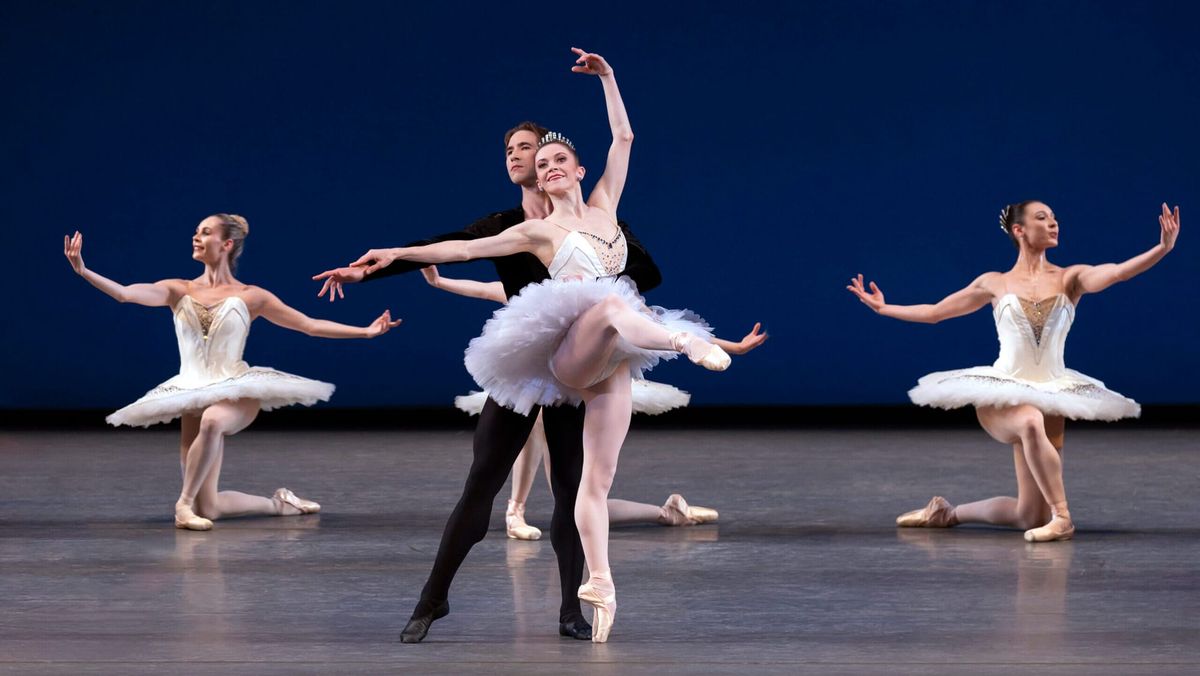
Fairchild, with Joseph Gordon, was a gracious hostess in the first movement of “Symphony in C”, welcoming the audience into her world, a happy, cheerful place. Her retirement has been widely publicized, and she seemed to be thanking the audience for the privilege of dancing those steps. She moved with a crystalline yet luxurious purity, almost purring with pleasure. Her footwork was sharp and clear and her upper body had a delicate elegance, precise without sharpness. Gordon danced his brief solo (“Symphony in C” is really a symphony for ballerinas) with a lot of sharpness, snapping out his pirouettes as if he were drilling a hole in the floor. He is such an elegant dancer, combining an astounding technical clarity with a gently modest demeanor, showing off his ballerina as if she were the most precious thing in the world
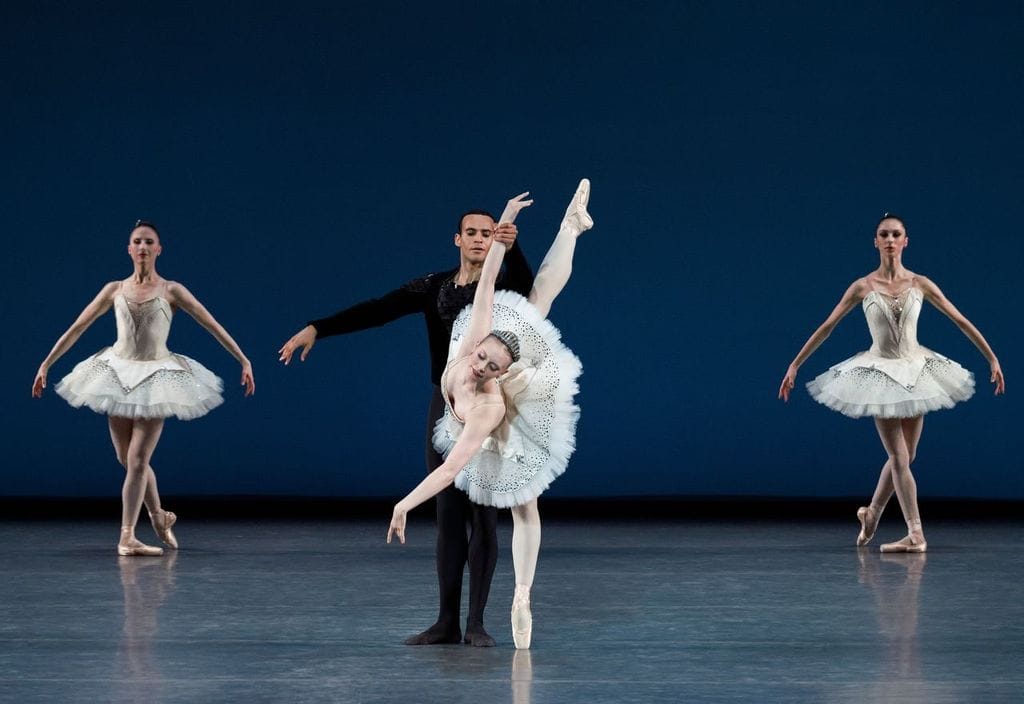
Ryan Tomash, debuting in the plangent second movement, was equally focused on his ballerina, Dominika Afanasenkov, also debuting. Tomash gave his unassuming entrance, as he backed onto the stage to the haunting anticipation in the music, an eager tenseness, as if his whole body were waiting for a revelation. Afanasenkov wafted in as if she were in a dream, a distillation, perhaps of Aurora’s vision scene. She has a beautiful upper body and fluid arms (she seems to have no elbows), and her shoulders and neck floated in the music. She gave a lyrically subdued performance of haunting beauty, only to burst out with a radiant sunshiny smile in the energetic finale.
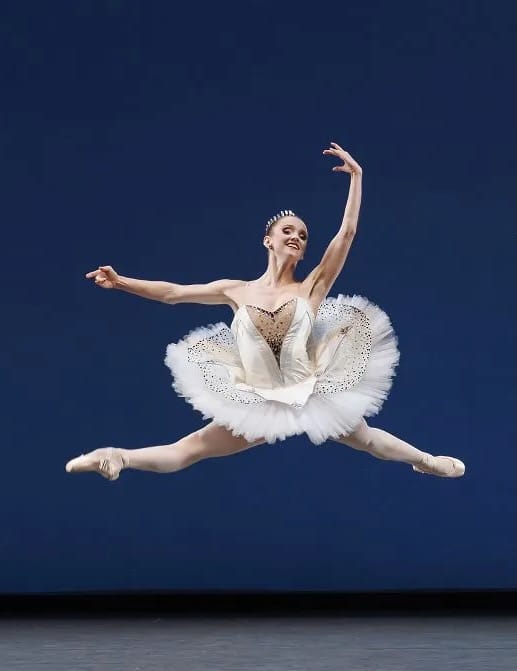
There was plenty of sunshine in the third movement, led by the high-flying pair, Emma von Enck and KJ Takahashi. Their dancing was exhilarating, as they bounded through the jumps, von Enck matching Takahashi’s height jump for jump, with pauses for a bit a lyricism, as Takahashi paused slightly as he lowered von Enck from the lifts so that she seemed weightless.
Emily Kikta was certainly not weightless in the fourth movement, and she commanded the choreography. The fourth movement can be a bit of an afterthought, as it bleeds seamlessly into the finale, but Kikta, accompanied by Owen Flacke in his impressive debut, was dynamic and imperial. She attacked the tricky pirouette series fearlessly, and her extended leg hovered until the music seemed to bring it back in. The finale was both synchronized and spontaneous, as if everyone were listening intently to the music and deciding to jump at exactly the same time.
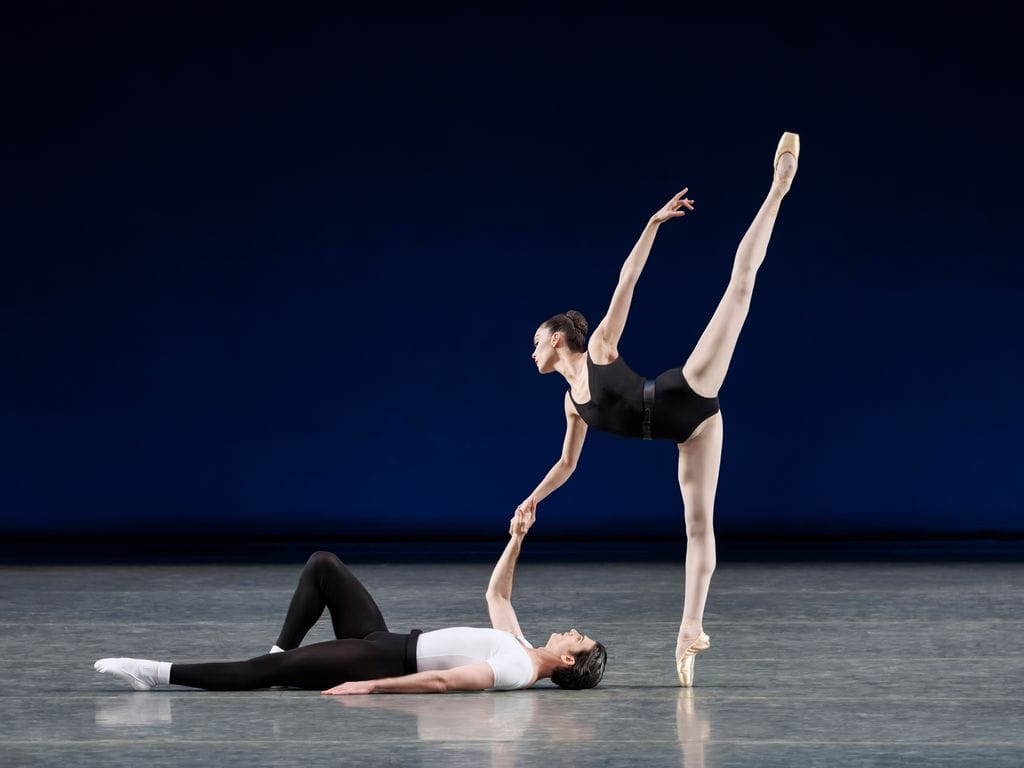
“Agon”, too, got a musically incisive performance, with the opening four men digging into the dynamic rhythms. Mira Nadon, with a dignified and devoted Peter Walker, made her debut in the pas de deux. Nadon has talked about working with Suzanne Farrell on this role, saying in an Instagram post that she would be dancing Farrell’s version. Like her other Farrell works, Nadon has absorbed the essence of the choreography and made it fresh—there was no overly careful feeling of imitating the Farrell style. Nadon did not resemble the descriptions of Diana Adams, the original dancer, whose calm impassiveness let Arthur Mitchell mold her into those fantastic shapes, but she also avoided the overheated approach of some recent interpretations, where the dancers’ legs snap open with an almost vulgar eagerness. She danced with an enticing mystery, confidently using her long legs to carve shapes in the air, letting the shapes flow with a hypnotic majesty, spinning a web around the smitten Walker.
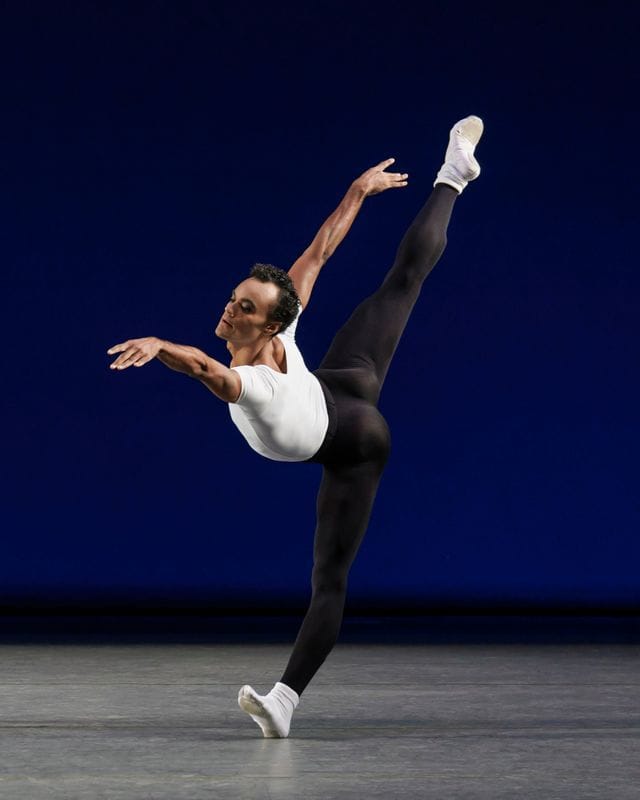
There was more magic in Taylor Stanley’s smooth, quirky sarabande. He danced with an elegant and graceful boneless quality, so appropriate for the formal dances that inspired Stravinsky’s music. Isabella LaFreniere’s bransle gay was a hearty contrast, and her balances, supported impressively by Jules Mabie and Davide Riccardo, were confidently held just long enough to look impressive without showing off. I do miss the witty little nod at the end that I have seen some years before, that small chink in the fourth wall, like a wink to the audience saying “And you thought I couldn’t do it”. She certainly deserved a moment of celebration.
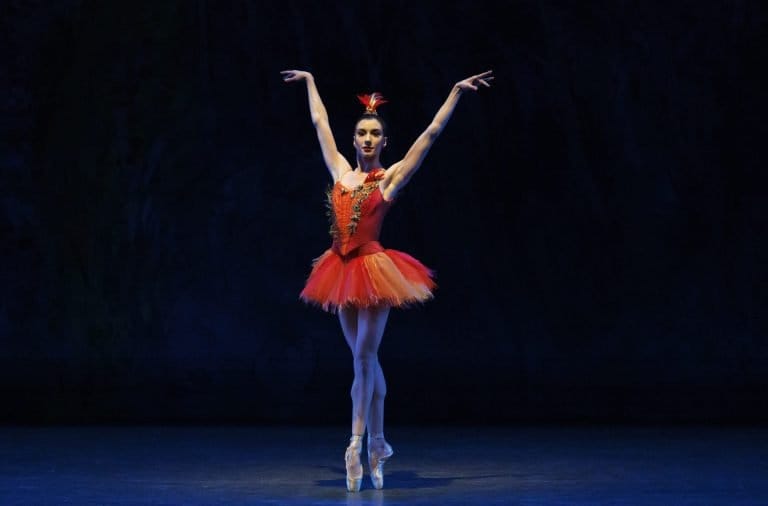
Balanchine’s “Firebird” has a lively and colorful celebration to close the ballet, though the work itself does have its issues. There were no issues with the dancers. There was a new Prince and Princess, as Afanasenkov had her second debut of the evening, and Preston Chamblee was a new Ivan. Chamblee, who joined City Ballet in 2015, has always been a steady and reliable dancer, but recently he has also become a dynamic and very interesting one, physically much leaner and more imposing.
His Ivan crept through the mysterious Chagall forest, wary, looking around, bow at the ready, embodying that ominous music. Ashley Hod was the Firebird who flew into the forest. She was bit less feral than she has been in earlier performances, and was a somewhat conflicted half bird/half woman, an Odette in a red tutu who wasn’t sure if she wanted to fly away. Her fluttering, rippling arms were especially lovely. This does reflect Balanchine’s choreography, which has Ivan gently stroking her arms/wings to reassure her, though the mythological Firebird was never compliant and was forced to give Ivan that feather to buy her freedom. Hod did have trouble with the feather (it seemed to have been caught in her costume) and just mimed giving it to Ivan, who held his hand up triumphantly. The feather did appear when it was time to summon her, and Hod's powerful jump triumphed. She gave the subsequent berceuse a lilting melancholy, as though she were reluctant to leave the garden, which was perfectly in keeping with her softer pas de deux.
Though the pas de deux is lovely, Balanchine’s more romantic Firebird makes Ivan’s instantaneous love for the enchanted Princess seem like he would be happy with anything in a skirt. Afanasenkov’s Princess was certainly worth falling in love with. Her lovely epaulement gave the Russian folk moves a distinctive grace, and the couple’s generous open-handed gestures during the apotheosis embraced the audience with a joyful hope. Yes, dancers are leaving, but there are new ones coming.
© 2026 Mary Cargill