Love Means Having to Say You Are Sorry
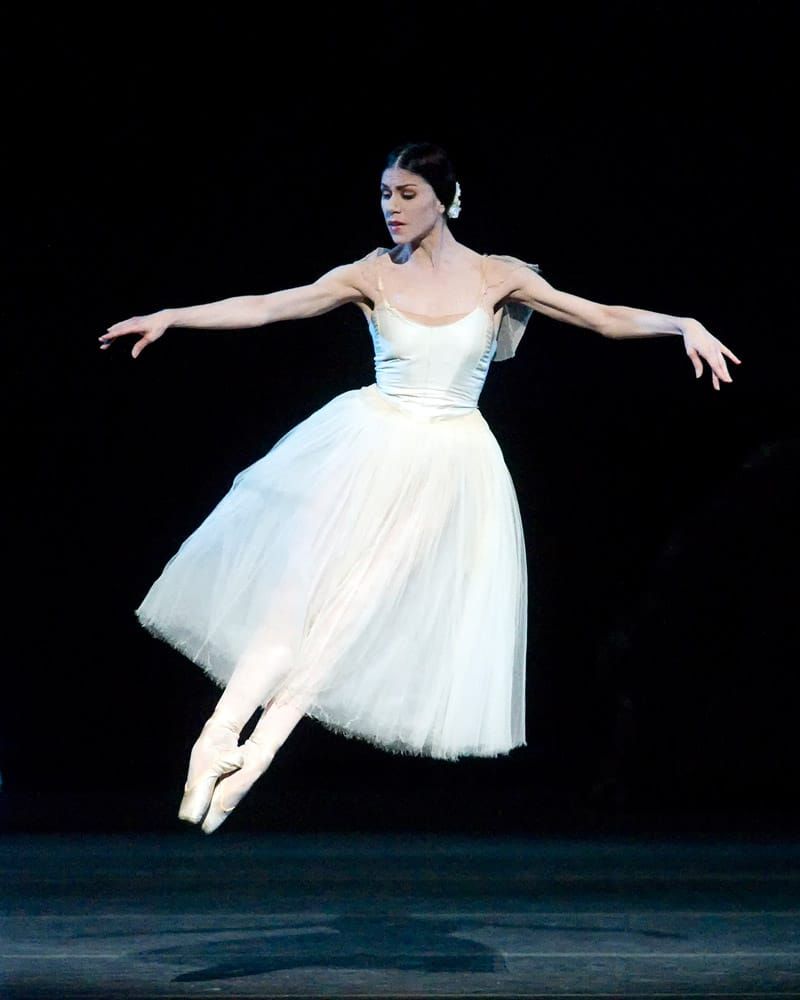
"Giselle"
American Ballet Theatre
Metropolitan Opera
New York, NY
July 9, 2008
One of the signs of a truly great work of art is that over time various artists can find new ways to portray the characters and new angles to find. I expect the original librettists of "Giselle" would be quite surprised at Albrecht's current characterizations, since they felt he could repent and end up happily with Bathilde. But the story is so strong and so true that Albrecht can be interpreted different ways and be equally moving. I have seen him as a jaded cad, as an innocent, as a playful boy, and all varieties in between. Marcelo Gomes, in his moving portrayal, was deeply, truly in love with his buoyant Giselle (Paloma Herrera), a true romantic who could not control his feelings. He was trapped, in a sense, by his most honest emotions. His loving concern when Giselle hinted at her heart problems, his protective gesture when she was warned about the Willis, and his rapture when dancing with her were all so believable. This was the happiest day of his life, too. His one moment of weakness, when he could not bring himself to reject Mathilde in front of the nobility, was his real undoing (and poor Giselle's too of course). The opening walk to Giselle's grave was staggering in its moving simplicity, with Gomes pausing to cling to his flowers, as if that were all he had left. His grief on her grave was so painful, it was almost like spying on a private sorrow. Few performers could make such paroxysms seem real, but Gomes had built such a believable character in the first act, so romantic and so genuinely likable, that I suspect many in the audience were sobbing themselves.
His dancing was so integrated into his character, it seemed as if the steps were an extension of his feelings. The steps were magnificent, clean and clear. The second act entrechants (an alternative to the now more familiar brises) were pogo-stick like, but imbued with a desperation that kept the audience on the edge of their seats.
Herrera's Giselle was not quite at the edge of your seat level. Her slightly stiff upper body doesn't translate into the romantic era shapes easily, and her slightly diffident acting gave a muted feeling to her mad scene. But she gave Giselle a fresh, slightly awkward innocence which had its own charms. She just collapsed when she discovered Albrecht was false, and almost froze. She carried this diffident sweetness to the second act, where it did seem like a private conversation, and she showed an unexpected strength when, as the sun rose, she got to tell him one last time, that she still loved him; rarely has the "I love you truly" gesture of the two fingers raised to the sky resonated so strongly.
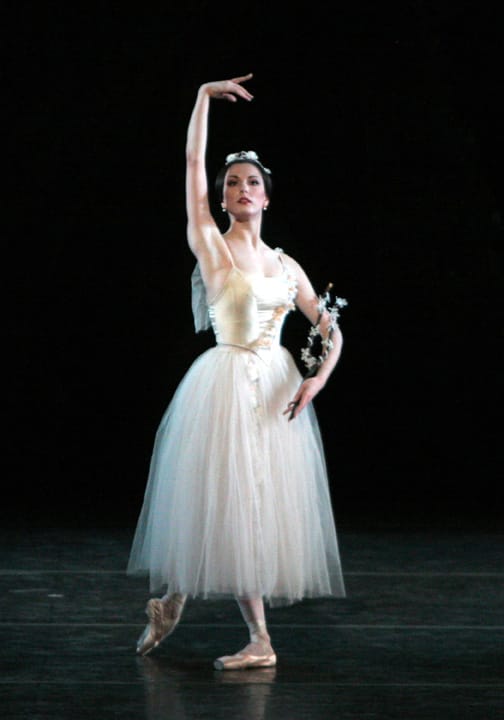
Veronkia Part was a magnificent Myrta, not technically as strong as some (she did wobble a bit in her opening), but absolutely compelling dramatically. She danced with a bloodless composure, convinced until the very last minute that she would win. There was something unearthly and really frightening about her presence, though she kept to the Romantic style and didn't exaggerate Myrta's movements; someone that beautiful couldn't be truly human. Other Myrtas are performed, but Part's is experienced.
The other roles were all well done. Gennado Saveliev was a dignified and sympathetic Hilarion, and Kirsti Boone, as Bathilde, toned down some of the bouncy flouncy exit that seems so over the top; after all, she has been publicly humiliated and betrayed as well. Sarah Lane and Blaine Hoven danced the peasant pas de deux as well as the strenuous and often charmless choreography would let them, but it does interrupt the drama for what seems to be a preview of coming "Etudes". Both Simone Messmer and Yuriko Kajiya as Moyna and Zulma made the most of their lovely solos, and the corps certainly deserved its ovation.
Copyright 2008 by Mary Cargill



