Latest

Golden Oldies

New York City Ballet

Golden Oldies


"Scotch Symphony", "Duo Concertant", "Sonatine", "Stravinsky Violin Concerto"
New York City Ballet
David H. Koch Theater
Lincoln Center
New York, New York
April 30, 2019


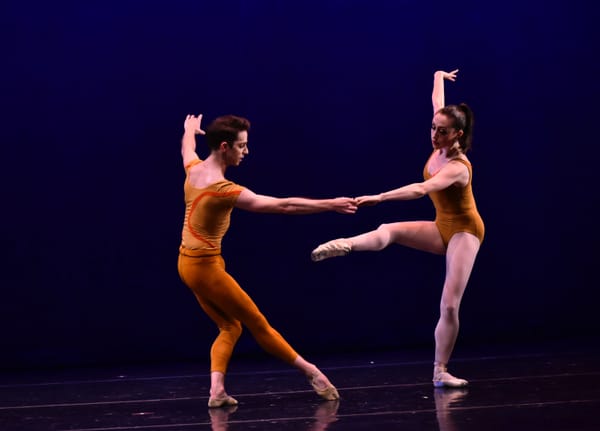
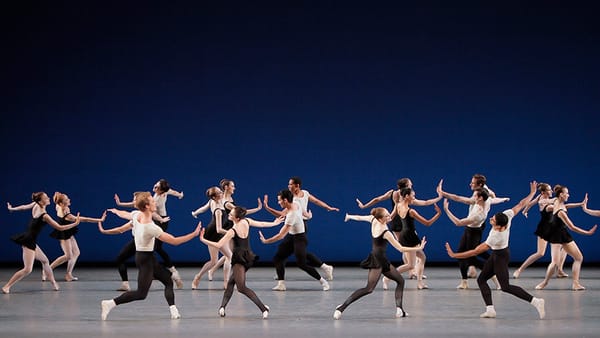
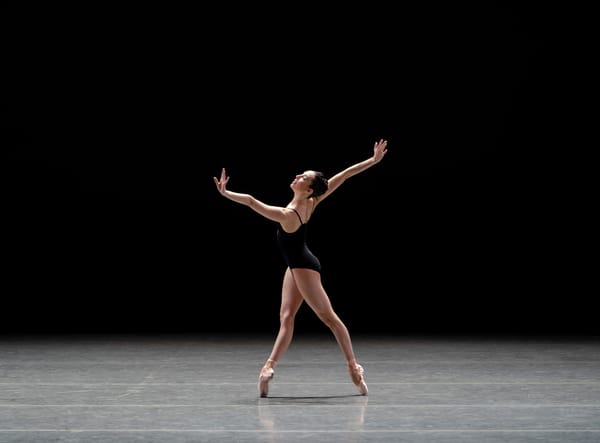
The most recent work on the all-Balanchine program was the 1975 "Sonatine" but all the dancers looked fresh and vibrant.  Even "Scotch Symphony", that charming but illogical wish-mash of Romantic themes with kilted men switching effortlessly from menacing barriers to bouncy villagers and an illusive sylph morphing into a triumphant ballerina, shimmered.  NYCB
By Mary Cargill
Modern Takes

Modern Takes


“Hallelujah Junction,” “Herman Schmerman,” “The Exchange,” “Concerto DSCH”
New York City Ballet
David H. Koch Theater
New York, NY
April 24, 2019


One of the most exciting things about New York City Ballet as a company is the sheer number of new choreographic works it manages to usher into the world season after season.  That it has whole programs devoted to 21st century choreographers is a testament to that, and those tend to be my favorite evenings

By Marianne Adams
Is Timing Everything?

Is Timing Everything?


“The Little Mermaid”
San Francisco Ballet
War Memorial Opera House
San Francisco, CA
April 19, 2019


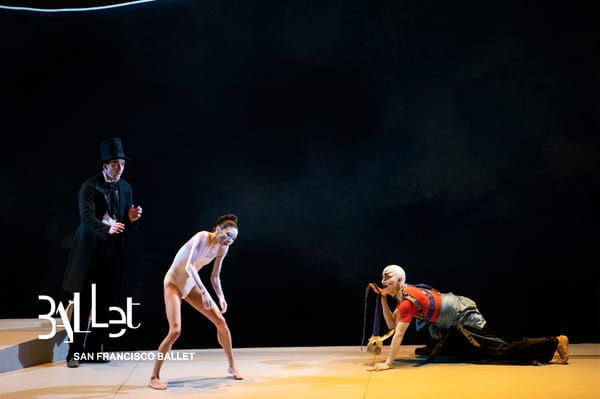
Stunning performances, particularly by Yuan Yuan Tan who we cannot possibly hope to again approach the mastery she brought to the title role of John Neumeier’s “The Little Mermaid,” left many of us speechless with admiration. If anything Tan brought an even more spellbinding intensity to her character’s physical frailty and fierce spirit. You couldn’t take her eyes off her in

By Rita Felciano
Celebrating Merce

Celebrating Merce


“Night of 100 Solos: A Centennial Event”
Merce Cunningham (staged by Patricia Lent)
Brooklyn Academy of Music
Brooklyn, NY
April 16, 2019


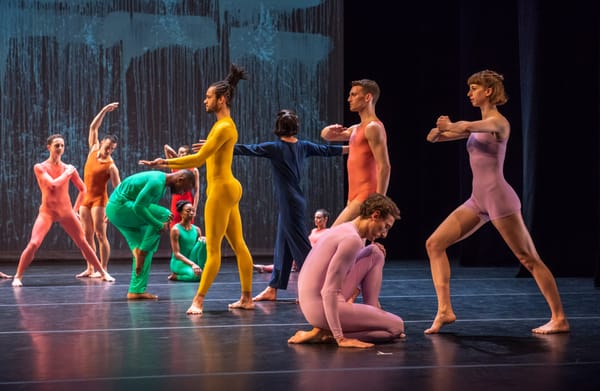
The blockbuster birthday party celebrating Merce Cunningham’s 100th could not have made a better case for the enduring power of his choreography and vision. In creating this “event” (his own phrase about reconfiguring dance elements to make a new work,) three splendid, invented “companies” of 25 dancers each were assembled to offer live performances in Brooklyn, Los

By Martha Sherman
Brand New and Re-thought

Brand New and Re-thought


“Art Songs” “Pole Star”
Alonzo King Lines Ballet
Yerba Buena Center for the Arts
San Francisco, CA
April 12 and 17, 2019


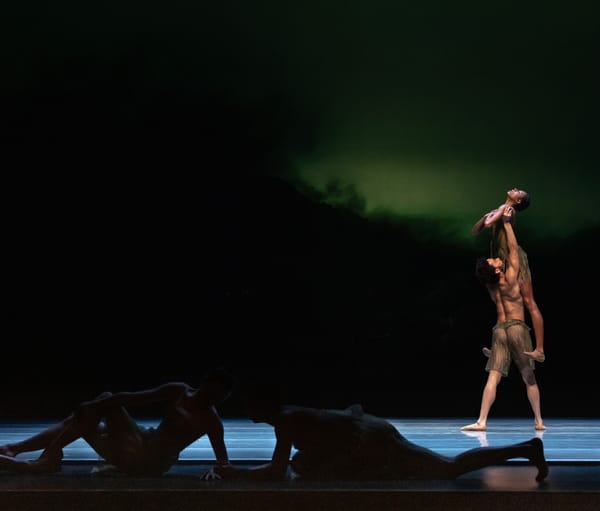
Misreading of curtain time made me miss the major part of Alonzo King’s reworking of his 2016 “Art Songs” which opened the company’s spring season. I thought it necessary to return since a partial perspective of a work never makes sense. Also, the new “Pole Star”, with original music, performed live by composer Van-Anh Vanessa Vo,

By Rita Felciano
Rarities

Rarities


“The Legacy of The New Dance Group”
Choreography by Jane Dudley, Sophie Maslow, Anna Sokolow and Talley Beatty
Coolidge Auditorium
The Library of Congress
Washington, DC
April 19, 2019


Seldom anymore do we get to see live performances of historic modern dance or, as it is called with loving irony, of “old modern”. Once upon a time, it constituted a successful revolution, or at least a fashion. That was from the 1920s into the 1960s, and not only in America.

By George Jackson
Classical Styles

Classical Styles


“Significant Strangers,” “Counterpoint,” “Blind Revelry”
Tom Gold Dance
The Kaye Playhouse at Hunter College
New York, NY
April 3, 2019


The spring program by Tom Gold Dance at The Kaye Playhouse at Hunter College, lasting only two days, was brief but choreogra- phically engaging. Tom Gold’s three works selected for the evening presented whimsical partnerships with the world premiere of “Significant Strangers,” theater with the New York premiere of last year’s dramatic “Blind Revelry,” and distinctly more modern

By Marianne Adams
The Body Speaks

The Body Speaks


“5 Soldiers: The Body is the Frontline”
Rosie Kay Dance Company
San Francisco Performances
Taube Atrium Theater
San Francisco, CA
April 11, 2019


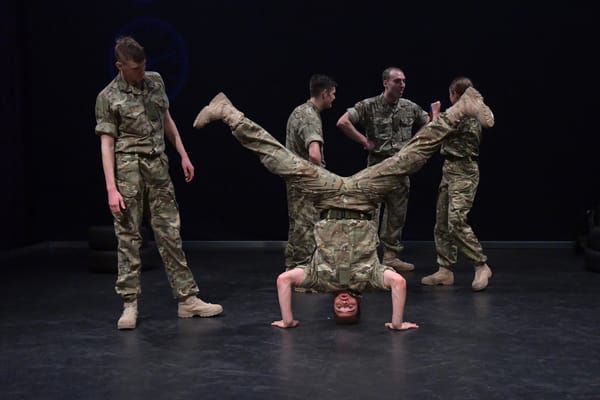
A West Coast American premiere of a work created in Britain is not an everyday event. One produced “In Association with the British Army” definitely would have to be considered esoteric. Kudos for San Francisco Performances for having taking the risk to program something as unusual. The Rosie Kay Dance Company’s “5 Soldiers: The Body is

By Rita Felciano
Of Numbers and Nationality

Of Numbers and Nationality


“Le Corsaire”
The Mariinsky Ballet
Opera House
The John F. Kennedy Center for the Performing Arts
Washington, DC
April 11, 2019

Eighty-one dancers are listed by Russia’s Mariinsky Ballet in its current Kennedy Center program. That does not include the children who supplement in the grand, Act 3 divertissement of “Le Corsaire”. These junior dancers are local, from two ballet schools – the DC Kirov Academy and The Washington School of Ballet. Of the company’s regular dancers, 44 appear

By George Jackson
A Troupe of Soloists

A Troupe of Soloists


New Works and New Productions
“Easy”, “In the Night”, “The Runaway”, “Something to Dance About”
New York City Ballet
Opera House
The John F. Kennedy Center for the Performing Arts
Washington, DC
April 5, 2019


The dancers of New York City Ballet are artists in their own right. They may not be the masterminds behind the locomotive patterns in which they travel or the original composers of the movement they exude, but in the end, they decide what happens on

By Arielle Ostry
Too Many Cooks

Too Many Cooks


“Le Corsaire”
The Mariinsky Ballet
Opera House
The John F. Kennedy Center for the Performing Arts
Washington, DC
April 9, 2019


A minimum of five composers, four text smiths, plus ten choreographers and ballet masters was required to reconstruct the 19th Century ballet “Le Corsaire”, which the Mariinsky company has brought to Washington. It shows. The action is choppy, especially at the start of what is a three-act production with prologue and epilogue. Not even mentioned up front in the

By George Jackson
Kyle Abraham at Skirball

Kyle Abraham at Skirball


“Live! The Realest MC”
A.I.M.
NYU Skirball
New York, New York
April 4, 2019


There was a time when both choreographers and critics thought dance should say it all. Language in any form was considered a corrupting influence that compromised dance’s autonomy. However, as modernism has faded, dancers have stopped being afraid of language. Now it is more often seen as a valuable adjunct to dance. I thought of that during Kyle Abraham’s concert at the

By Gay Morris