Kyle Abraham at Skirball
“Live! The Realest MC”
A.I.M.
NYU Skirball
New York, New York
April 4, 2019
There was a time when both choreographers and critics thought dance should say it all. Language in any form was considered a corrupting influence that compromised dance’s autonomy. However, as modernism has faded, dancers have stopped being afraid of language. Now it is more often seen as a valuable adjunct to dance. I thought of that during Kyle Abraham’s concert at the Skirball Center Thursday evening. Abraham’s “Live! The Realest MC” can be enjoyed purely as dance. But at certain points the spoken word is incorporated into the piece and enhances it. “Live! The Realest MC” also gains in meaning and poignancy when we learn in a program note that it was inspired by an early autobiographical solo about a closeted boy who is trying to find acceptance and an authentic identity. Referring to the Pinocchio story, Abraham asks, what does it mean to be a “real” boy?
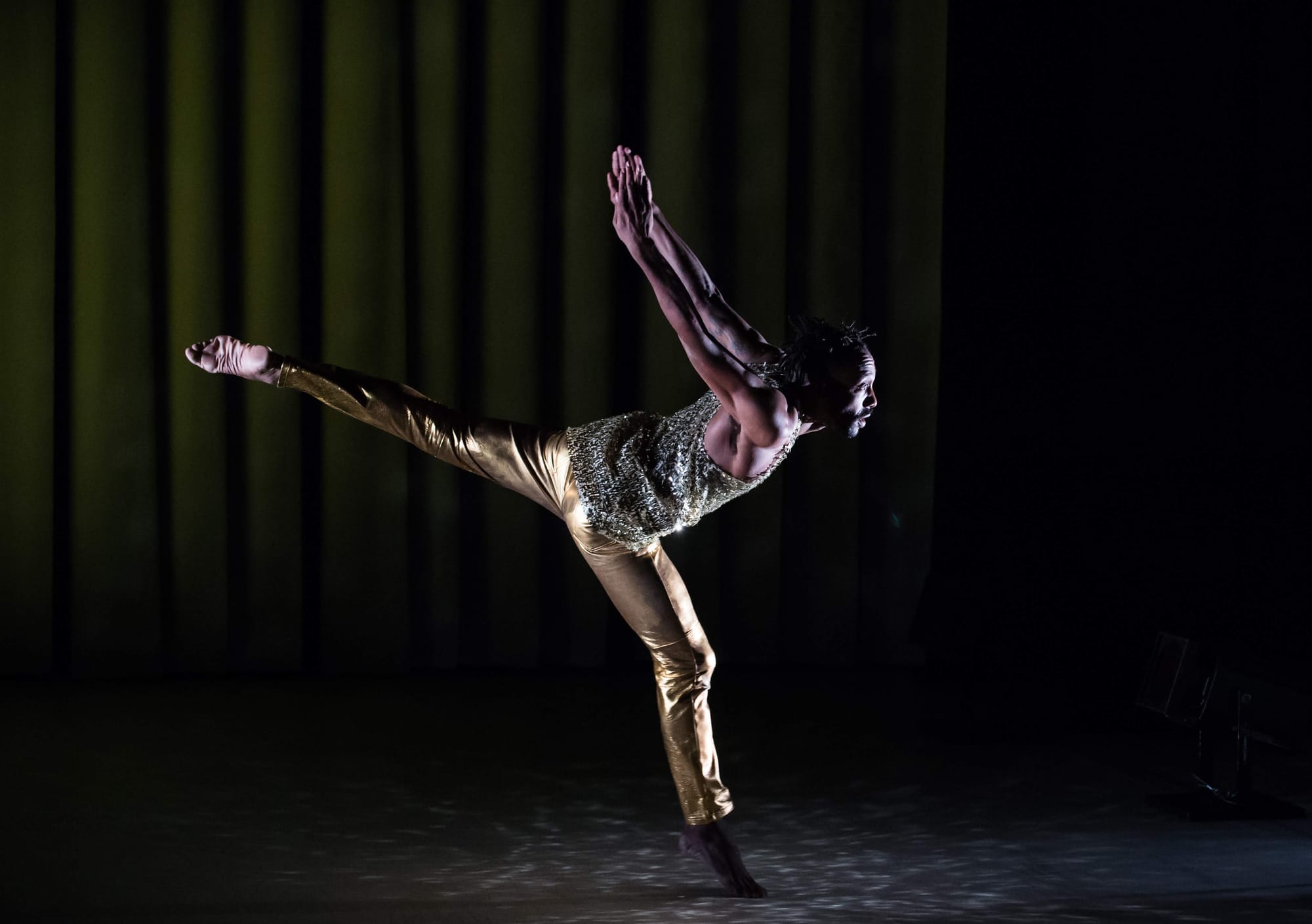
Abraham has expanded on the theme of masculine identity to create an hour long work set for A.I.M., his multi-racial company of seven virtuoso dancers: Matthew Baker, Tamisha Guy, Keerati Jinakunwiphat, Claude “CJ” Johnson, Catherine Ellis Kirk, Marcella Lewis, and Jeremy “Jae” Neal. In this new piece Abraham does not appear on stage, acting solely as choreographer, while Neal assumes the role of the central figure. The dance includes costumes by Abraham and Kristi Wood that consist of gold colored pants and sequined top for Neal, and similar outfits in black and silver for the rest of the cast. The set includes filmed backdrops by Carrie Schneider and lighting design by Dan Scully. The recorded score by Abraham, Alva Noto, James Blake, Bill Evans, Ben Frost, Mike Vainio and Pan Sonic, ranges from the sound of a thunderstorm, to electronic scratches and screeches, to pop and jazz tunes.
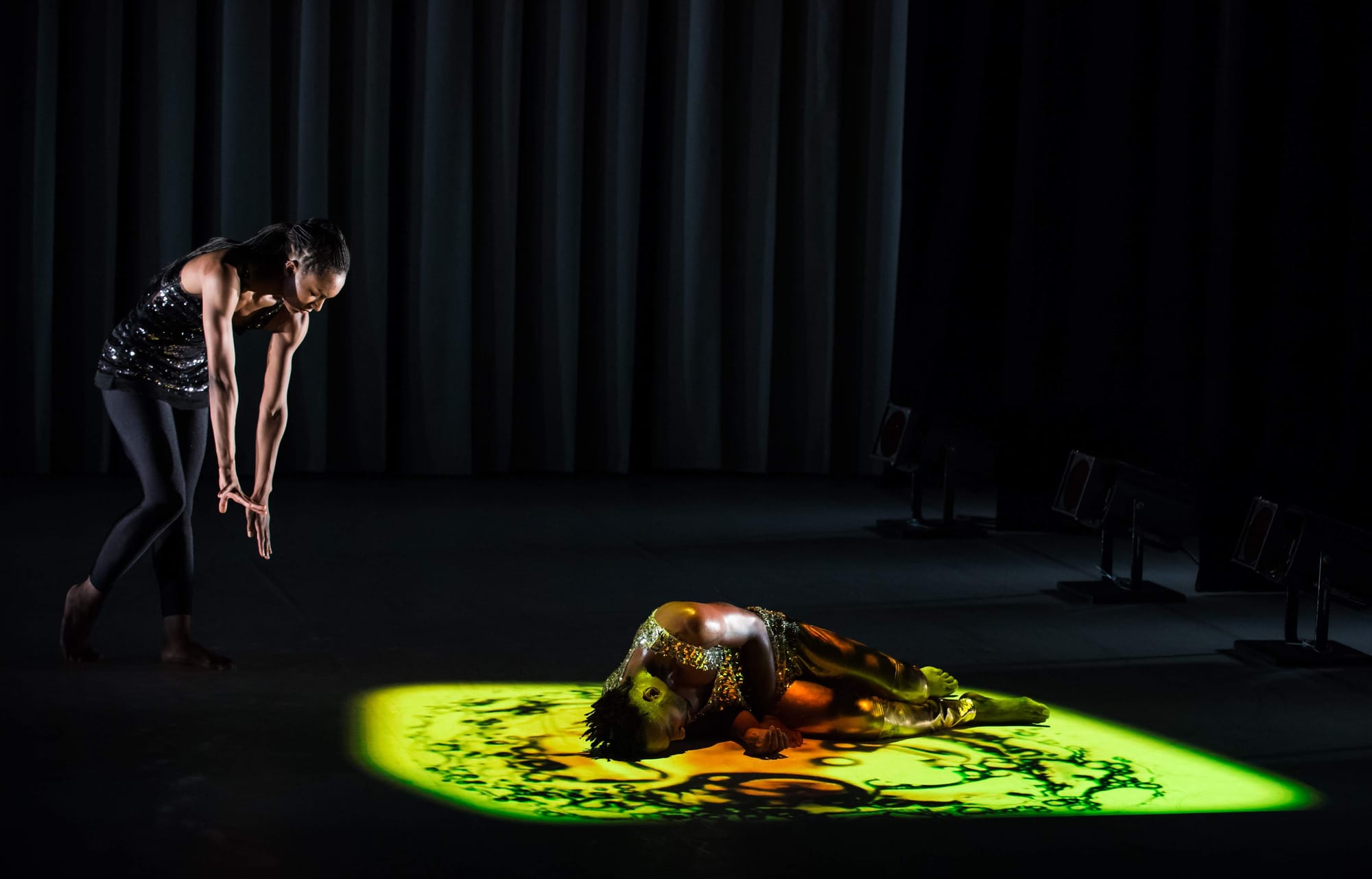
Abraham’s vocabulary is so eclectic it almost defies description, drawn as it is from genres that include hip-hop, ballet, modern and postmodern dance, and everyday movement. His choreography has the discipline of ballet and the intense energy of hip-hop. The work opens with Neal struggling to stand, like a newborn emerging into a hostile world. This painful solo ends as a group hurtles onto the stage; the piece then moves through a number of vignettes.
The dance constantly holds the attention through variations of patterning and of group movement intermingling with and set against solos. It would be possible to focus on the dance’s formal aspects alone and find the concert satisfying. However, there is far more going on than formal structure and arrangement. For example, a number of different kinds of masculine walks are explored within the broader context of the dance: the casual slouch, the street punk swagger, the drag queen sashay, the business like stride. These are reminders that walking is a basic element of identity, of how we present ourselves to the world.
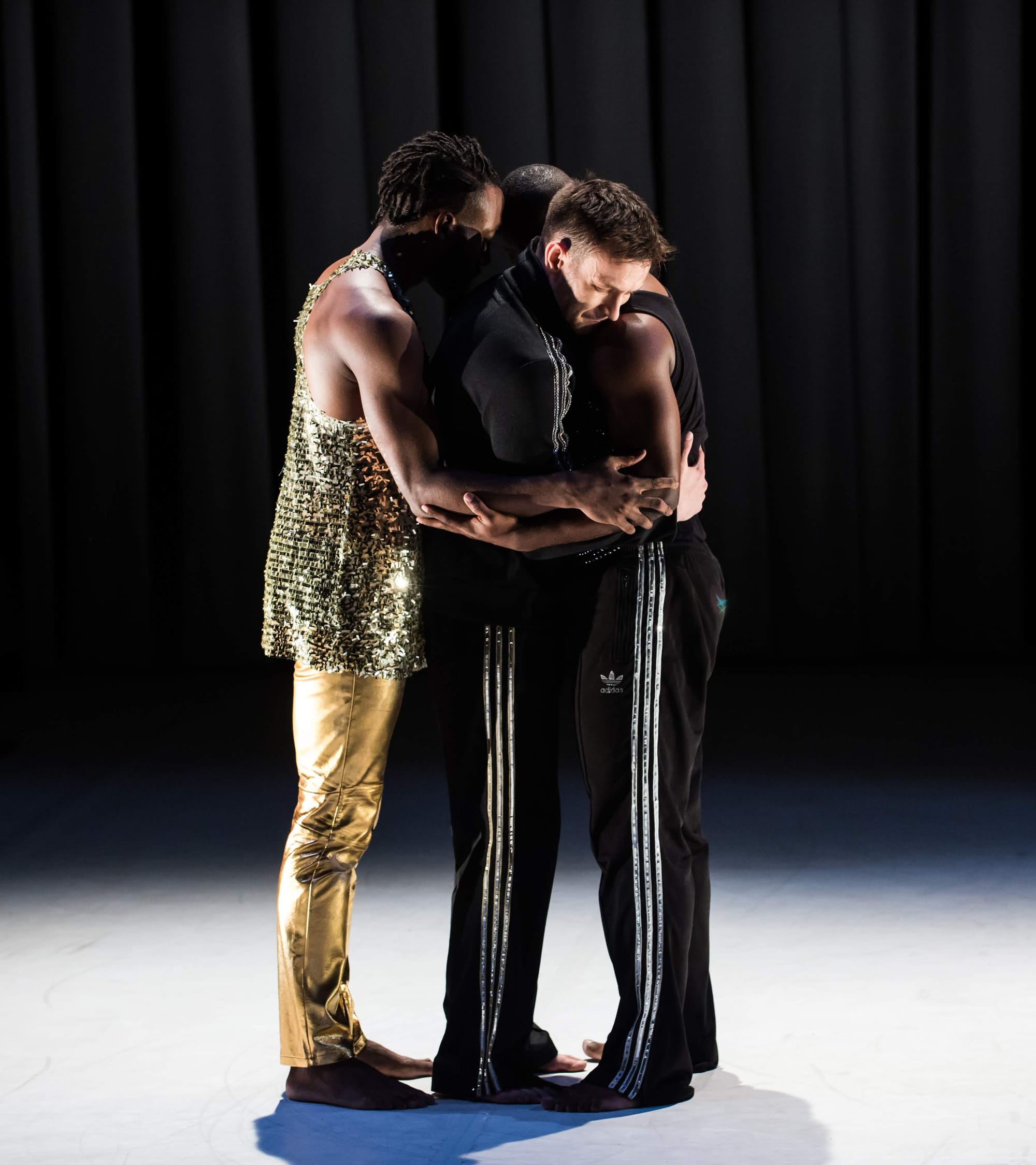
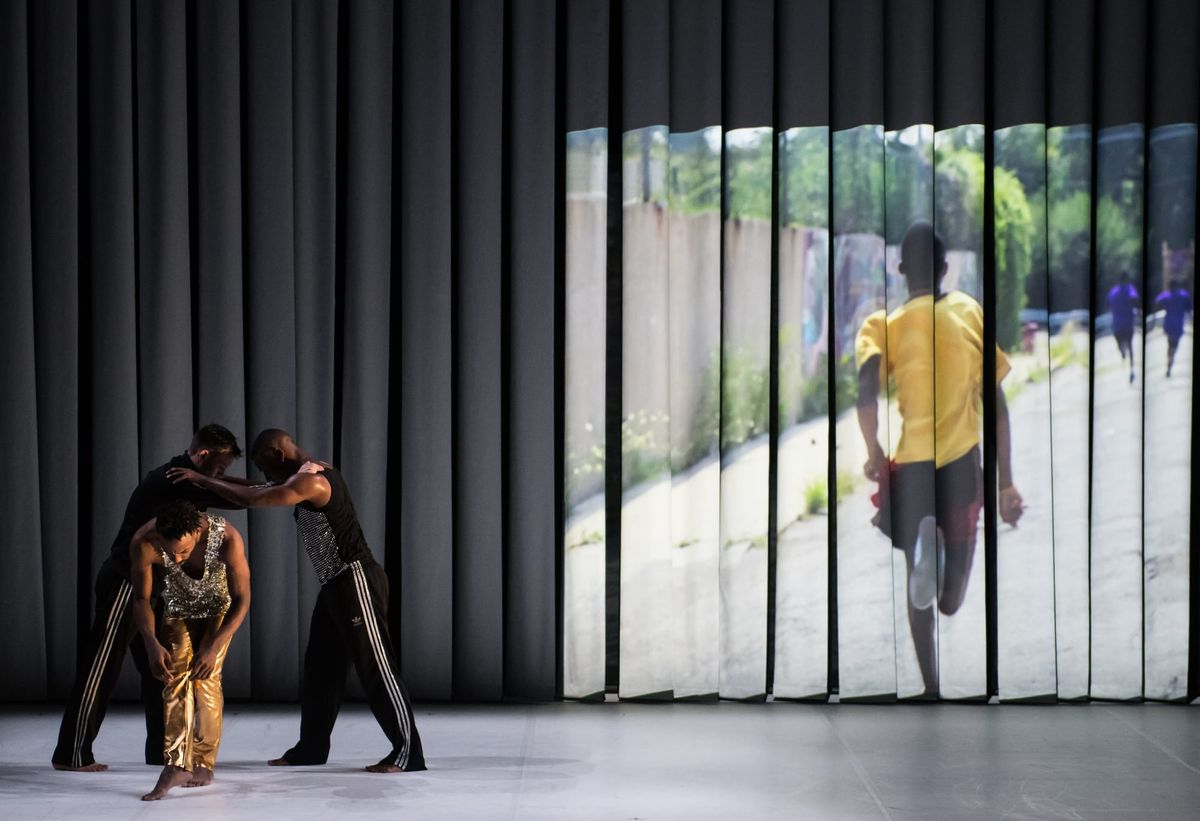
There is also an extended section on celebrity — a microphone is brought onto the stage and individual dancers perform to it and around it. An MC comes on and in an intimate voice asks the audience how it is doing, part of the banal patter of the cool professional performer. The MC offers another sort of masculinity, a highly influential one in today’s enthralldom to even the flimsiest kind of fame. There are suggestions, too, in the dance of male friendship, as dancers embrace in comradely or protective fashion. More prevalent, though, are occasions of violence. At one point a dancer cries that he has been beaten and abused, repeating the words, “Mommy they hit me. They held me down…” And in another section, Neal appears fallen in a spotlight of red. The element of violence experienced by black boys and men is made especially forceful considering today’s headlines. Behind the live action a series of video images are intermittently projected, from sneaker clad feet walking down a street, to a repeated image of boys running, always seen from behind, and which remain ambiguous. Sometimes one boy seems to be running away from or after other boys, at other moments boys appear to be chasing other boys, or perhaps they are simply running off to an innocent adventure.
Throughout, though, the major mood of “Life! The Realest MC” is one of struggle and tension. The search for a “real” identity and a place to belong is difficult, Abraham seems to say, and often painful.
copyright 2019 by Gay Morris



