Leïla Ka's Maldonne


"Maldonne"
Leïla Ka
Co-Presented with Dance Reflections by Van Cleef & Arpels Festival
New York Live Arts
New York City
February 27 and February 28 (matinee), 2026
French choreographer Leïla Ka is not one to shy away from the depths and vulnerability of womanhood. Co-presented with Dance Reflections by Van Cleef & Arpels at New York Live Arts, Ka’s "Maldonne" stretches the definition of femininity, utilizing five dancers and 40 dresses to deliver an irreplaceable message: women are capable of anything.
At the start of "Maldonne", trembling silhouettes of five women emerged, appearing mechanical and subtly frantic. When audible gasps of exaggerated breathwork sound, the audience began to fidget, experiencing an intriguing balance of discomfort and curiosity. The dancers’ limbs began to stretch and bend, creating jagged shapes amidst what seems like a growing, silent panic attack. Within the first couple minutes, a startling sense of desperation in the dancers’ faces, provoked genuine, aching sympathy from the audience.
While the initial choreography of "Maldonne" exercised extensive repetition, there was constant unpredictability and discrepancy between the dancers who were often omitting an arm, leg, or fall within the sequencing. The amount of physical abandon in the dancers’ bodies was incredibly moving, fueled with release and unrestraint.
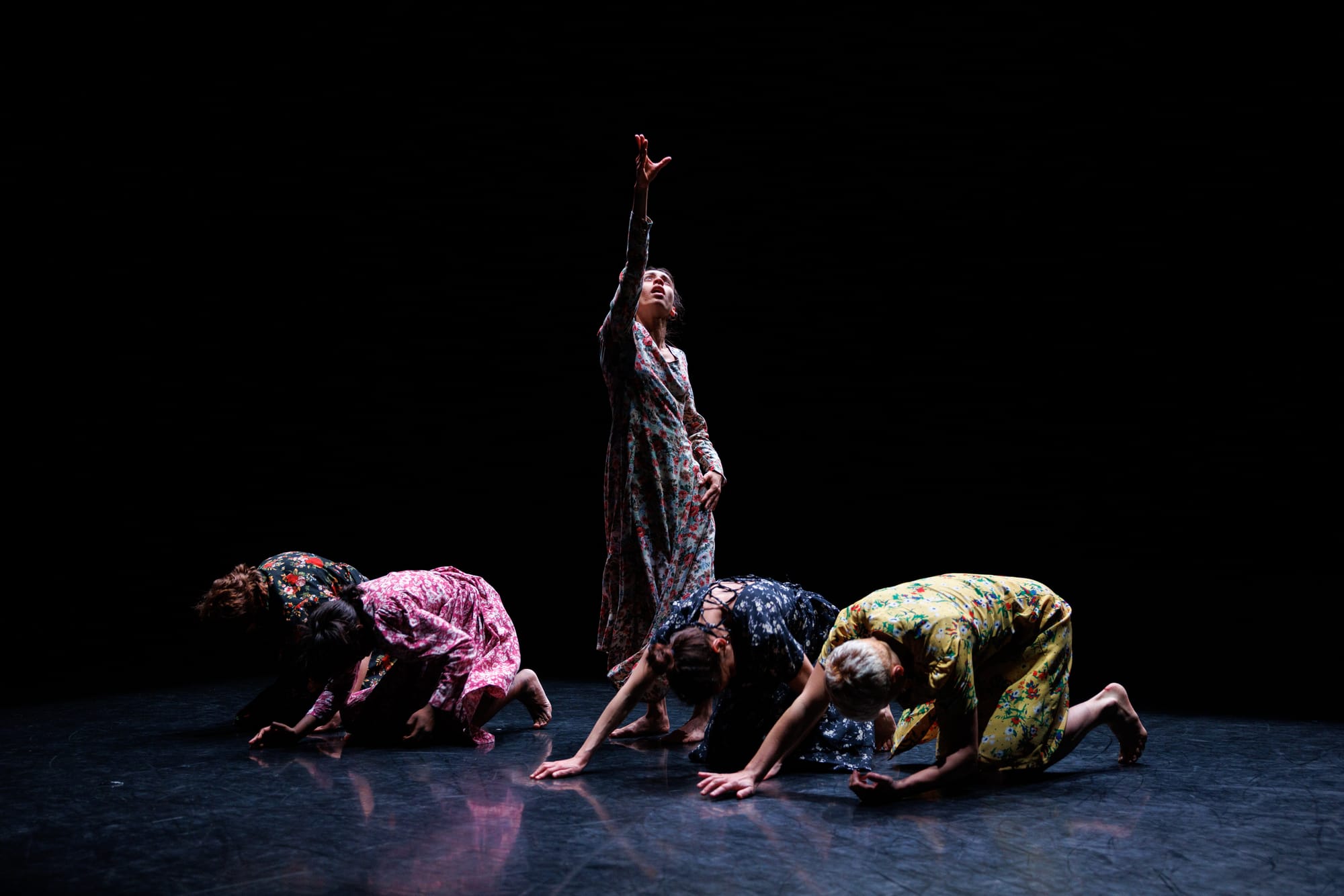
Ka does not condense the dancers’ feminine spirit into one category; the dancers oscillate between panic, fragility, sass, grief, politeness, and conviction. As they morph into different versions of themselves, Ka’s artistic choices continually stretch the dimensions of what it means to be a woman; that both softness and rage can coexist in the female body.
At a certain point the dancers met upstage, referencing a visual motif of something parallel to a housemaid. When they rolled their spines, opened their legs and hips, and bounced on the floor, they appeared fiercely liberated, exuding sensational desire. They bit their dresses, staring down the audience with intimidating enticement and angst. A question which emerges is, are they performing for the societal male gaze, or the audience?
The dresses, designed by Ka, range between silky night slips, animal print pajama robes, and patterned tunic style dresses. After the two first changes, it was easy to lose count how many dresses the dancers have worn.
The dancers surprise the audience when they wrapped their tunic-style dresses around their heads, revealing head-to-toe black tops and long skirts. With their heads fully covered, the dancers execute soft footwork in blind unison. A strange, empty feeling absorbs the stage when five metal hooks suddenly dropped. The dancers unveiled their faces and hung the dresses on the hooks, shedding part of their identity as if they no longer have to perform for anyone around them. They opened their collarbones, sweeping the air in tandem underneath the floating, ghostly garments. The lack of distraction in costuming and visual effects brought full attention to their relaxed yet mourning expression.
In addition to their role as dancers, it is evident that the cast of "Maldonne" performs with intense demands as actors and athletes. Within the hour, the physical demand on each dancer’s stamina is extraordinary, topped off by their emotional commitment and expressiveness to the work. One of the most striking moments of "Maldonne" was when the cast lip sings to French singer Laura Fabian’s “Je Suis Malade.” Each dancer independently achingly cried as they began to pour out the song lyrics from their diaphragm, pleading the audience to be rescued from their misery. Dancer Justine Agator harnessed focus, articulating sorrow in her eyes and furrowed brow with unbearable desperation.
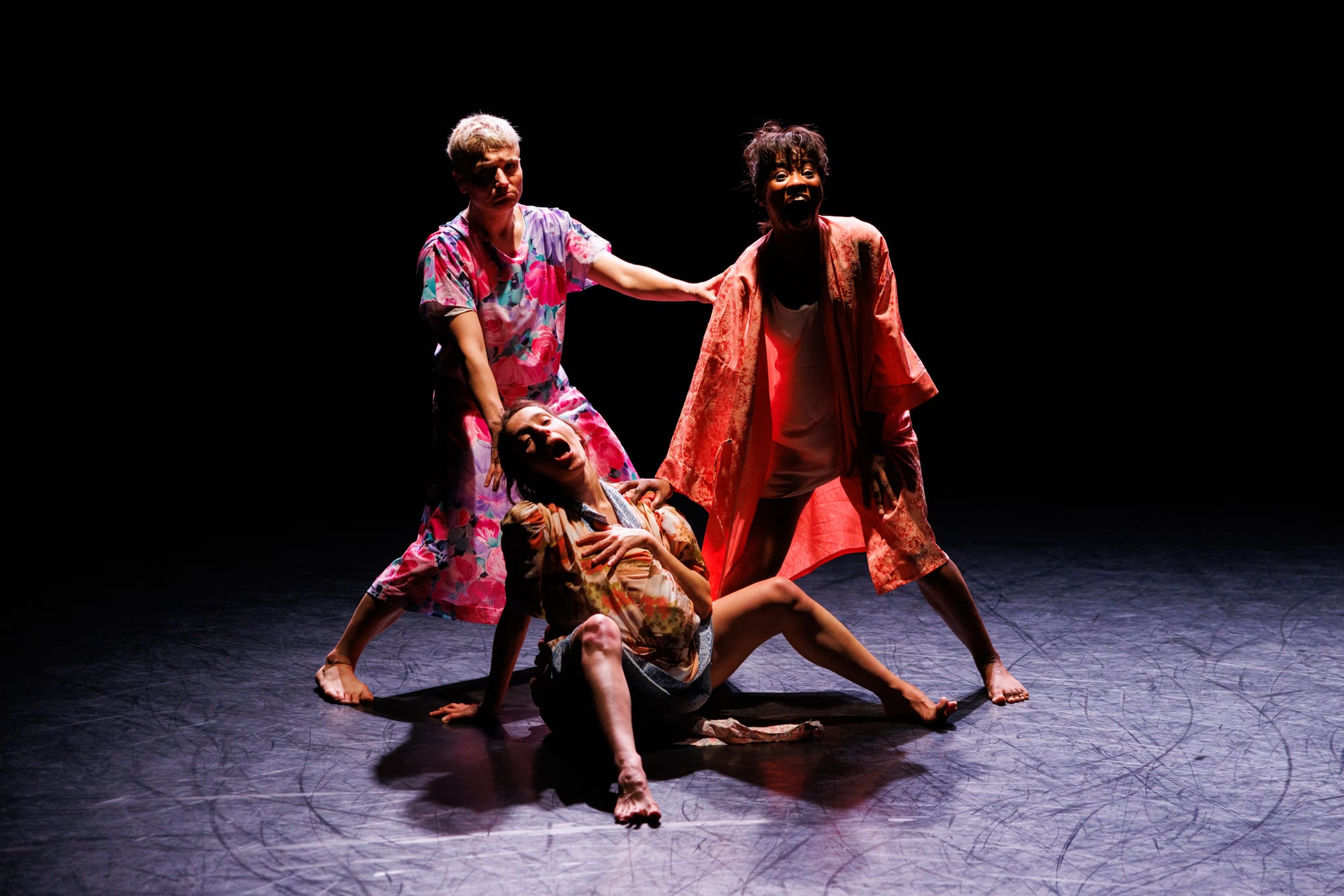
In contrast, one of the most amusingly comical parts of "Maldonne" began by the sudden splash of water which one dancer threw on another, sending everyone into a cartoon-like frenzy. The sudden outburst came audibly as well, initiating the soundtrack of loud frantic orchestra strings mixed by sound designer Rodrig Desa. Morphing into animated characters, the dancers were quick to enter and exit the stage as they pantomimed actions such as gossiping, complaining, comforting each other, or even posing a fake pregnancy to bear a child.
As the dancers move in dramatic fashion, it began to feel intentional that Ka presented every societal stereotype of women in an over-the-top, theatrical manner. When they're nosy, emotional, dramatic, into each other’s business or talking too much, Ka intentionally draws attention to all the ways women have historically been unfairly stereotyped. Watching this part of the work is a powerfully memorable embodiment of female stereotypes. It was simultaneously amusing and disturbing.
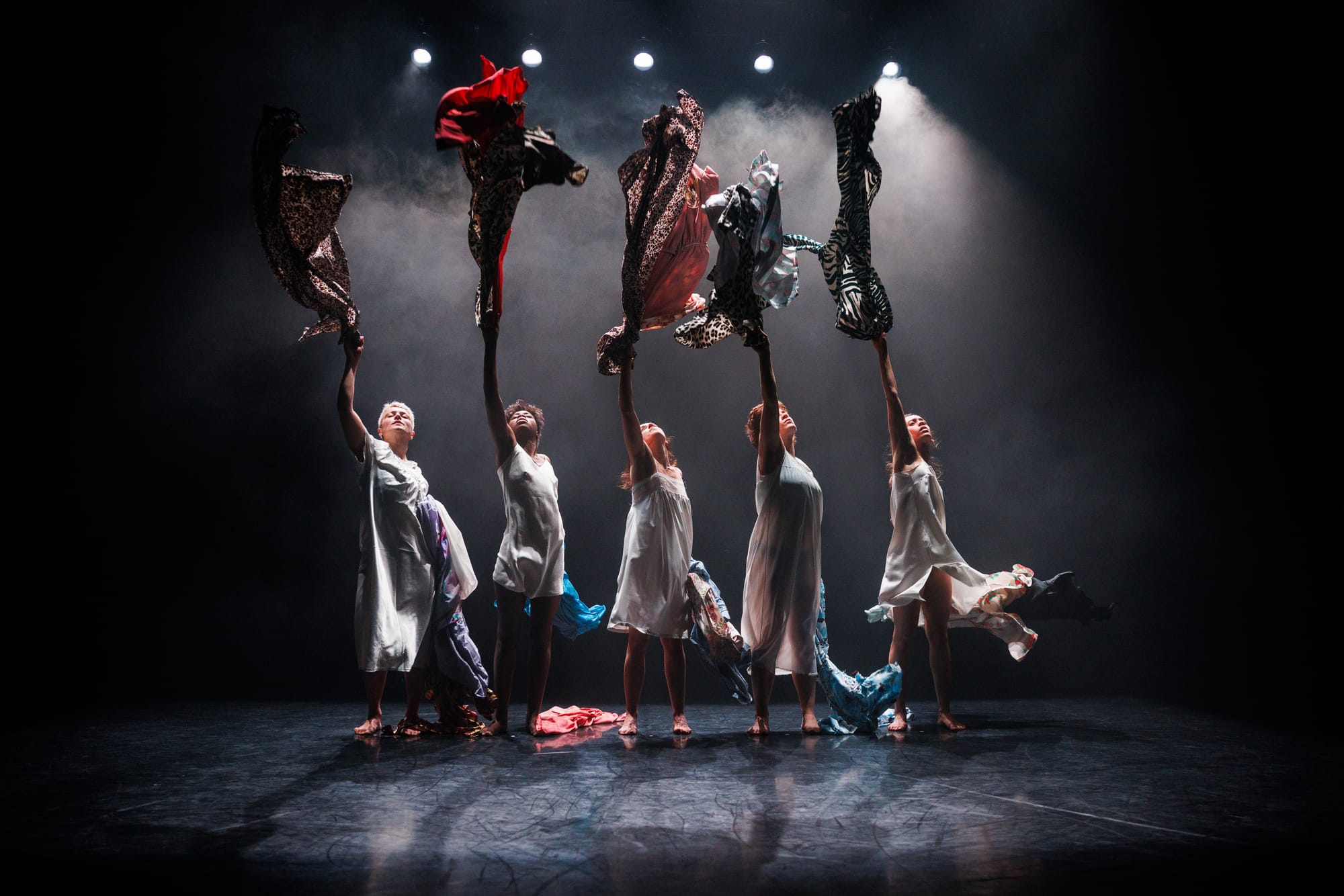
When the dancers found unison under a box of piercing white light, they unveiled multiple layers of dresses to bare themselves in simple white slips. Under a cloud of seeping fog, the feeling of unity surfaced. The dancers threw their dresses in the air like silks, celebrating their multifacetedness. "Maldonne" is a tremendously moving testimony to women’s strength as much as their vulnerability.
copyright © 2026 by Miranda Stuck