Classical Styles
“Significant Strangers,” “Counterpoint,” “Blind Revelry”
Tom Gold Dance
The Kaye Playhouse at Hunter College
New York, NY
April 3, 2019
The spring program by Tom Gold Dance at The Kaye Playhouse at Hunter College, lasting only two days, was brief but choreogra- phically engaging. Tom Gold’s three works selected for the evening presented whimsical partnerships with the world premiere of “Significant Strangers,” theater with the New York premiere of last year’s dramatic “Blind Revelry,” and distinctly more modern craftsmanship with the 2017 duet titled “Counterpoint.” While the program could have benefitted from better dancing, the evening was an abundant exploration of classical style.
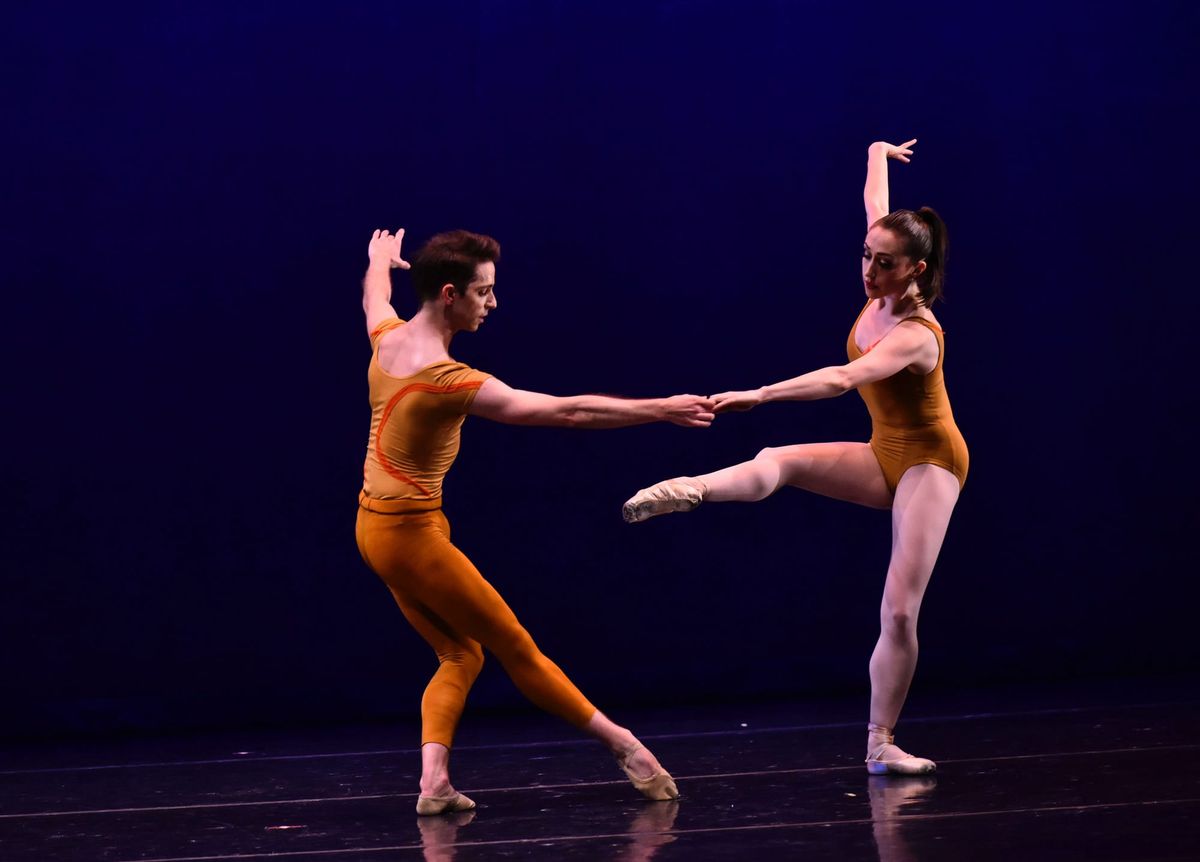
Photo of Evelyn Kocak and Michael Sean Breeden in Tom Gold's “Significant Strangers.” Photo © by Eugene Gologursky
“Significant Strangers,” the new work for two couples to a collection of music pieces by Leonard Bernstein played aptly by Joseph Liccardo on the piano, was marked by masterly calibrated movement symmetry in patterns and steps. Starting and ending with the full cast of two female and two male dancers, the work would transition from synchronized steps to movement mirrored and echoed from one side of the stage to the other. The piece was marked by many engaging duets, alternating between same-sex and mixed gender match-ups, and the prescribed clean classical lines and steps were periodically embellished by flourishes of other styles, such as jazzy flairs of twisted hips and quick, turned-in foot positions. While one all-female dance stood out for its playfulness and an all-male dance for its strong, allegro focus, my favorite was a section of two mixed duets with minimal partnering but eloquent interplay between the partners and the couples.
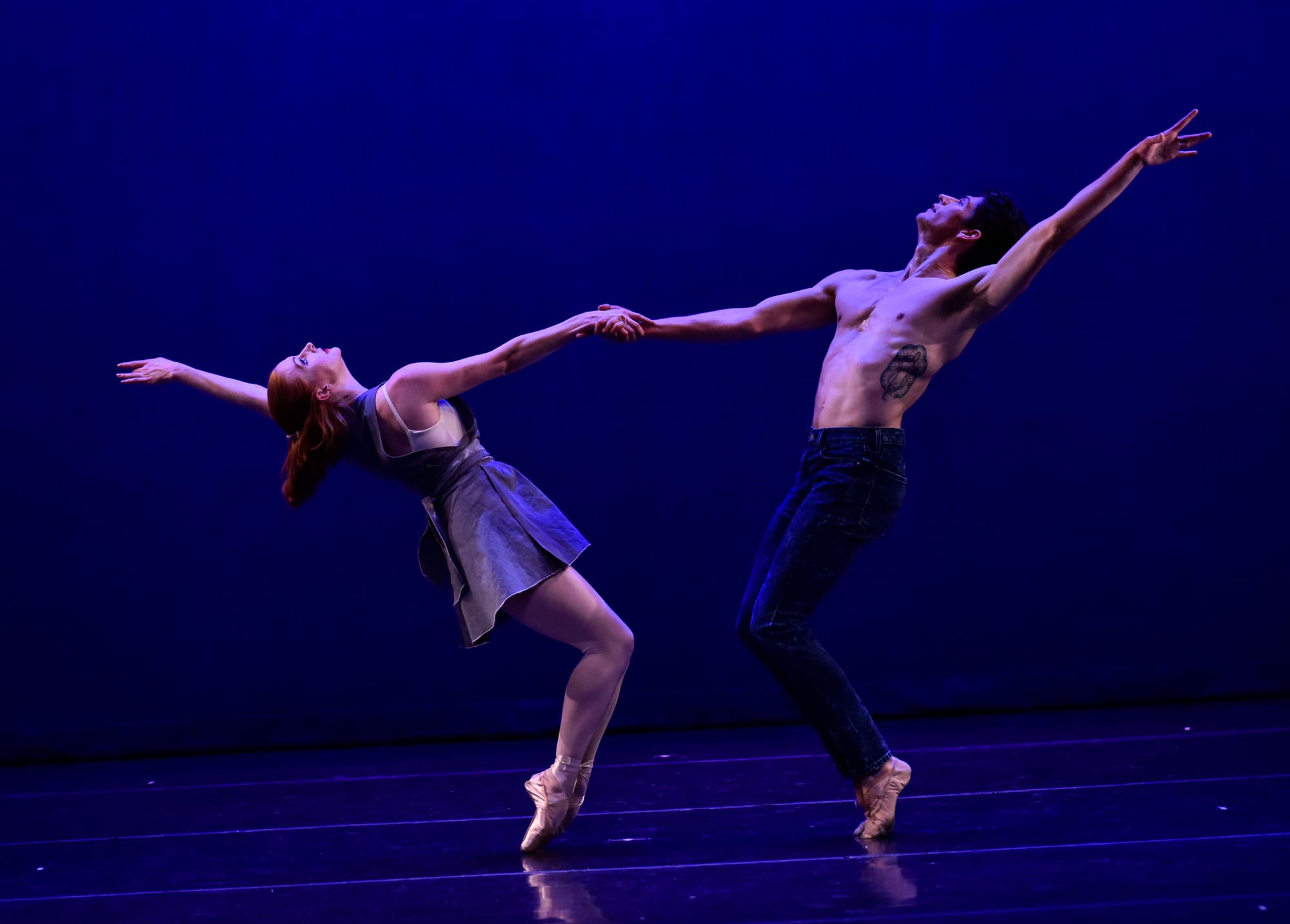
By contrast, “Counter- point,” which is set to Steve Reich’s “New York Counterpoint” and “Nagoya Marimbas,” was a purposely detached and colder piece, with keen isolations in movements filling in the repetitive score with detail. What stood out most was Gold’s ability to use movement to create certain demarcations on the stage: without being too obvious, the steps and dance blocking split the stage up into quadrants, with dancers favoring each at different phases of the score. It was a rare kind of choreographic geometry, not easy to achieve with just two performers, and as unapparent as a painter’s brush strokes, but it seemed to add some special depth to the work as the rest of the steps focused on bringing to the forefront the music’s nuances. In one moment a repeated battu by Abigail Mentzer to beating music extended into a lingering arabesque with the score’s transition, and in the next the dancers shifted to another section of the stage as the music’s phrasing moved on.
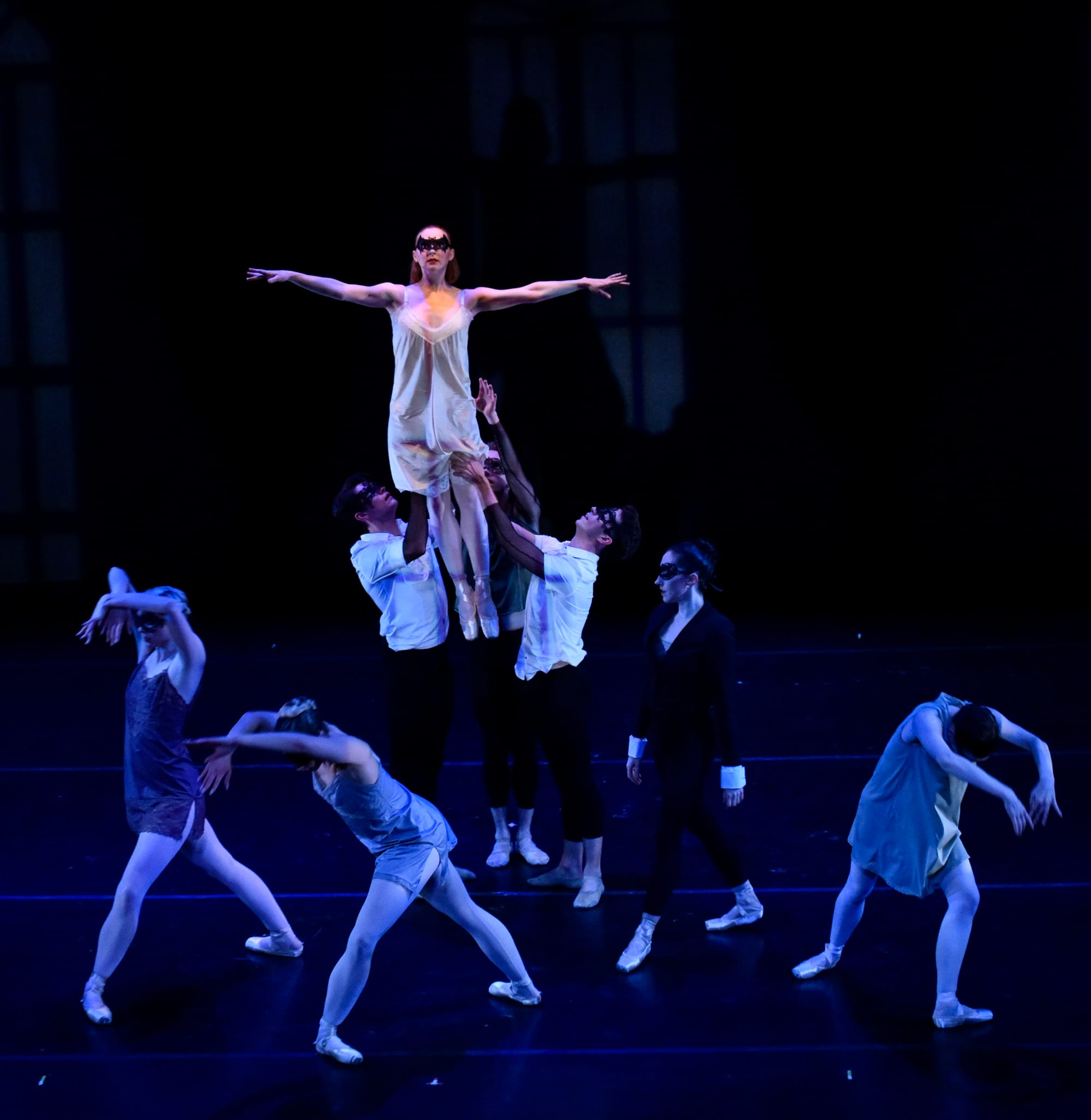
The program ended with theater in the form of the New York premiere of “Blind Revelry,” set to Stephen Sondheim’s “Concertino” played on two pianos by Liccardo and Adam Marks. The music itself was remarkable as it was composed in 1949 while Sondheim was a student at Williams College, but it has not been publicly performed until it was rediscovered in 2001, so in watching this new work the audience likely was hearing the Sondheim piece for the first time. The dance itself, while intended to be a contemporary reimagining of the first encounter of Dionysus and Ariadne on the island of Naxos, worked better if viewed just as a mysterious ball with masked characters. The stage and costumes were set precisely thus, and the partnered movements matched the setting. All the dramatic intrigue fell on two female characters – the masked Evelyn Kocak in a masculine jacket who seemed to entice an unmasked ingénue, danced by Mentzer, into joining the fray. It wouldn’t be much of a spoiler to say that Kocak’s character succeeds and Mentzer donned a mask, but with the lavish choreography and setting, it’s no surprise – this dance was that appealing.
copyright © 2019 by Marianne Adams