Golden Oldies
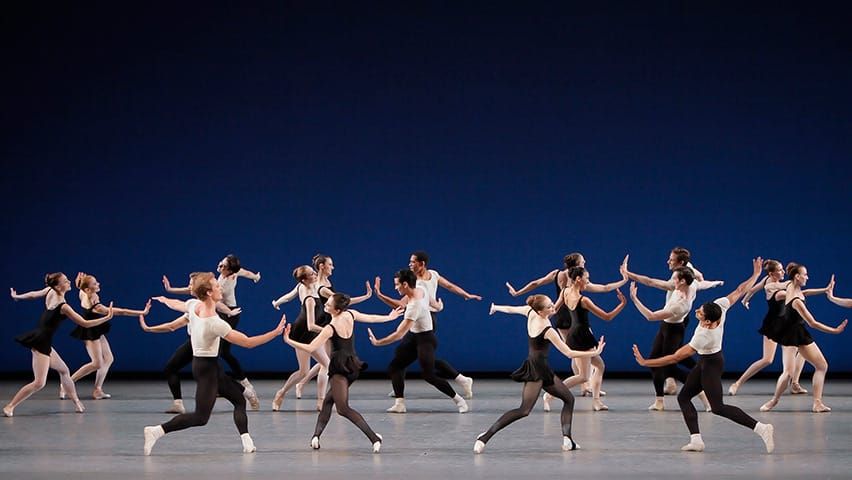
"Scotch Symphony", "Duo Concertant", "Sonatine", "Stravinsky Violin Concerto"
New York City Ballet
David H. Koch Theater
Lincoln Center
New York, New York
April 30, 2019
The most recent work on the all-Balanchine program was the 1975 "Sonatine" but all the dancers looked fresh and vibrant. Even "Scotch Symphony", that charming but illogical wish-mash of Romantic themes with kilted men switching effortlessly from menacing barriers to bouncy villagers and an illusive sylph morphing into a triumphant ballerina, shimmered. NYCB has returned to the cartoon Highland of the Horace Armistead designs, after a brief fling with Karin von Aroldingen's 2009 drab Expressionistic backdrop which cast such gloom over the chipper little ballet.
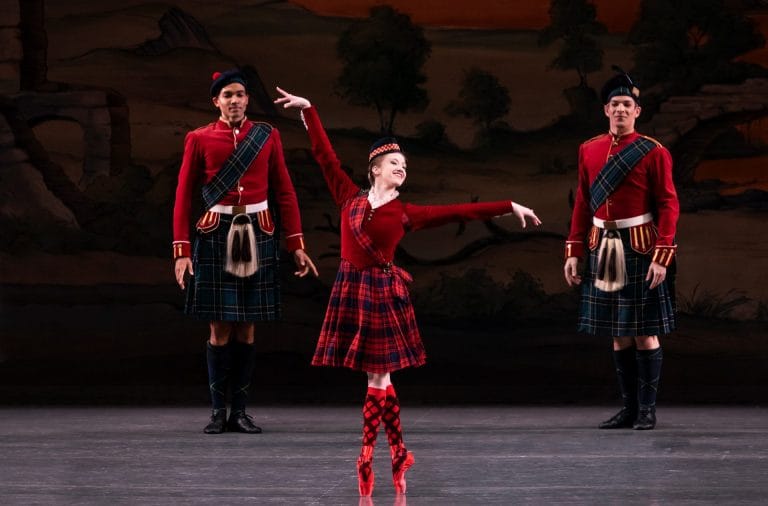
Baily Jones, a young corps dancer, was certainly chipper in her debut as the little Scotch girl (formerly known as Effie). She is a small, precise dancer with a sweet-natured charm; there was no saccharine coyness in her saucy little strut. The series of brisés have been danced more crisply but it was a confident and expansive debut.
Joseph Gordon also made his debut as the Jamesish character who manages to win the sylph. His series of turns with the rotating landings was tossed off with effortless aplomb and he was a dignified and generous partner. He does not have, though, the underlying sense of weighty melancholy and tearing that Balanchine's poets, even those few who end up with the girl, embody.
Ashley Bouder was a radiant sylph, dancing with a creamy power. Her forthright demeanor does not give the sylph the mysterious danger that her nineteenth century ancestor had, but Balanchine's sylph is a more domesticated vision, a woman who is happy to settle down in Brigadoon. The thrilling tosses though, with their echoes of the flying sylph of old, seem to have vanished in the mists, as the men set her carefully into Gordon's arms.
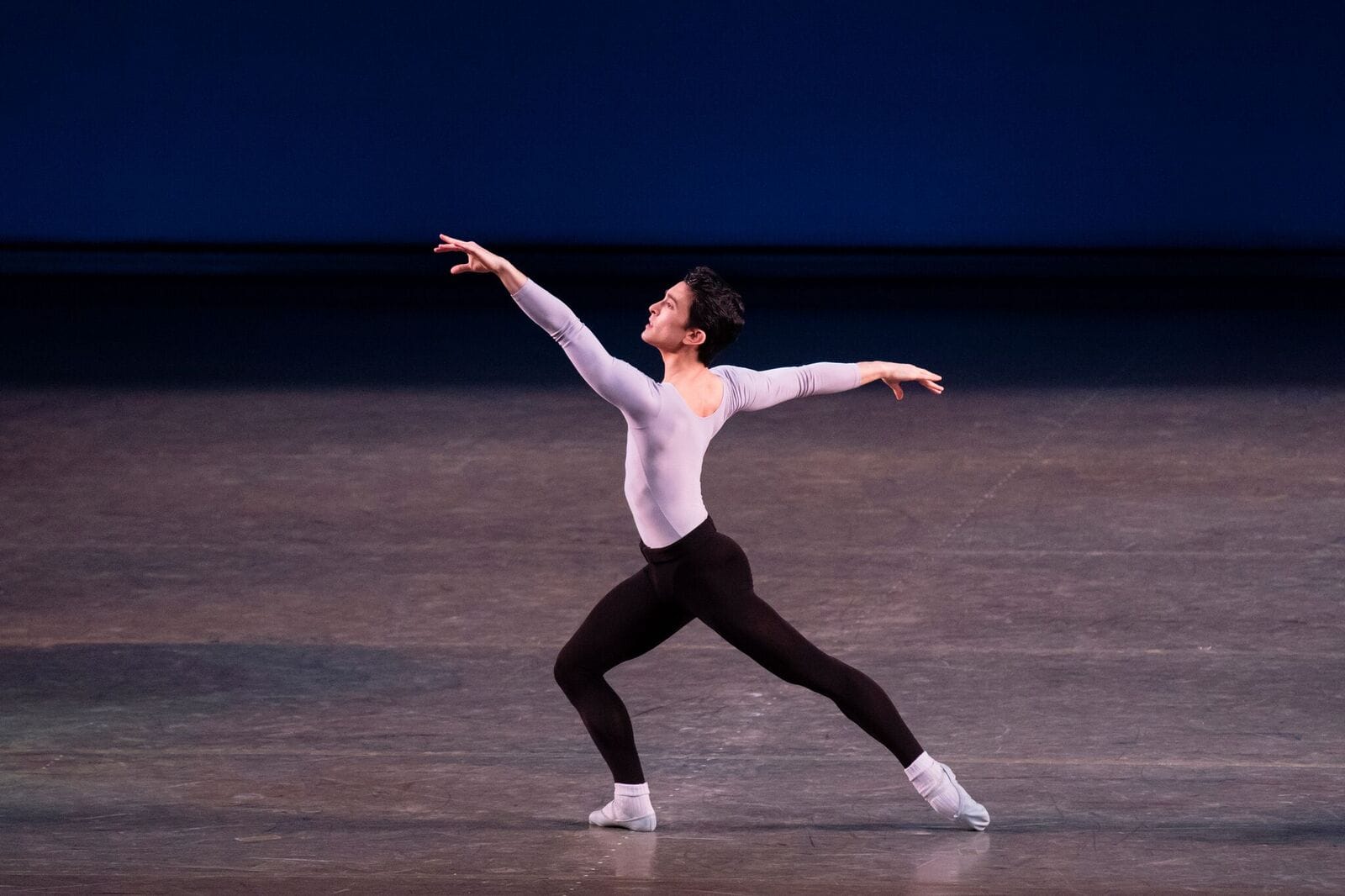
The two middle ballets, "Duo Concertant" and "Sonatine", were gentle counterpoints to the Scottish romp and both had on-stage musicians and a couple reacting to the music. "Duo Concertant", with Megan Fairchild and Anthony Huxley, is, in its quiet way, one of Balanchine's most unusual and challenging works, as the couple has to stand still through the first movement of the Stravinsky score, leaning against the piano and listening to the music without any choreographed artifice. Huxley was most impressive, with a casual air of being lost in the music. He seemed to invite the audience to listen with him. His dancing, too, had a natural flair, as he skimmed over the stage, buoyed by the music.
Fairchild also seemed to play with the music, emphasizing the contrast between the staccato moves and the more expansive lyrical passages. Their pas de deux had a breathless youthfulness which made the final movement, with the piercing violin and the dramatic spotlight, seem not so much a lament for a lost and elusive love but a farewell to youth.
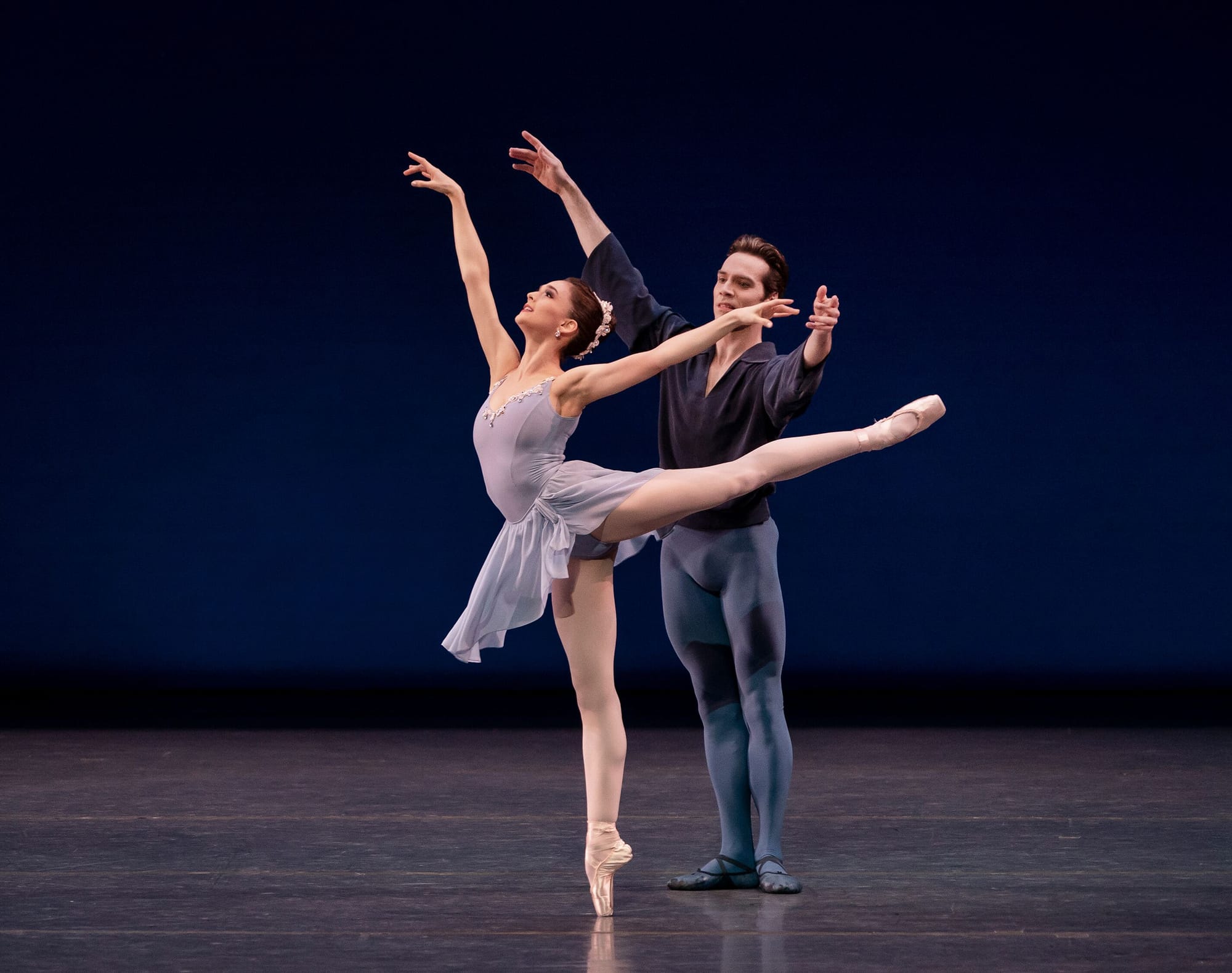
"Sonatine", set to Ravel, is a gentle meander through the music, a ballet of subtle perfume and somewhat forced dramatic highlights. Lauren Lovette, in her New York debut, looked elegant with her chic hairdo, a sophisticated vision. She tended to exhibit the steps, though, rather than loose herself in them, rather like a glamorous fashion model posing for the camera. But the poses were so beautiful and her control so impeccable the perfume was hardly missed. Gonzalo Garcia as her partner danced wit a plush musicality, even making some incongruous Slavic leg-slapping seem organic.
Maria Kowroski's backbends in "Stravinsky Violin Concerto" seemed organic too, as she poured her lean, luxurious body through the contortions of Aria I, though I did miss the angular spikiness of the original cast, as von Aroldingen gave the moves a fierce tension – Kowroski made it look so easy. She was ably supported by Adrian Danchig-Waring, whose quirky little moves seemed to evoke his very fine Phlegmatic. In Aria II Sterling Hyltin has a piquant vulnerability that Russell Janzen set off well. The two pas de deux are the heart of the ballet, but the opening movement was especially bracing, as the dancers rushed on, playing with the complex rhythms. The men looked notably well-rehearsed, as the corps tossed off a thrilling and precise series of pas de chats vole with a go-for-broke virtuosity and breathtaking musicality. The ballet may be over 45 years old, but performances like this are timeless.
Copyright © 2019 by Mary Cargill



