New York City Ballet

Star-cross'd

New York City Ballet

Star-cross'd


"Romeo + Juliet"
New York City Ballet
David H. Koch Theater
New York, New York
February 21, 2018
.


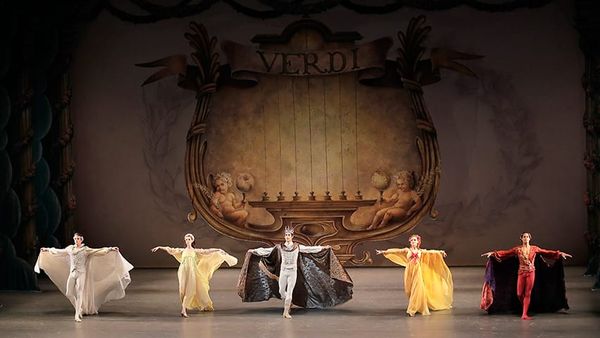
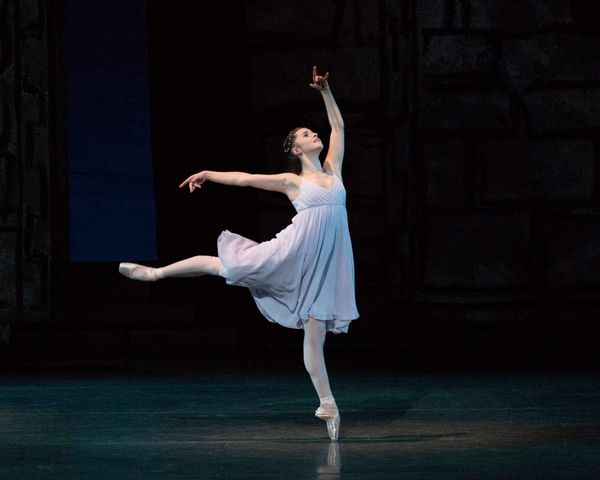
Like Tchaikovsky's final act music for "Swan Lake" Prokofiev's score for "Romeo and Juliet" has protected a number of choreographers by providing a rich emotional resonance no matter how lame the choreography. Fortunately for Peter Martins' "Romeo + Juliet" the balcony scene and suicide music always wraps the audience around the drama and his ballet, despite its repetitive, hyperactive steps and bizarre designs (Per

By Mary Cargill
What's New?

New York City Ballet

What's New?


"The Red Violin", "dance odyssey", "Russian Seasons"
New York City Ballet
David H. Koch Theater
New York, New York
February 1, 2018
.


New York City Ballet's New Combinations Fund, inspired by Balanchine's quote "There are no new steps, only new combi- nations", funds new choreography, and supported Peter Walker's new ballet "dance odyssey" which premiered between Peter Martins' "The Red Violin" and Alexei Ratmansky's "Russian Seasons". Both of those works were choreographed in 2006 as part of the Diamond Project,

By Mary Cargill
Beginning to End

New York City Ballet

Beginning to End


"Apollo", "Mozartiana", "Cortège Hongrois"
New York City Ballet
David H. Koch Theater
New York, New York
January 27, 2018, matinee
.


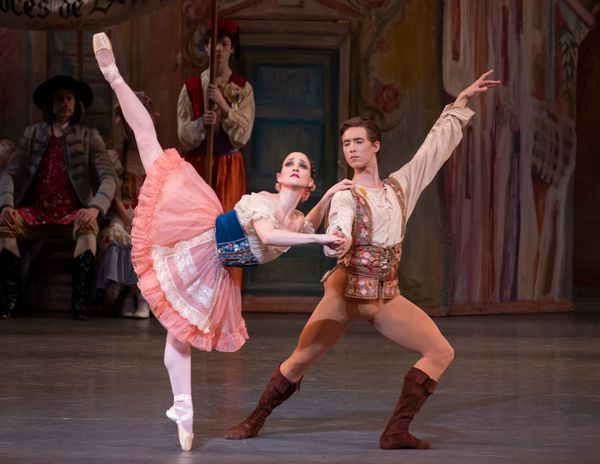
The all-Balanchine program began with "Apollo", the oldest Balanchine work danced by New York City ballet (though Balanchine did rework the 1928 ballet in 1979, stripping it of its Expressionistic prologue), followed by "Mozartiana", choreographed in 1981, his last major work.  It ended with the bon-bon "Cortège Hongrois" from 1973, with its generous helping of Petipa, a reminder of

By Mary Cargill
The Gold Standard

New York City Ballet

The Gold Standard


"The Nutcracker"
New York City Ballet
David H. Koch Theater
New York, New York
December 5, 2017
.


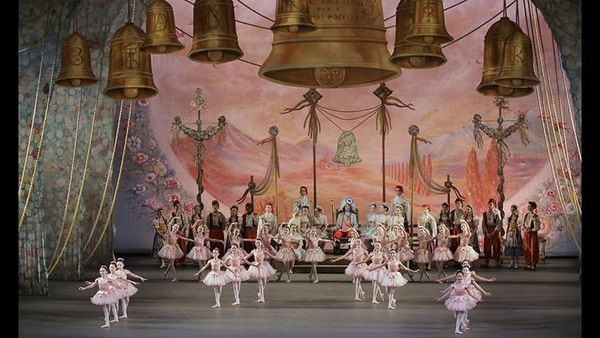
The enduring charm of Balanchine's "The Nutcracker" continues to light up the stage with its combination of the Maryinsky of his youth (the little Nutcracker's mime, the hoop dance, the floating arabesque trick, the snowflake's pom poms, and the magical tree that all came from the Russian version) and the more daring style of his own company (notably in the Dewdrop choreography).  

By Mary Cargill