Star-cross'd
"Romeo + Juliet"
New York City Ballet
David H. Koch Theater
New York, New York
February 21, 2018.
Like Tchaikovsky's final act music for "Swan Lake" Prokofiev's score for "Romeo and Juliet" has protected a number of choreographers by providing a rich emotional resonance no matter how lame the choreography. Fortunately for Peter Martins' "Romeo + Juliet" the balcony scene and suicide music always wraps the audience around the drama and his ballet, despite its repetitive, hyperactive steps and bizarre designs (Per Kirkeby's Verona appears to be a rest stop on some run-down section of the interstate), sells well. On Wednesday night the audience was rewarded with Indiana Woodward's impressive debut as Juliet.
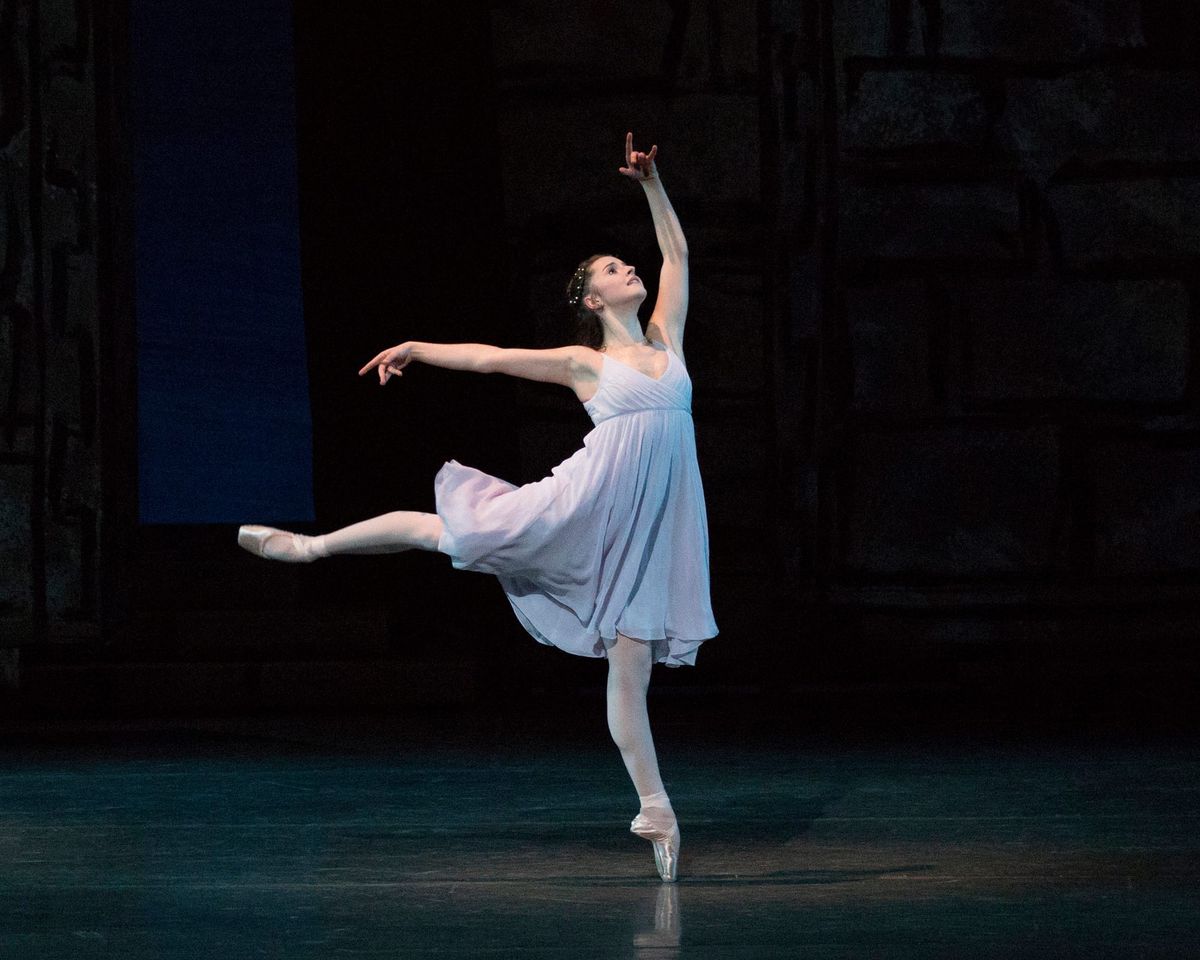
Woodward is a dark-eyed, expressive dancer with beautiful control and without any exaggerated mannerisms. Her sylph a few years ago was lively, individual, and ultimately heartbreaking. Unfortunately Martins' Juliet seems to be a child of ten going on eleven, and he has her skitter energetically and generically to and fro. (Why the noble and refined Paris of Andrew Scordato would be so smitten was a puzzle, since he seemed to be the only grownup in the ballet.) Martins gives his Juliet little time for growth or reflection, and has her instantly hurl herself towards Romeo, apparently thinking he would be a fine support on which to practice her arabesques, but Woodward gave her dancing as much nuance and sweetness as possible, pausing whenever she could to let her emotions register.
She was most effective in the latter part of the ballet, when the plot and Prokofiev's music demanded that she stop fidgeting. Her despair when Romeo had to leave her and her brief moment of joy when she saw him in the tomb were heartfelt, natural and extremely moving, complimenting rather than just using the music's emotions.
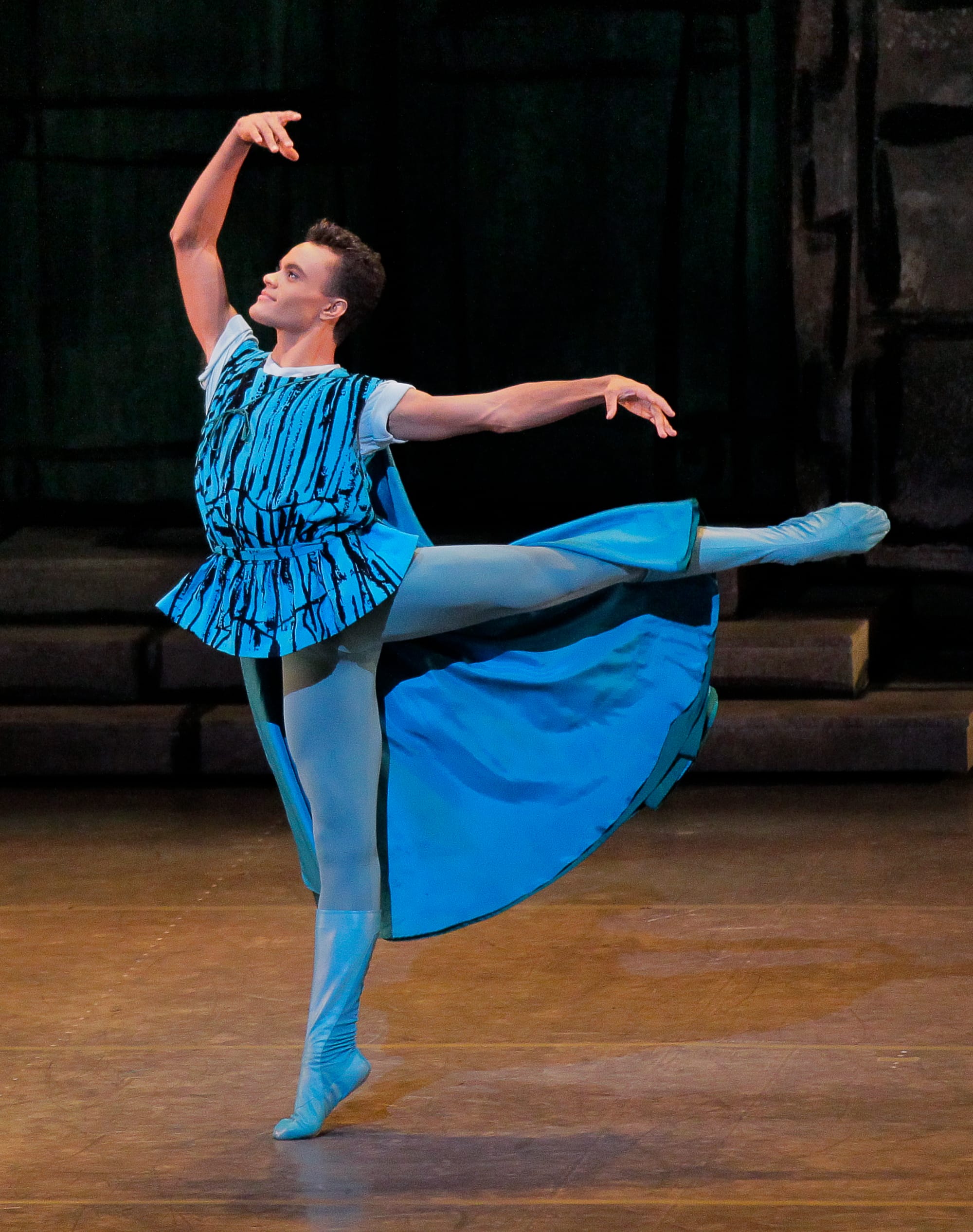
Taylor Stanley, her Romeo, is a smooth, elegant, and very limber dancer and his opening solo had some impressively pure shapes. Unfortunately, Martins has banished Rosaline, so Stanley was dancing in a vacuum – beautiful but inexpressive. (The bright turquoise costume did not help.) Stanley's calm, smooth demeanor made his Romeo a bit placid and his sudden rage after Mercutio's death (Martins has him repeatedly hack at Tybalt) seemed a bit cartoonish. He partnered Woodward well (there are a lot of upside down lifts) but there was little romantic connection between them. Romeo and Juliet as good chums may be sad, but it isn't tragic.
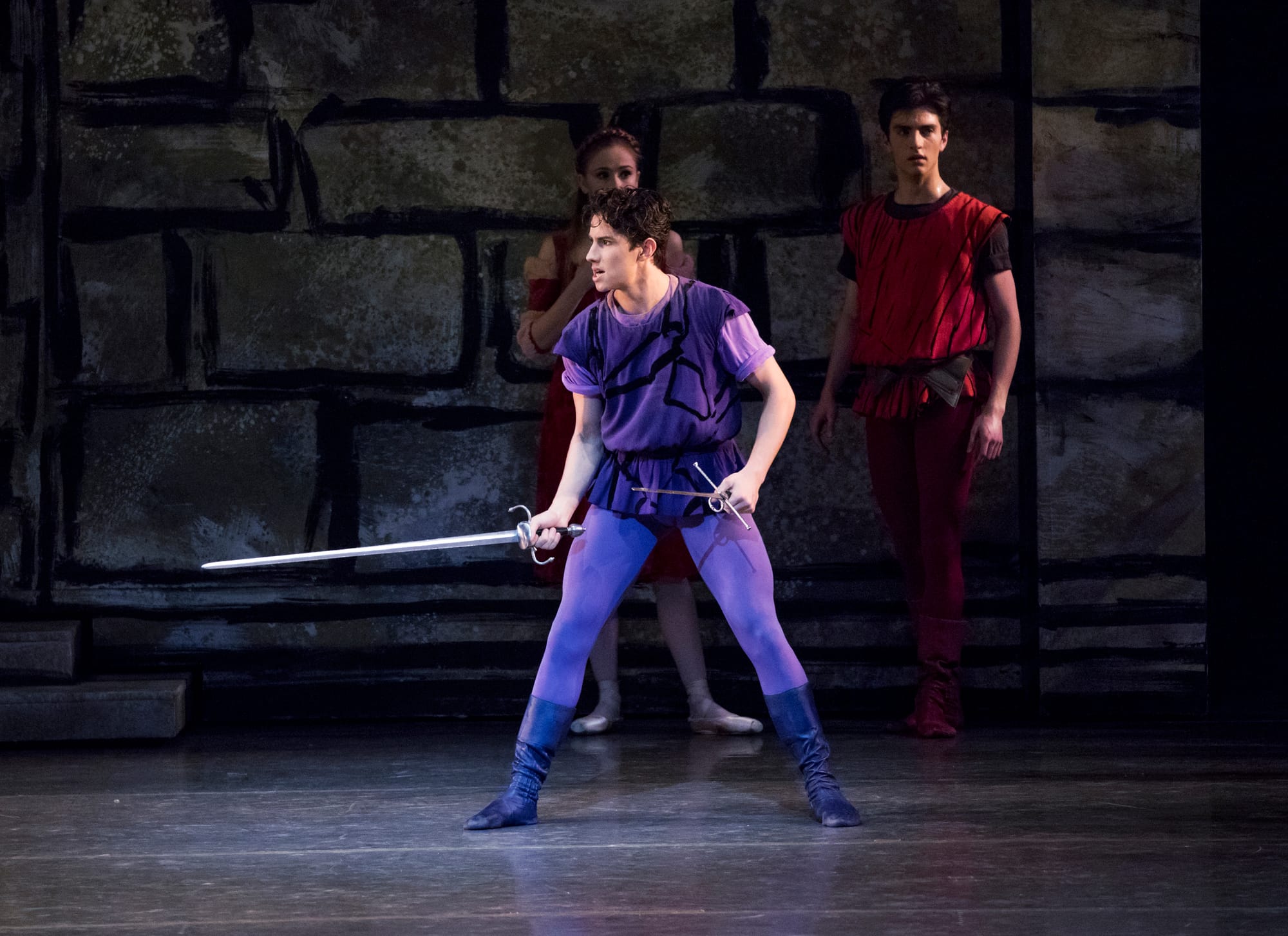
Romeo's male chums were Roman Mejia (debuting as Mercutio) and Christopher Grant (Benvolio). Grant, a young corps dancer, showed off a strong and elegant technique and a fine stage presence as he bounded through the many, many jumps and turns. Mejia has moved from apprentice to star, it seems, almost overnight. Mercutio complimented his sparking technique, as his sharp, clear beats seemed to carve through the air. He also gave the role as much weight and dignity as Martins' irritating little whippersnapper can have and his death scene, as he defied his fate, angrily pawing the air, was vivid, imaginative, and deeply moving; it was an astoundingly rich and mature performance, especially from someone who is barely old enough to drive.
Spartak Hoxha, another debut, danced Tybalt, Mercutio's killer. Hoxha was a bantam cock, prancing around looking for a fight, who wielded an impressive rapier. Unfortunately his bright yellow costume made him look like a giant bumblebee and his perpetual scowl made the noble (if quick-tempered) Tybalt into a one-note sourpuss. He led a band of fighters whose brightly colored outfits made the crowd scenes look as ominous and threatening as a bowl of gummy bears. But that music, and the few moments when Juliet could quit running and show some emotion, carried the story.
Copyright © 2018 by Mary Cargill



