The Gold Standard
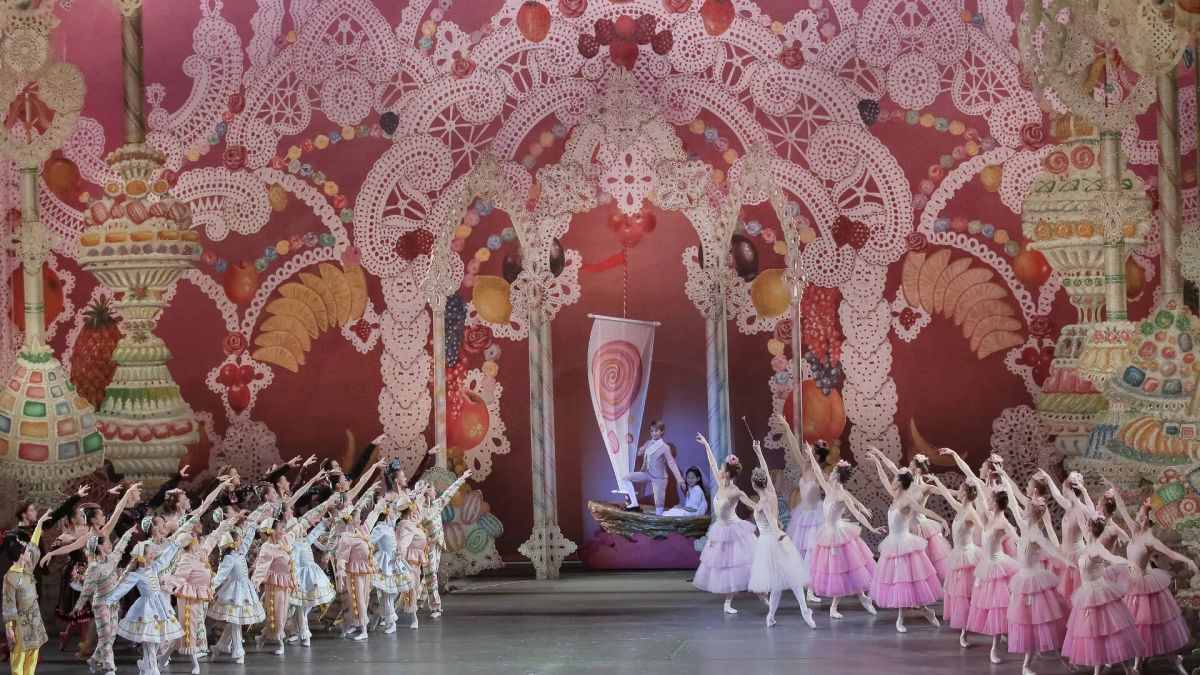
"The Nutcracker"
New York City Ballet
David H. Koch Theater
New York, New York
December 5, 2017.
The enduring charm of Balanchine's "The Nutcracker" continues to light up the stage with its combination of the Maryinsky of his youth (the little Nutcracker's mime, the hoop dance, the floating arabesque trick, the snowflake's pom poms, and the magical tree that all came from the Russian version) and the more daring style of his own company (notably in the Dewdrop choreography). Modern, though, only goes so far and Balanchine's "Nutcracker" is a glorious pre-Freudian homage to the innocent wonder of childhood.
Robert La Fosse, guesting with his old company, was a fun-loving and understanding Drosselmeier, and his brilliantly detailed portrait anchored the first act. Fosse's Drosselmeier was an eighteenth century dandy who had never forgotten the reality of childhood griefs. His delicate, almost finicky hands showed someone who wore invisible lace cuffs and carried an imaginary snuff box--indeed he did take a surreptitious sniff at the party, turning his back, literally on the present.
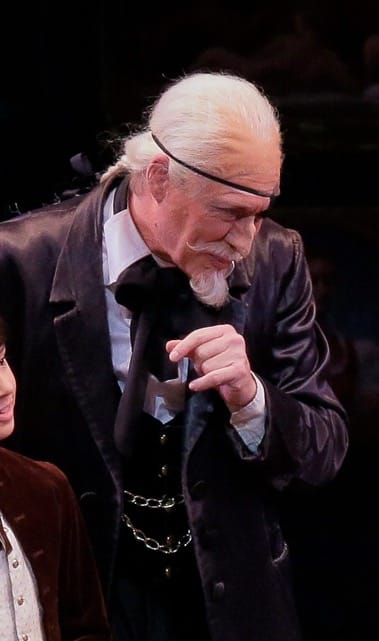
The gentle care and concern he showed while sneaking back to fix the Nutcracker doll, anticipating Marie's joy and wonder which Christmas morning would reveal the miracle was a perfect, uncondescending understanding of childhood's sorrows and joys. It was a rich and moving performance.
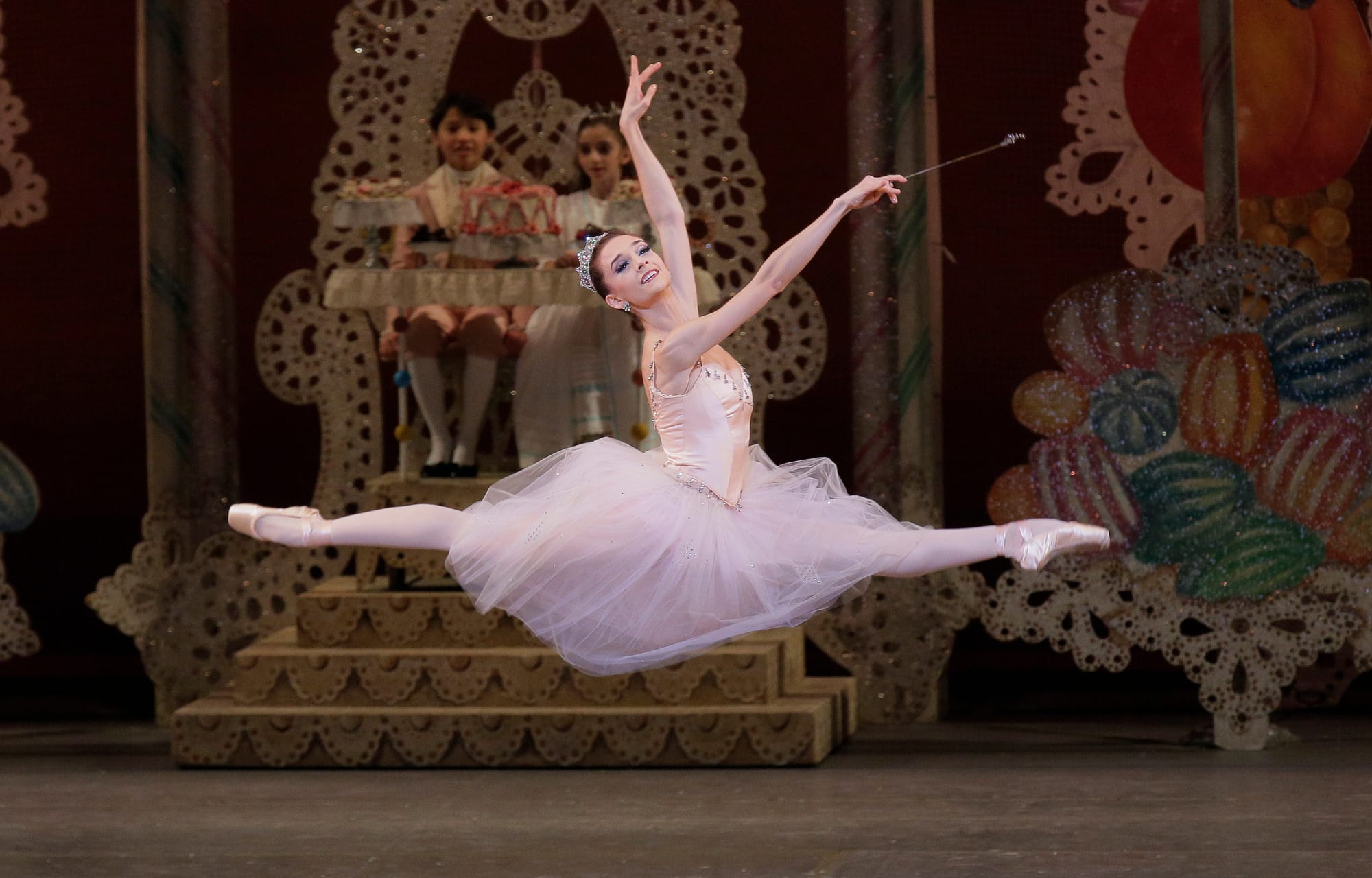
Lauren Lovette as the Sugarplum Fairy carried this warmth over to the second act and gave the impression of dancing her variation for the little white angels, acknowledging them with gracious and individual nods that included but were not directed to the audience. She danced with a crystalline purity, all serene arabesques and crisp phrasing and made that somewhat froufrou palace seem like the winter home of the Lilac Fairy.
Anthony Huxley as her anonymous cavalier was a bit short for her and he doesn't have the classic proportions that can give the brief role a timeless nobility, but both his dancing and his partnering had a real flair. Those running shoulder lifts were grand and fearless and he made a ravishingly beautiful moment of his slow descent to his knee as he was partnering Lovette, looking as if he were bowing to the most beautiful thing in the world.
The many children were, as always, well-rehearsed and well-coached, performing without a hint of precocious cuteness. Marie (Marina Kashvili) was a dark-eyed beauty who showed a touching concern for her broken doll and the Nutcracker (Tenzin Niles) moved with a dignified seriousness and gave his show-stopping mime scene time to register.
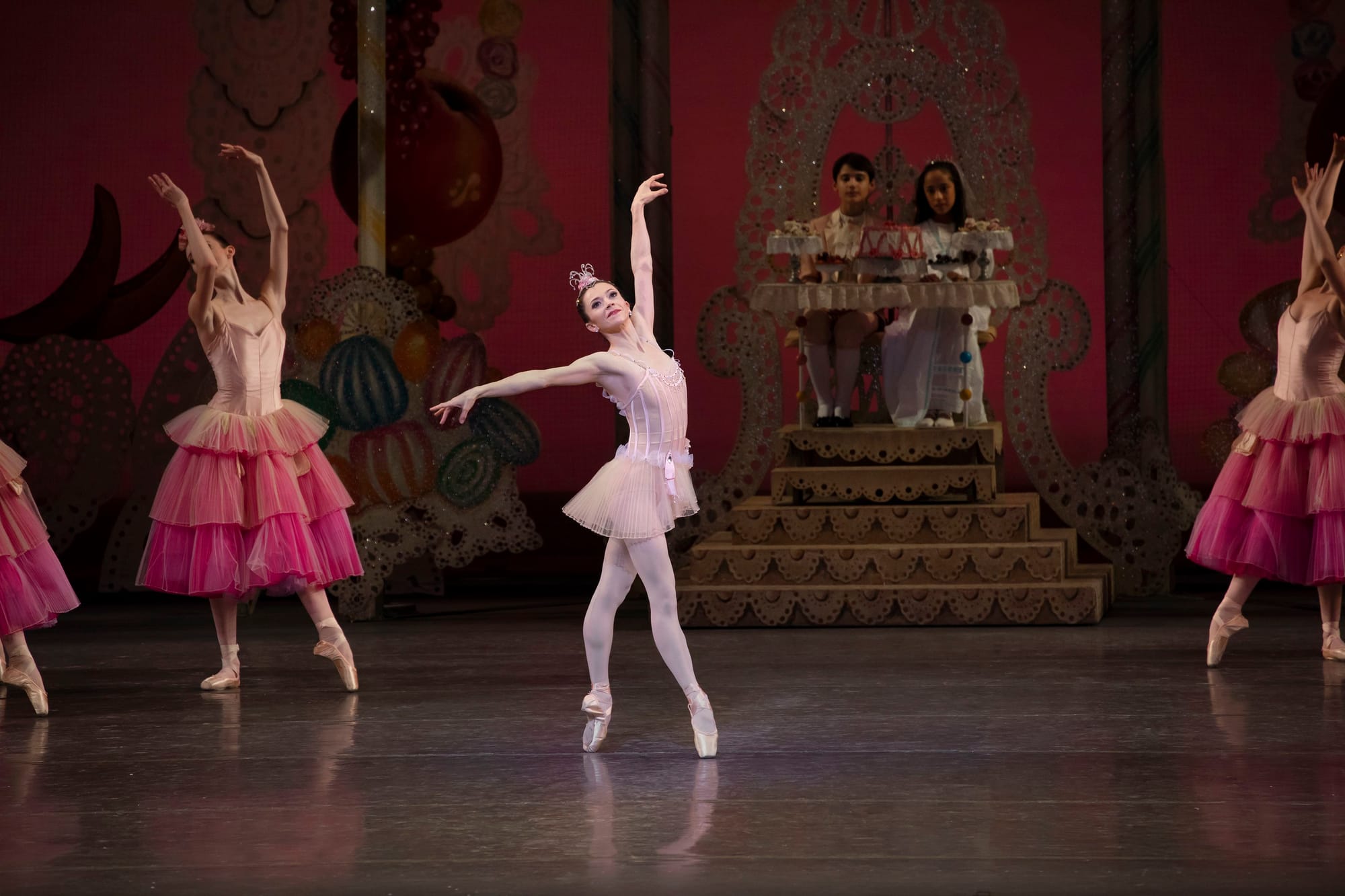
The quality of the supporting roles varied, but "Nutcracker" is really dancer-proof. Daniel Ulbricht as Candy Cane made the most of his brief appearance, combining technical thrills with an open-hearted generosity. He made it seem as if there were nothing in the world more wonderful than to dance those steps for that audience, and he certainly danced those steps, throwing in double twirls of the hoop with a confident musicality, while seeming to float into his positions. Megan Fairchild was a darting, energetic Dewdrop who seemed to be pulled by the melody, bending back into the music. Despite an occasionally constricted upper body, her dancing had a wonderful stretchiness that combined abandon with clarity.
Copyright © 2017 by Mary Cargill