Beginning to End
"Apollo", "Mozartiana", "Cortège Hongrois"
New York City Ballet
David H. Koch Theater
New York, New York
January 27, 2018, matinee.
The all-Balanchine program began with "Apollo", the oldest Balanchine work danced by New York City ballet (though Balanchine did rework the 1928 ballet in 1979, stripping it of its Expressionistic prologue), followed by "Mozartiana", choreographed in 1981, his last major work. It ended with the bon-bon "Cortège Hongrois" from 1973, with its generous helping of Petipa, a reminder of Balanchine's beginnings.
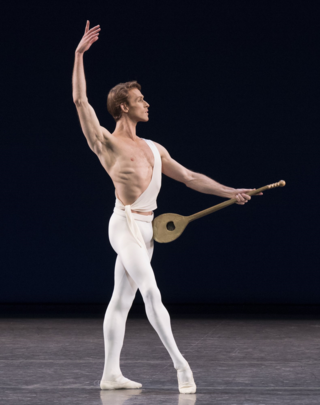
Adrian Danchig-Waring's raw and energetic Apollo was a useful reminder that Balanchine often said that the role was demi-caractère. Danchig-Waring was not born a god, but was on a physical and emotional journey, developing both his strength (he was not afraid to look awkward while he learned how to control his movements) and his taste, as he evaluated the muses. His dancing had power mixed with tentativeness; I especially like his soccer kicks, low and almost hesitant at first, and then exploding as his confidence grew. The magical call to Olympus, unfortunately, lacked some of the transcendent glory it can have, as he looked out at the audience without transforming the atmosphere. The final sunburst pose, though, showed a calm magnificence.
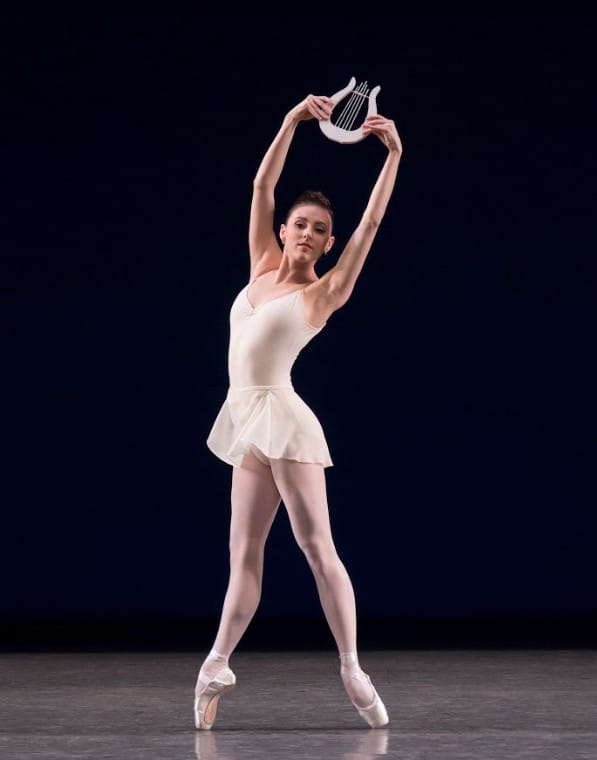
Tiler Peck, his Terpsichore, is smaller and more compact that the lofty goddesses often cast, but the role was choreographed for Alexandra Danilova, who certainly was not tall, and Peck didn't sweep through the poses but danced the fleet little steps with a serene confidence and joy. Her Terpsichore was young and playful, which made the perfectly balanced swimming motif look like a declaration and not a gimmick. The pas de deux had a touching tenderness, and they supported each other.
In her debut Indiana Woodward, another compact, juicy dancer, was an appealingly eager and charming Calliope. Ashly Isaacs, as Polyhymnia, danced with a gorgeous flow, though she did grit her way through those tricky turns.
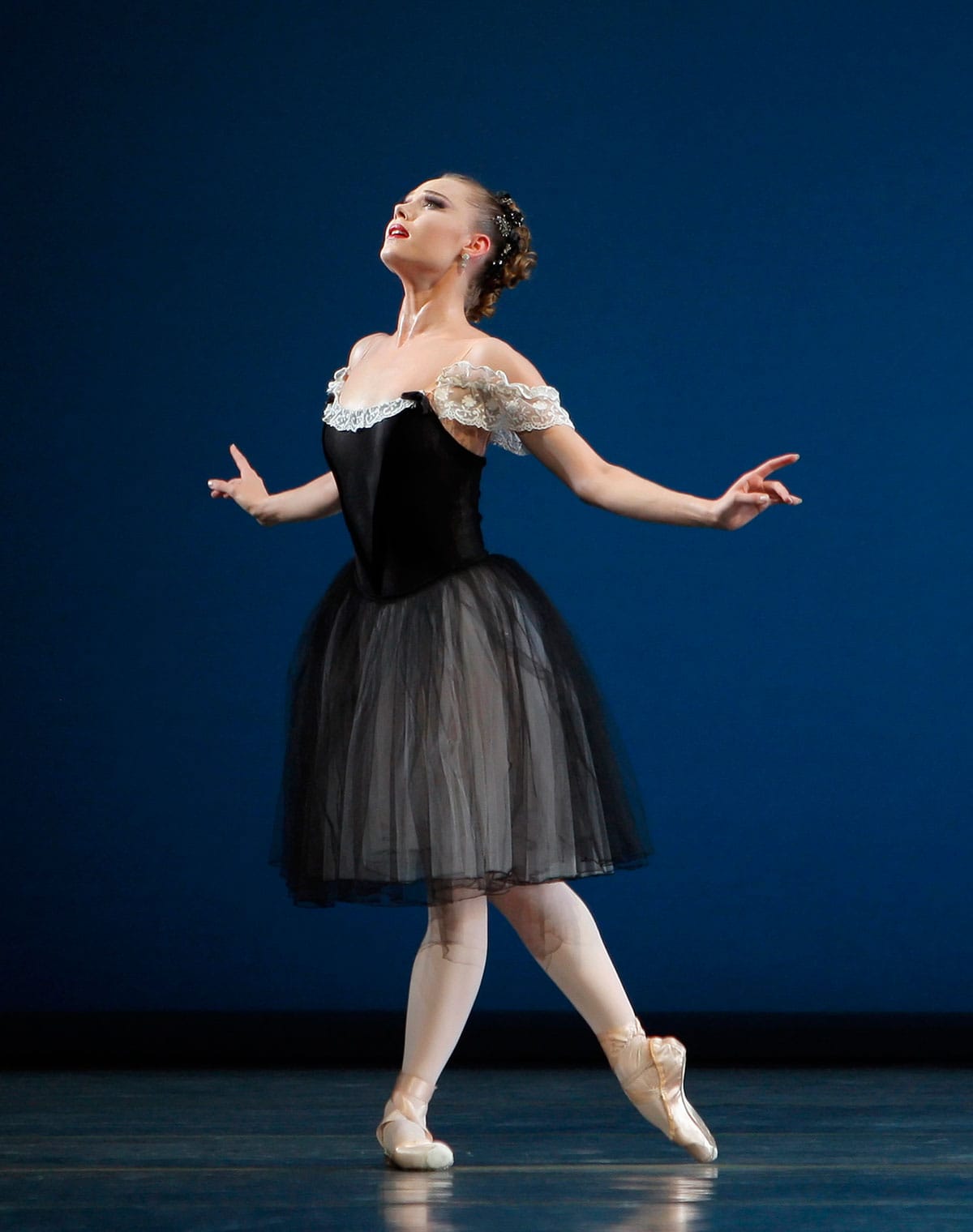
Sara Mearns has no need to grit through anything and in "Mozartiana" she gave the opening Preghiera an unusual fervor. Most dancers use the Farrell approach, a spiritual vision floating through the bourrées with a timeless serenity. Mearns pressed her hands to guard those four young dancers. It was unique and richly moving.
However the Theme et Variations, where she and her partner (Chase Finlay) trade solos, requires sparkling wit and petit allegro, attributes which that magnificent dancer does not possess in abundance. Her solos were collections of unconnected steps, and she did not seem able to capture their pulse.
Finlay dances his ferocious beats with aplomb, though some of the turns were a bit shaky. He seemed to be concentrating on getting through the steps, which no one after Ib Andersen (on whom it was made) has been able to dance with Andersen's effortless, piquant charm. There was little spiritual connection between Mearns and Finlay, and their pas de deux seemed like a polite, elegant exercise.
Troy Schumacher's Gigue was polite and elegant, and he danced with a witty ease, making the quick little steps flow together. He didn't emphasize the positions -- there were no "I'm so cute" pauses to show off his flexed feet. It was a gracious and generous performance, as he danced as if he were hearing some secret harpsichord playing in the distance and he wished to share the music with the audience.
Grace and generosity are hallmarks of "Cortège Hongrois", as the dancers pour on in what seems to be a complete compendium of Petipa finales, set to Glazounov's luscious music. Ashley Bouder made her debut as the dancer formerly known as Raymonda; Andrew Veyette was also scheduled for his debut but Russell Janzen was a late substitute, so they may not have had an abundance of rehearsal time. Bouder, of course, could probably dance the most complicated pas de deux on her own, but Janzen was a deferential and gallant partner. Bouder gave the pas de deux a clear and cohesive emotional arc, somewhat shy at the beginning, then gradually warming up and finishing triumphantly, if a bit too emphatically. Her final flourish looked as if she were beating an invisible kettle drum so loudly all of Lincoln Center could hear her.
Unity Phelan (in her debut) and Sean Suozzi led the character contingent, Suozzi with a swagger and flair and Phelan with a refined delicacy that contradicted the ferocious choreography. Her airy dancing, full of loose-jointed limbs and light landings, had no tinge of the paprika and campfires that Suozzi's dancing, with his solid leaps and panache (without a hint of camp) had. The character corps should have watched him stride on the stage as if he owned it, but instead they shuffled on as if they were wearing flip-flops. But the lilt of that folk-inflected music creates its own atmosphere and a visit to Balanchine's Hungarian fantasy is always a fine way to end a performance.
Copyright © 2018 by Mary Cargill



