What's New?
"The Red Violin", "dance odyssey", "Russian Seasons"
New York City Ballet
David H. Koch Theater
New York, New York
February 1, 2018.
New York City Ballet's New Combinations Fund, inspired by Balanchine's quote "There are no new steps, only new combi- nations", funds new choreography, and supported Peter Walker's new ballet "dance odyssey" which premiered between Peter Martins' "The Red Violin" and Alexei Ratmansky's "Russian Seasons". Both of those works were choreographed in 2006 as part of the Diamond Project, an earlier effort to seed new choreography. Few of its projects had staying power and "The Red Violin" should have remained in its case.
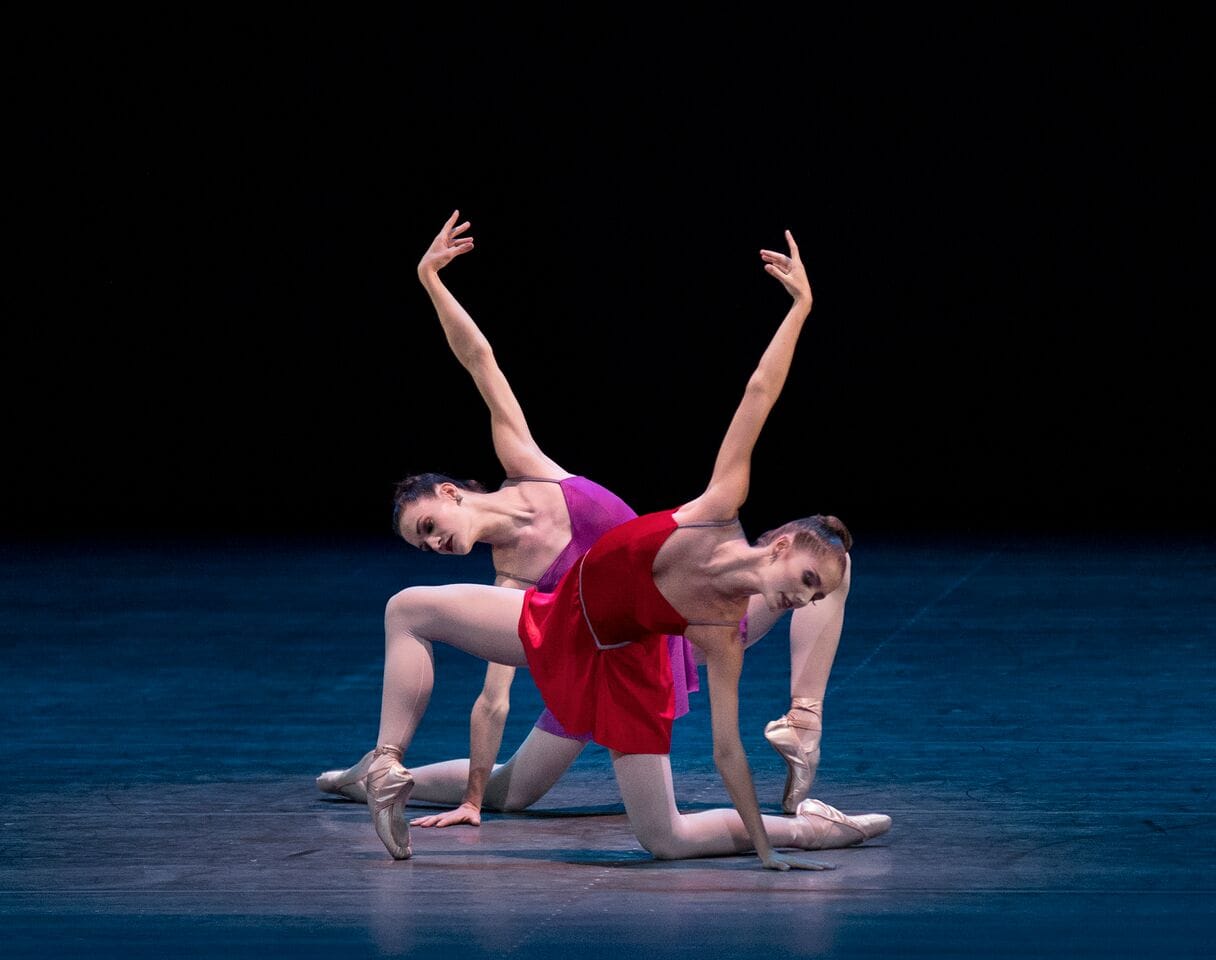
The music, John Corigliano's "Concerto for Violin and Orchestra", is based on his film score for "The Red Violin". (Other than Unity Phelan's red costume, there is no allusion to the film.) The opening had a haunting, mysterious atmosphere, as the music shimmers with a "Firebird" feel and four men (Chase Finlay, Zachary Catanzaro, Harrison Coll, and Joseph Gordon, all in grey) follow each other on, repeating slow, expansive shapes, reaching up and then arching into rich backbends. But then the women appear (Unity Phelan, Megan LeCrone, Emilie Garrity, and Lauren King) and the two main couples (Phelan with Finlay and LeCrone with Catanzaro) spend the rest of the ballet locked in overly complicated, emotionally vacant steps full of grappling and groping with lots of exposed crotches. There was no difference in texture or mood between the various pas de deux for the two couples, who tended to repeat each others moves with no hint of motive or characterization, and the pas de deux were so geometrically complex the partners could barely make eye contact. Exertion is not emotion and movement is not meaning.
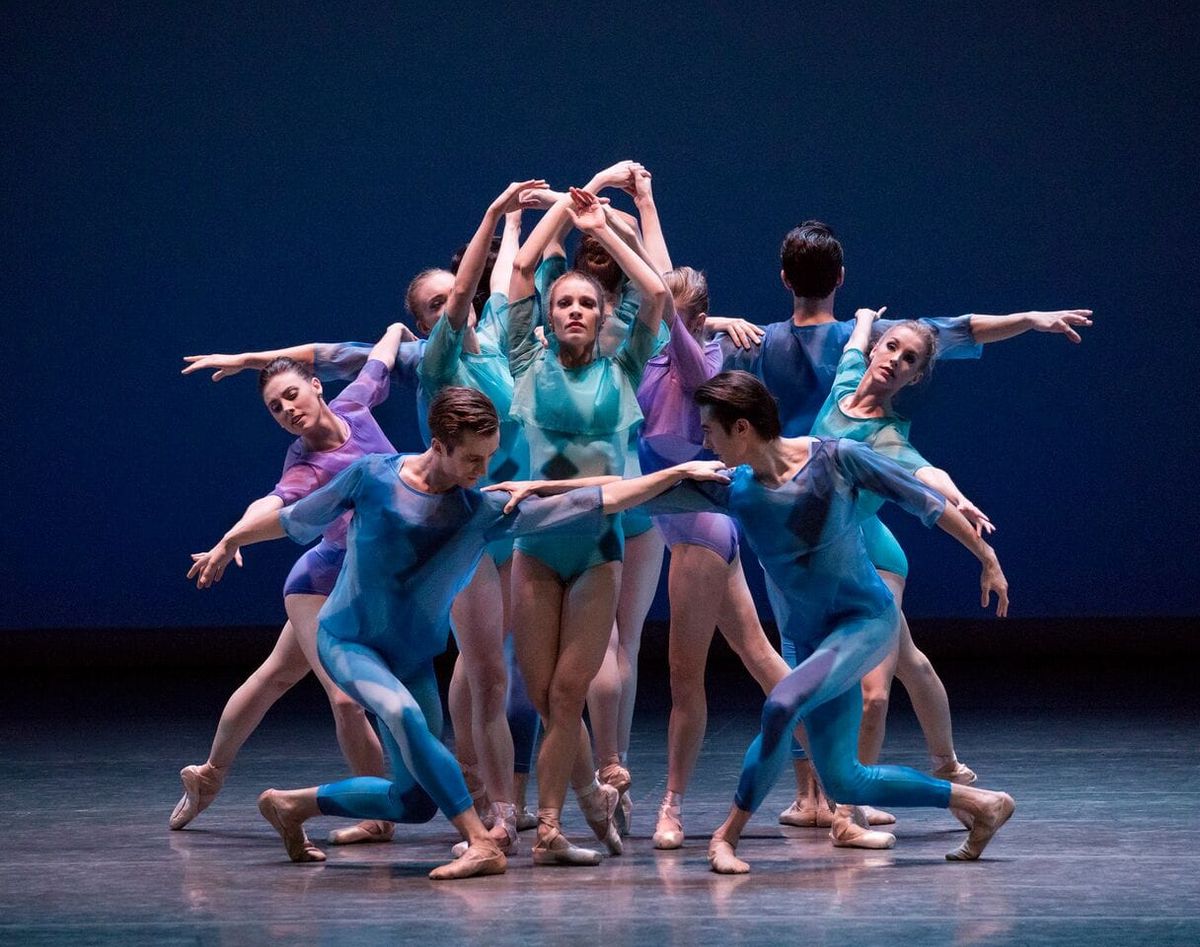
Peter Walker's "dance odyssey" had some of the same issues (as well as the irritating "I'm too cool for school" tic of ignoring capital letters). His work, to selections of sweet-natured music by the British composer Oliver Davis, also had some fine moments of pure joy. It began playfully, with a brief light show as colored foot lights beamed on the closed curtain. The lighting (by Mark Stanley) was also imaginative, with a wavy horizontal neon light bisecting the backdrop as if dunes of sand here silhouetted against the sea. (This hint of the ocean was the only tenuous connection to Odysseus.)
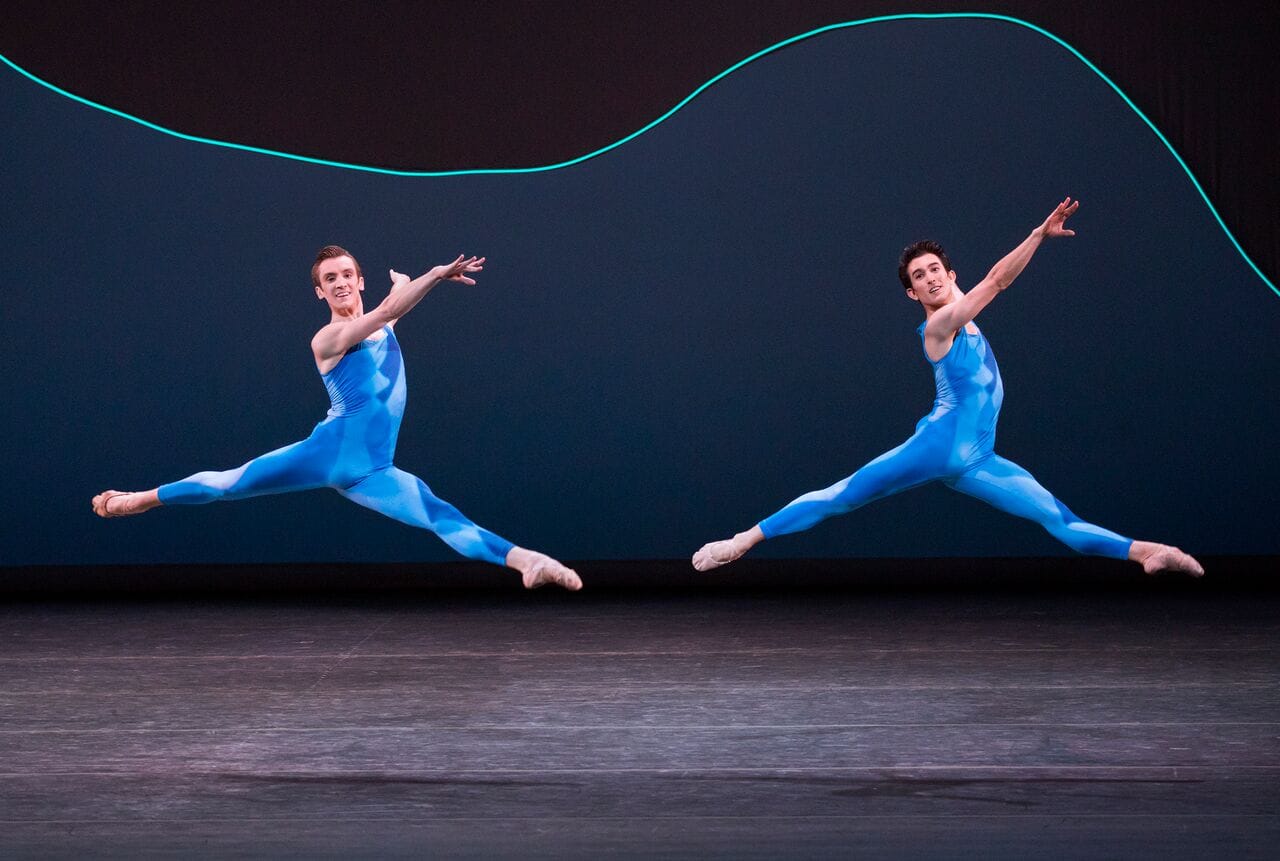
The dancers' colorful costumes (by Marc Happel), which Walker frequently mingled together very effectively, had a beachy feel, as the women wore swimming suit-like leotards and the men wore equally bright body suits. Unfortunately, the women's combination of bare legs and point shoes was an uneasy mixture of naturalism and artifice, and bare skin is not flattered by stage lighting. Some of the choreography, though, was extremely flattering, especially the perky little duet for the two male soloists (Devin Alberda and Anthony Huxley), who seemed to toss their steps back and forth. Lauren King, sunny in yellow, also stood out for her joyful bounce.
Like Martins' violin, Walker had two main couples (Ashley Laracey with Adrian Danchig-Waring and Tiler Peck with Zachary Catanzaro); they danced energetically but rather generically. There were a number of complicated lifts punctuated by fussy little steps which seemed to float above the music without enriching it. There was also a repeated motif of the men swinging the women's' legs forward and then hoisting them backwards as if the ladies had no wills of their own. Despite Laracey donning a purple chiffon skirt and ending the ballet rather abruptly with some shimmering bourrées, Walker didn't really differentiate between the two couples, and the ballet, while cheerful and quite pretty, revealed little about his abundantly talented and distinctive dancers.
"Russian Seasons" is another plotless work, but Ratmansky used choreography to reveal characters, not just shapes (though his shapes were powerful and arresting). The music, by the modern Ukrainian composer Leonid Desyatnikov, combines aspects of Russian folk songs, the Eastern Orthodox liturgy, and Vivaldi's "The Four Seasons". It is a shame the program can't include the texts of the songs, but the piercing, mournful soprano of Veronica Mitina made the gritty endurance and raucous joy of the eternal Russian peasant both immediate and timeless.
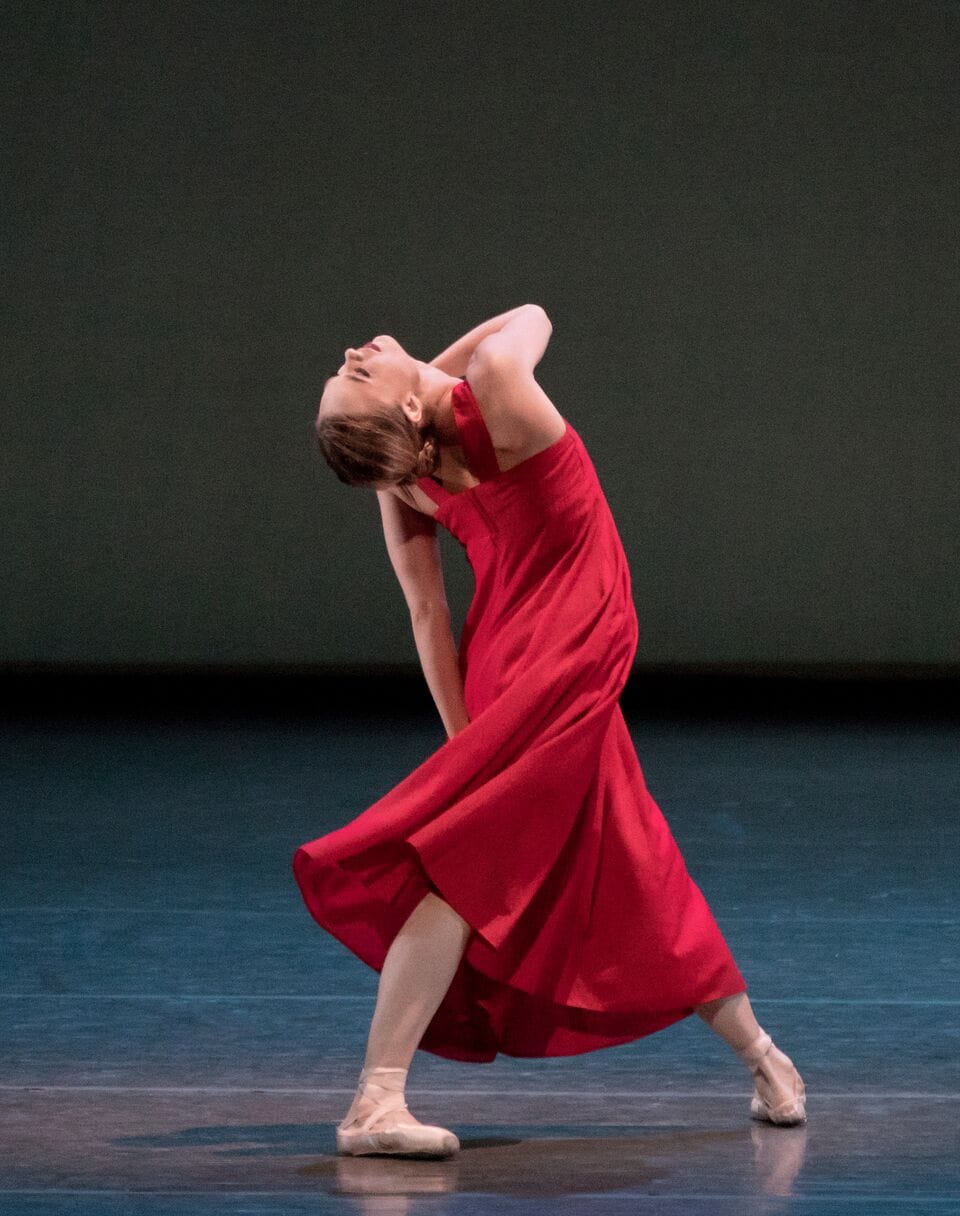
Jared Angle, in orange, led the group with a natural authority, dancing with a smooth and vivid weightiness. Maria Kowrowski, in her debut, was his partner; her long limber line gave her solo a plangent, elegiac feel. They gave the final moments, as they reappeared in etherial white while the soprano repeated "Allelujah", a mysterious serenity and comfort; there is peace and rest, it seemed, if only in the grave. Sara Means, in red, had no peace or rest as she danced a fierce and wild solo, raging against her fate, this grand and powerful dancer at her best. Though we were in the land of "Les Noces", not everyone had such a grim prognosis, and the cast, particularly a luscious and expansive Abi Stafford, got their fair share of happiness. This is a work that reveals its secrets slowly and each time I see it, the richer it appears; depth, understanding, and imagination may not be new but they are a welcome combination.
Copyright © 2018 by Mary Cargill



