Working Hard
"Petal", "Petite Mort", "Paquita"
American Ballet Theatre
David H. Koch Theater
New York, NY
October 22, 2026
ABT’s optimistically named “Fresh Visions and Timeless Classics” program included ABT’s first performances of Helen Pickett’s “Petal”, originally choreographed in 2008 for the Aspen/Santa Fe Ballet, Jiří Kylián’s “Petite Mort”, first danced in 1991 by the Nederlands Dans Theater, and a revival of Natalia Makarova’s 1983 staging for ABT of the final act of Petipa’s “Paquita”. 1991 and 2008 are hardly fresh, and Makarova’s staging was based on 20th century Soviet productions, which are hardly timeless. The dancing, though, was fresh, committed, and invigorating.
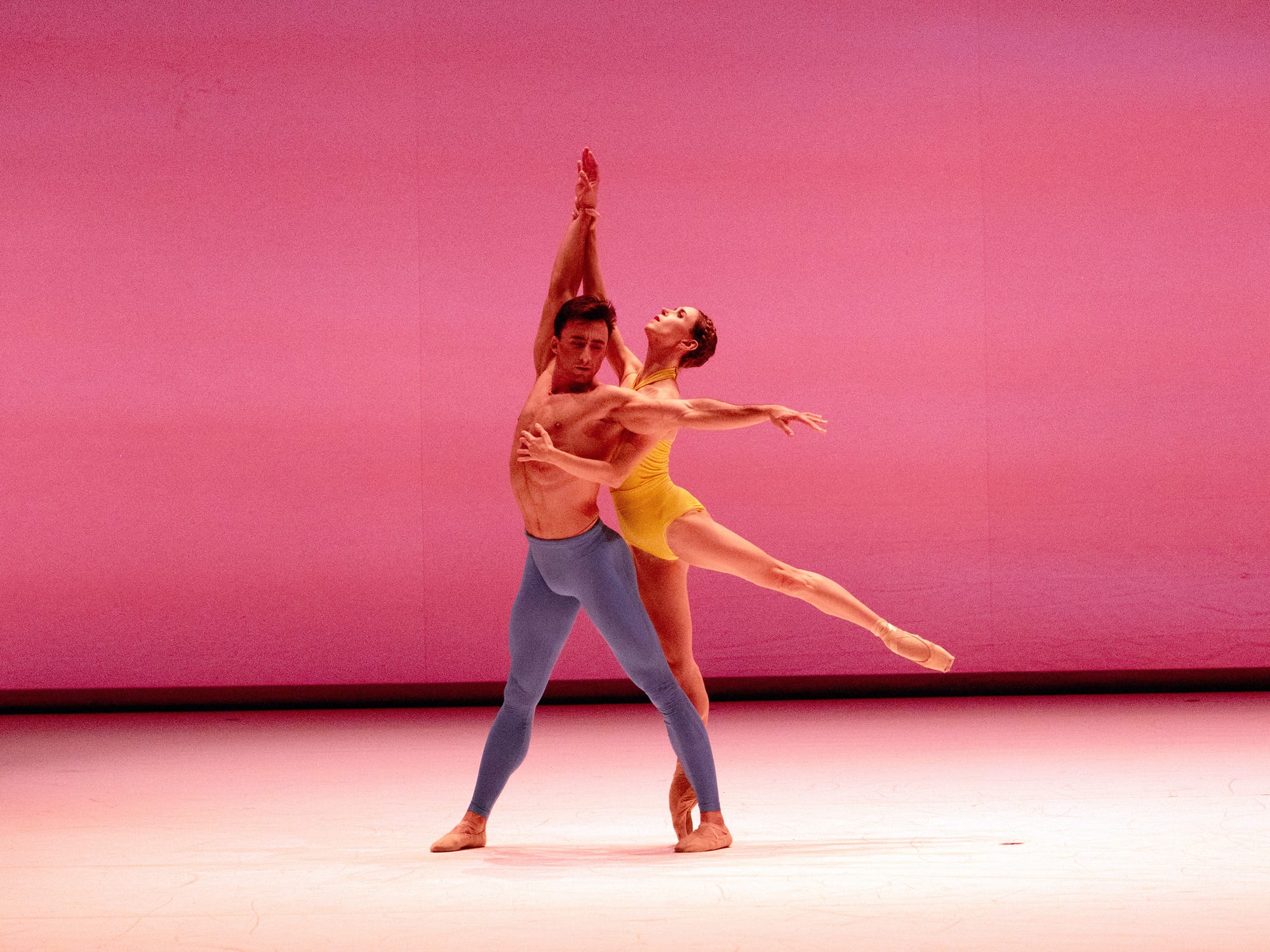
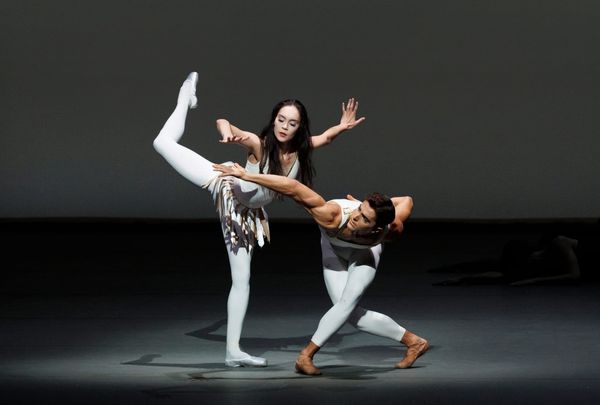
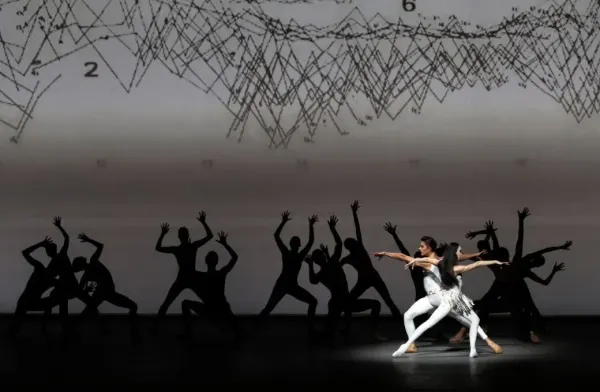
“Petal”, to very loud recorded music by Thomas Montgomery Newman and Philip Glass, had four couples (Skyler Brandt with Carlos Gonzales, Breanne Granlund with Sung Woo Han, Etsy McBride with Melvin Lawovi, and Olivia Tweedy with Alejandro Valera Outlaw), the women in bright yellow leotards which resembled 1950’s bathing suits and the shirtless men in turquoise trousers dancing in front of a brightly yellow, mellowing to pink, background. Skyler Brandt with a blank expression opened the work, dancing with squiggly, stop and start precision, her arms and torso undulating erratically. This fast, clipped choreography, with dramatic, crotch-exposing extensions, sudden explosive moves, waving arms, slides on point, and slouchy, can’t-be-bothered walks on and off was repeated by the rest of the cast, complete with blank expressions.
The cast burst out in solos, couples, and group dances with youthful enthusiasm, though there were a few hints of darkness, especially in the stylized aggression shown by Gonzalez and Han who seemed to be fighting over Granlund. The women, though, held their own, and Granlund broke free in a frenzy, to be followed by Brandt and Gonzalez having their own problems. Things did work out for everyone the end, though, with a number of vigorous pas de chats. It was a dance as workout, with little real development, just fast, exacting moves, performed expertly.
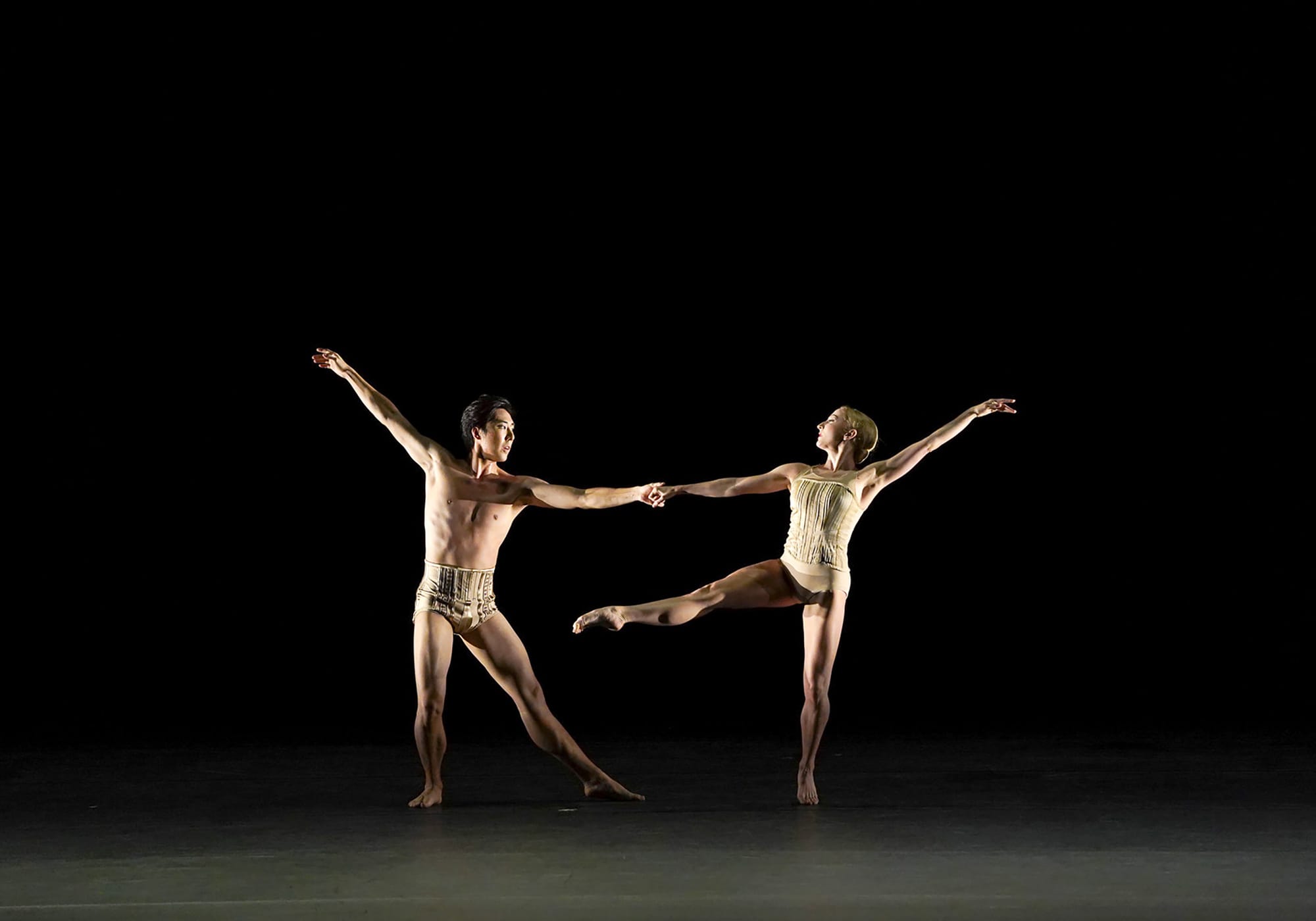
“Petite Mort”, set somewhat uncomfortably to Mozart, the familiar meltingly romantic Adagio from Piano Concerto No. 23 and Andante from Piano Concerto No. 21, has six barefoot couples wearing very little. It began silently in the dark as the six men maneuvered their rapiers, slashing the air or prancing around like ghosts of eighteenth-century drum majors, the bronze lighting gleaming on their blades; a striking picture.
Once the Mozart began the men deployed a scene-changing billowing silky curtain, revealing the six women encased in carapaces of black plastic panniered dresses, which they subsequently entered and exited at various times. These dresses seemed to have minds of their own, as they occasionally circled the stage in their own private dance. The rapiers, elaborate shape of the dresses, and the hints of laced corsets in the costumes, not to mention the Mozart music, suggested Mozart’s time, but the choreography was aggressively modern, with the vocabulary’s 180° legs, spidery arms, and complicated lifts. The heart of the ballet was a series of pas de deux which were paradoxically both anatomical and steamy
The dancers (Léa Fleytoux with Jacob Clerico, Betsy McBride with Melvin Lawovi, Breanne Granlund with Sung Woo Han, Yoon Jung Seo with Herman Cornejo, Olivia Tweedy with Andrew Robare, and Sierra Armstrong with Jarod Curley) dove into the choreography. Granlund danced with a notable fierceness, picking through her spiky choreography, Cornejo was charisma incarnate, and Armstrong and Curley gave the final pas de deux a dramatic intensity.
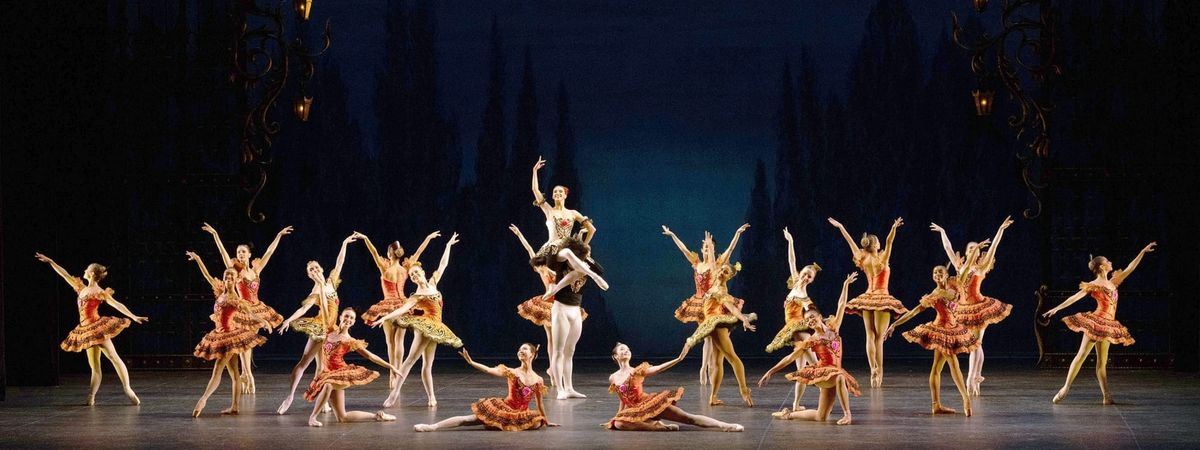
There was little dramatic intensity in the colorful, cheerful “Paquita” which used José Varona’s the bright orange costumes for the corps (the leads, Devon Teuscher and Aran Bell were in elegant white) and simple but effective sets (a curtain and some chandeliers) from ABT’s 1995 version. Ballet archaeology is a somewhat arcane and nebulous endeavor, but, with Ratmansky’s excavation of the historical notations which informed his recent New York City Ballet version of “Paquita’s” finale, it is almost inevitable. The corps formations, with their playful mixture of eight, four, and two dancers bounding on and off in glorious symmetry looked similar, though ABT’s dancers made a bit of a distracting clatter. The solos, the heart the work, were very different. Makarova’s twentieth-century Russian background showed, and ABT’s solos looked difficult and at times awkward and somewhat unmusical.
Madison Brown, despite some lovely moments, had trouble with the Italian fouettés, which she attacked enthusiastically but which came unstuck towards the end. Ingrid Thoms had better luck with her solo, with the little sweeping footwork and wafting hands; she got through the series of turns into arabesque, though it did look somewhat aggressively difficult. So did Camila Ferrera’s solo, with its athletic diagonal of cabrioles into turns. Elizabeth Beyer looked strong and bold in her jumping solo.
Teuscher had a cool elegance as the heroine, and gave her harp solo an air of refined mystery. The apparently inevitable fouetté coda (any ballerina purporting to be Spanish must show them off, I guess) was astoundingly solid, with fast, secure singles and doubles. Bell was a gracious partner, and his solo seemed to be an amalgam of showy jumps; he seemed a bit heavy, though he gave the barrel turns and energetic flourish. But there was a slight metallic air to the work, making it seem like a collection of steps rather than a lighthearted celebration of beauty.
© 2026 Mary Cargill