To Break a Heart
“Oscar”
The Australian Ballet
New York City Center
October 11, 2026 (matinee)
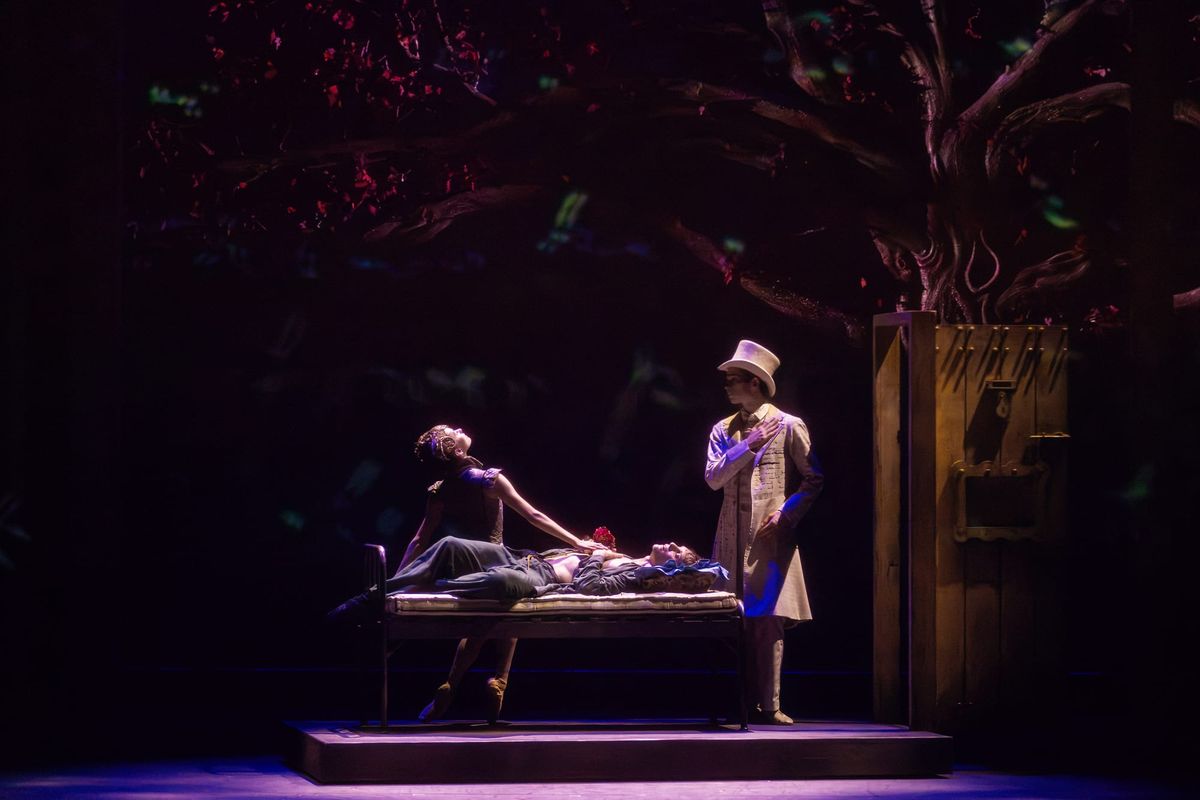
By the time the moon began to weep red tears, it was clear how much of himself Christopher Wheeldon had put into his “Oscar.” The 2024 work was danced by The Australian Ballet, which returned to New York for the first time in more than a decade thanks to its new Artistic Director, David Hallberg. Though the city saw it a mere five times, at this closing matinee, before a house full of ballet’s insiders and fans, "Oscar" proved both ambitious and heartbreaking.
Wheeldon leaned heavily on his growing theater experience, in both staging and pacing. Amid the rich minimalism that has become signature to his narrative ballets, and with Joby Talbot’s lean score, the ballet put emotional impact more to the forefront than in any of his other ballets, even “Like Water for Chocolate.” That helped, though at times also hindered, the many-layered delivery, and inadvertently made me understand why Wheeldon partners with Talbot so often, despite the often near-total absence of real melody or inflections: with all the storytelling and theatrical drama, the music let the dancing be the melody, elegantly receding into its supporting function.
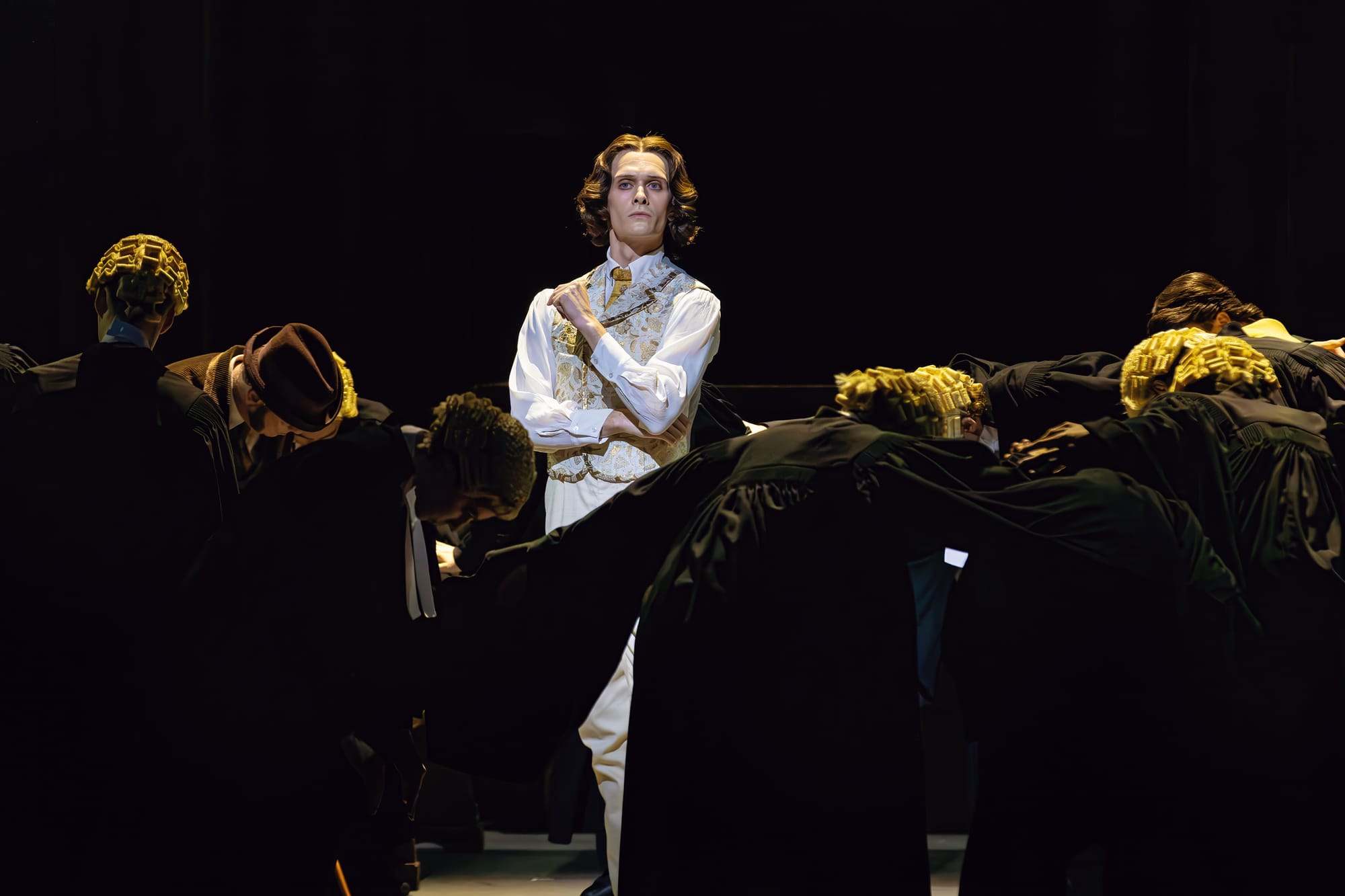
To tell Wilde’s story, Wheeldon interwove life and art. The ballet opened with the writer's trial and prison, then flashed back through “The Nightingale and the Rose” for his creative rise and the romance that landed him there, and later through “The Picture of Dorian Gray” for his decline. The program summarized both works, and familiarity with them helped, as did Seán O’Shea, an actor who spoke context before each act and at the end.
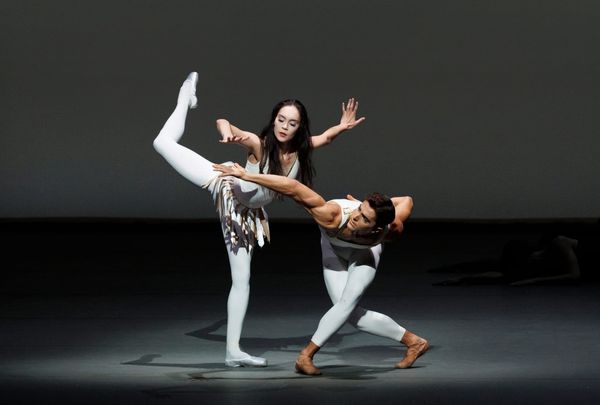
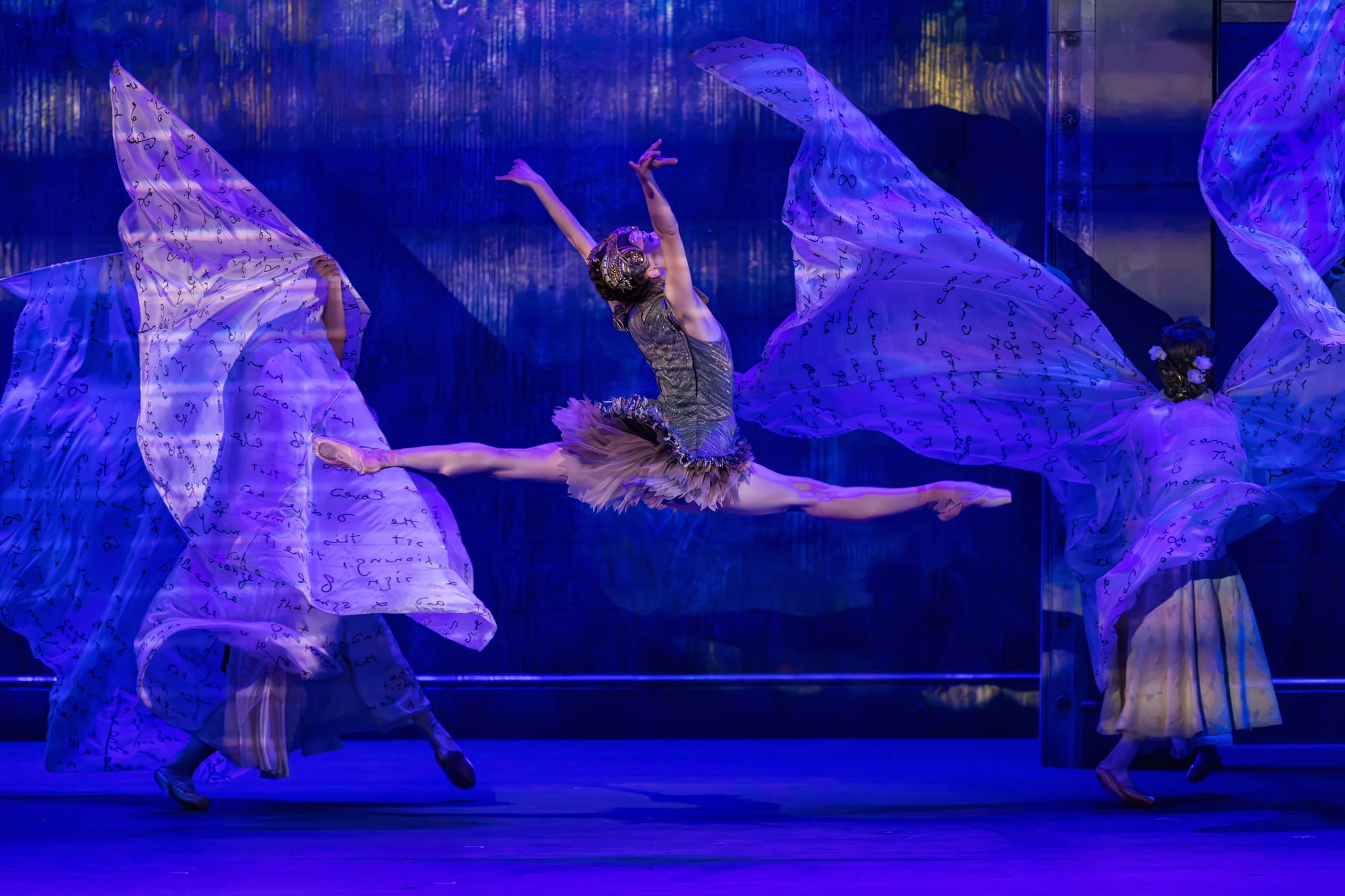
Callum Linnane, dancing a multifaceted Oscar, opened with a face that went from stillness to fear as the trial rushed into prison. Then Jean-Marc Puissant’s designs began their majestic world-building, and the prison fell away to reveal a lush picnic where Wilde told the Nightingale’s story to his two sons. The bird was just as rich a character as Oscar, and Samara Merrick’s portrayal was both determined and kind, from her pas de deux with Mason Lovegrove’s Student to the many exchanges with the different dancers as rose bushes that followed. The dancing used classical vocabulary as its point of departure, but took great leaps away from it, such as turns for Merrick with a flexed foot and plié, and an interesting counterclockwise manège of piqués somehow on the right foot.
Against the Nightingale’s innocent errand for a rose, Wilde’s own foray into a dangerous life developed. Joseph Caley’s Robbie Ross seduced him in a trio with Sharni Spencer’s Constance Wilde that turned more romantic as she receded, and Linnane’s arabesque leans, pulling away, slowly turned from awkward to seductive. There also were the party scenes, along with a bar where fun and debauchery took hold, with a jovial drag duo, Bryce Latham and Cameron Holmes, as Harri and Zella, full of big fouettés and comedy in equal parts.
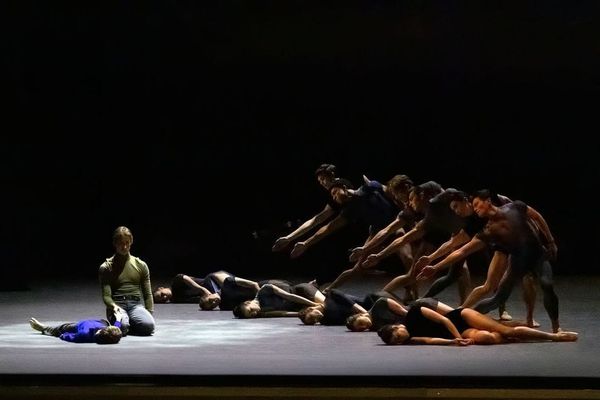
The Nightingale kept reappearing, and Merrick reached her last dancing among the corps portraying red rose bushes. Her body was lifted, passed around and rolled down the line, under a sad moon that ultimately wept red tears. And this was not the first time Wheeldon had told this story. In many ways, the scene built on “The Nightingale and the Rose” he made for New York City Ballet in 2007. The music then was by Bright Sheng, but lines of red rose men, even the crying moon, both proved to be reused concepts. This time, the bird’s small, lifeless frame was not left on the ground: the act ended with Wilde appearing from the shadows of his cell and carrying his broken heroine to rest upon his prison bed. The ballet’s moment of first deep emotional shatter.
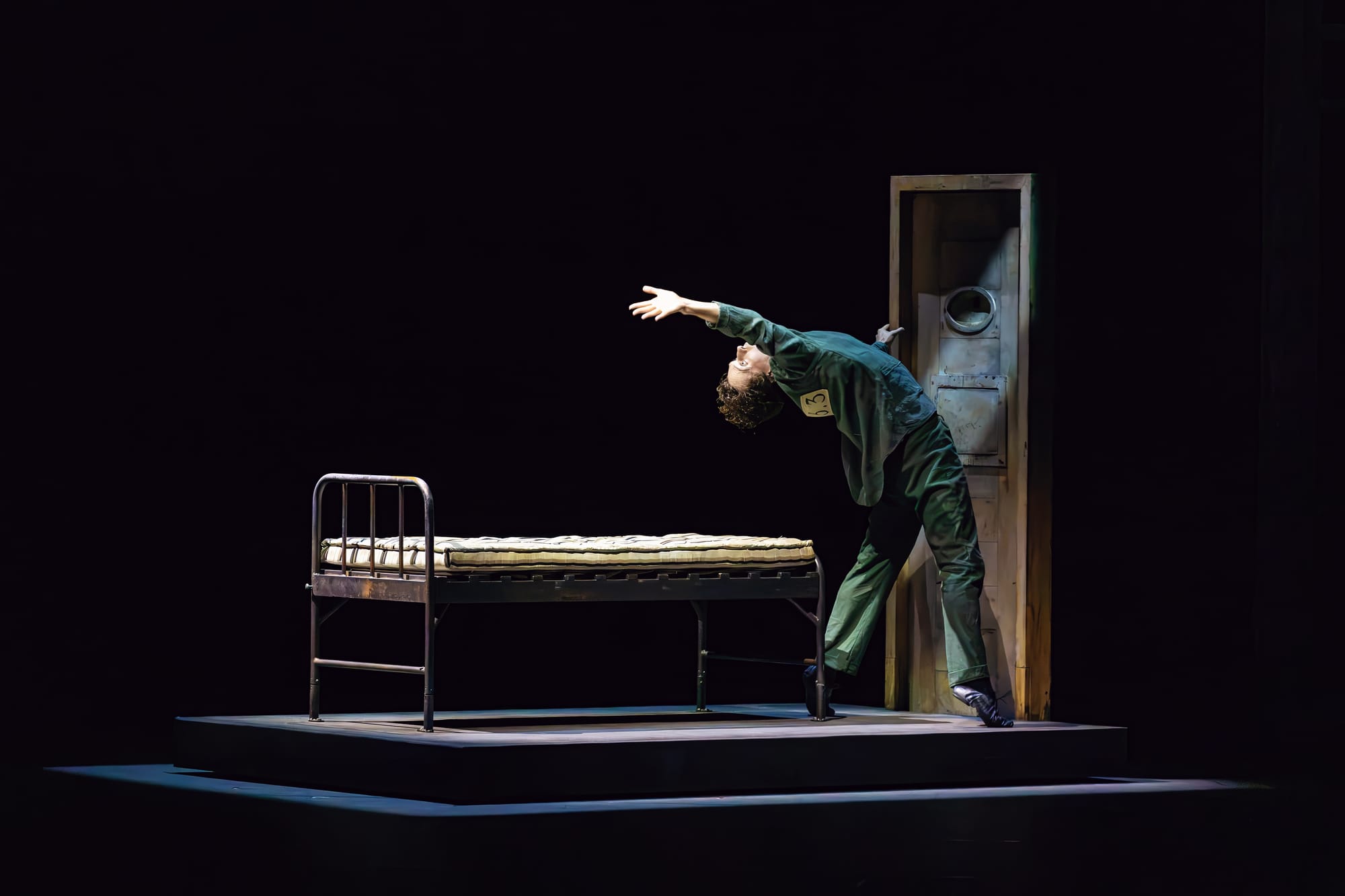
After intermission, the story almost never left the prison walls. Using Dorian Gray as a reflection of the writer’s decay, Wheeldon opened the act on a frame that Adam Elmes, as Gray, quickly occupied with a vain demeanor. That proud stature against the bare cell, with but a door and a bed, set off a long and dazzling descent into a cruel fever dream. O’Shea explained the physical ailments that came to Wilde after his first year, and Linnane danced the act like a true madman. Balletic shapes crumbled, showing the man and his talent trapped and unable to come out, and memories and despair blurred together.
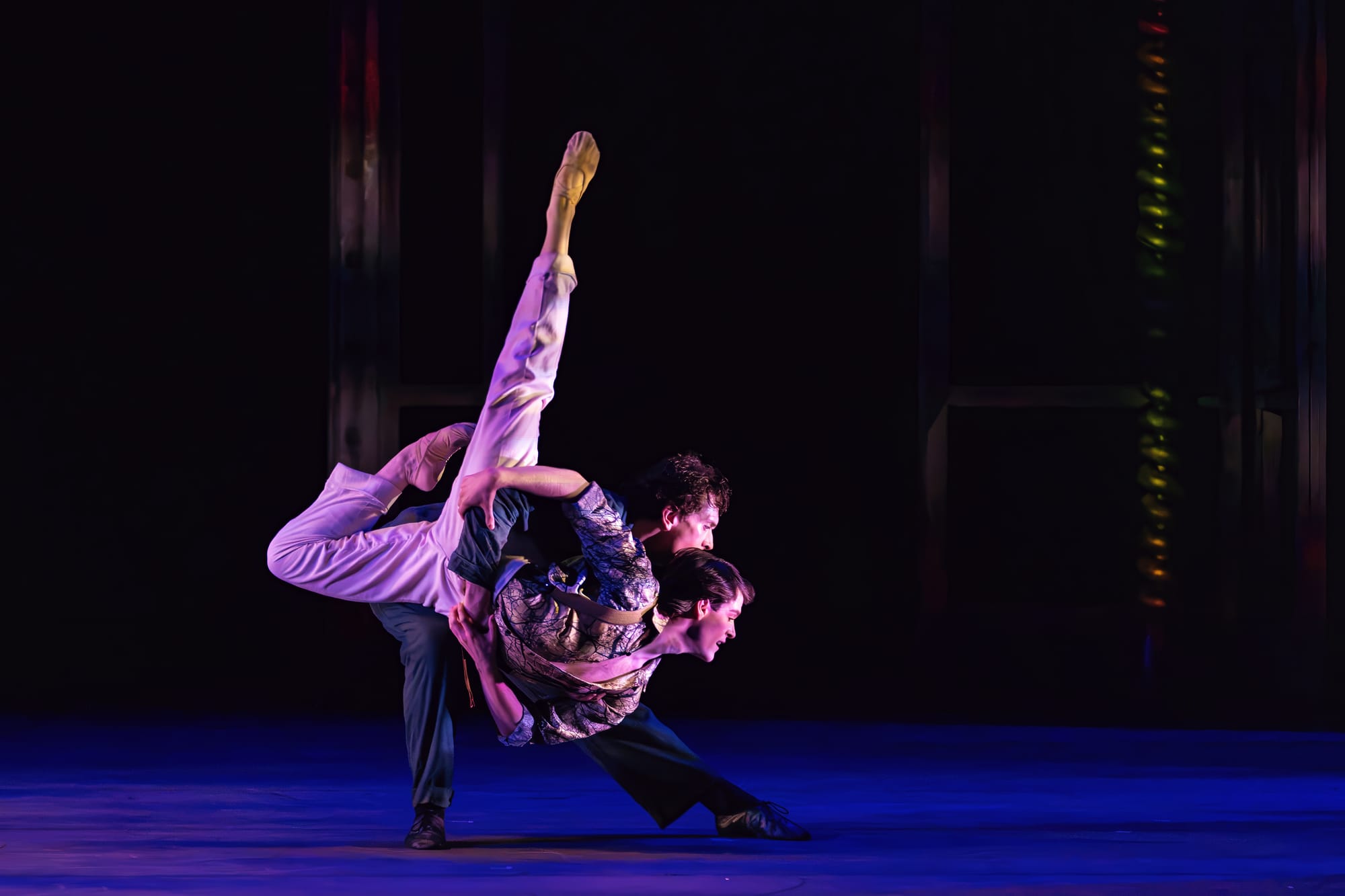
There was a memory of Ross, a bedroom scene with a few too many dancers and police at the door, and then, amid all this, Elijah Trevitt’s “Bosie” – the ultimately reason for Wilde's incarceration. Stolen glances evolved into a rich pas de deux that might have been the work’s focal point had the rest of the production not been so rich. Lifts, supports and finally a kiss were shown as passion free of sin, made far crueler by the prison fixed behind them. Then the novel took over entirely: Wilde stepped into the portrait’s frame himself, with Elmes’s dancing reinforcing the transformation. The decline of the character and the decline of the writer ran together.
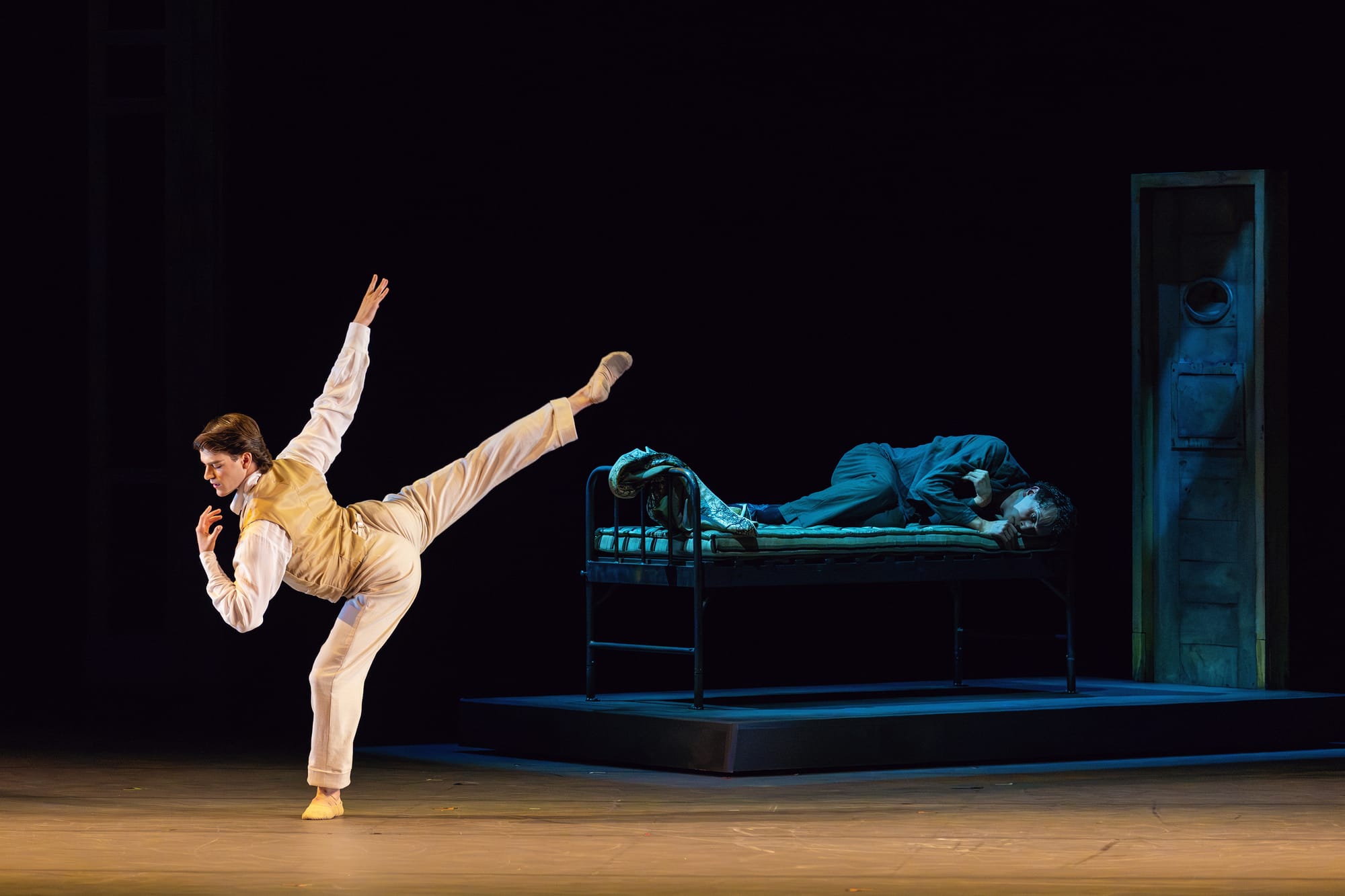
It was a lot, and the act felt it, seeming both long and far too dark for what it had to say. Call it the fault of a choreographer who could not bear to leave a detail out, an emotion unexplored, with every good intention. Yet when Wilde was released, with Ross, his friend to the end, collecting him from jail and O’Shea noting his departure for France the next day, it felt like a sad ending, not relief. His death a few years later was portrayed with his great characters, the Nightingale and Dorian Gray, at his bedside. The music receded one last time, leaving just silence and this heartbreaking tribute.
copyright © 2026 by Marianne Adams