An Understated, Warm Goodbye
“The Four Temperaments,” “Each In Their Own Time,” “Once with you,” “Agon”
New York City Ballet
David H. Koch Theater
October 18, 2026
It is rare for ballet stars to time a retirement well. Most often, it comes either too soon or when the peak of their creative form is meaningfully behind them. Adrian Danchig-Waring set his date a year ago. In 2024 a spinal infection nearly killed him, and he promised himself that if he danced again he would stop within a year. He kept to it. In saying goodbye to New York City Ballet after more than two decades, he danced four works that showed the range of what he had given the company, with a classicist’s care.
He made two statements at his farewell: one of a through-and-through Balanchine classicist, and one of a versatile dancer wholly at home on a big stage in any work. The stripped-down “Four Temperaments” opened the program and “Agon” closed it. In between came cherished dancing of Lar Lubovitch’s “Each In Their Own Time,” with Taylor Stanley, and a pièce d’occasion by Pam Tanowitz, “Once with you.” He had asked for no solo and wanted to dance with friends, and the program reflected that.
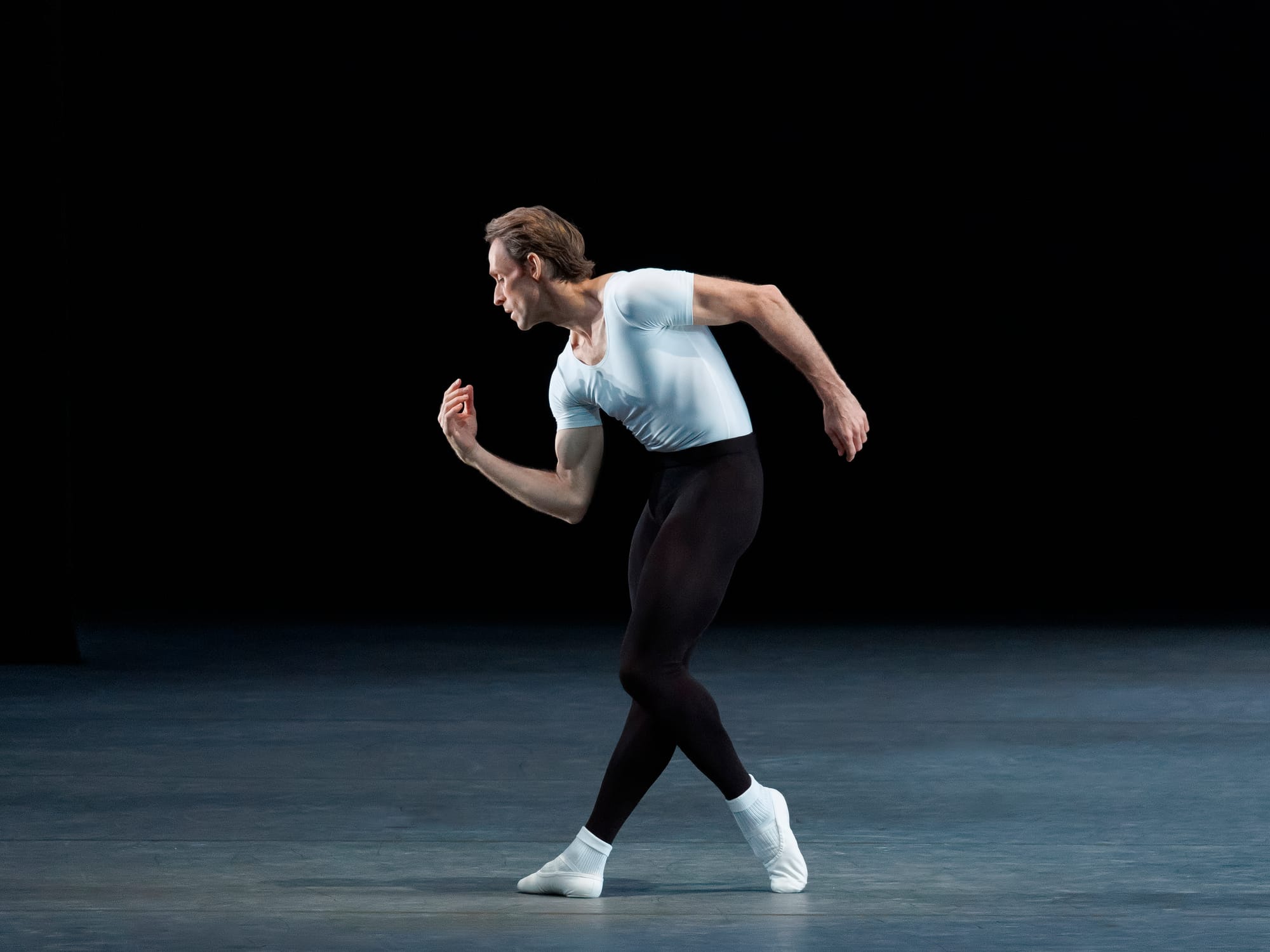
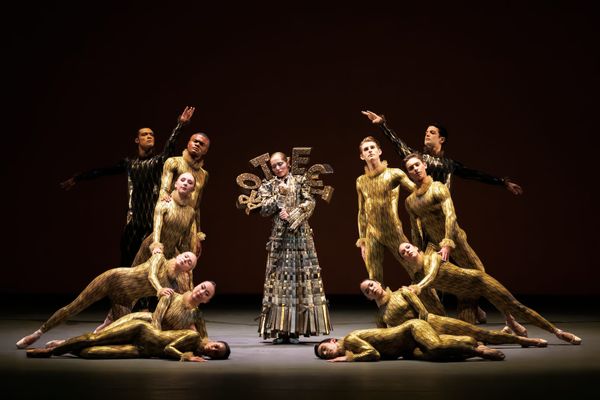
Each work had its stellar moments, though in each Danchig-Waring was the star. In “Four Temperaments,” Emily Kikta was an engaging Choleric, with a lot of upward lift in her steps. The Sanguinic duet, danced by Naomi Corti and Chun Wai Chan, was somewhat mismatched in stature and intensity: Corti was firm yet unforced, while Chan had a piercing, princely quality. Danchig-Waring danced a refined Phlegmatic in which each detail was thought through, from the fall of his arms to how he folded them. Taylor Stanley was another standout as the Melancholic, with expansive arms, strong shoulders and an upper-body control that extended his stature.
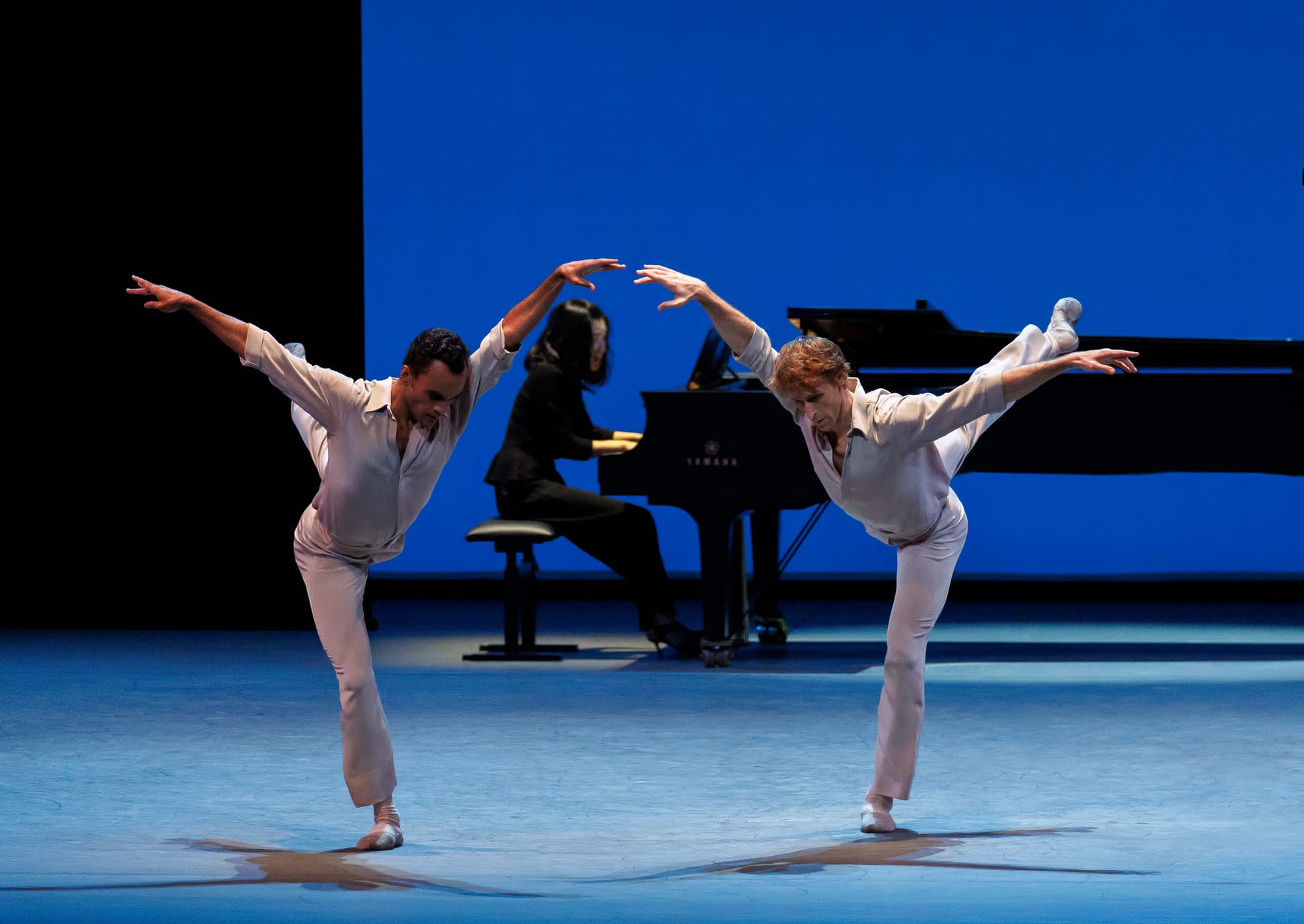
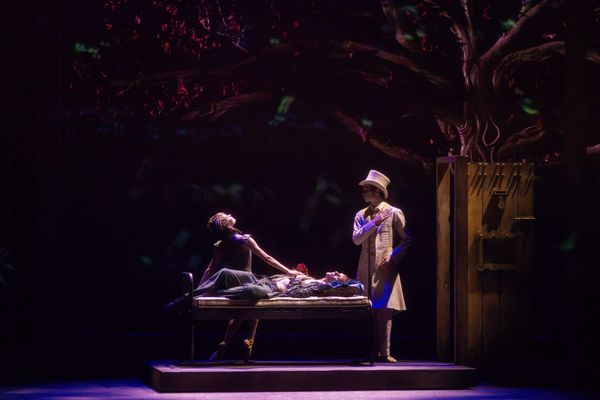
There was a sad irony in Stanley’s own retirement coming at the company’s winter season, on February 28. When the two danced Lubovitch’s ballet, in which Danchig-Waring originated his role, it seemed a meditation on their respective careers. Artistically, they were in peak form, in their articulation, in the intertwining of movements and stalls, and in the serpentine cascades of steps that felt like thoughts percolating toward the logical conclusion of what they had to say. The dancing didn’t feel sad, even at the end, when Danchig-Waring held on to Stanley’s leg as he leaned toward the wing. It was a poetic note: they were both leaving on their own time, though Stanley’s had not yet arrived.
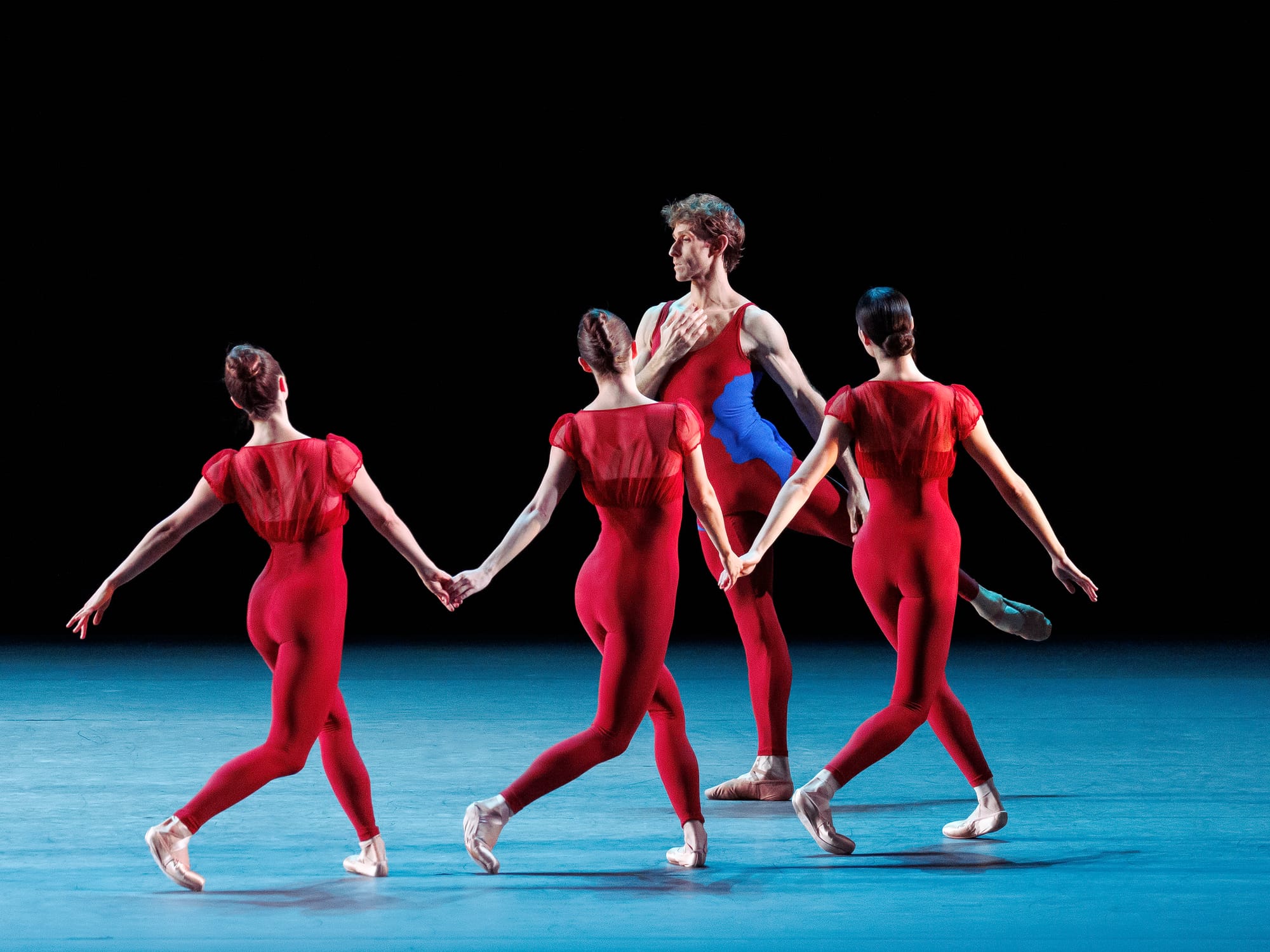
A similar echo of real-world meaning shaded “Once with you,” Tanowitz’s gift to Danchig-Waring, not a company commission. Set to a Beethoven string quartet, it began jovially, with embellished turns and steps from three of the company’s great ballerinas, Mira Nadon, Unity Phelan and Indiana Woodward, in red unitards. Danchig-Waring arrived by falling comically onto the stage from the wing, which suited what Tanowitz told the New York Times she wanted: his balletic training, but a little messy. He took turns dancing with the women, whose movement came more alive in partnership than when they receded to dance on their own in the background. It read as a metaphor of sorts for ballet dancers’ lives, with partners coming into them for different ballets, then leaving, until they meet again. The work was modern in flavor but neoclassical in the dancers’ interpretation, and one I wish I'd get to see again.
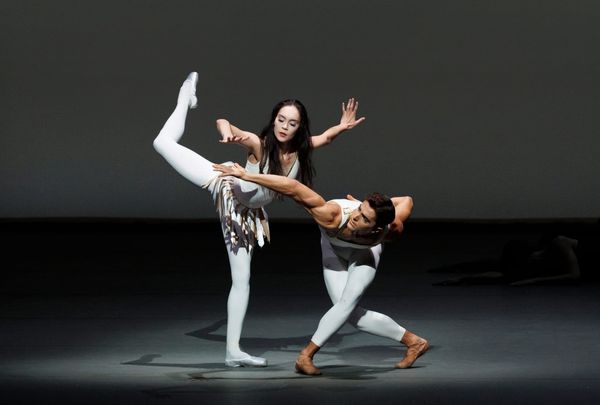
Danchig-Waring said he wanted “Agon” to be his last performance so that he could keep feeling something new to the end. Dancing the iconic pas de deux with Phelan, there was real chemistry, a trust that showed in how they moved from one position to the next. Though some of the outstretch arm balance showed visible strain, the ease between them left no question that the moves wouldn’t fail, and felt a bit like a break of the fourth wall, allowing the audience into the chemistry felt between the dancers, not just shown.
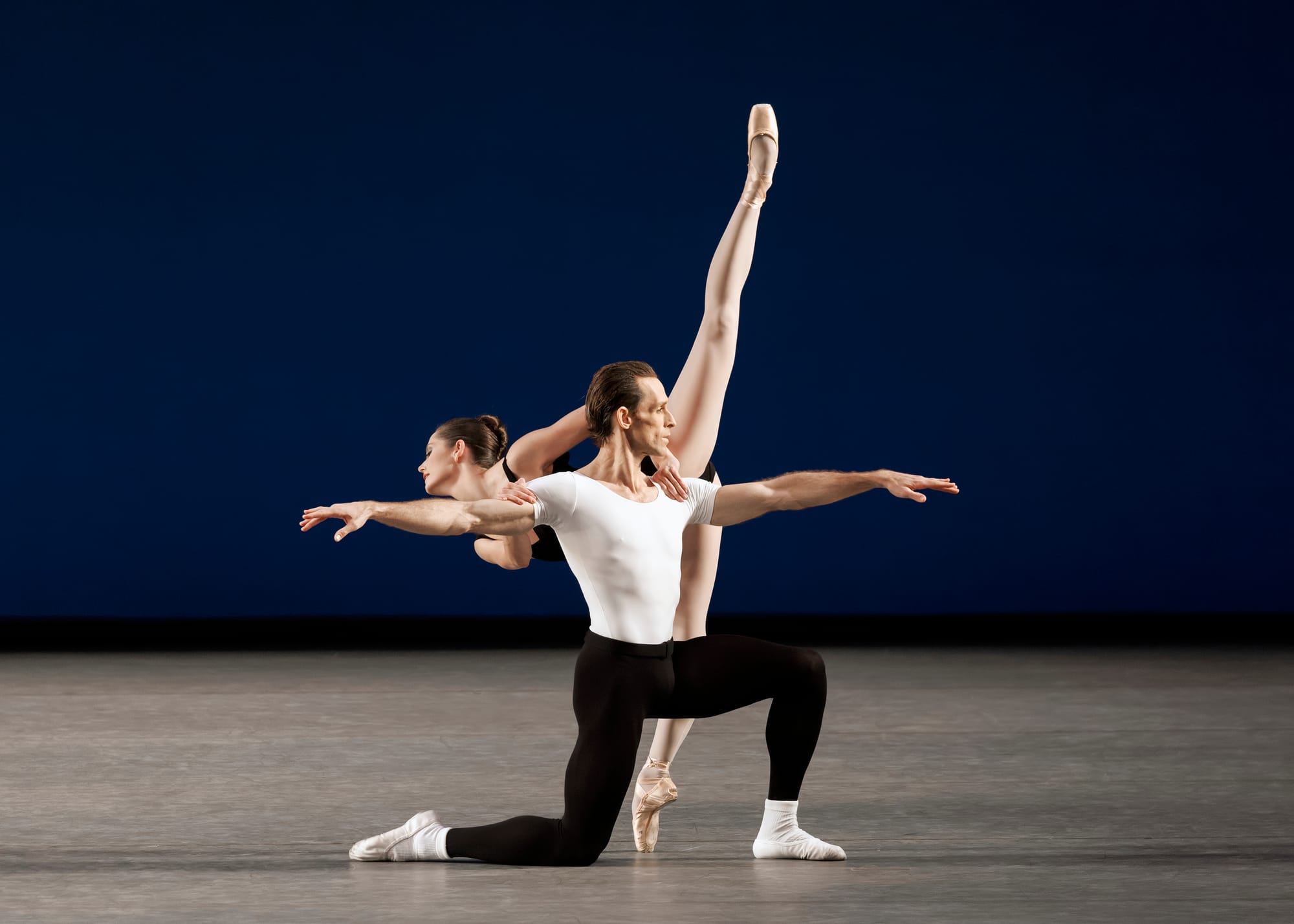
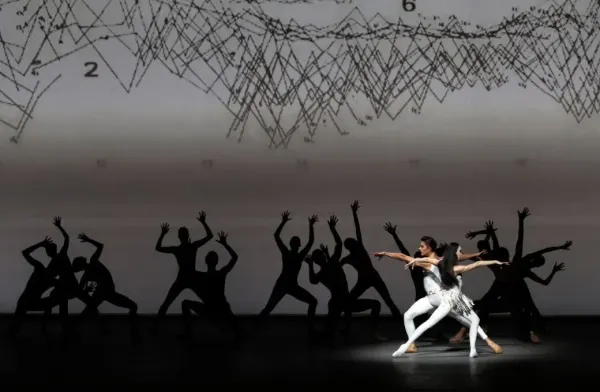
It also was a passing of the torch. The ballet featured debuts by David Gabriel in the first pas de trois and Dominika Afanasenkov in the second. Gabriel danced with authority, filling out the space as he partnered Sara Adams and India Bradley. Then Afanasenkov infused the stage with explosive jumps, grand arabesques and impeccable balances. A real joy to watch.
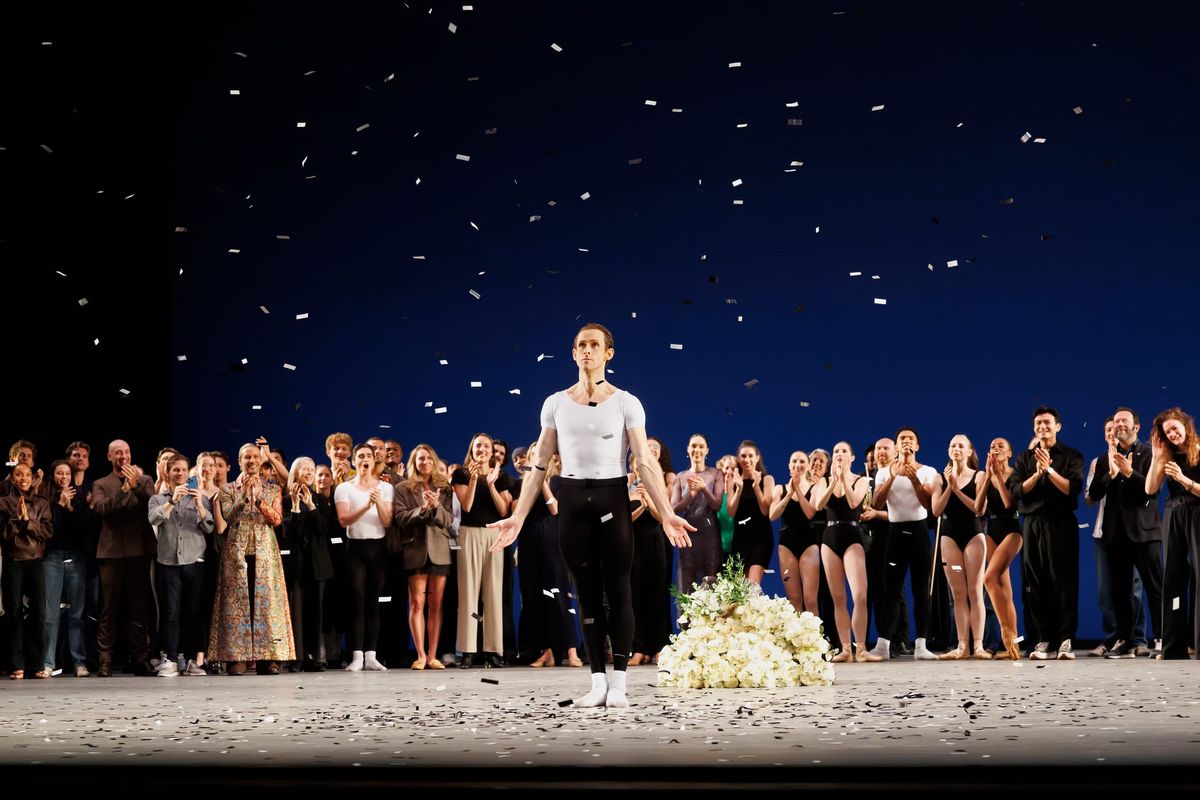
The audience stood for the heartfelt final bow, with dancers one by one delivering a hug and flowers to the man of the hour. Even those long retired from the stage – Megan Fairchild, Teresa Reichlen, Sterling Hyltin – came to honor their past partner. And each bouquet, each interaction seemed a personal moment for the departing star.
He left the stage, but not ballet. Danchig-Waring has directed the New York Choreographic Institute since 2018, which gives new choreographers studio time and dancers, and his next work will be there, with artists at the start of their careers.
copyright © 2026 by Marianne Adams