Variations in White
"La Sonnambula", "Pithoprakta", "The Unanswered Question", "Theme and Variations"
New York City Ballet
David H. Koch Theater
New York, NY
October 13, 2026
Perhaps coincidentally all four ballets in this all-Balanchine program featured women in white. Most of these women were mysteriously unavailable; only the couple in the final “Theme and Variations” seemed set for a happy life, and that was a fairy tale romance, as the ballet is essentially a quick tour of the highlights Petipa’s “The Sleeping Beauty”. The mysterious sleepwalker in “La Sonnambula” can only connect with the Poet once he is dead; the couple in “Pithoprakta”, the long-lost Balanchine work revived by Suzanne Farrell this season, barely touch and end separately; and the floating ideal in “The Unanswered Question” disappears at the end of the ballet. But though these women all had different fates, they were united by some very fine dancing.
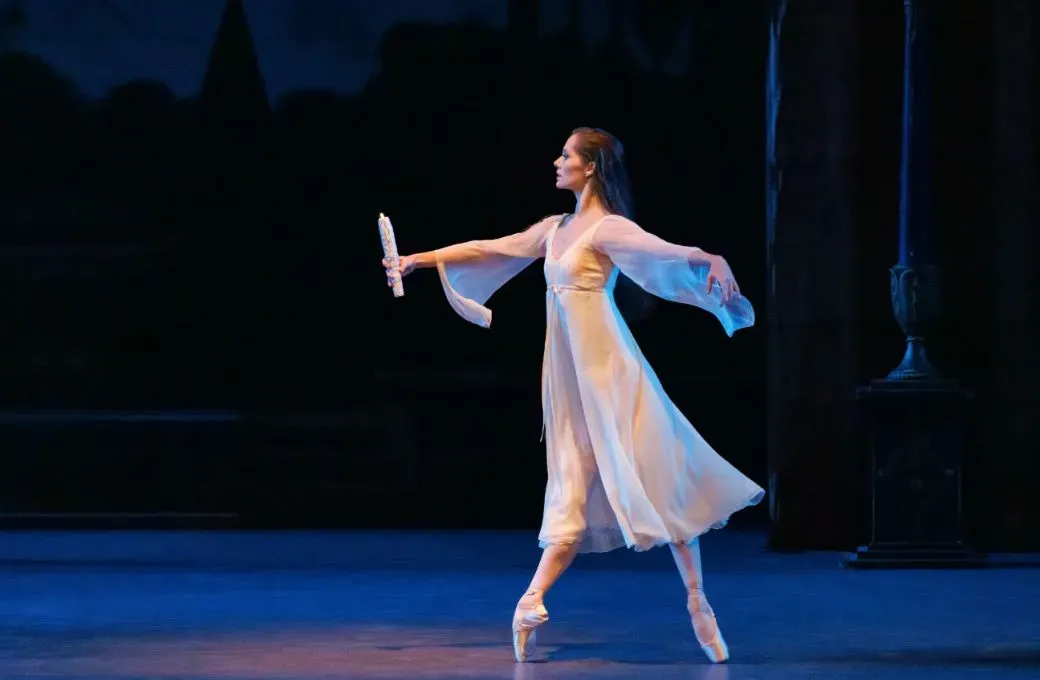
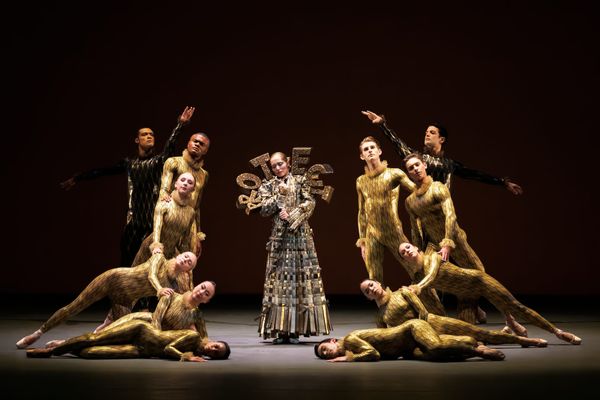
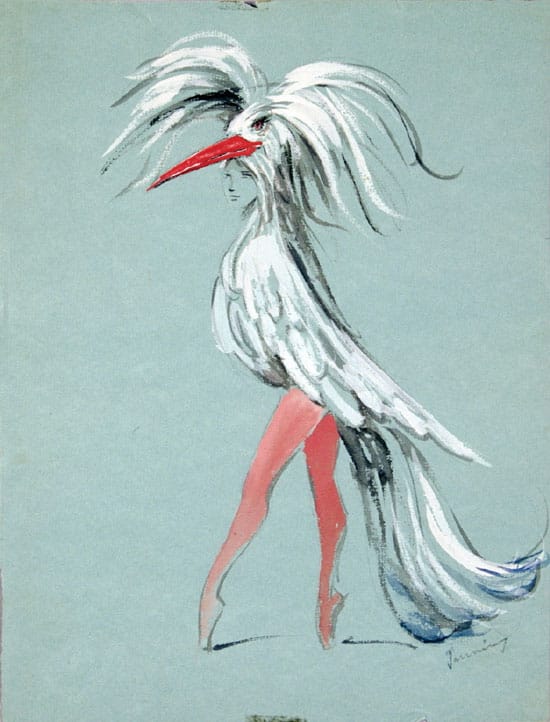
Unity Phelan was the Sleepwalker in Balanchine’s 1946 Gothic horror story, originally commissioned by the Ballet Russe de Monte Carlo using the gloriously melodic themes from various operas by Bellini orchestrated by Vittorio Rieti and the surrealist artist Dorothea Tanning’s designs. It was first danced by NYCB in 1960, with new sets and costumes; the original surrealist Tanning designs were on the peculiar side, with the guests in very strange masks shaped like animals or inanimate objects. These designs would, though, reinforce the uncanny story, making the guests vaguely threatening. The current dancers do look a bit perky and cheerful and don’t really convey the underlying strangeness of the story.
Though the story is reasonably clear, the work revolves around a mood of ominous mystery, and when the sleepwalker appeared, rushing on with a desperate urgency, the ballet slipped into focus. Phelan’s face was blank but her body, as she bourreéd effortlessly around the stage was eerily expressive, especially in the spine-tingling moment when she collides with the Poet’s dead body and a little ripple ran through her as she finally was able to feel his presence.
Taylor Stanley was her Poet. He was remarkable in their odd pas de deux as he tried to reach her. His backbend with his arms reaching for her as she melted through him was perfectly timed to the soaring, shimmering music. He was very confident with the Baron and the Coquette, a bit too self-assured really, as he seemed to be dismissing the Baron by refusing to shake his hand. He could have been visiting royalty, not an uninvited guest.
Aarón Sanz danced the malignant, threatening Baron. Though he has been very effective in character parts (he was especially funny yet human as the vain, rich suitor Léandre in Balanchine’s “Harlequinade”), his Baron was a bit light weight, and he looked too youthful and naive to make his jealousy and anger believable, much less to look threatening when waving his knife. Naomi Corti as the Coquette too, seemed a bit too unsure—despite the pas de deux with the Poet where she continually looks away, leading him on, she looked as if she were dancing Juliet meeting Romeo, making her abrupt return to the Baron and all those diamonds inexplicable. But the haunting ending, as the Sleepwalker finally unites with her Poet, was magical.
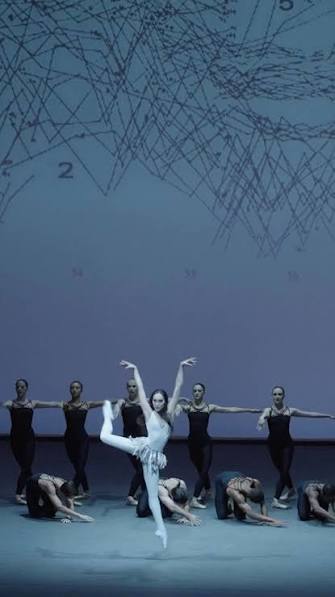
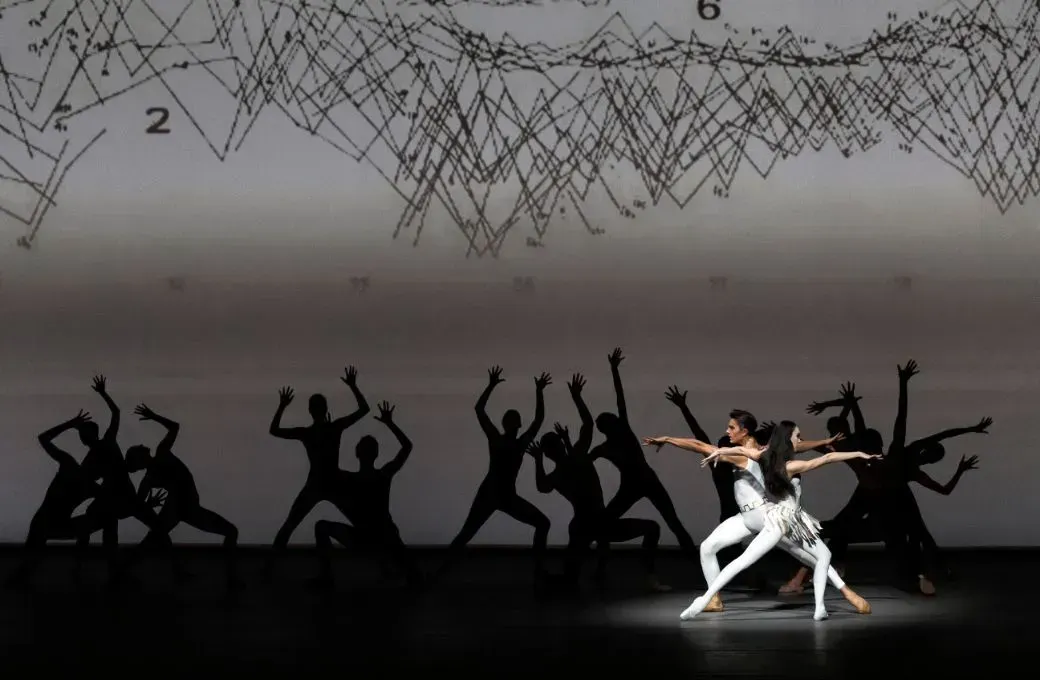
“Pithoprakta”, though not magic, does have its oddities. Balanchine choreographed it in 1968 to the 1957 work of the same name by Iannis Xenakis; the title means “actions through probability” and the score was based somehow on molecular theory—it was certainly not based on any theory of harmony or melody. He choreographed it for Suzanne Farrell andArthur Mitchell, and NYCB only performed it for two years. (Farrell left the company in 1969.) She has restaged it and, though it probably won’t send the audience out humming or looking for other music by the same composer, it is a complex and intricate way to spend ten minutes.
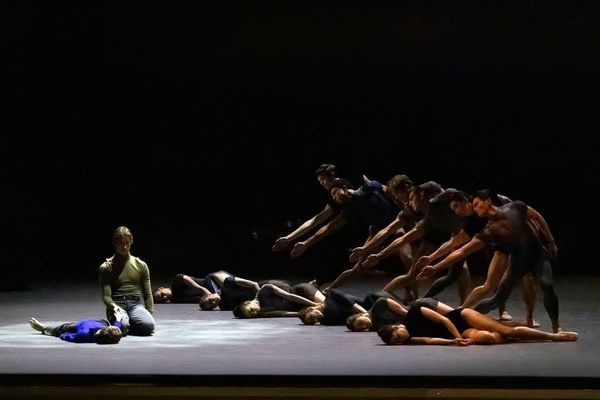
The backdrop, an enlargement of the score, set the angular scene, and the seemingly random series of spotlights introduced the cast, Mira Nadon and Davide Riccardo in white leotards, with Nadon sporting a hint of a skirt, and the twelve-member cast in back ones. The corps moves in angular, anonymous waves, often lying on the ground or moving like drops of water on a white hot frying pan.
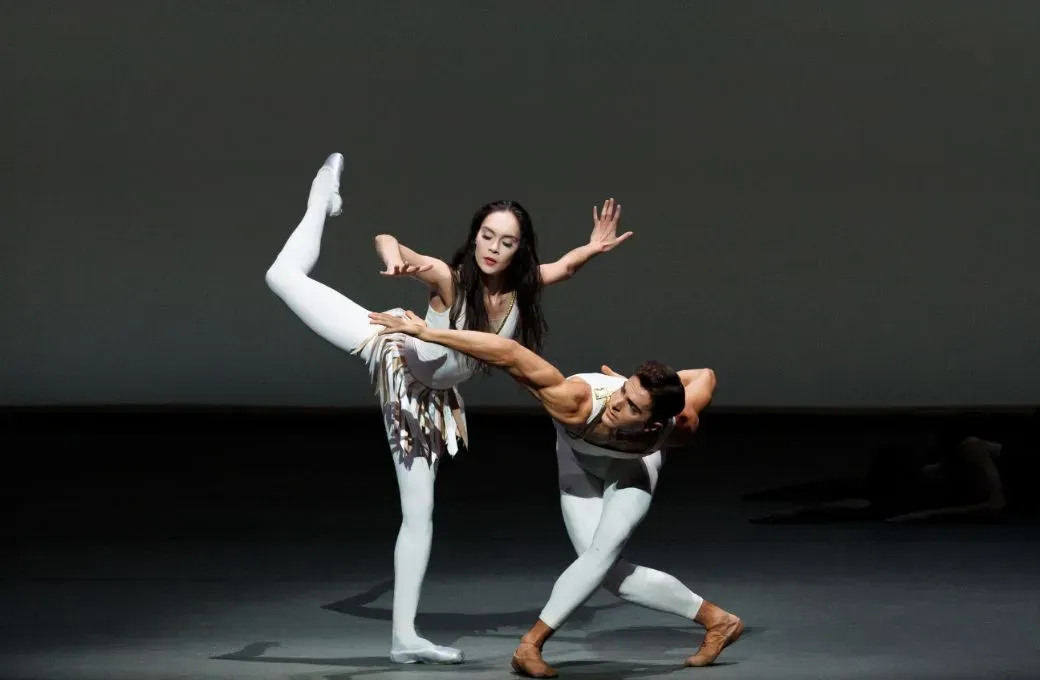
The heart of the ballet is, not surprisingly, the woman, and Nadon, her hair flying like a fifth limb, oozed through the off-center steps, full of hip thrusts, kicks, and off-balance extensions. She seemed at times to be a unapproachable deity, a sorceress casting a spell, or an alien acrobat. Riccardo was less prominent (apparently Farrell had to reimagine his part as the only video didn’t include Mitchell), but he was a smoldering presence, even if their dances together didn’t allow them to actually touch each other. In the end, they disappeared into their own pools of light, with the final spotlight on Nadon’s quivering fingers, like a space aged Dying Swan.
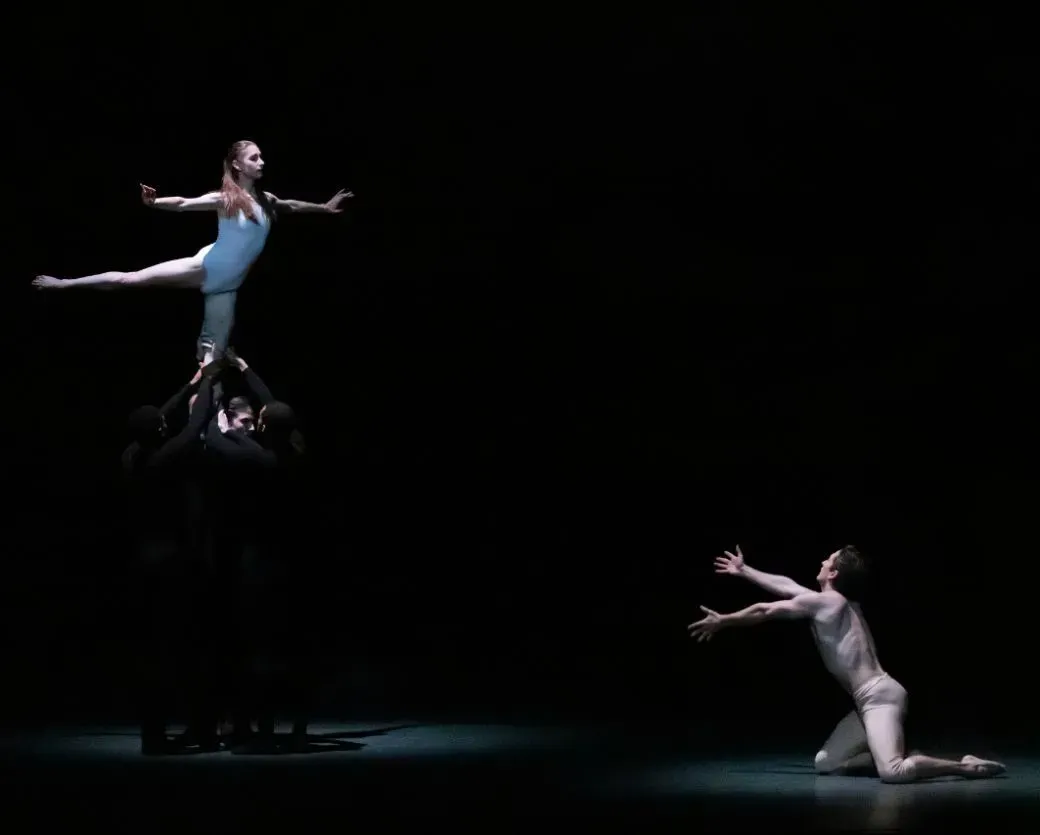
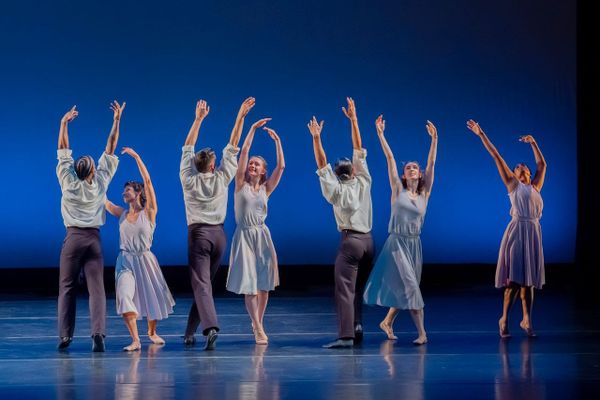
The woman (Ashley Laracey) in “The Unanswered Question” doesn’t get to interact with her yearning partner (a fine Cainen Weber) either. The Ives music seemed to float into a different sphere, as Laracey, in a plain white leotard, was carried on by four men in black whose main role was to disappear into the back background. The men, Gilbert Bolden III, Oscar Estep, Eli Raphael Gruska, and Hugo Mestres, disappeared with the best of them, moving seamlessly as Laracey wove in and out, the ultimate unattainable ideal. The role seems so simple; the woman, with a calm expression, is just carried on and off, but very few can make it resonate, and Laracey, with her long, floating arms and powerful but delicate presence, is mesmerizing.
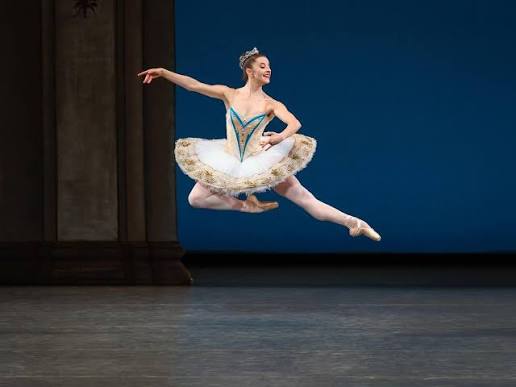
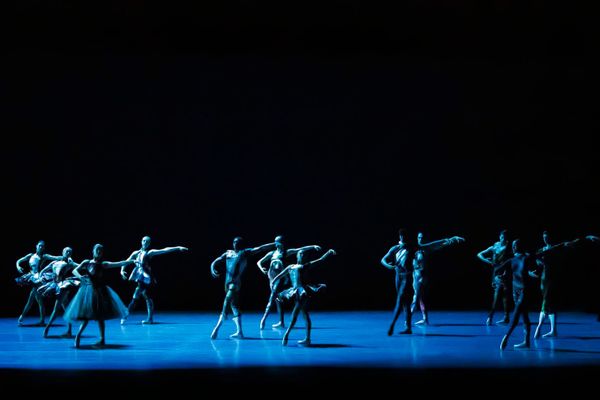
“Theme and Variations” is certainly not simple; Balanchine choreographed it in 1947 for Ballet Theatre (as ABT was then called) as a ballet in the grand manner; its hierarchy and geometry, complete with a final polonaise, echo in a condensed scale all of those Petipa ballets that Balanchine grew up with. Led by Indiana Woodward and Joseph Gordon, it was an explosion of technique wedded to poetry by Tchaikovsky’s grand score.
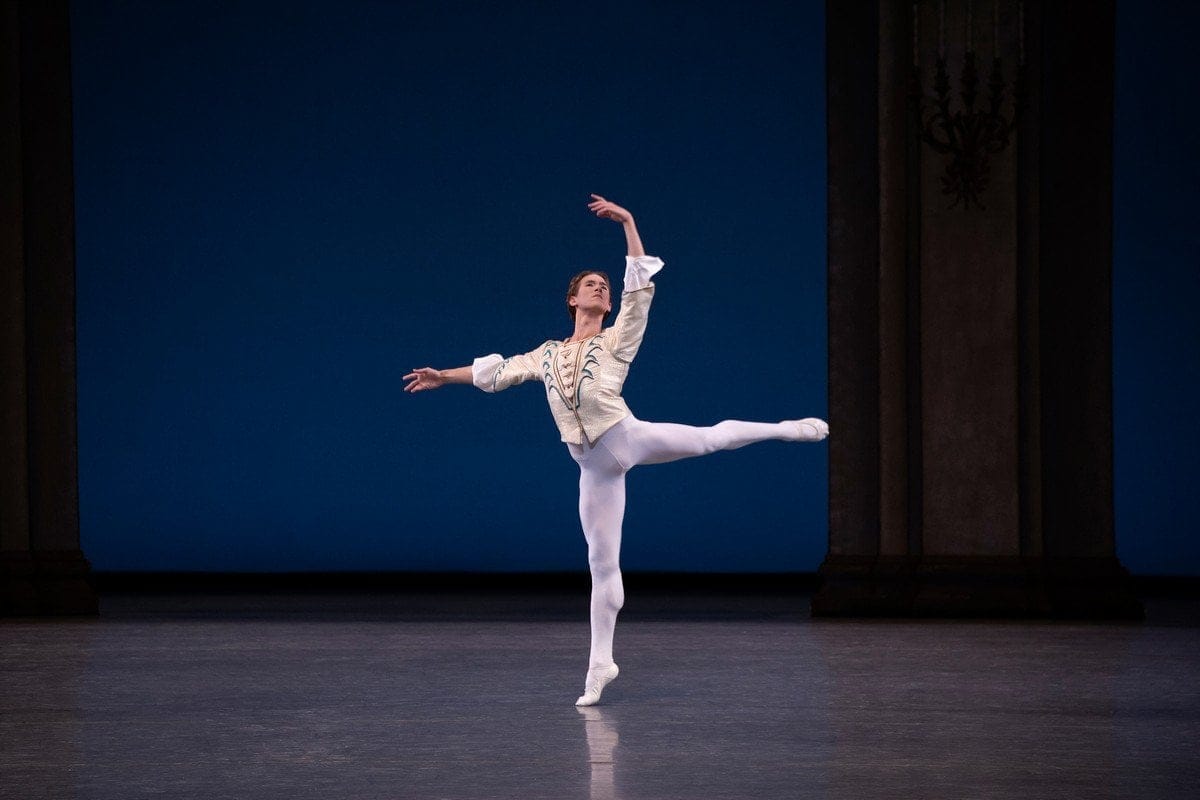
Woodward’s filigreed precision and luxurious upper body made her a perfect princess and she caught the subtle emotional shadings so perfectly. The brief vision scene, where she floated through arabesques supported by her fellow nymphs had a wistful air, as if she were dreaming of her prince. And them bam! she was dancing at her wedding showing off split second turns. Gordon, though a bit distant, was an elegant partner, with strong and centered dancing—such clear ronde de jambes and double tours with a smooth upper body; he has a reticent and luminous perfection to his dancing that makes his a perfect prince.
The entire cast looked majestic, especially the four demis (Sara Adams, Dominika Afanasenkov, Meaghan Dutton-O’Hara, and Mary Thomas MacKinnon) who, besides dancing with a radiant clarity, looked as if they were so happy to be at the wedding. The men of the corps, too, arriving for the polonaise, bounded on as if they could hardly wait to dance those elegant steps. Each and every one of them deserved their very own woman in white someday.
© 2026 Mary Cargill