Yesterday's Tomorrow
"La Sonnambula," "Pithoprakta," "The Unanswered Question," "Theme and Variations"
New York City Ballet
David H. Koch Theater
New York, NY
October 8, 2026
Amid premieres and a retirement, one of the most talked-about ballets of NYCB’s fall season was the revival of George Balanchine’s 1968 “Pithoprakta,” which the company saved for week five. Made back then on the legendary Suzanne Farrell, the work left the company’s repertory a year later, as did the ballerina. Now, decades later, the reconstruction was pieced together from incomplete recordings and Farrell’s memory, and felt like a meticulous labor of love. Sharing a program with “La Sonnambula,” “Theme and Variations” and the rarely seen “The Unanswered Question,” it made for an evening of storytelling, virtuosity and experiment in equal measure.
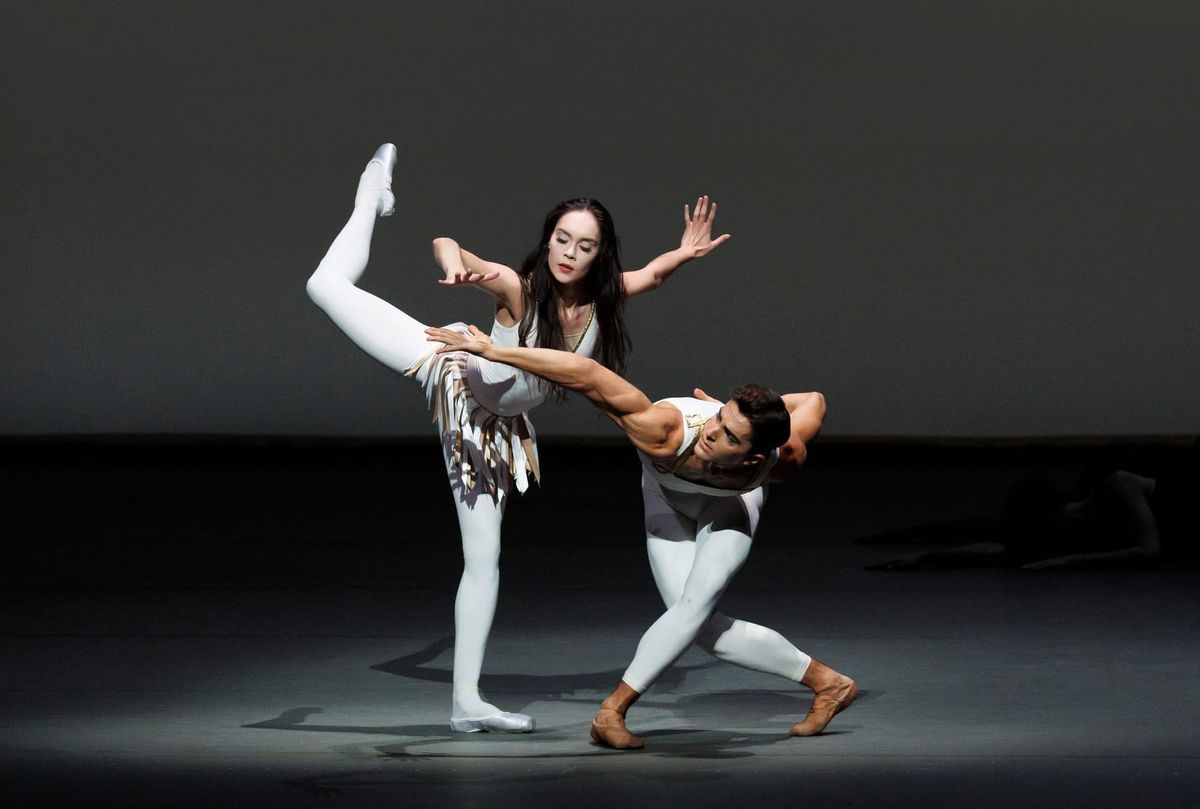
Perhaps the most remarkable feature of “Pithoprakta” was how experimental it still feels. Fully tethered to the punctuating score by Iannis Xenakis, the ballet centers on its lead ballerina – danced with elegance and magnetism by Mira Nadon – who is partnered by a mostly peripheral man (David Riccardo) and accompanied by twelve corps dancers. Balanchine calibrated the steps to deliver movement that both mirrored and complemented the score, but it was the alternating abandon and refinement of Nadon – sometimes alluring, sometimes sinister – that drew the viewer in.
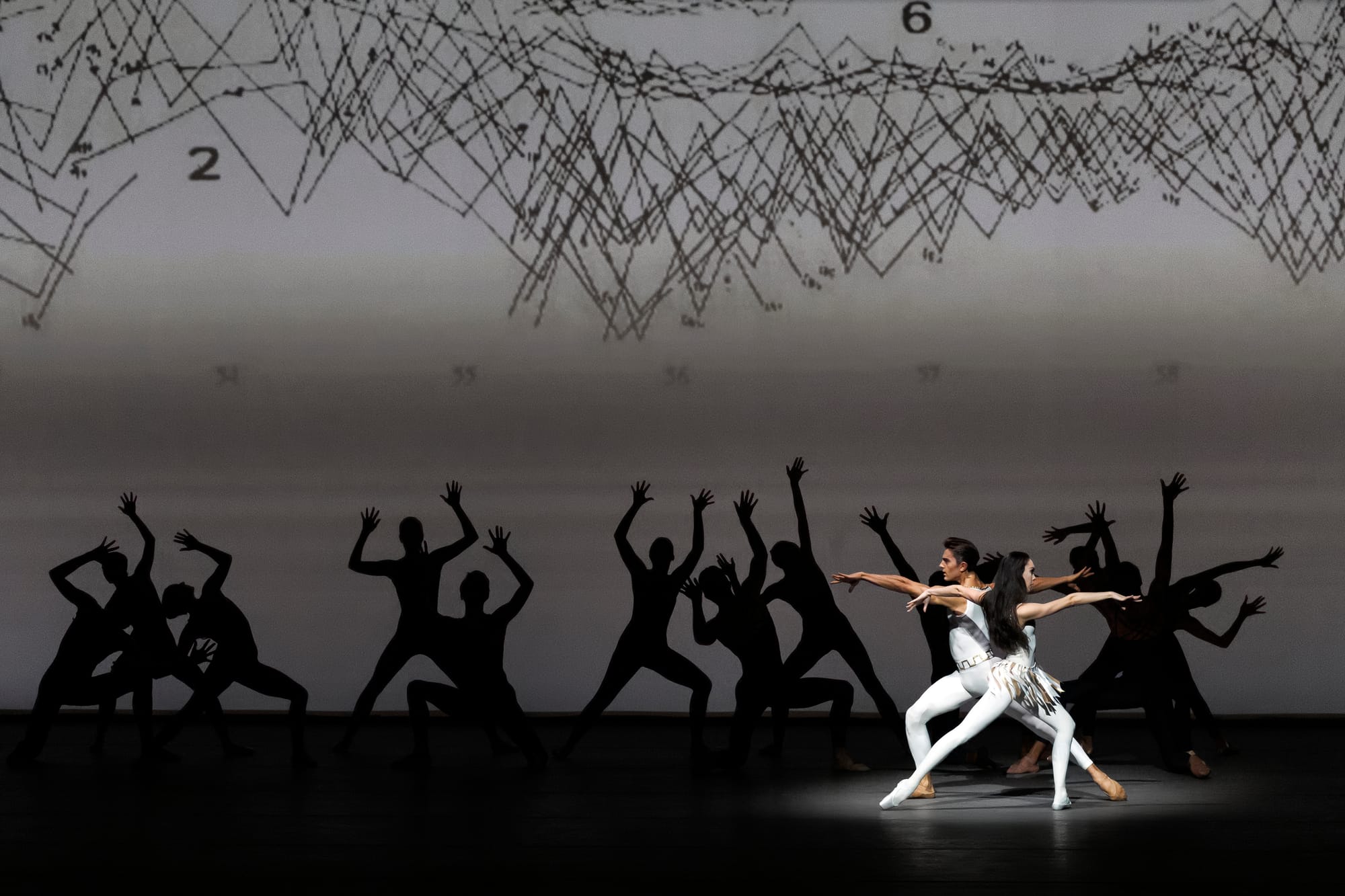
Opening to raps like a wooden spoon on a table, the work’s signatures were geometric patterns for the corps, repetition and careful placement of the leads. At one point Nadon crouched, then exploded into a radiating à la seconde that hung in the air, echoing the suspension in the score, before melting into a fluid crossing of the stage. She would step over rolling dancers, as though obstacles, interact with Riccardo, overtake and recede into the spotlight with alternating precision and looseness. A jump, then a shake-out of tension, then a lingering pose.
There was a certain irony in seeing this ballet next to a program of contemporary work offered on other nights. Repetitive movements, loose-limbed transitions, stillness and plasticity: today’s directions were all explored decades ago. But Balanchine’s ballet did it with purpose – challenging the viewer intentionally, with a shared theme and vocabulary throughout the piece. It was a powerful reminder of the creative genius testing ballet’s possible growth direction, and when Farrell came on stage to share the bow with the cast, the audience’s roaring appreciation was a reminder of how lucky we are to have such revivals be possible.
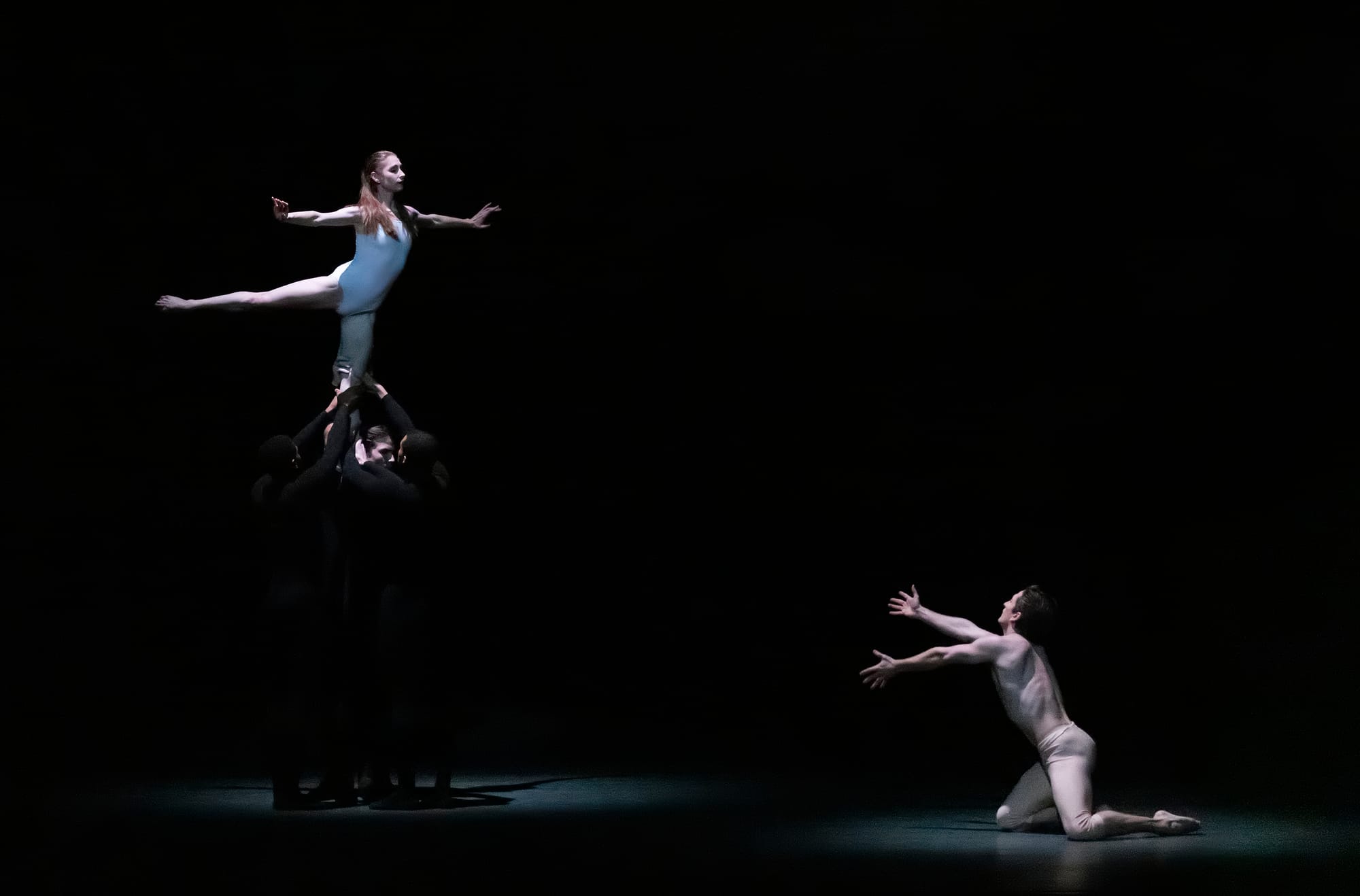
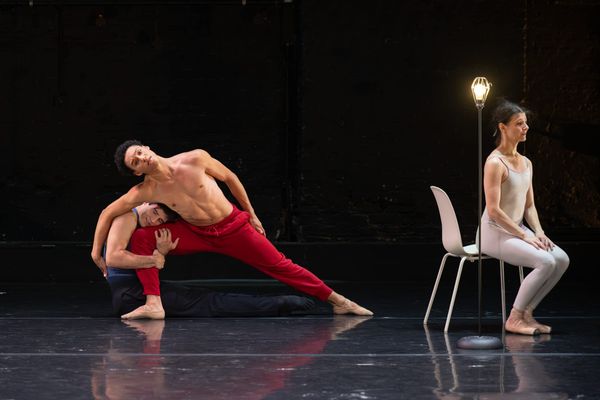
“The Unanswered Question,” from 1954 and set to music by Charles Ives, made a similar point in a different key. Where “Pithoprakta” is geometry and pulse, this was suspension: Ashley Laracey, wisplike, almost never touches the ground. Endlessly lifted and shaped by four men, she looked dreamlike and sinister at once, an object of wonder and a subject of manipulation, and the ballet lets you hold both readings. The men – Gilbert Bolden III, Oscar Estep, Eli Raphael Gruska, and Hugo Mestres – had both presence and anonymity, and Cainan Weber, debuting in the male lead, played hopeful captivation. Around them, the ballet exposed both Laracey’s plasticity and her extreme athleticism. The role demands both, but carrying out those steps with no visible strain was its own otherworldly feat.
Bookending these modern works was the generously expressive “La Sonnambula” and the classical virtuosity of “Theme and Variations,” as though the program’s goal was to remind the audience that experimental excellence aside, Balanchine’s range was far reaching.
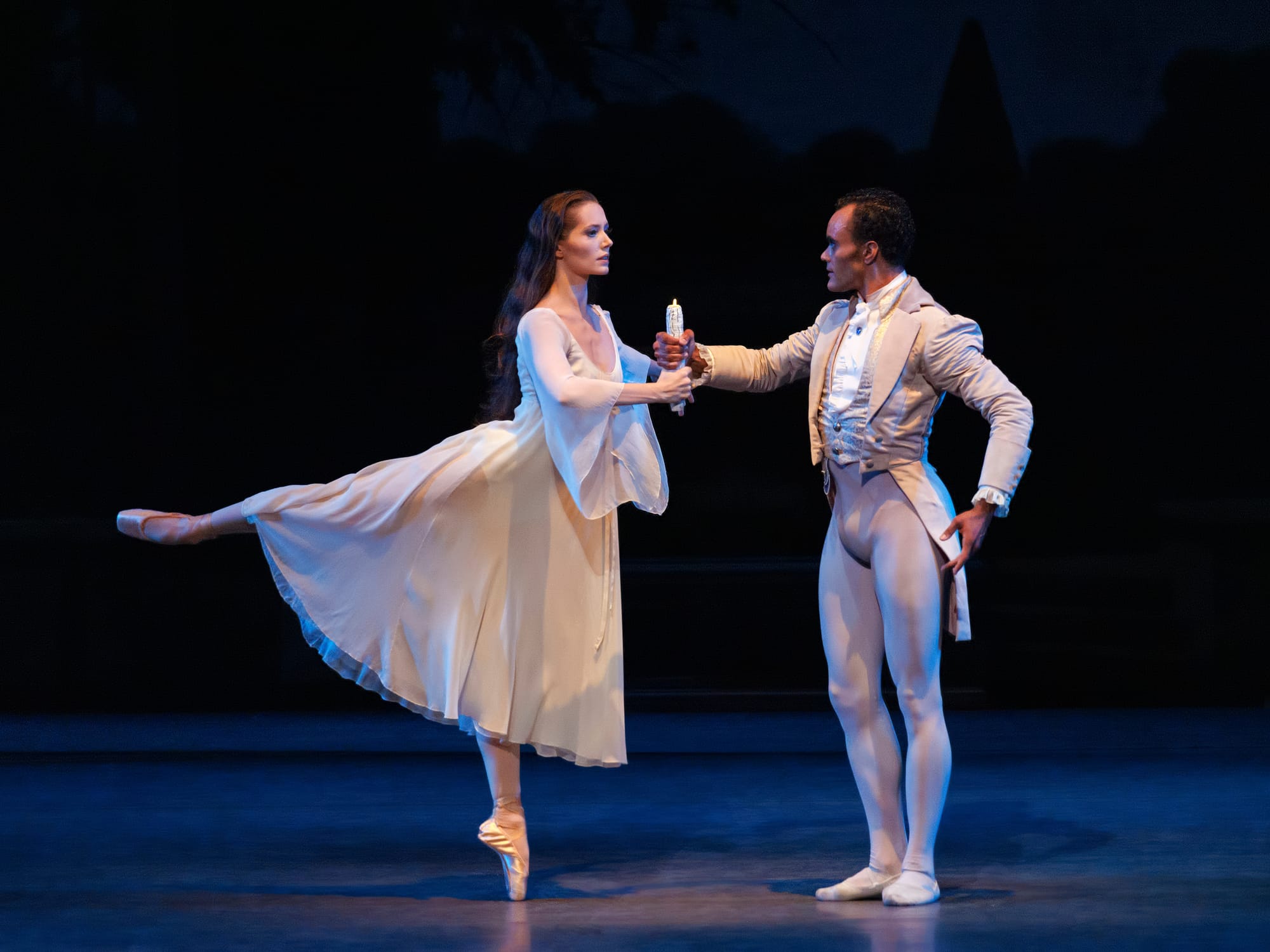
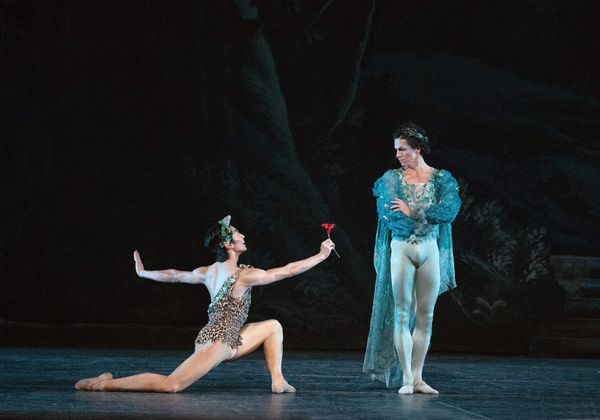
“Sonnambula” opened the evening with several compelling debuts. Naomi Corti’s Coquette danced with elegant intensity, less flirty than alluring, and traded measured exchanges with Aaron Sanz’s Baron and Taylor Stanley’s Poet. Debuts really piled up in the Pastorale: Lauren Collett and Noah McAuslin danced with fitting demeanor, while fellow debutant Kennard Henson partnered the more seasoned Gabriella Domini with flair that didn’t always land. Daniel Ulbricht’s Harlequin was predictably entertaining, and remarkable for how youthfully he still plays it.
If there was one real complaint, it was the mismatch in height and style between Corti and Stanley. They told their story convincingly enough, but it paled beside Unity Phelan’s Sleepwalker and that ballerina's exchanges with Stanley. Stepping erratically, with stops and starts, unhindered and perhaps a little unhinged, she moved with a restlessness that made the sleepwalking almost hard to believe. That ended up being key to her portrayal: her inner world was less ghostly and ethereal than troubled, and so far more accessible. Stanley, opposite her, was a convincing poet, confused, mesmerized and relatably desperate to help.
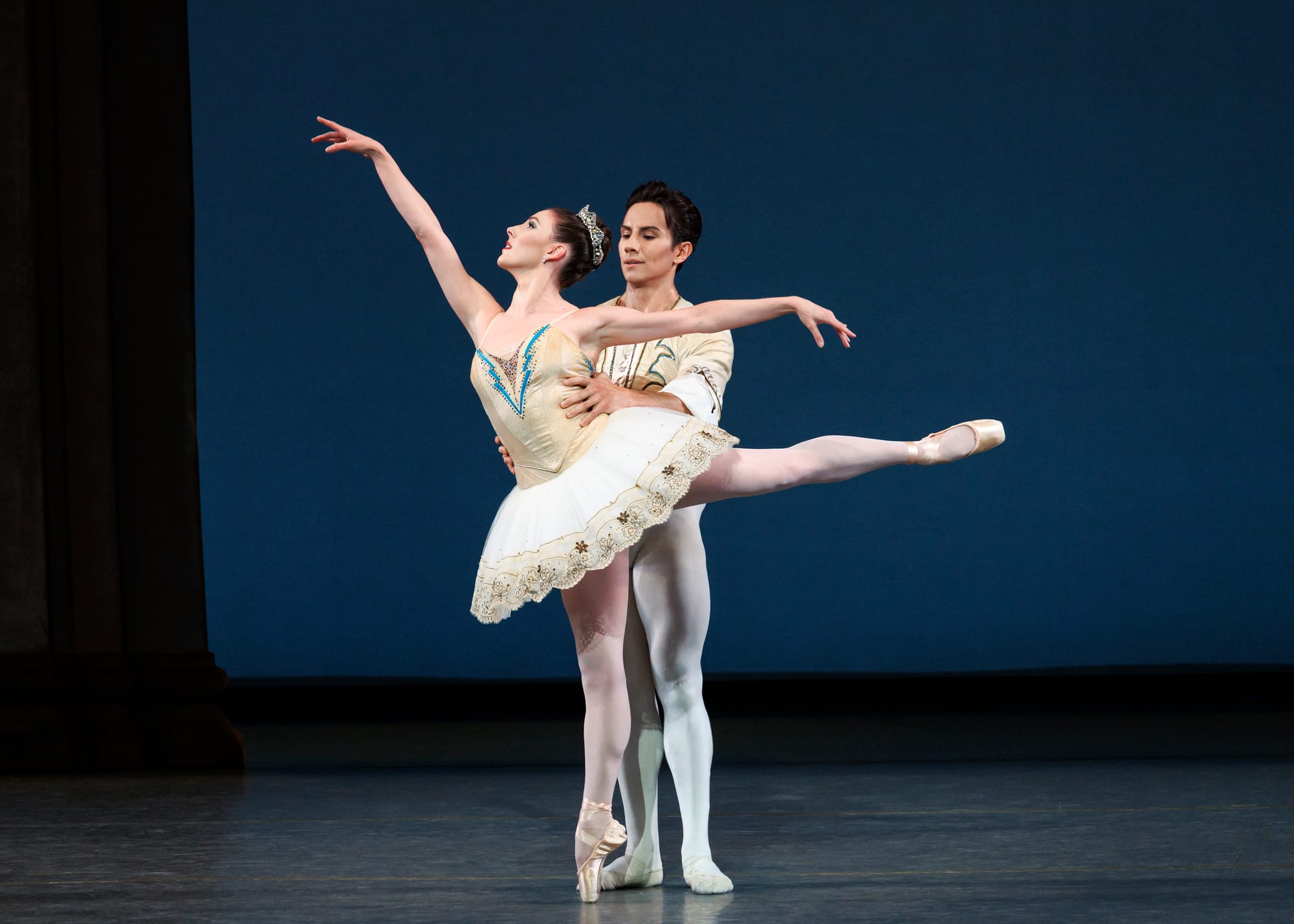
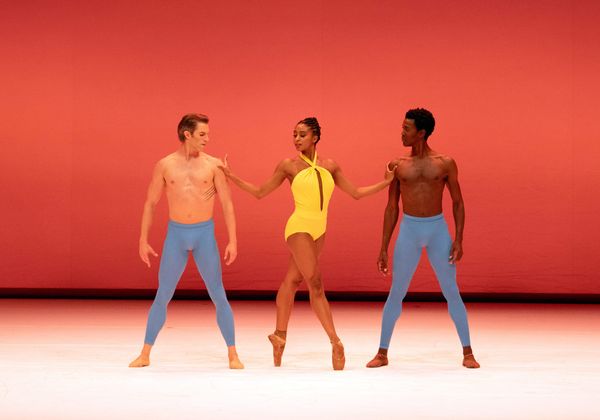
“Theme and Variations” closed the night, and while Tiler Peck and Roman Mejia delivered their standard-issue bravura and technical precision, the most remarkable dancing came from farther upstage. Dominika Afanasenkov was pure radiance in the four-women section, and Mary Thomas McKinnon shone in the finale’s polonaise. It was a fitting last note for a program about range. After an evening of experiments, the classical form still had surprises of its own, this time in soloists' ability to outshine the leads, a glimpse of NYCB's tomorrow.
copyright © 2026 by Marianne Adams