Welcome Guest
"La Bayadère"
American Ballet Theatre
Metropolitan Opera House
Lincoln Center
New York, New York
May 29, 2018
by Mary Cargill
copyright © 2018 by Mary Cargill
ABT has abandoned its policy of importing guests wholesale to populate its Spring season roster, but with the current shortage of tall, princely men (so many injuries), the company invited the Korean-trained Maryinsky dancer Kimin Kim back for "Bayadère" week, a wise and rewarding decision. Kim's noble bearing and superb partnering helped his Nikiya, the beautiful but somewhat bland Hee Seo, float through the famous white act, and electrified the audience with his solos.
Nikiya is one of the nineteenth century's strongest heroines, one who is in control of her own fate. She is aware of her lowly station but able to fight for her man; it is impossible to imagine Giselle grabbing that sword and lunging at Bathilde. Nikiya doesn't have to go mad from shock, she deliberately rejects the Brahmin's antidote, choosing to die rather and the watch Solor marry her rival. Seo has beautifully rippling arms and a fluid back, but emotionally seemed a bit vague. She rather politely rejected the High Brahmin's advances and waved the knife at Gamzatti with a somewhat placid air.
Her dancing, especially in the more lyrical parts, was stunningly beautiful, if a bit airy for the passionate Nikiya, but it seemed divorced from emotion. I especially missed the yearning that most Nikiyas show as they summon Solor to them at the opening of the Shades scene; Seo's arms were soft and flowing, but just decorative.
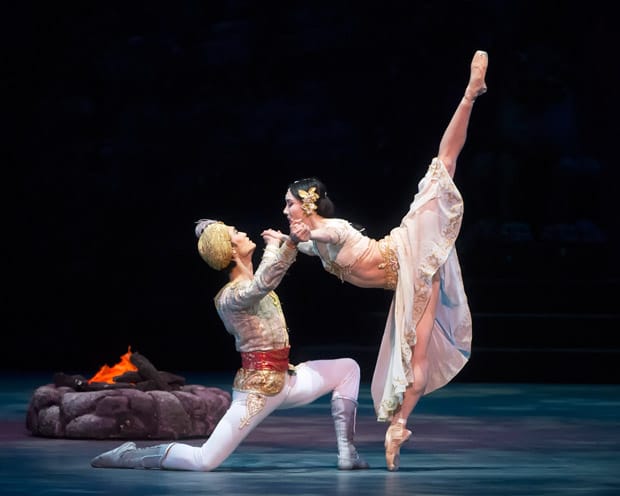
Kim was a Solor worth yearning for. He was not a completely natural or instinctive actor and his gestures occasionally seemed stylized, yet so connected to the situation that they had a ritualized depth. His proud and confident, but not arrogant, opening entrance and his desperate run in the Shades scene perfectly merged movement and meaning. His dancing was superb, fiery without flash and effortlessly virtuosic. His grand jetés carved impressive arcs, without the current split leap style that flattens the effect. And he has some amazing hang time; he seemed to float down from the double assemblés en tournant.
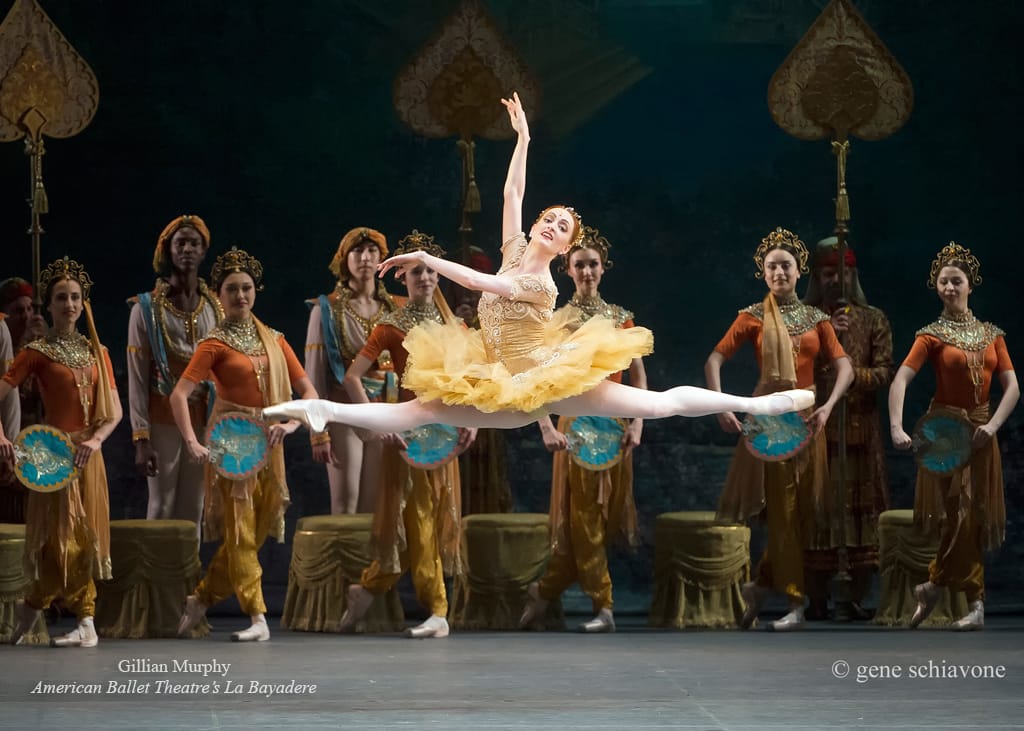
Gillian Murphy's spoiled, imperious Gamzatti was a fine match for him, and the betrothal pas de deux was a real pas d'action, as the excitement built, finally exploding into a series of fouettés. Though Murphy did not dance with quite the go for broke ease of ten years ago she is still a supremely powerful dancer. She gave Gamzatti a hard, glittery sheen, with no sentimental softness. She made it obvious that she wanted to biggest trophy in the kingdom and was willing to kill for it.
Roman Zhurbin, with his Yul Brenner-like cheekbones and smoldering presence, made the High Brahmin almost powerless with desire, as he seemed overwhelmed by his need for Nikiya. He was wrong and he knew it. He seemed almost as hopelessly misguided as Hilarion, convinced that the Radjah would punish Solor, not Nikiya, and then trapped by his own actions. Alexandre Hammoudi's Rajah, unfortunately, did not match Zhurbin's force. His mime seemed to originate in his arms, not from his back and he was a bit lightweight for the all-powerful ruler. Dugumanta should not tiptoe around his palace.
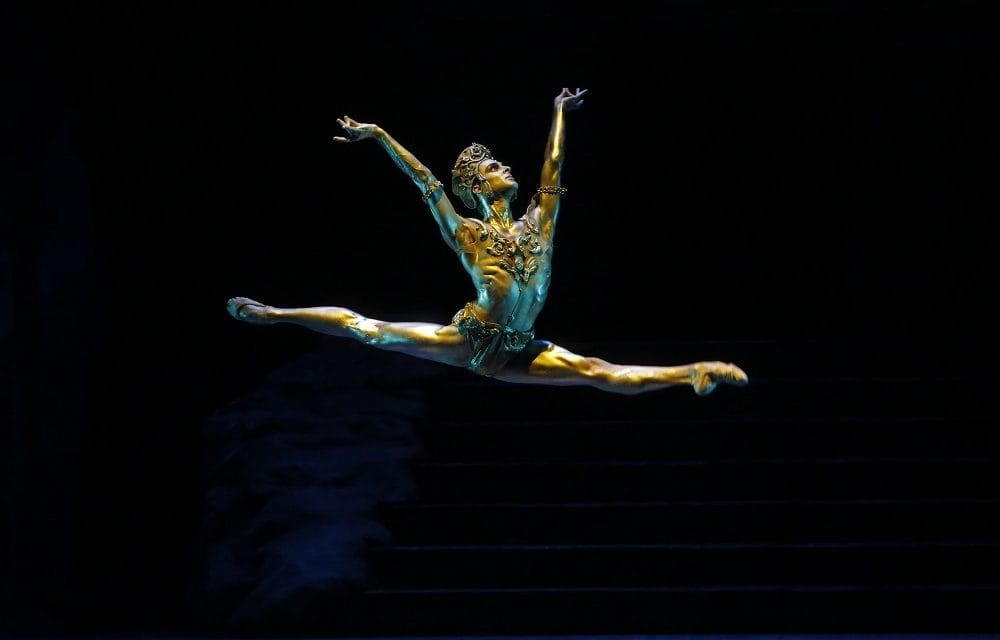
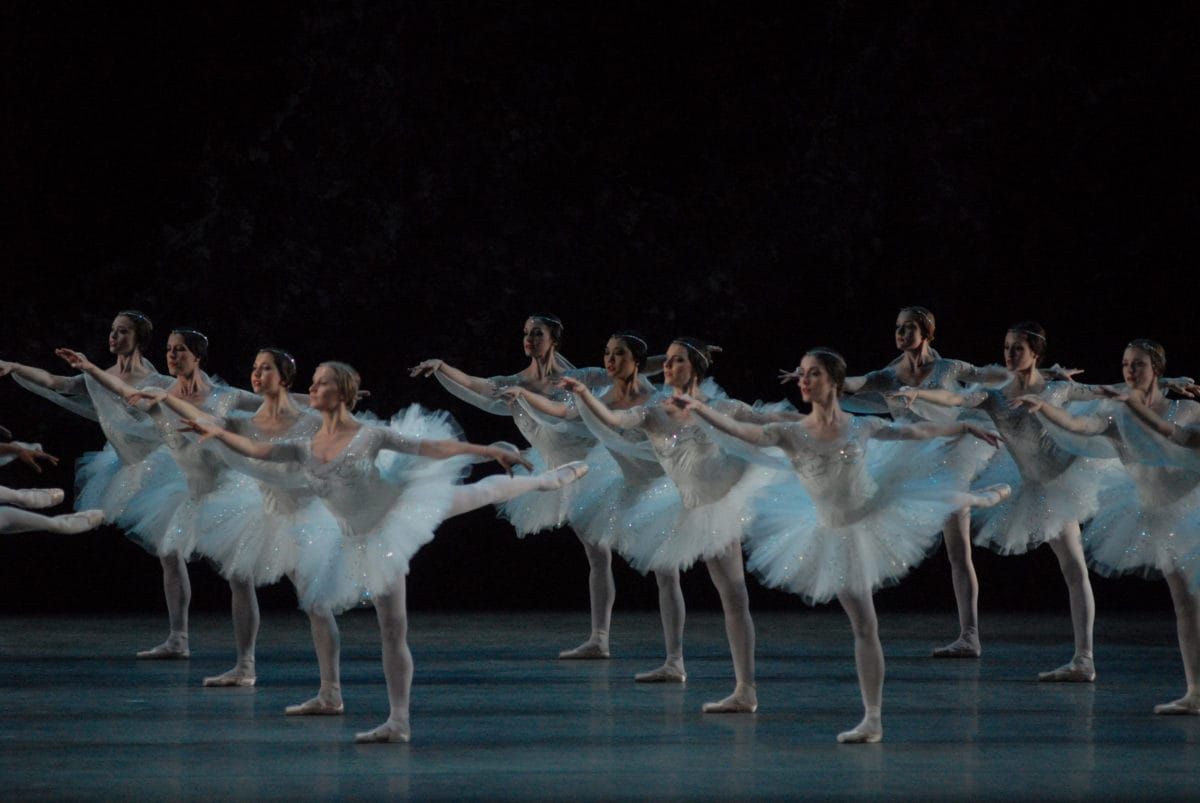
The choreographic heart of "La Bayadère" is the magnificent shades scene, and, perhaps due to first-night nerves, the dancers were a bit wobbly. The three shades (Skylar Brandt, April Giangeruso, and Katherine Williams) made a flowing, charming trio. Brandt's sprightly dancing, with her wonderfully controlled backward hops on point, was particularly impressive. Joseph Gorak got to show off his virtuosic side as a fine Bronze Idol, all molten arms and beautifully pointed feet. The demi-soloists in the betrothal pas d'action, with their sparkly tutus, were especially buoyant, and the male cohort (Aran Bell and Jose Sebastian) made their brief duet musical, detailed, and exciting. Perhaps with dancers like that, in the future guest stars won't be necessary, welcome though Kim should always be.
Copyright © 2018 by Mary Cargill



