Things to Come
"Harlequinade", "Praedicere", "AfterRite"
American Ballet Theatre
Metropolitan Opera House
Lincoln Center
New York, New York
May 21, 2018
ABT's Spring Gala included three premieres, two of coming attractions ("AfterRite" and excerpts from "Harlequin- ade") and one gala special (tap dancer Michelle Dorrance's "Praedicere"). "Harlequinade" is a reconstruction by Alexei Ratmansky of Petipa's 1900 ballet, based on the Stepanov notations now owned by Harvard, so it is technically not a premiere, but the Petipa version was last danced in Russia in 1927 and though there was another reconstruction in 2012 by the Japanese NBA Company, the Ratmansky version was new to the audience.
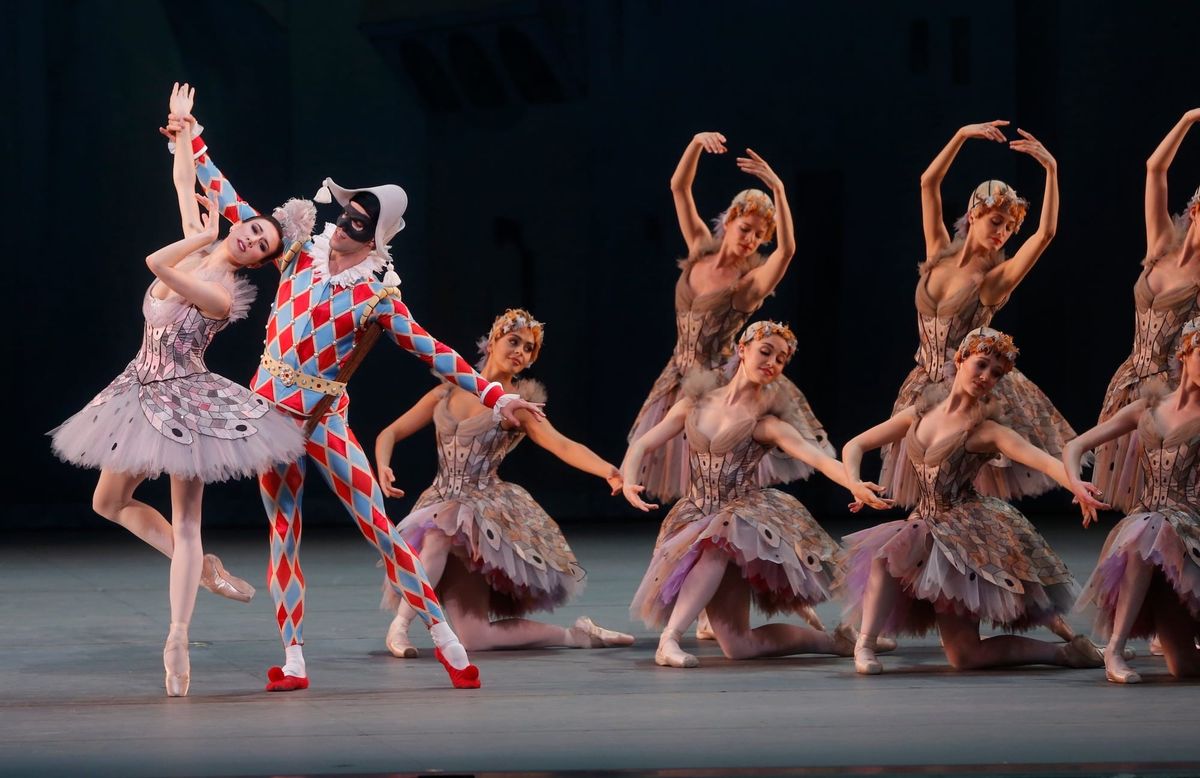
The first "Harlequinade" excerpt was the ballabile from Act I featuring Babesh and his wife (Luis Ribagorda and Courtney Shealy). There was no plot summary (even my Beaumont has nothing) so it was hard to guess who Babesh or his wife were, but they led an exuberant romp in character shoes, with a frolicking group in colorful commedia dell'arte costumes. The costumes, designed by Robert Perdziola, were inspired by Ivan Vsevolozhsky's originals, a name revered by ballet lovers since he was the man behind "The Sleeping Beauty", so it was wonderful to see him get another credit. Ratmansky kept the arms low and the jumps soft and bouncy as the group wove in and out, ending in an ever-growing circle as they skipped happily off the stage. It was a stylish and charming interlude.
The second excerpt, the "Hunt of the Larks" from Act II showed that even in his 80's Petipa had not exhausted his invention, as the corps of lady larks, in beautiful grey and mauve knee-length tutus, wove in an out of the happy couple (Isabella Boylston and James Whiteside as Columbine and Harlequin). One particularly happy arrangement had the corps separate into couples facing the opposite direction with their hands around each others' waists hopping around in ever changing patterns; a similar idea to "The Sleeping Beauty's" vision scene, of course, but fresh and unexpected. What a creative choreographer he was.
Columbine and Harlequin had a grand pas de deux with delicate character touches; Harlequin was wearing a mask and carrying his wand (familiar to those who know the Balanchine version) and got to scamper around without any noble poses. Whiteside was at his best, with his sparkling entrechats, tossing off little sideways jumps, and looking like he was having a wonderful time posing in his oversized hat.
Boylston, too, combined unforced charm with detailed and musical dancing though her solo, made originally for Mathilde Kschessinska, had its challenges and the difficult balances shifting from one position to another did wobble a bit. But Boylston's soft upper body, opening out to the music, and effortless jumps were irresistible.
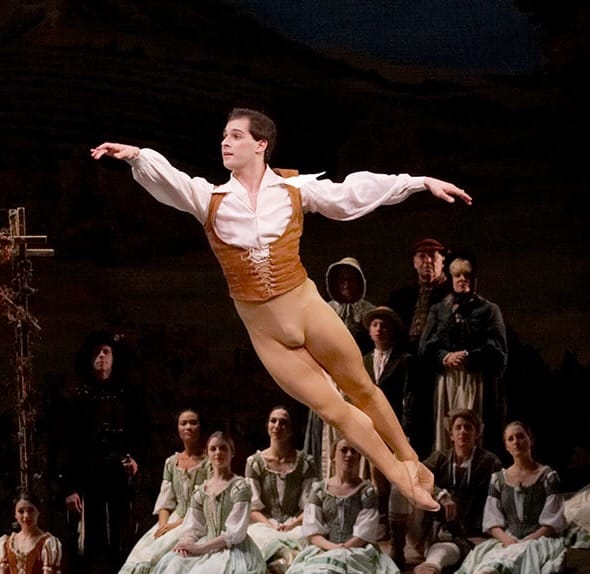
"Praedicere" (a Latin verb meaning to preach or to proclaim; yes Virginia, another obscure title) had its irresistible moments, as soloist Craig Salstein said goodbye to ABT in a dynamic tap solo, so typical of his full-scale, open-hearted performance style. He had been on a leave of absence to work on Broadway's "Carousel" and had recently decided, according to a note in "The New Yorker" to leave ABT, but the director enticed him back for one last performance, and he went back to his tap roots (like many American male dancers, he started in tap) as the dancers clapped in unison. I will miss his rare ability to combine broad comedy with a gentle humanity and his absurd but touching Gamache (the rejected suitor of "Don Quixote") and his Alain (another reject in "La Fille Mal Gardée"), Johnny from "Company B", the Champion Roper, and so many others are cherished memories. He has a rare gift for creating indelible characters, as his mean, spiteful, petty, and vindictive but extremely musical Carabosse proved, and last year his Hilarion showed his darker side, an outsider who wanted what he could never have.
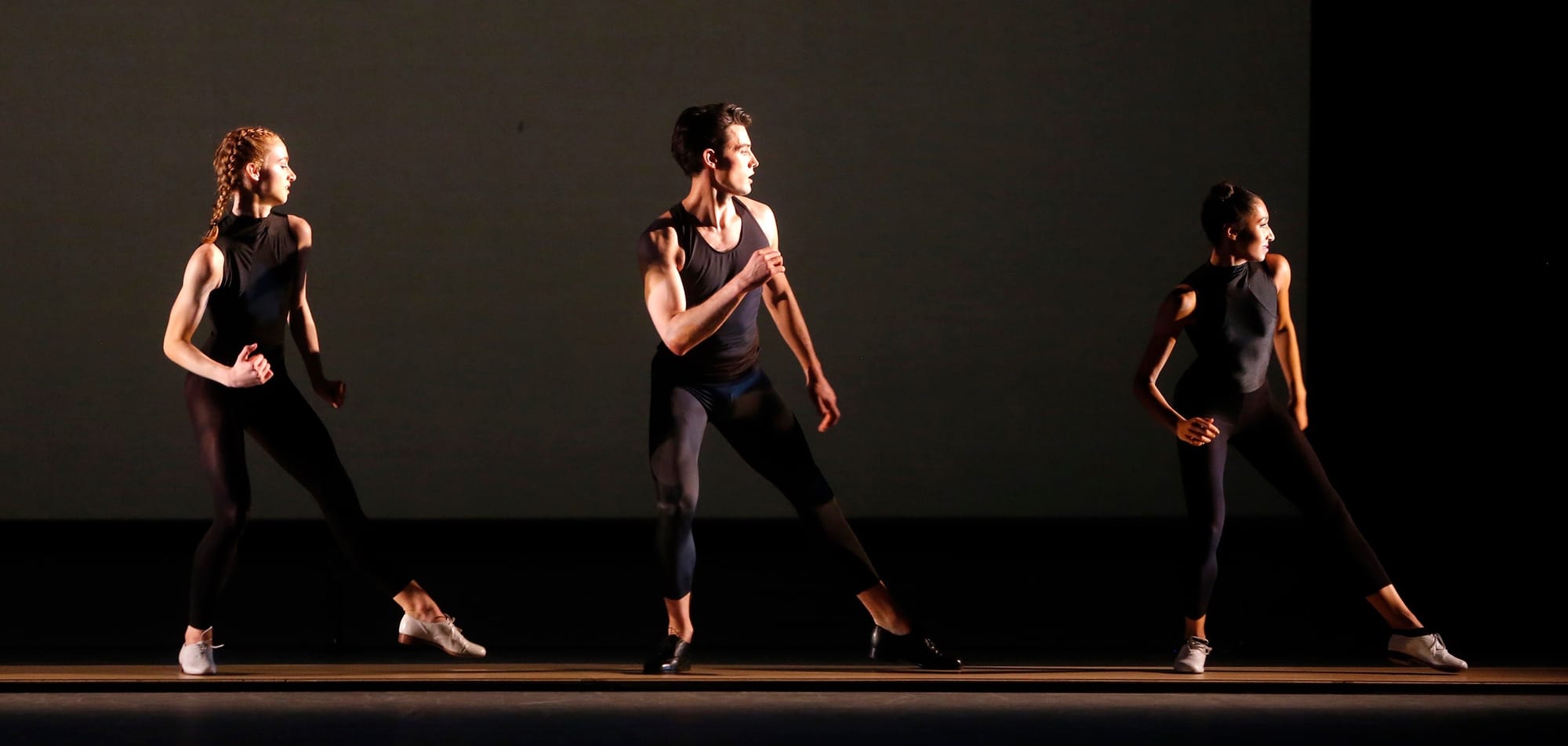
It was not clear what Dorrance wanted with the rest of "Praedicere", or who she was preaching to, and the work seemed an uneasy mixture of ballet and tap. Tap has mixed with ballet before in the wonderfully over the top vaudeville hybrid shows, and there are a few films of energetic dancers pounding away with taps on their shoes. Dorrance didn't go full out, though the dancers did change shoes midway (no taps though). The aggressive minimalism of the Dawn of Midi music (one friend thought that the stagehands were accidentally pounding on sets when the work began) had little rhythm or variety. Tap's dynamic clicks were replaced by some dull and muffled pounding and the dancers moved their upper bodies somewhat gingerly until they could grab hold of some in the ballet steps interspersed in the choreography, until they finally lined up to slide across the floor. This all took place in a dark gloomy atmosphere (complete with dry ice); presumably it was preaching to the choir.
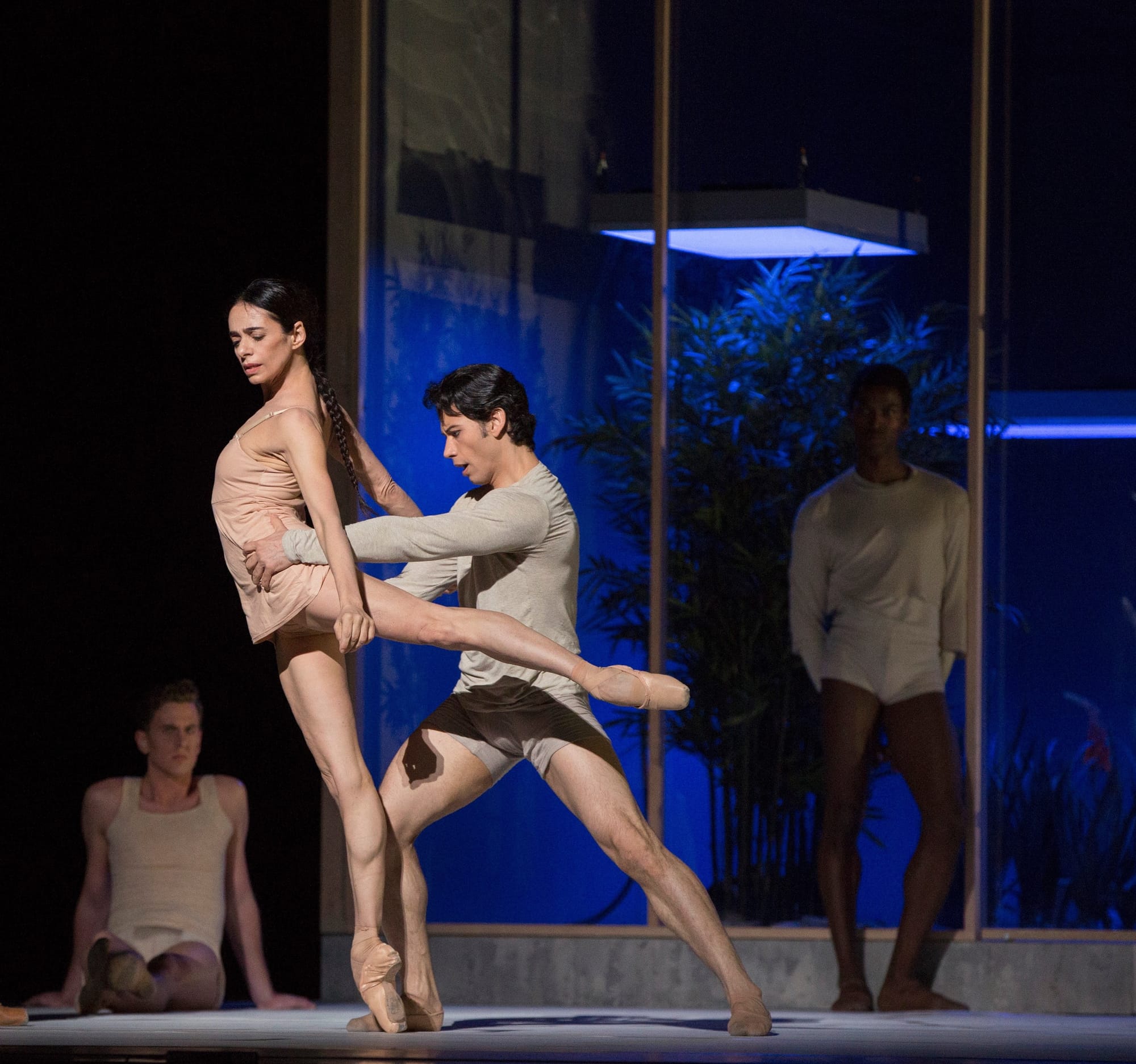
The British choreo grapher Wayne McGregor's "AfterRite" also had a dark and foreboding set, though the music, Stravinsky's "Rite of Spring" certainly was full of rhythm. The overpowering score has challenged many choreographers, and McGregor avoided the original libretto, updating shards of the story to a sci-fi future. The original story (a pagan rite ensuring the arrival of spring by sacrificing a virgin) was shocking at the time, of course, but it had understanding of the urgency with which the early Russians awaited spring, and their desperate need for its sustenance. McGregor seemed to have been influenced by all those paranoid post-apocalyptic nuclear disaster movies of the 1950s (a mid-century modern greenhouse figured prominently). The work is set, according to the program "inside the last colony [where] humanity is a fragile frontier and survival demands the fittest." Also something about "nature reclaiming it rites"; surely rites are performed and rights are reclaimed, but his grammar, like his choreography, is a bit muddled.
The dancers, some of ABT's finest (and those are fine indeed), were joined by guest artist Alessandra Ferri, playing the mother of the two children who were apparently not the fittest, since one was gassed to death at the end (the greenhouse filled with hissing smoke, turned on by Herman Cornejo). The dancers were all dressed (by Vicki Mortimer) in drab baggy shorts or skimpy undies, designed apparently to make them look as ugly as possible--the last colony presumably had no dressmakers. The choreography was McGregor's usual stop and start, with exaggerated extensions and stylized violence. Though some of the moves were quite striking, especially as odd swaying dance for four women (Misty Copeland, Hee Seo, Cassandra Trenary, and Stephanie Williams), the choreography had little variety or phrasing, and the insistent rhythms of the music were used as decoration.
Ferri was at her dramatic best, haggard and frantic, and given to silent screams. The idea of woman as perpetual victim tossed from man to man while not wearing tights may be cutting edge ballet, but the brutal depiction of every thud seemed more like voyeurism than choreography. And gassing children is really an edge too far.
Copyright © 2018 by Mary Cargill



