A Backward Glance
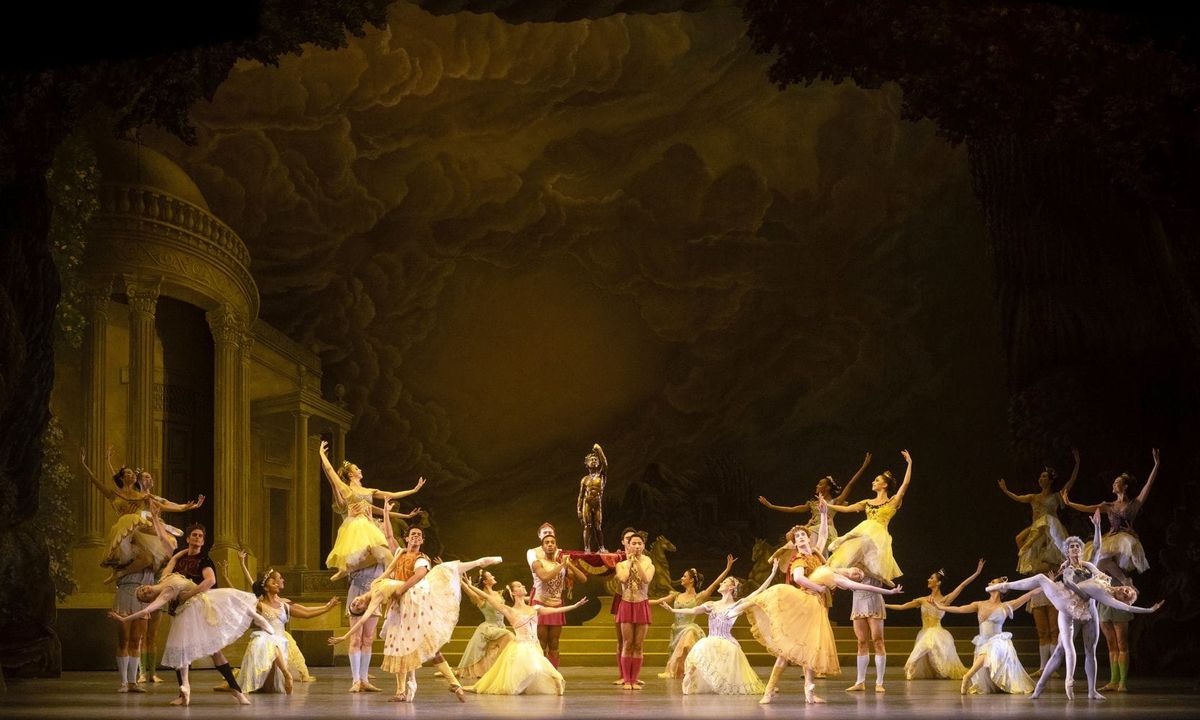
"Sylvia"
American Ballet Theatre
Metropolitan Opera House
New York, NY
July 10, 2026 matinee and evening and July 11, 2026 matinee and evening
The high-class circus of “Don Quixote” week was followed by the stylish exaltation of Ashton’s “Sylvia”; both ballets are joyful explosions of dancing with large casts which allow ABT to show off its many dancers, but “Sylvia”, with its cohesive and coherent style is first-class art as well as first-class entertainment. The story is simple—an innocent and virtuous Ancient Greek shepherd Aminta is in love with Sylvia, a nymph in Diana’s retinue who was sworn to chastity. Sylvia mocks Eros, the god of love, who gets his revenge by wounding her with an arrow, guaranteed to make her fall in love. She is abducted by Orion, an evil hunter, Eros saves her and reunited her with the pining Aminta and they live happily ever after, once Diana is reminded of her former love for the shepherd Endymion. But though the plot is simple, the ballet is multilayered. Like the much better known “The Sleeping Beauty” “Sylvia” is a 19th century ballet (it premiered in 1876 in Paris) looking back to the pre-Revolutionary classical genre, where heroes were led by benevolent gods and order and harmony were restored in architectural grandeur before before such optimism was swept away by the French Revolution.
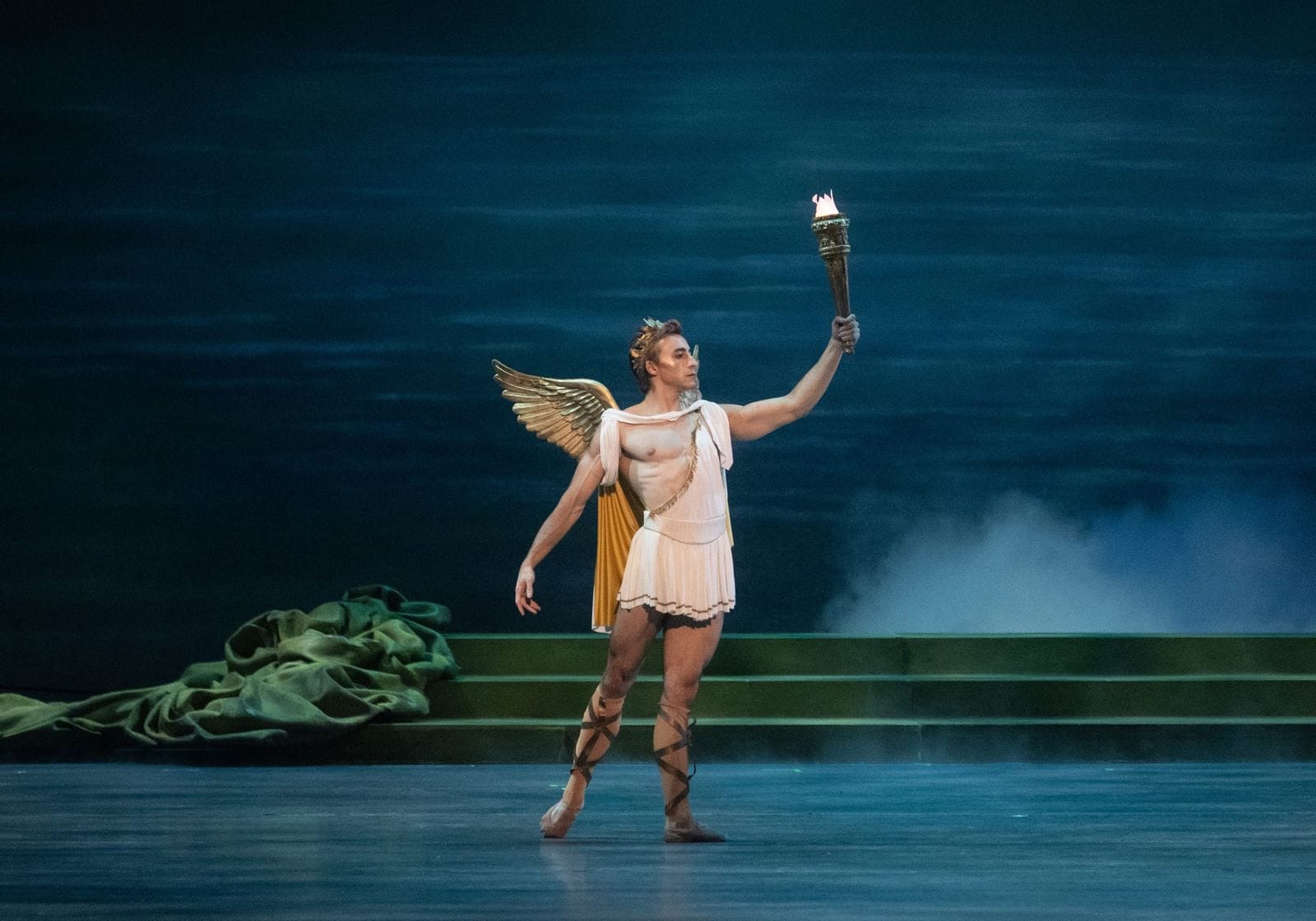
One of the layers is the Delibes score. Though the story is based on a sixteenth-century poem by Tasso, Delibes did not produce a pastiche of baroque music and “Sylvia” is a rich, melodic, and danceable confection. I once heard Peter Wright, who had worked closely with Ashton, talk about Ashton’s approach to music, stressing that he felt it was important not to compete with it, so he often let the musical climaxes speak for themselves. The is certainly the case in “Sylvia”, where the moral highpoint (reflected in the searing, plangent music) has the goddess Diana simply bowing to Eros, acknowledging his power. And Ashton let the crashing chords as Sylvia escapes from Orion accompany Eros just walking down some stairs, though the god does have to hold a torch up high while maneuvering down some moving sets wearing heavy wings and looking both gracious and magnanimous.
The choreography isn’t all walking and bowing, of course it is extremely demanding, especially for the women; Sylvia dances at full throttle through most of the ballet, with only a well-earned break in Act II before the final pas de deux. Osipova, the Bolshoi powerhouse who danced “Sylvia” with the Royal Ballet, has been quoted as saying that she thought Ashton wanted to kill the ballerina and she didn’t see how Fonteyn could dance it.
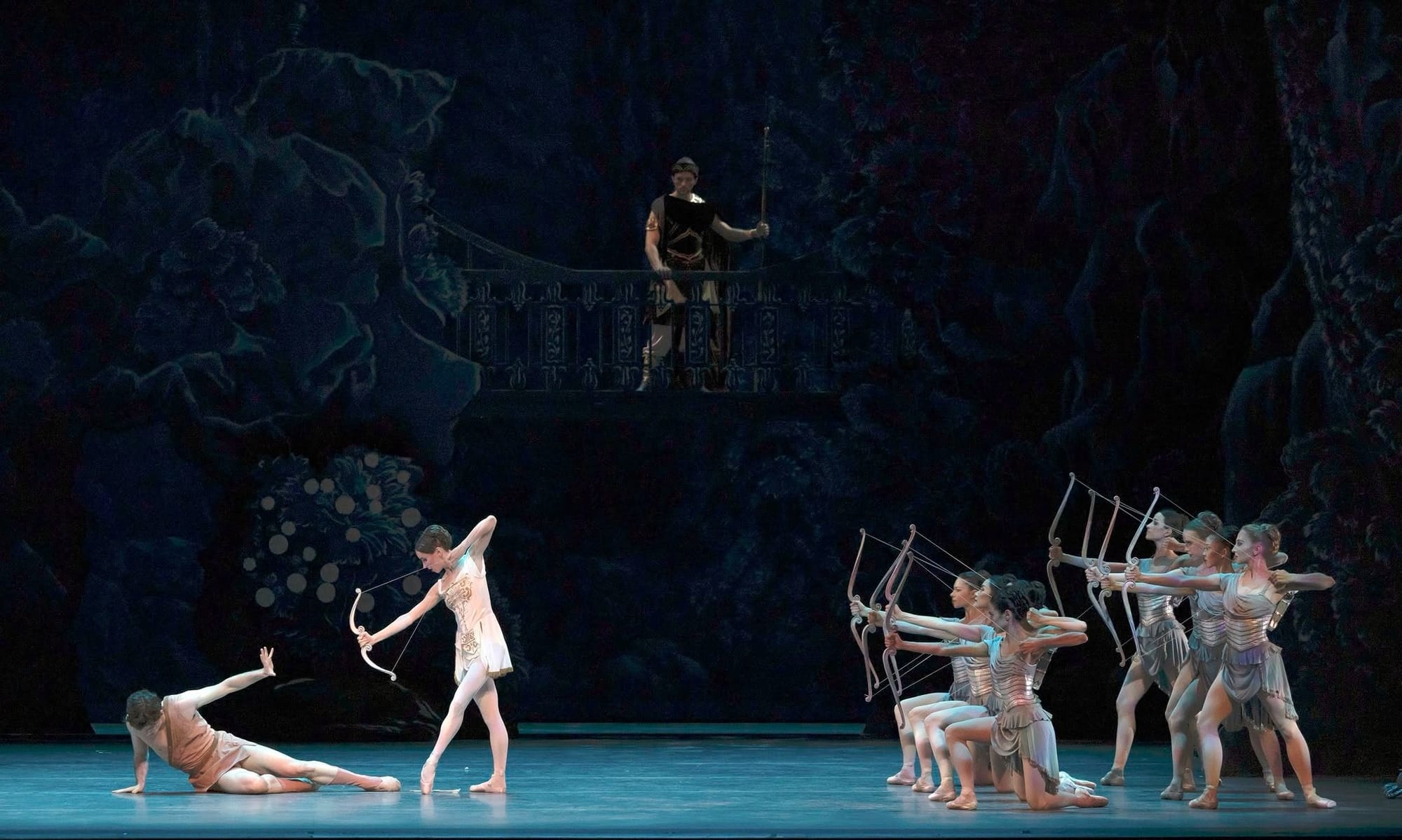
ABT’s Sylvias (Catherine Hurlin, July 10th matinee; Skylar Brandt, July 10th evening; Devon Teuscher, July 11th matinee; and Hee Seo, July 11th evening) all were able to dance it and each gave Sylvia their own individual interpretations. Hurlin combined a creamy upper body with fierce jumps in the opening section; she had a beautifully pure 90° arabesque that extended her line. She could have been a bit more dogmatic in her contempt for Eros and Aminta and her bow occasionally looked a bit like a baton as she waved it around, but her shimmering little bourrées as she was pulled by Eros’s arrow towards Aminta were beautiful. Teuscher, in her debut, had the fiercest opening, tossing Aminta’s cloak with a raging disdain and using her majestic upper body to pound her bow above her head in a defiant rejection of romance. I loved the sneering glance she gave to the statue of Eros as she sat down by the fountain.
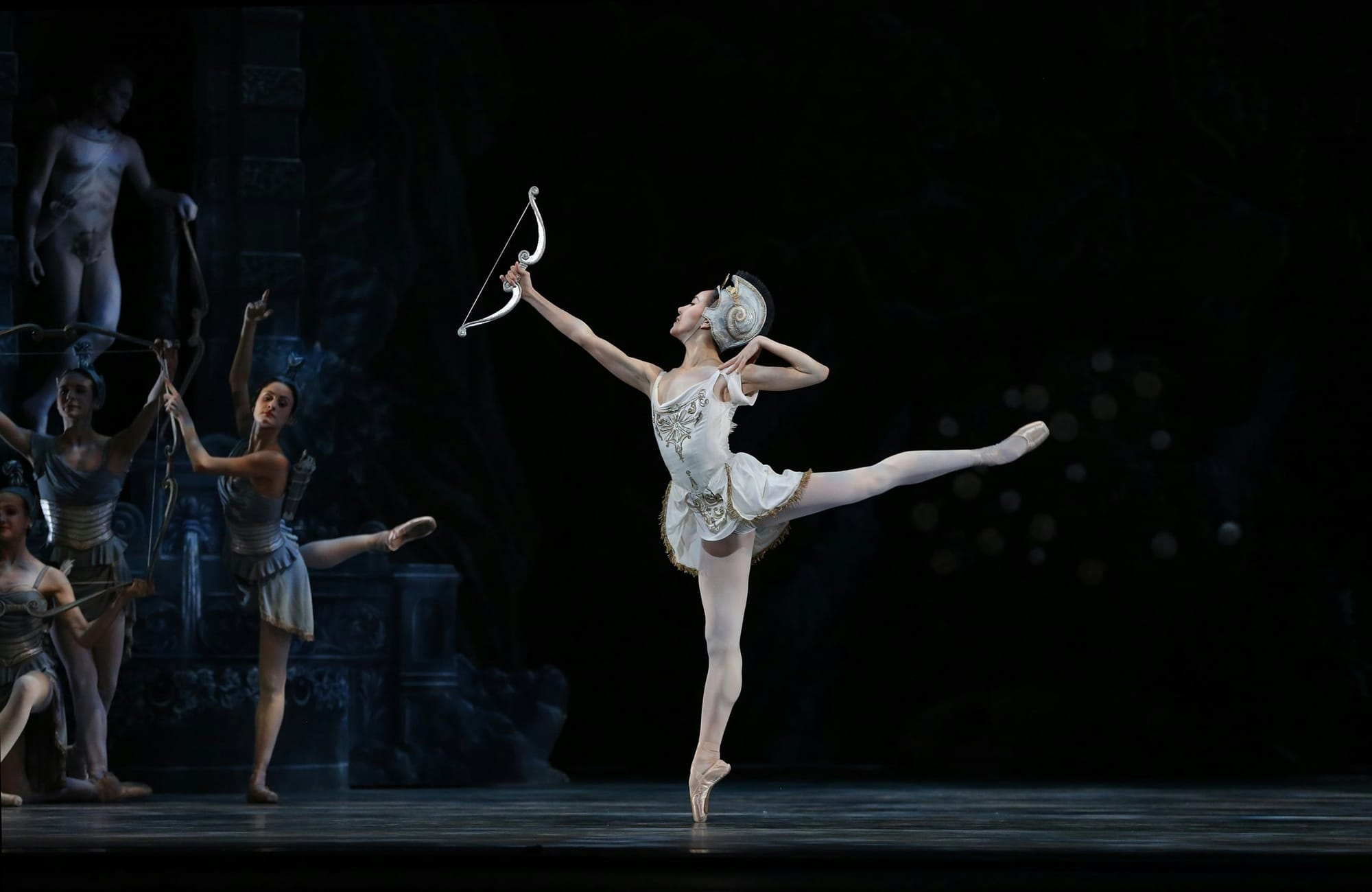
Brandt, too, had a fierce attack and her opening jumps flew. She does have a slightly constricted upper body and some of Ashton’s luminous shapes seemed a bit flat but she was a completely convincing if not totally Ashtonian nymph. Seo, with her boneless lyricism was more of a carefree Sylvia, reveling in her dancing rather than her contempt for Eros.
All four revelled in the grotto scene undulating through what must be the most delicate and musical of orgies. I did miss the more vivid lightbulb moment, when Sylvia decides to entice Orion into drinking himself silly. In earlier years it had been a bit of a cartoon, with hand to forehead “Ah ha, I have an idea” ostentatious mime, but this year it passed so quickly that it looked like Sylvia might have succumbed to Orion’s enticements. Teuscher’s mime after Orion finally passed out was especially clear, as she crept carefully around the stage to make sure everyone was out cold before grabbing Eros’s arrow. Brandt’s mime too, was vivid, as she held on to the arrow until it shook just at the moment when Eros emerged to set her free—it was as if her prayer had turned the arrow into a magic wand that could summon the god.
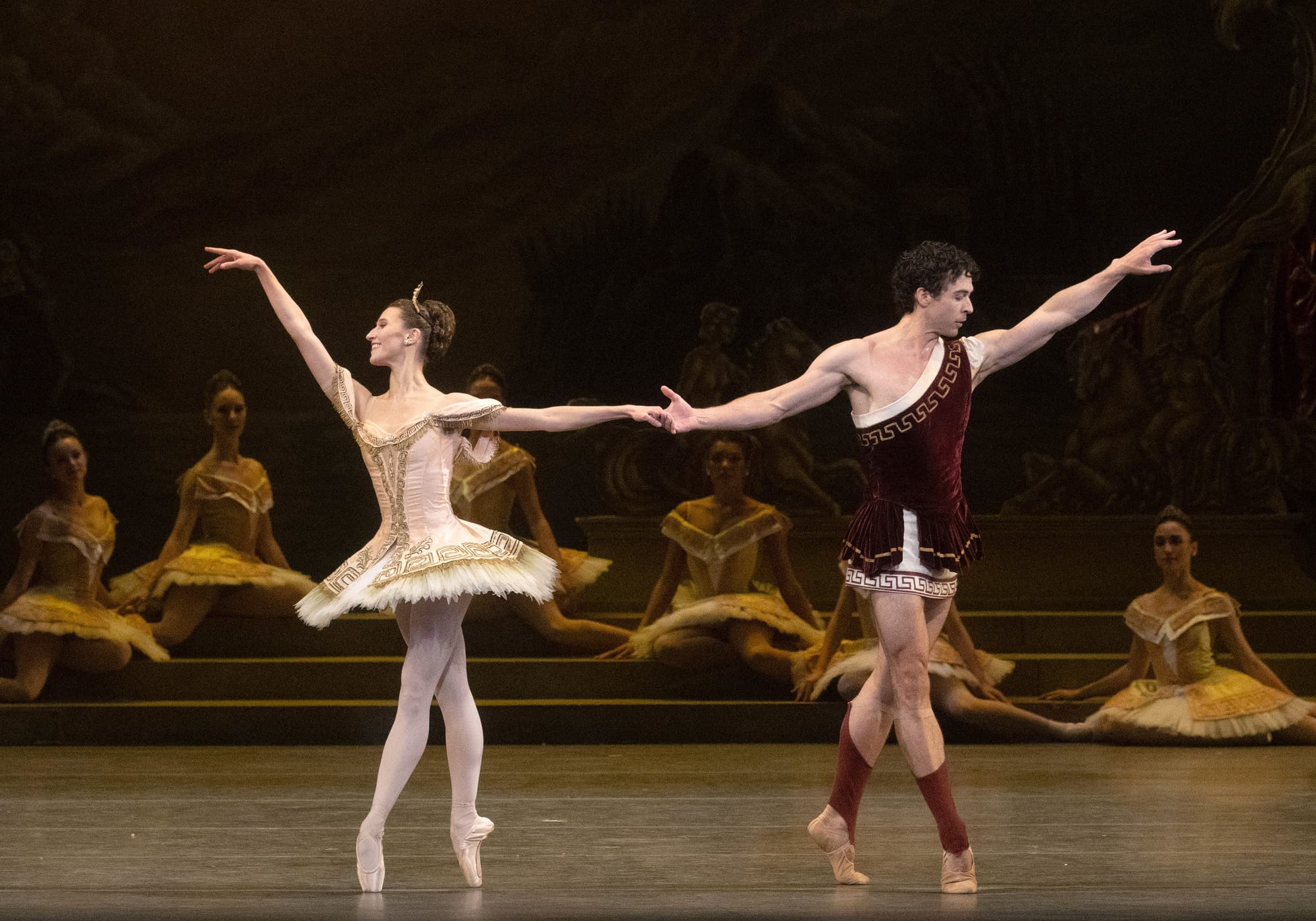
Once Eros brought her back to safety and Aminta, all was well, and it was time for the magnificent if atypical pas de deux. The pas de deux does not open with the traditional adagio, which is usually a slow, formal introduction, nor does it have a slam bang coda. Sylvia and Aminta just recognize each other and run to the back of the stage as if they can’t contain their joy, join hands, and then Aminta presents her to the guests as she dances her pizzicato solo. Aminta then gets his solo, which is followed by a breather as the two frisky goats (a nod to “The Sleeping Beauty’s” cats come on followed by the adagio. The entire cast then dances to the music of the coda, after which, as in the equally celebratory Polonaise in “The Sleeping Beauty”, the show continues. In “The Sleeping Beauty” Aurora and her Prince return to their kingdom and in “Sylvia” Diana, reminded of her own lost love, releases Sylvia from her vow of chastity and blesses their marriage. For all the physical triumphs and rapturous applause of the pas de deux the true endings of both these ballets are moral victories of their societies.
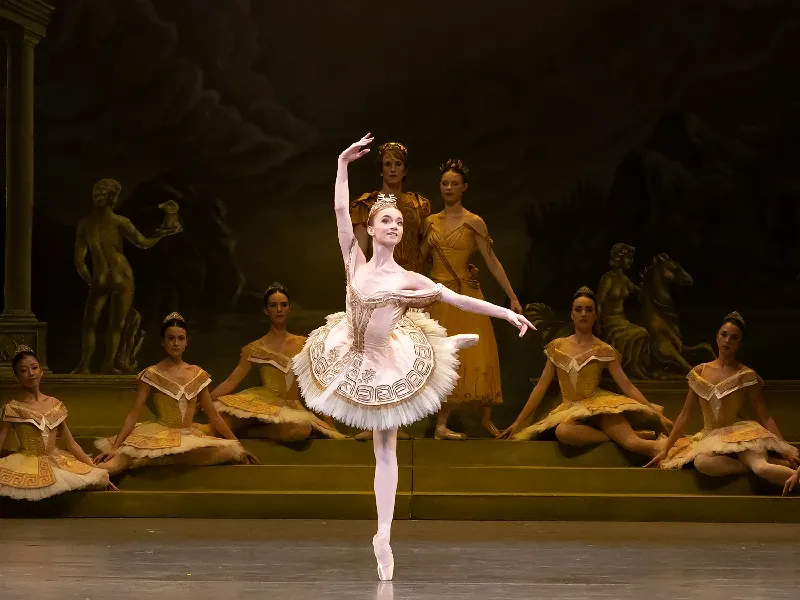
The pizzicato solo with its fast, elegant footwork and stop on a dime timing, not to mention backward hops on point and a series of quick gargouillades, is a minefield but Hurlin danced with a strong, radiant confidence and sparkling musicality. Her arms, with the alternating bent elbows and hand to the cheek phrases (which help to highlight her face so elegantly) were smooth and eloquent. Brandt’s jumps and balances were especially impressive. Both Teuscher and Seo had a bit more trouble with the footwork, which looked a bit muddy and they didn’t get all the way through the backward hops but both their upper bodies were elegantly majestic.
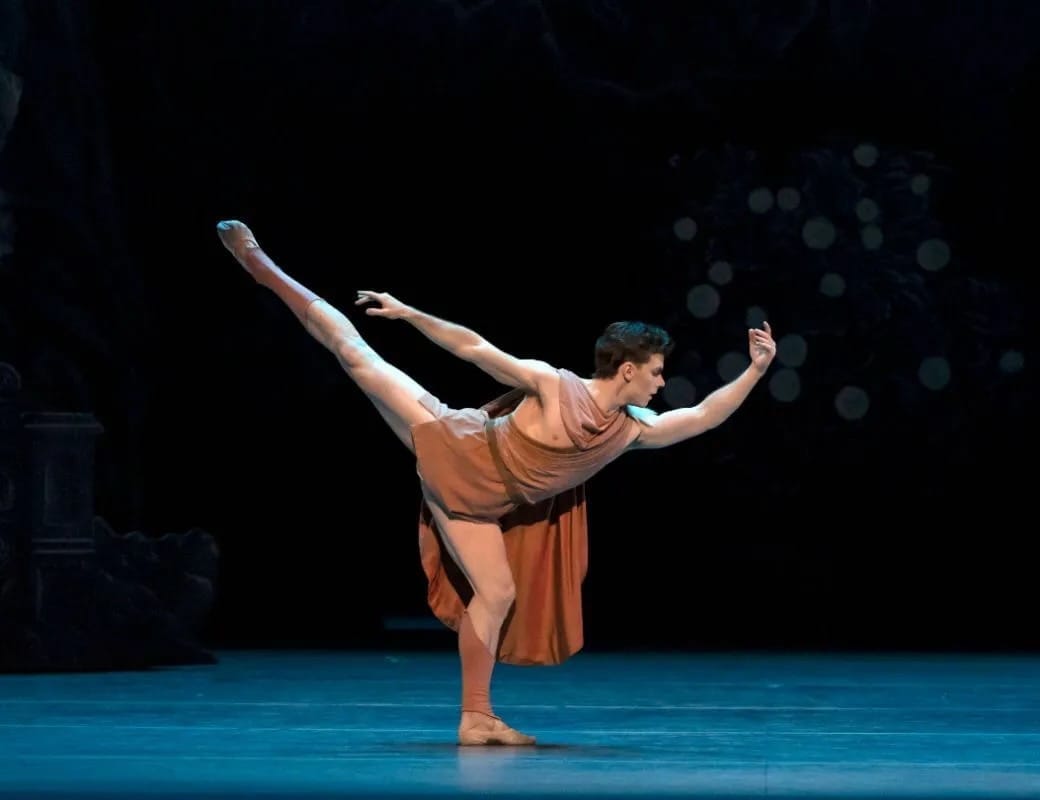
Aminta, like Desiré, has superficially little to do, but he must embody an innocent and eager purity that deserves the support of Eros, or in Desiré’s case the Lilac Fairy. Joo Won Ahn with Hurlin, Jake Roxander with Brandt, Thomas Forster (a debut) with Teuscher, and Aran Bell with Seo all gave their sad little opening dance, with the arching arabesques and melancholy but statuesque poses, a poignant resonance. Ahn’s soft, fluid arms, Forster’s controlled long legs, Roxander’s steady arabesques and Bell’s controlled but heartfelt mime as he begged Eros for help were especially impressive.
The poor fellow can only yearn after Sylvia—the stylistic convention reserves the heavy lifting to the gods—but Aminta does get a brief look in during the grotto scene, as he poses by the temple of Diana, looking mournfully out to sea. Though he only stands there looking like a Greek statue, the scene has a powerfully gentle melancholy which does vary with each dancer. Roxander and Forster were especially poignant.
He finally can get into the spotlight in the second part of Act II. His solo is full of stag leaps and quick changes of direction, ending with a quick stop into a statuesque pose. Roxander was especially strong and controlled, with powerful jumps that seemed to float up effortlessly. Aminta’s partnering skills got a work out too, in the adagio, which began with Aminta entering while holding her in a torch lift. (The original choreography had Sylvia leaning back with her arms reaching for the heavens, though this go round only Seo managed the difficult and I expect quite discombobulating backward cambré; the others just tilted their necks slightly.)
Unfortunately for Seo, after that Bell seemed to be having an off night, and her supported turns were a bit fraught, and the tricky catches in mid-pirouette almost didn’t connect. The other couples worked more smoothly; Forster was especially luxurious in the quite moments after the fish dives as Aminta pulled Sylvia’s head to nestle on his shoulder. Ashton was such a master in finding little romantic interludes in the music.
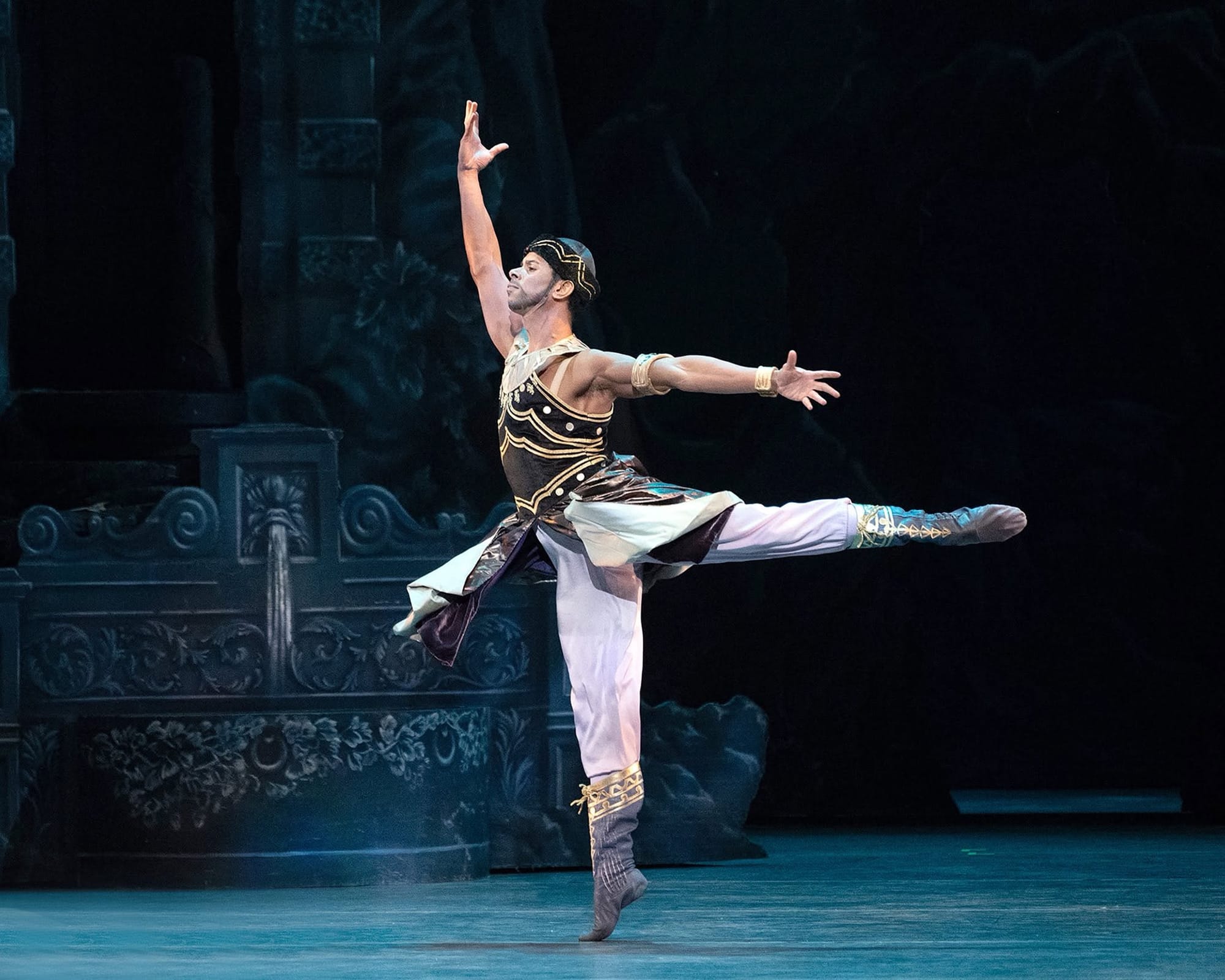
There is not much romantic about Orion, and he gets his comeuppance in Act II after he pounds on Diana’s door to demand Sylvia back, only to have the goddess stalk out and shoot him. I saw three Orions, Jose Sebastian (July 10th matinee and July 11th evening), James Whiteside (July 10th evening) and Cy Doherty in his debut (July 11th matinee). Whiteside was the most villainous, a grasping blowhard with high, powerful jumps who thought he could bully his way to having Sylvia. Sebastian was a bit lighter, oafish rather than truly evil; he looked as if he just couldn’t understand anyone rejecting jewels. Doherty, a very tall, rangy dancer gave Orion a slyly menacing air, and was quite a convincing drunk. All three handled the complicated partnering well, manhandling Sylvia with ease, and the upside down lifts all went smoothly, garnering a well-deserved round of applause.
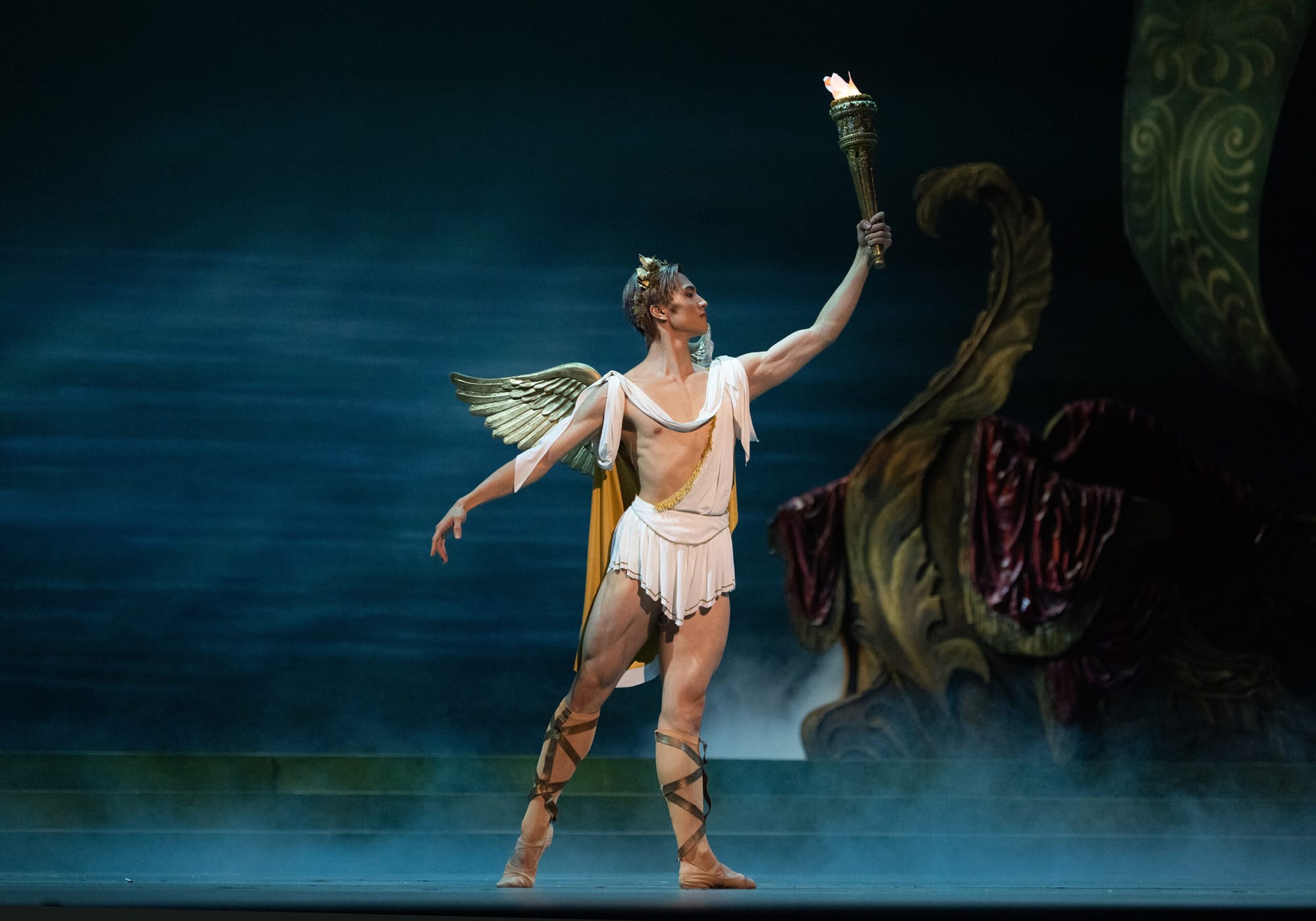
The role of Eros may be one of the most uncomfortable in the ballet repertoire, since the little god, covered in silver paint, in addition to coming down that staircase, must stand completely motionless for the first 20 minutes, invisibly slip his disguise on and off, plus use his slight of hand to magically create a red flower, prance around with elegantly pointed feet, not to mention producing some fast, elegant jumps. Takumi Miyake (July 10th, matinee and July 11th, evening) was lightest Eros, with beautiful floating jumps and a witty gleam to his dancing. The others, Elwince Magbitang (July 10, evening) and Carlos Gonzalez (July 11, matinee) were also very effective; Gonzalez was especially moving when asserting his power—generosity and love—over Diana’s bitterness.
The tall and noble Sierra Armstrong was a powerful Diana (July 10 matinee and July 11th evening) and her sweeping mime scene as Eros reminded her of her love for Endymion via an impressively effective tableau vivant was very moving. Zhong-Jing Fang (July 11, matinee) and Virginia Lensi (July 10, evening) lacked some of Armstrong’s command, but nevertheless were not anyone to mess with, flying out of the temple with bows raised.
Among the many supporting roles were Orion’s two male servants (in earlier years, they were his slaves, but presumably he has recently become an abolitionist). Their bouncy deadpan duet was reminiscent of the British music hall couple Wilson and Keppel’s equally deadpan Egyptian dance—Ashton took his inspiration from many kinds of dance. Tyler Maloney and Kento Sumitani (July 10 evening) were the strongest, nailing the complicated final pose, as they supported each other on one leg. The most popular of the smaller roles, without a doubt, were the frisky goats prancing through the infectious music with a synchronized insouciance and stiff little hooves. Breanne Granlund and Takumi Miyake were especially vibrant with Miyake’s gorgeous flying jumps looking especially goat-like.
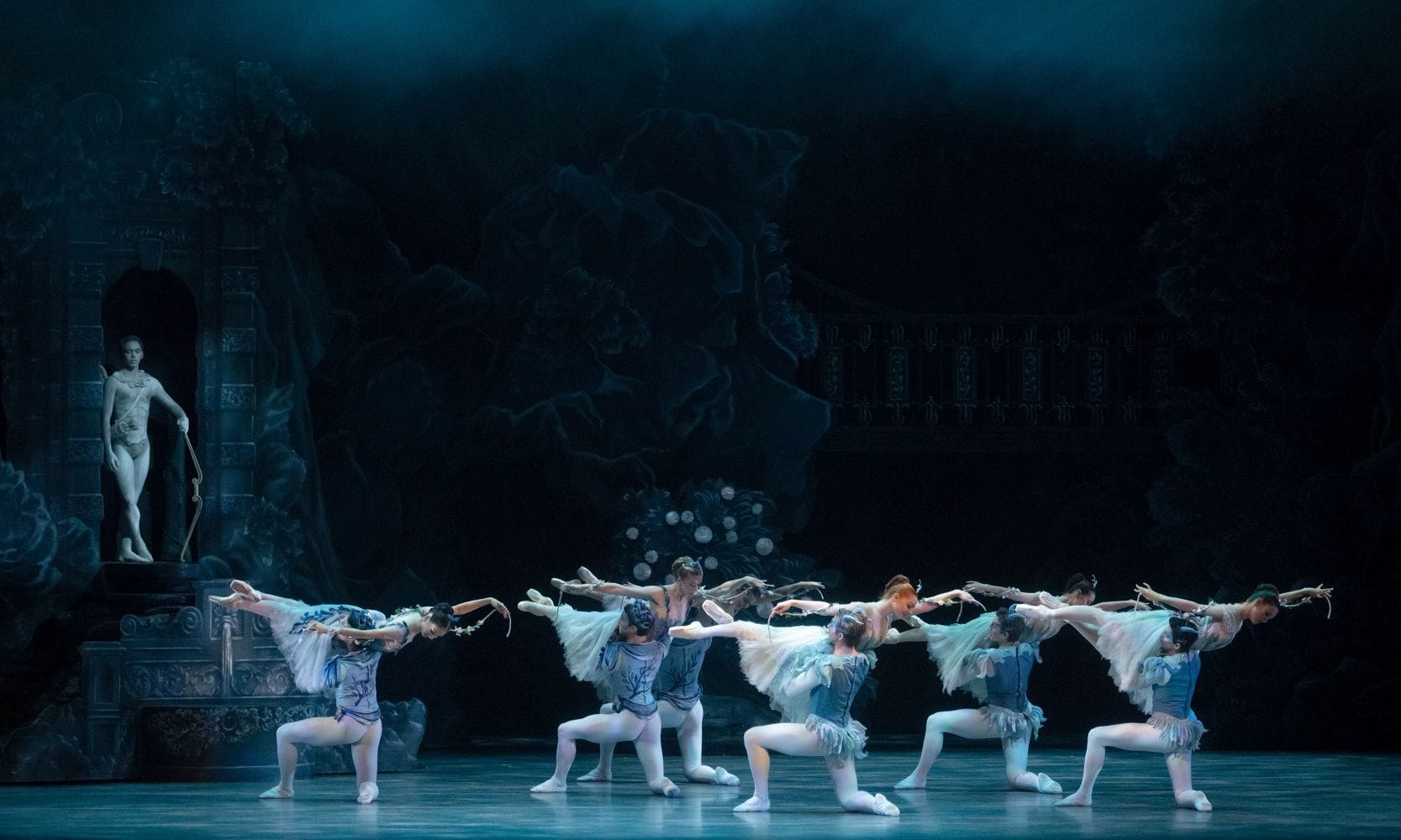
The corps too, had to work hard, beginning with the magical opening as the various fauns and sylvans and their naiads and dryads cavorted with impressive precision that got more precise as the run continued, turning their heads bopping up and down, playing with their garlands and generally creating a sylvan paradise. The eight huntresses accompanying Sylvia poured on, bows held high, and burst into a series of simultaneous fouettés, an elegant display of glorious misandry. One only hopes that they, like Sylvia, manage to live happily ever after in that wonderful past, a past that, thanks to Ashton, we can visit if only for a while.
© 2026 Mary Cargill