Soul Man
Program A: Soul of America--Jazz and Pop
"Pizzica", "Three Preludes", "Dancing Honeymoon", 'You've Got To Be Modernistc"
Mark Morris Dance Group
The Joyce Theater
New York, NY
July 14, 2026
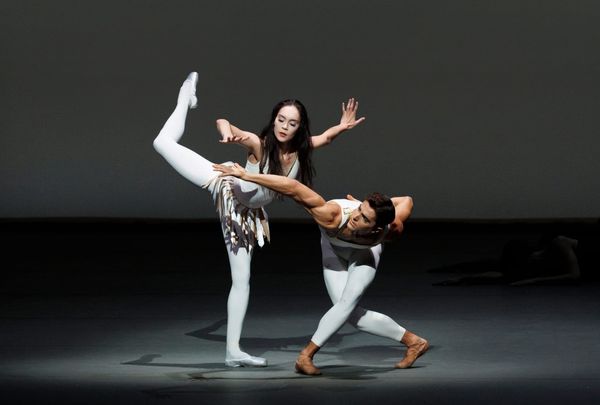
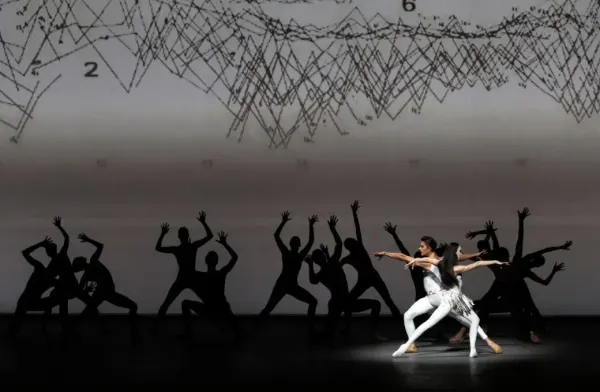
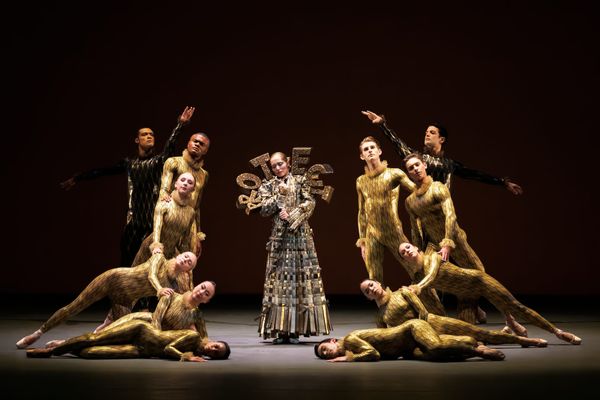
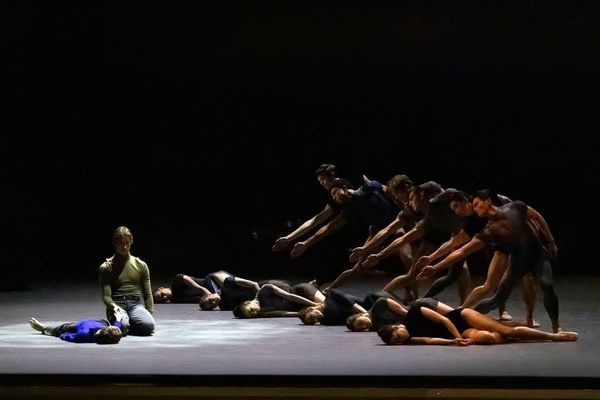
Mark Morris is honoring the American semisesquicentennial—a long word meaning 250th anniversary—with a long look at his works choreographed to American music. The first of the three programs saluted earlier popular composers, primarily Louis Moreau Gottschalk (“Pizzica”), George Gershwin “Three Preludes”, and the early jazz composer James P. Johnson “You’ve Got To Be Modernistic”, in addition to a bevy of popular songs from the 1920’s and 1930’s (“Dancing Honeymoon”). A few British songs were snuck into the last one, including the Noel Cowardesque “And Her Mother Came Too” by the multi-talented Ivor Novello—the Brits do deserve some gratitude for America’s independence, I guess. And Morris certainly a great deal of gratitude for his insistence on live music; Colin Fowler played the piano for the Gottschalk and the Gershwin works, Ethan Iverson played his arrangements of James P. Johnson’s songs. Blaire Reinhard, with a small band sang the 1920’s songs with a stylish understatement.
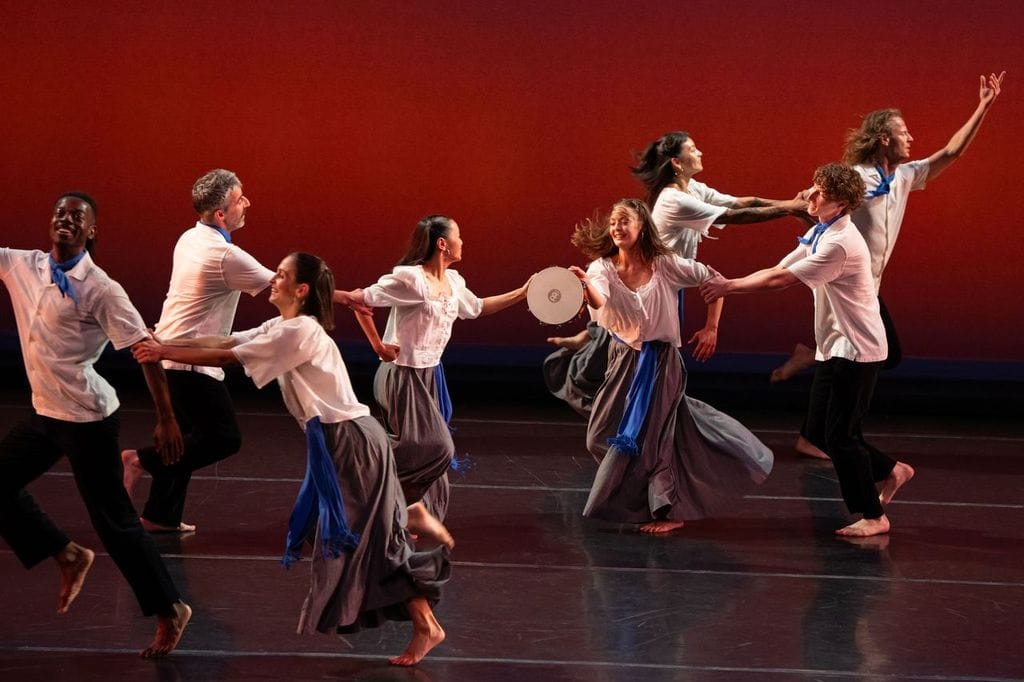
“Pizzica”, 2025, a New York premiere set to Gottschalk’s well-known “Tarantella”, was a perfect opening, a bouncy, cheerful fleet-footed romp for four couples, complete with tambourines. (Pizzica is a variation of the tarantella.). The work opened rather ominously, with a woman alone shuddering on the ground until a man appeared, raised her up and started dancing to the insistent rhythms of Gottschalk’s music. This was, I expect, a reference to the old Southern Italian belief that dancing would sweat out poison from a spider bite. The four barefooted couples swept through the fast-paced, complicated footwork with a joyful flair, occasionally changing partners, forming ever-shifting shapes. Every so often someone would flaunt a tambourine and wave at the audience which a sightly sly, knowing smile, as if saying “Yes, this is a cliché, but it is a lot of fun”; the tambourine has rattled through ballets from Bournonville to Balanchine, but rarely has it been shaken with so much joy.
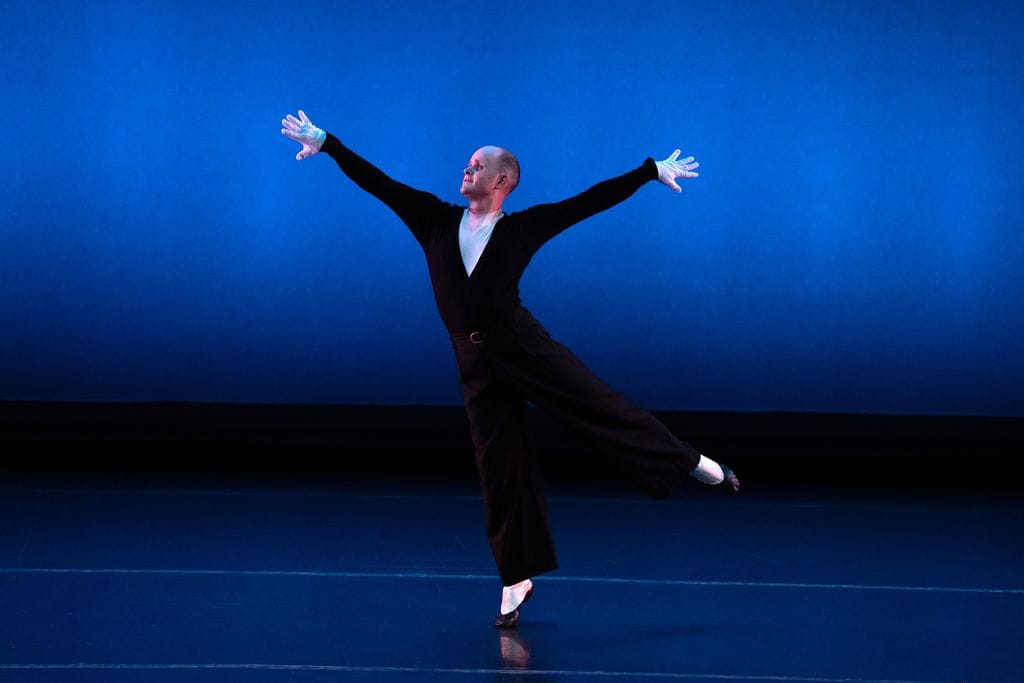
There is a lot of joy in “Three Preludes”, the 1992 solo Morris set to Gershwin that ranges through some very American styles. Dallas McMurray was the dapper soloist wearing Isaac Mizrahi’s witty black and white costume, half dinner-jacket with some natty spats, half Mickey Mouse with impressive white gloves that seemed to glow against the dark background. He did give the first prelude a Mickey Mouse tinge with his exaggerated hands, as well as a Fred Astaire flair with his elegant jump; two American icons ironically but affectionately combined. He was a bit of a sad sack in the second prelude, flopping around to the bluesy music and trying to keep his balance. He was more confident in the final section, dancing with frisky little steps as he mimed playing the piano with the air of a slightly jaded lounge singer.
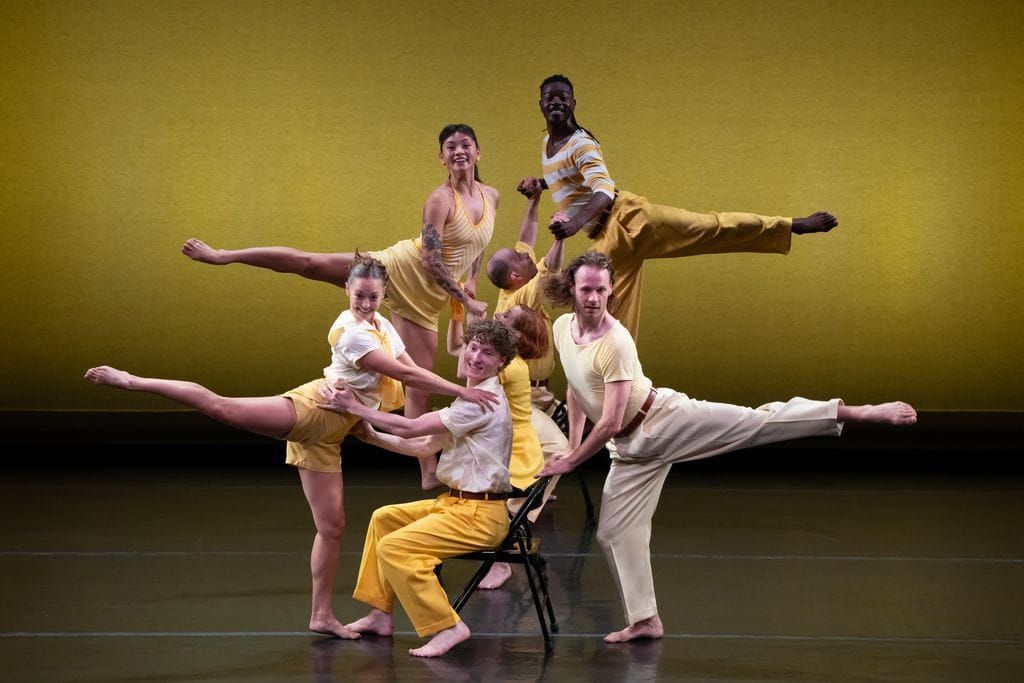
“Dancing Honeymoon” was not jaded at all. Morris choreographed the sixteen vignettes to songs transcribed by Ethan Iverson (who played the piano along with Gregory Valtchev, violin and Sean Ritenauer, percussion) from recordings of Gertrude Lawrence and Jack Buchanan, the ultra-sophisticated British entertainers. He avoided the obvious path of imitating their chic air and “Dancing Honeymoon” is a sunny, funny explosion of pop surrealism; the three folding chairs almost dance along with the cast . The bright yellow costumes (by Elizabeth Kurtzman) would not look out of place at a sock hop.
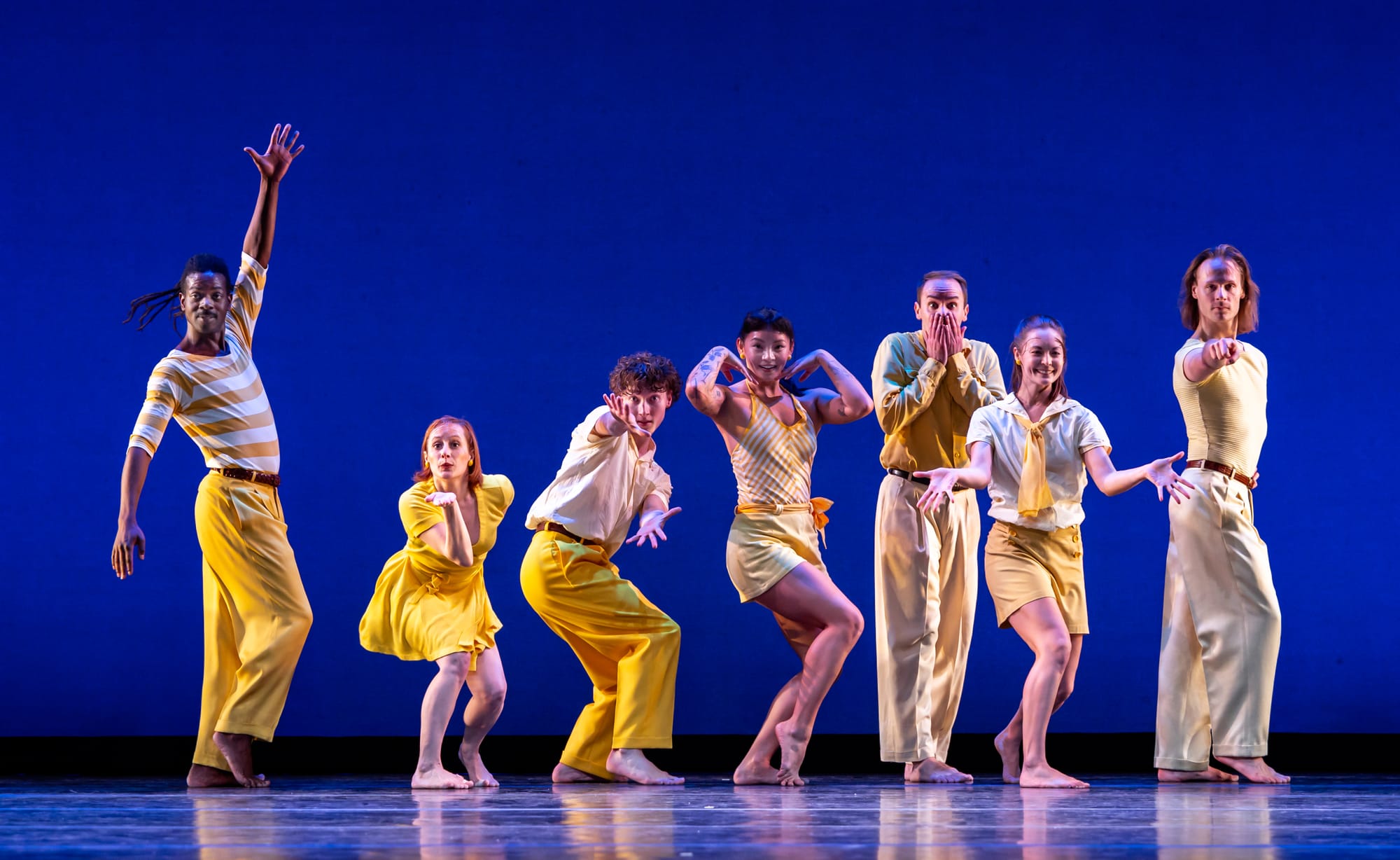
Morris’s seven dancers and three chairs romped through the songs with energetic precision, showing off his astounding use of geometry as the dancers (and chairs) formed constantly shifting shapes. The shapes were not random, as each song told a story or echoed a mood—I especially loved the non-plussed suitor of “And Her Mother Came Too”, as he tried so politely lose her. The mood was gloriously upbeat, and even the wistful “Someone to Watch Over Me” had a cheerful air. The final song, “Always Tomorrow”, ended with the cast leaving in a chorus line to the words “tomorrow was yesterday”; those lovely songs show that yesterday can be tomorrow as well.
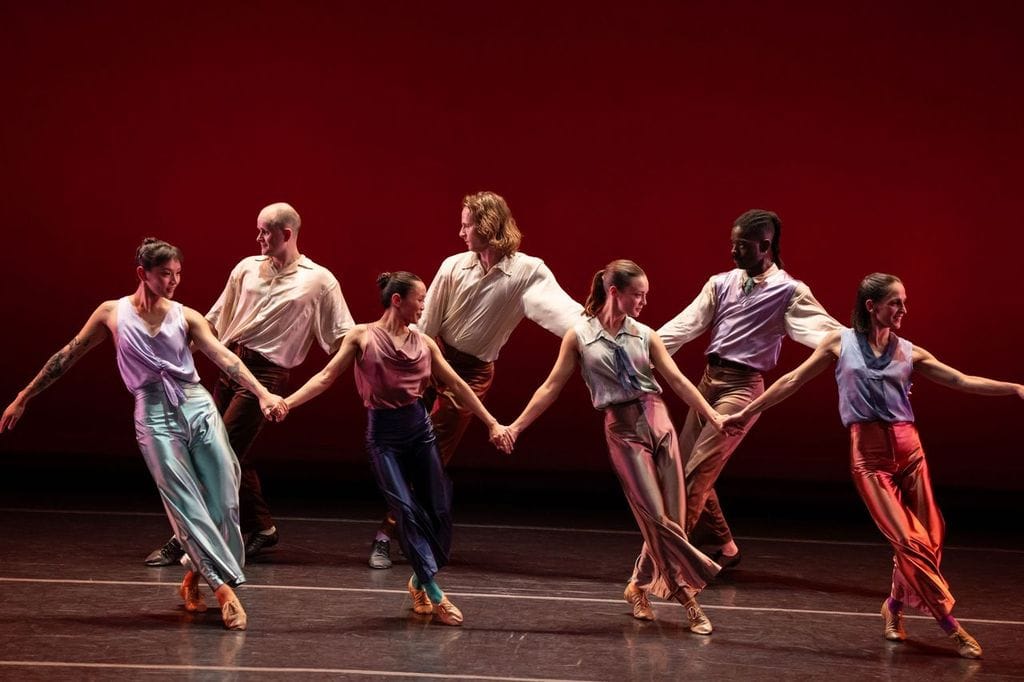
“You’ve Got To Be Modernistic” (2025) is also rooted in popular jazzy ragtime songs by James P. Johnson, which were transcribed from old recordings by Ethan Iverson for piano. According to the program Johnson most famous song is “The Charleston”, and the cast of seven danced variations of this and other popular dances, including the Black Bottom, with quirky variations; the Black Bottom dancers slapped their cohorts bottoms instead of their own with joyful abandon. There were many moments of pure fun, especially the opening as the dancers twirled their long beaded necklaces around their necks like so many little hula hoops, and later on when they seemed to turn into little Popeyes, watching everything through a spyglass. The shiny, satiny palazzo pants and loose tops, again by Elizabeth Kurtzman, had a timeless, comfortable elegance.
Compared with “Dancing Honeymoon”, however, the piece seemed a bit disjointed, as the dancers moved from one moment to the next with little of the sculptural craft of the earlier work. The often moved in straight, horizontal lines that did get a bit repetitive, though the dancers were vibrant and energetic. It was eminently watchable and fun, though a bit more soul would have made it more memorable. However, the rest of the program had soul to spare.
© 2026 Mary Cargill