The Human Element
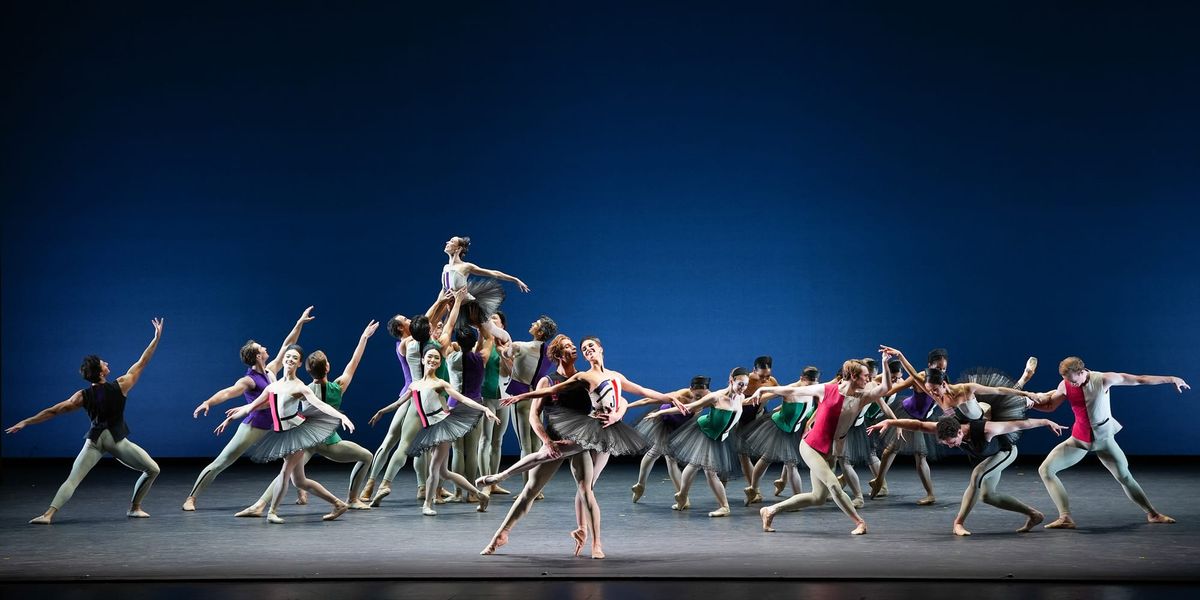
"La Boutique", "Mercurial Son", "Études"
American Ballet Theatre
David H. Koch Theater
Lincoln Center
New York, New York
October 8, 2024
ABT opened it’s Fall season with two premieres, Gemma Bond’s “La Boutique” and Kyle Abraham’s “Mercurial Son”, and Harald Landers’ 1948 “Etudes”, a salute to classical ballet that ABT first danced in 1961. Though “Etudes” does have an homage to the grand nineteenth century ballets, especially the works of the Danish choreographer August Bournonville, and “La Boutique’s” program note refers to Léonide Massine’s 1919 “La Boutique Fantasque” which told the love story of two dolls in a toyshop, all of these works are plotless, with some outstanding dancing, but little emotional resonance.
For “La Boutique” Gemma Bond used a rearranged version of the original Massine ballet, which was written by Ottorino Respighi, based on themes by Gioachino Rossini. The music is bouncy, tuneful, and packed with character—one Massine’s most famous pieces was set to its lively can-can— which Bond has turned into a classical ballet. The costumes, by Jean-Marc Puissant, have very flattering tutus for the women, with a slight Art Deco feel, which is echoed in the men’s leotards, though their dorm room green tights are an odd choice.
Devon Teuscher and Aran Bell were the lead couple, accompanied by Sunmi Park with Cory Stearns and Skylar Brandt with Carlos Gonzalez. There was a large corps, with the same Art Deco designs who danced sharp, clear steps, swinging their arms with little breaks timed to the music; the dancers had a careful épaulement and a fun-loving air. Bond used her corps well as they formed and reformed in straight lines and boxy shapes, and it was a cheerful and bracing beginning. Unfortunately, it did seem to meander after that, slightly losing focus. Park and Stearns danced a pas de deux combining swooping lyricism alternating with overly complicated lifts. After they walked off together, Teuscher bouréed in alone, followed by Bell, and they danced a very similar lyrical pas de deux, with extra-complicated lifts; Bell then walked off to one side for a fine series of turns looking away from Teuscher and came back again—there was little emotional logic and fine though the dancers were, there was little connection among the dancers, no mystery, no secrets, and, to some extent, no purpose.
There was a lot for the dancers to do, though, with solos, duets, and trios interspersed among the corps formations. Teuscher had a lovely adagio solo with flowing arms, though she did take a fall she recovered well. Stearns got a cheerful, happy dance with quirky, rather floppy arms, and Bell got to show off his elegant, soft jumps and pure lines. Andrew Robare and Joseph Markey, two of ABT’s most impressive young dancers, got a fun, show-off competition, and everyone came back for the enthusiastic finale. Bond has made a pretty piece and moved her corps well, but those dancers deserved a richer work.
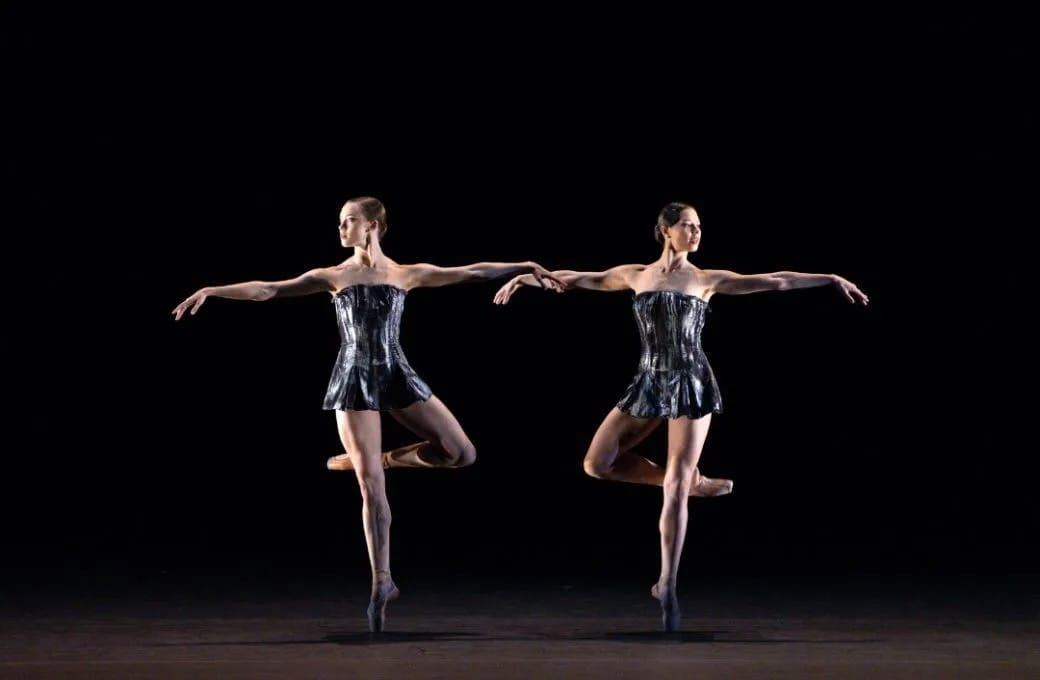
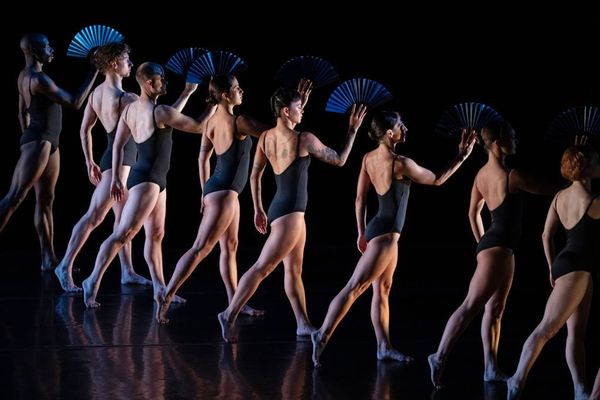
Kyle Abraham’s “Mercurial Son” also had impressive dancing, though it too was a bit diffuse. It is set to sounds by Grischa Lichtenberger, whose compositions appear to be the musical equivalent of brutalist architecture, made up of a very loud series of booms and squeaks. Karen Young’s costumes ranged from extremely attractive to rather odd. Two girls (Sierra Armstrong and Ingrid Thoms) got very flattering little sleeveless short dresses, Cassandra Trenary showed off her shapely muscles in a black two piece bathing suit, and Catherine Hurlin was chic in a golden unitard. But the poor men (Carlos Gonzalez, Joseph Markey, and Andrew Robare) had unflattering tunics which made them look like cavemen wearing the skins of the colorful but long extinct lamébeast.
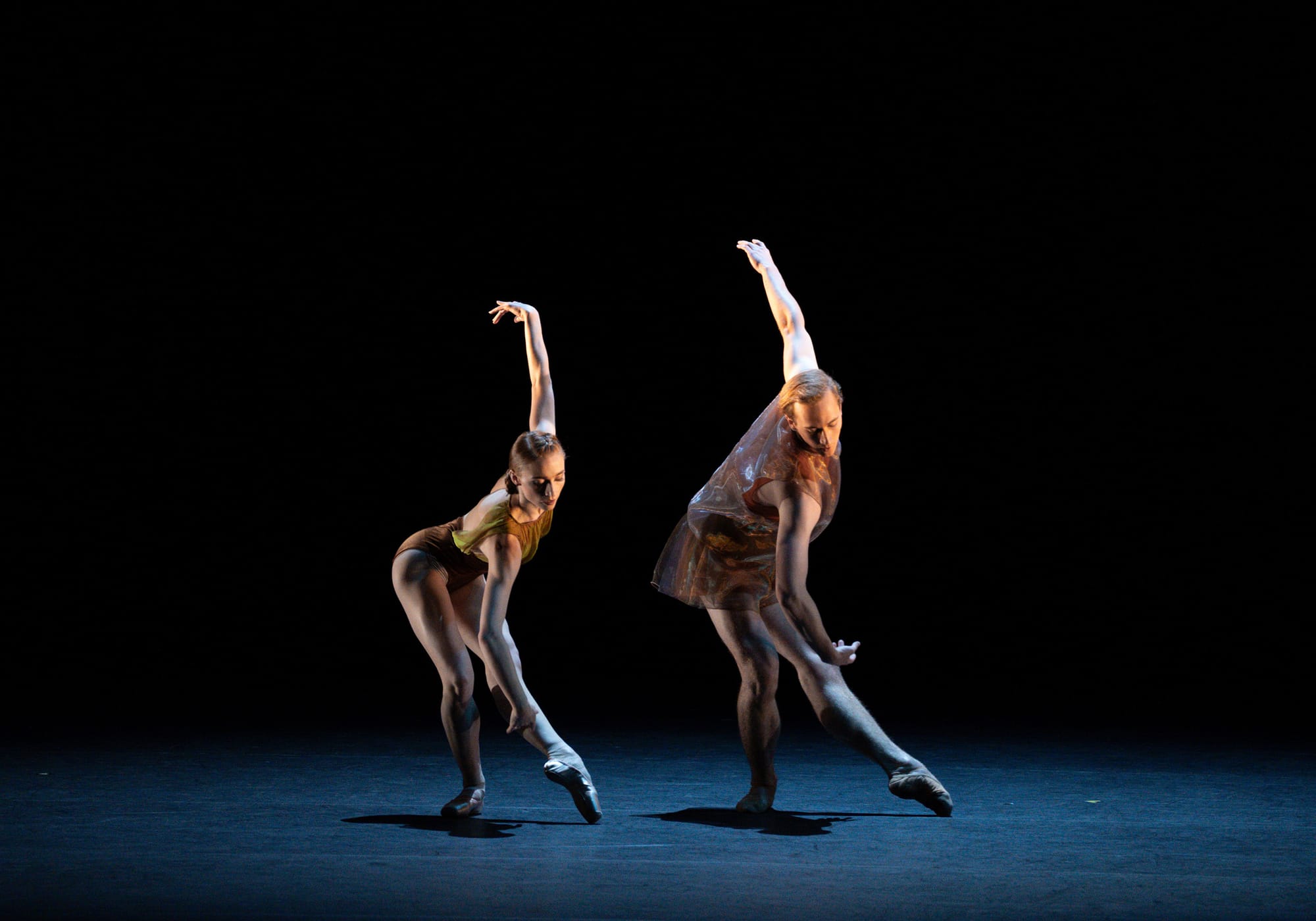
The choreography came in short, sharp spurts of movement, with impossibly fast turns and liquid shapes, with lots of rippling shoulders, head rolls, and quirky postures; the dancers’ control and speed were phenomenal. Robare, in pink, had a memorably fluid solo, with strong, off-center balances. Trenary, stabbing the stage with her points, seemed to be exultantly independent; her pas de deux with Gonzalez was passionately aggressive. Hurlin was both sensuous and fierce, with a brief solo at the edge of a spotlight, dancing, it seemed for herself alone. The danced ended with a single dancer, Markey in gold, struggling against some unseen force with animal-like moves, until he either surrendered or died; he walked off with a stylized, mechanical gait, controlled and almost inhuman, though what this had to do with either Mercury or his son was a bit vague. The work had a bright sheen and impressive technical facility, but the dancers seemed to be moving in a vacuum, with little connection to each other.
“Études” is full of connections; it is a quick survey of ballet technique and of ballet styles, opening with a stylized dance class with spotlights on the dancers’ point work, the quintessential symbol of classical ballet. Lander was Danish (he directed the Royal Danish Ballet from 1932 to 1951) and “Études” includes many references to the Danish tradition, with its sparking footwork. ABT’s current “Études” was set by Thomas Lund, a noted Danish stylist, and the dancers, especially the men, looked like they had absorbed much of the style, especially the sharp fifth positions and the low, soft arms, which makes jumping so difficult and looks so easy and elegant.
After the opening demonstrations of the basic footwork and arm movements, Lander explored various styles, opening with the nineteenth century Romantic Bournonville tradition—Bournonville’s most famous ballet is his version of “La Sylphide”, the tragic story of a magical sylph and her fated love—followed by some bravura Petipa-inflected dancing, and ending with what can seem an endless variety of finales. This performance was led by Catherine Hurlin, Isaac Hernández, ABT’s new principal, and Jake Roxander. Hurlin showed off her soft line, flowing arms, strong balances, and dramatic acuity in the brief salute to “La Sylphide”, making the hints of mime clear, as she showed the poor slyph’s arms getting colder. There was also a brief hint of a mirror dance (an echo, perhaps of Bournonville’s “La Ventana”), as the ballet wandered through pas glories.
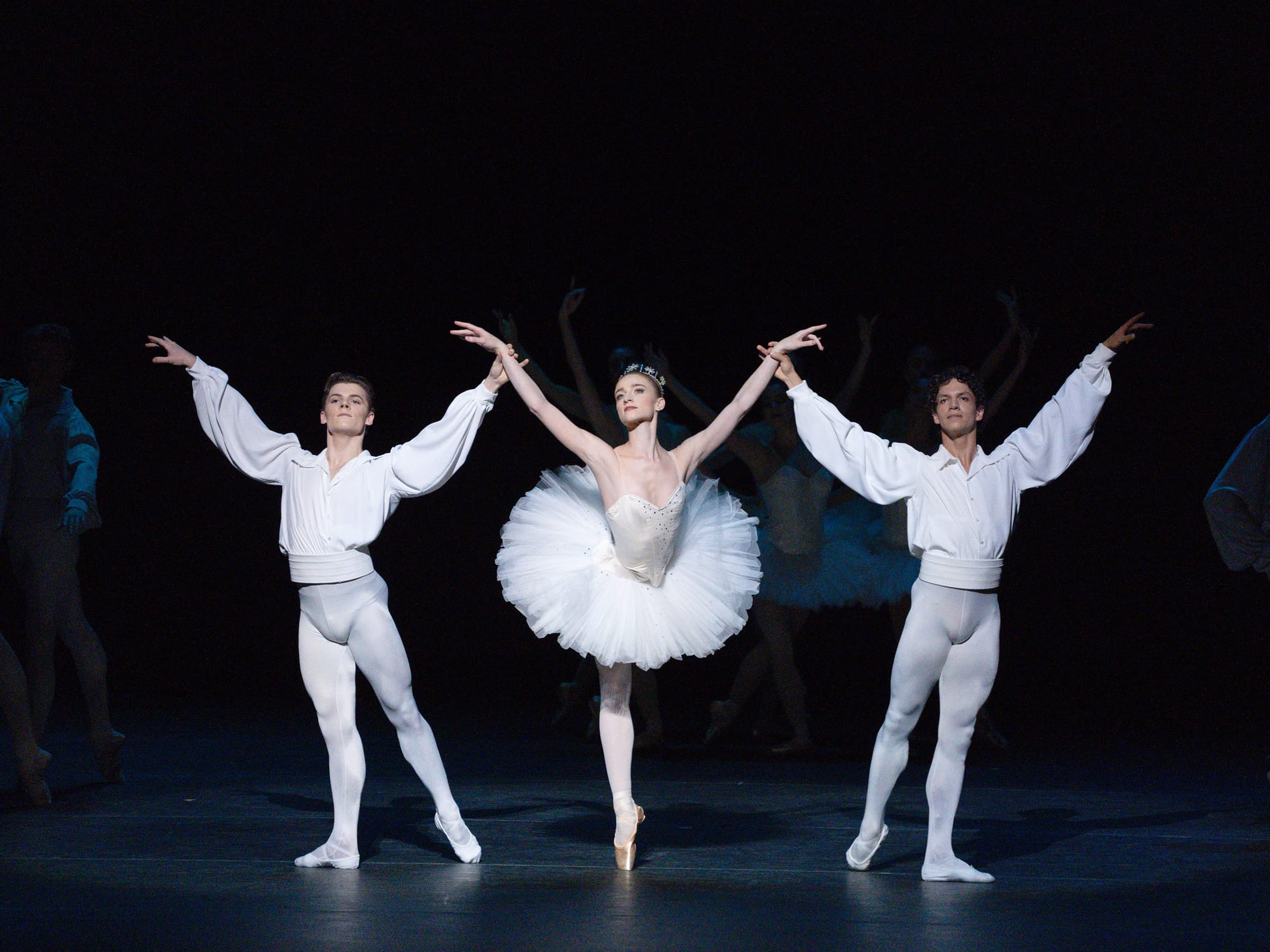
Hernández was her gracious partner, miming his “I love you” with elegant conviction. He did seem a bit confounded by the Bournonville style as his arms kept trying to propel his jumps, but he has a compelling presence, and he and Hurlin were triumphant in the classical finale. Lander didn’t forget character dancing, a staple in so many nineteenth century ballets, and Roxander tore through the mazurka, dancing as if the stage were a trampoline. He is a dancer who brings along his own spotlight, a light so bright it illuminates the whole company, and the flashy, thrilling jumping sequence, with the company roller derbying across the stage in death-defying speeds was breathtaking. For all the excitement, though, watching “Etudes” is a bit like looking at a book of photographs, and it leaves me hungry for the real thing, for dances that connect to emotions, and for the human element.
© 2024 Mary Cargill