The Giselle for Our Time
“Giselle”
American Ballet Theatre
Metropolitan Opera House
New York, New York
May 18, 2018
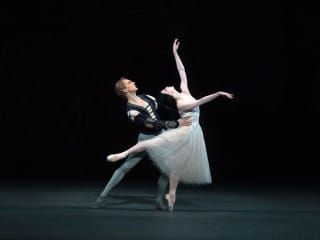
Every generation hopes for dancers who bring iconic roles to life. In 2005, when Natalia Osipova suddenly emerged from the Bolshoi corps de ballet dancing as if shot from the proverbial canon as Kitri in “Don Quixote,” she did it for that role. Thirteen years later, dancing alongside David Hallberg at ABT last Friday night in “Giselle” (her only New York performance this year), she confirmed that she’s done it for this role too. To the likes of Margot Fonteyn, Lynn Seymour, Natalia Makarova and Gelsey Kirkland, iconic Giselles of the 60’s and 70’s, add Osipova’s name today.
Interestingly, the heart of her accomplishment was neither technical virtuosity (although that abounded) nor physical acrobatics. Instead, dance acting of great integrity and emotional force distinguished her performance.
In contrast to Osipova’s Giselle of a few years ago, who was at times flirtatious with Albrecht in act one, her character was extremely innocent on Friday, subtly displaying deep attraction to Albrecht, but time and again attempting to return home during the start of the action only to have Hallberg head her off and take her hands. Only when he earned her trust by swearing his love with an upraised right hand, the fingers as a pledge, and left hand across his heart, did she give in.
Meanwhile, Hallberg’s Albrecht, who had started out as a lusty seducer, himself discovered real tenderness for Giselle after he learned of her weak heart. A beautiful bit of character acting by Osipova here, as she turned faint, faltered, touched her heart and went physically weak, seemed to turn the performance. Hallberg became protective, as if unexpectedly touched by the vulnerability of this peasant girl. Never truly faltering again in his dedication, even when he momentarily denied his love for Giselle to Bathilde (after Hilarion exposed his true identity), Hallberg turned to her during the mad scene with passionate regret, embracing and kissing Giselle at the moment of her death and refusing to leave her fallen body as the curtain fell. Because Osipova’s Giselle also forgave him in the meantime and returned his embrace a moment before she collapsed, the couple’s reassertion of their love paved the way for a great second act. Her transcendent effort to protect and redeem Albrecht in act two, and his equally heartfelt repentance, looked to proceed directly from the mad scene.
Having actually danced a restrained act one (where holding back her prodigious physical talents helped to build the portrait of the maiden with a weak heart), Osipova then upped the physical level of her dancing in the second act. But even here she was more restrained than in prior New York performances (for instance the last time she danced the role here with the Mikhailovsky Ballet). The opening sequence of whirling ballonées in arabesque was prodigious but done with a lower working leg than during prior visits. What instead stuck with you were myriad details: her layout in a shallow retiré during a pair of lyrical press lifts against the music, with Hallberg supporting her beautifully straight up and holding her still against the melody; Osipova’s beautifully long arms and hands, and the way she carried every dance motion out of her back as if rippling slowly in gestures to the tips of her fingers; her “sad feet” just touching the floor when Hallberg carried her skimming during promenades - and who knew that feet could be sad? A pair of tour jetés towards the end finished with a gesture of the hands that was nearly mime. So expressive had her dancing become that her technique was merely a means to dramatic freedom, and isn’t that what ballet dancing’s all about?
The ending Osipova chose was particularly unprecedented as, at the break of dawn with the church bells tolling, and with Myrtha retreating from her prey, her Giselle approached the prostrate Albrecht, first nearly lay upon him, breast to breast, seeming to revive him, and then bouréed downstage with him to deliver a delicate kiss. It looked as if, before disappearing back to the grave, her Giselle nearly came back to life.
Hallberg enabled this superb performance with consistently sure, strong and gentle partnering during act two, supporting Osipova during a heartbreaking adagio that had the couple memorably coordinating musical gestures of their arms to ABT conductor Ormsby Wilkins’s lovely rendition of the simple melodies of an underrated romantic score. He also danced his own solos with strong masculine bravura, choosing the Nureyev version of straight up and down entrechats six for his dance against death sequence at the conclusion, even if he did cut the sequence short at 19 or 20 before finishing doing grand jetés in attitude.
Christine Shevchenko’s Myrtha was appropriately hard edged but slightly lacking in true enmity towards the males of the species and a bit too businesslike; Thomas Forster’s portrayal of Hilarion (danced with great ballon and pull up in his upper body in act two) was similarly a bit phoned in. Special praise, however, must be given to Skylar Brandt and Joseph Gorak for a particularly memorable peasant pas de deux during the first act. With exquisite and delicate points, Brandt has long had some of the best feet in the company. But the way she made the step sequences intuitively clear here, all the while dancing with a radiant expression, showed her dancing at an entirely new level of maturity. With the elegant and beautifully turned out Gorak matching her step for step, the old chestnut of a divertissement was riveting and provided real dance interest for the middle of the act.
copyright © 2018 by Michael Popkin