Men Alone

"Birthday Offering", "Mercurial Son", "Ballet Imperial"
American Ballet Theatre
David H. Koch Theater
New York, NY
October 23, 2026 and October 24, 2026, matinee
Perhaps coincidentally, the “Neoclassical Works” program with ballets from three very different choreographers (Sir Frederick Ashton, Kyle Abraham, and Balanchine) all featured glimpses of men alone on stage searching yearningly or restlessly for something. Ashton’s “Birthday Offering” (1956), a radiantly abstract celebration of classical ballet, had an anonymous cavalier looking longingly around the empty stage before his partner appeared, Abraham’s rather discursive “Mercurial Son” (2024) ended with a man dancing a heartfelt prayer, and Balanchine’s “Ballet Imperial” (1941) included a lyrical vision scene, so loved by the nineteenth-century choreographers, with the unnamed hero searching through a garland of girls for his beloved.
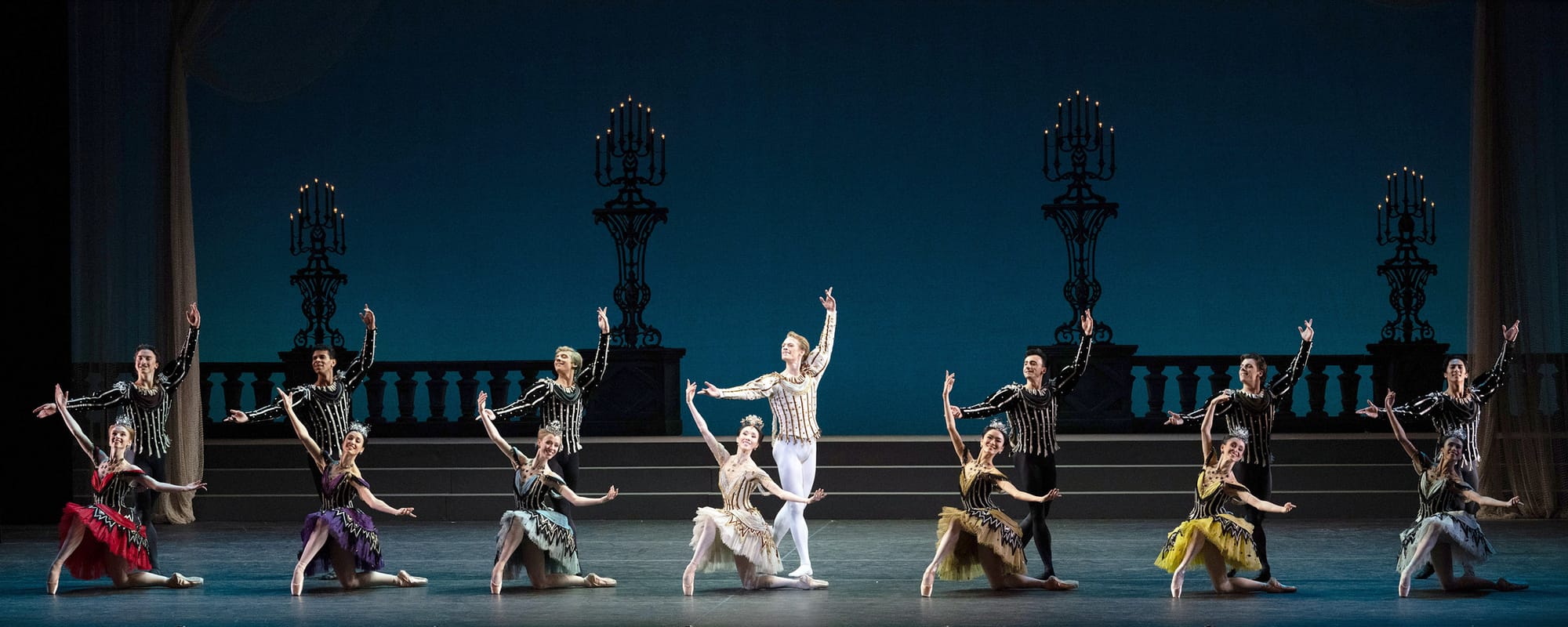
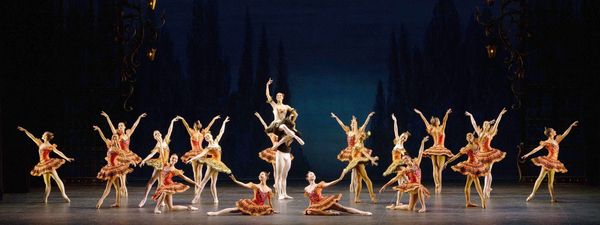
Ashton choreographed “Birthday Offering” using luxurious selections of music by Glazunov to celebrate the now Royal Ballet’s twenty-fifth anniversary. Known colloquially as “Seven Brides for Seven Brothers”, he created seven solos to highlight the talents of his seven ballerinas—the men had to make do with a rousing mazurka. The solos were tailored to the gifts of each dancer and are deceptively difficult, with quick changes of direction, sudden stops, and lilting musicality; the choreography looked like filigree decorating steel. ABT used the original costume designs by the Dior-trained French designer André Levasseur; their elaborate French chic does look a bit wedding cakey, but the swirling multi-colored knee-length bell-shaped skirts, so evocative of the late nineteenth-century tutus, made the stage look like a dancing jewel box.
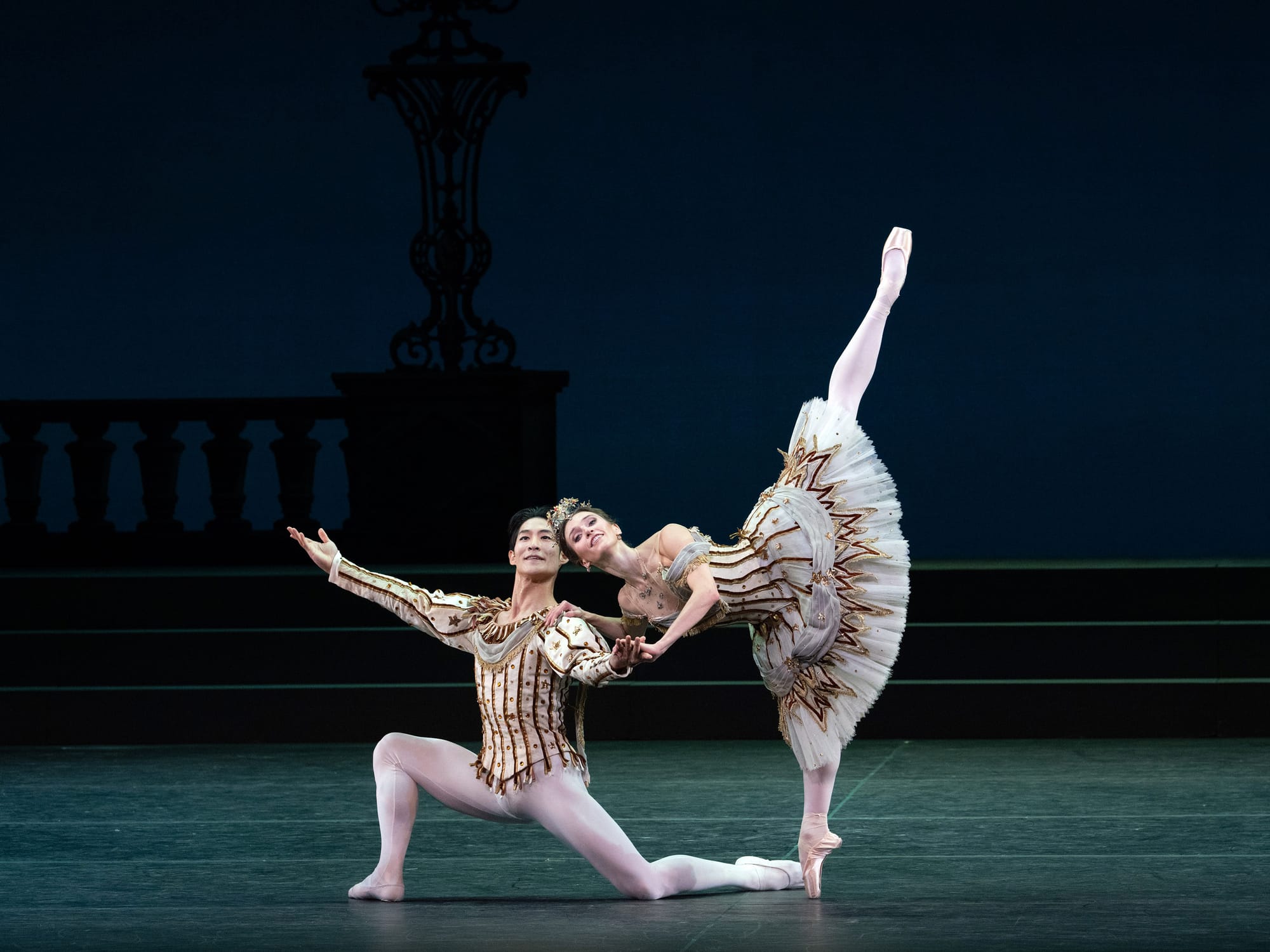
Hee Seo, with Jarod Curley (Oct 23) and Devon Teuscher, with Joo Won Ahn (Oct. 24, matinee), all debuts, danced the leads, originally choreographed for (of course) Margot Fonteyn and Michael Somes. Seo’s solo was lilting, with delicate jumps and flowing arms—she looked like she was having so much fun. Teuscher, too, captured the lightness and the joy. Both used serene, unexaggerated arabesques—Ashton wanted harmony, not height. Seo and Curley gave their pas de deux a gentle arc; Seo, leaning into the music, seemed shy at first, but after a deep, rich backbend, blossomed with confidence. She sailed through the tricky balances, and the lyrical phrase, where Ahn gently pushed her turning one way then another seemed like a conversation. Teuscher was more regal, and danced with a quiet confidence, and though she did have a slight slip holding a balance but recovered well.
Léa Fleytoux (Oct. 23) was especially effective opening solo, neat and precise in her turns, switchin directions and stopping in perfect fifth position. The final little “twas nothing” shrug was a charming nod to the audience. Both Fanqi Li (Oct. 23) and Virginia Lensi (Oct. 24, matinee) floated mysteriously through the third solo, with beautifully articulated legs and arms. Skyler Brandt (Oct. 23) and Breanne Granlund (Oct. 24, matinee) flew through the bouncy fourth solo, with its imaginative jumps (one had the dancers landing on one foot while the other leg swung backwards and forwards—a phrase Ashton used later in his sunny “La Fille Mal Gardée”, which he made for the same dancer). Betsy McBride (Oct. 23) and Ingrid Thoms (Oct. 24, matinee) in the fifth solo were expansive and solid, flowing through the Italian fouettés. Thoms was especially expressive as she let them grow higher as she turned--Ashton gave them enough to look impressive, but not so many that the audience started counting.
Though the men were somewhat shortchanged (Ashton did incorporate a male solo for later dancers, but this wasn’t used). Ahn, in his brief solo, showed off some fine double tours and entrechats—he has such a rich, strong plié. Curley’s dancing was a bit less secure but his noble reticence, especially in his brief moment alone, gave an elegant sheen to his partnering. All the men in both casts were especially strong in their mazurka, bending into the music and sweeping the air with their arms.
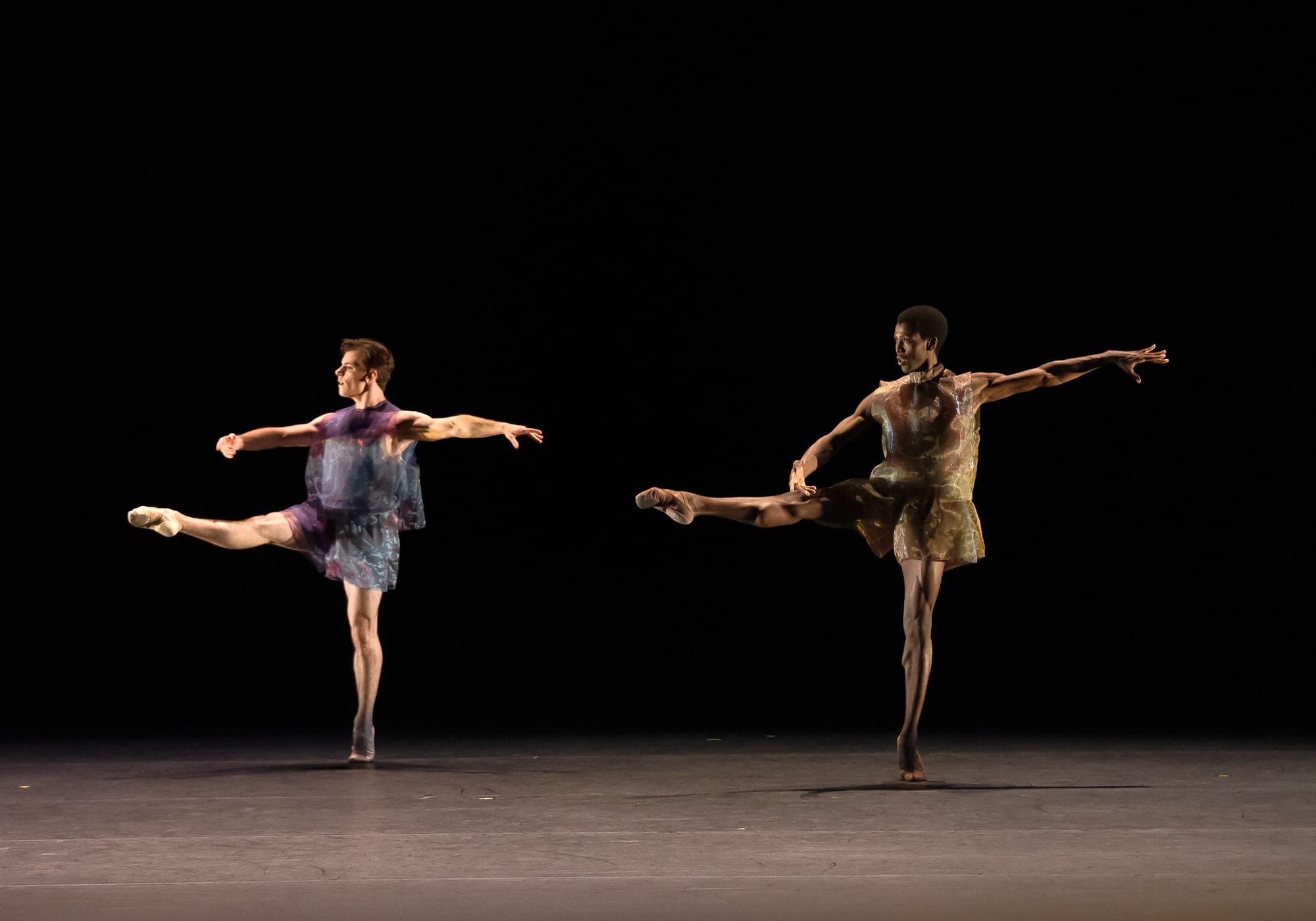
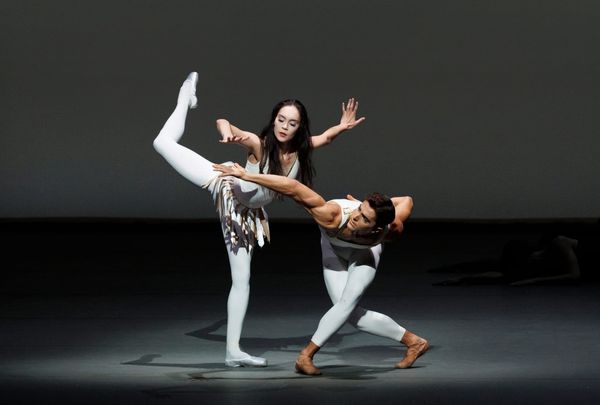
The men were equally strong in “Mercurial Son”, though the style was completely different, as Abraham hurled his cast of seven on and off with almost random casualness, giving the work an unconnected, episodic air. The score by Grischa Lichtenberger, too, was very far away from Glazunov’s melting melodies, and was industrial strength noise. The individual dancers, though, moved with a vibrant fascination.
Most of the Oct. 23 cast (Léa Fleytoux, Breanne Granlund, Kanon Kimura, Melvin Lawovi, Jake Roxander, Calvin Royal, and Aleisha Walker) and the Oct. 24 matinee cast (Sierra Armstrong, Jacob Clerico, Carlos Gonzalez, Catherine Hurlin, Kayla Mak, Andrew Robare, and Ingrid Thoms) were repeating their 2024 roles, though Aleisha Walker (as one of the side girls) and Kayla Mak (in the Catherine Trenary role) were making debuts.
The male costumes remained puzzling; the loosely pleated billowing chiffon tunics and shorts for the men obscured some of their dancing, though they were probably comfortable to wear. Both Roxander and Gonzalez (in the blue costume) made the most of their roles, creeping warily through the windy noise before bursting into thrilling pirouettes, though what exactly they were creeping away from was never clear—the choreography was more effect than content, striking though those effects were. Lawovi and Robare were interesting contrasts in the purple role. Lawovi was a loose-limbed floating dynamo, balancing, it seemed, on the air and spinning so fast he became a colorful blur. Robare was sparer and more discrete, letting the various shapes emerge with a powerful force.
Granlund, in a stunning gold leotard skittered with a mysterious dynamism, while Hurlin, in the same role, had a more gentle approach, flowing through the shapes. The final dance for the man in gold (Clerico and Royal), dancing on the dark stage in a strip of light, was a quieter change of pace with the soaring music, as the man stood, open-armed with a haunting sense of vulnerability and yearning, quietly miming a prayer before walking off. Royal, with his air of eager innocence, was especially affecting, though if I were him, I would be praying for less aggressive music.
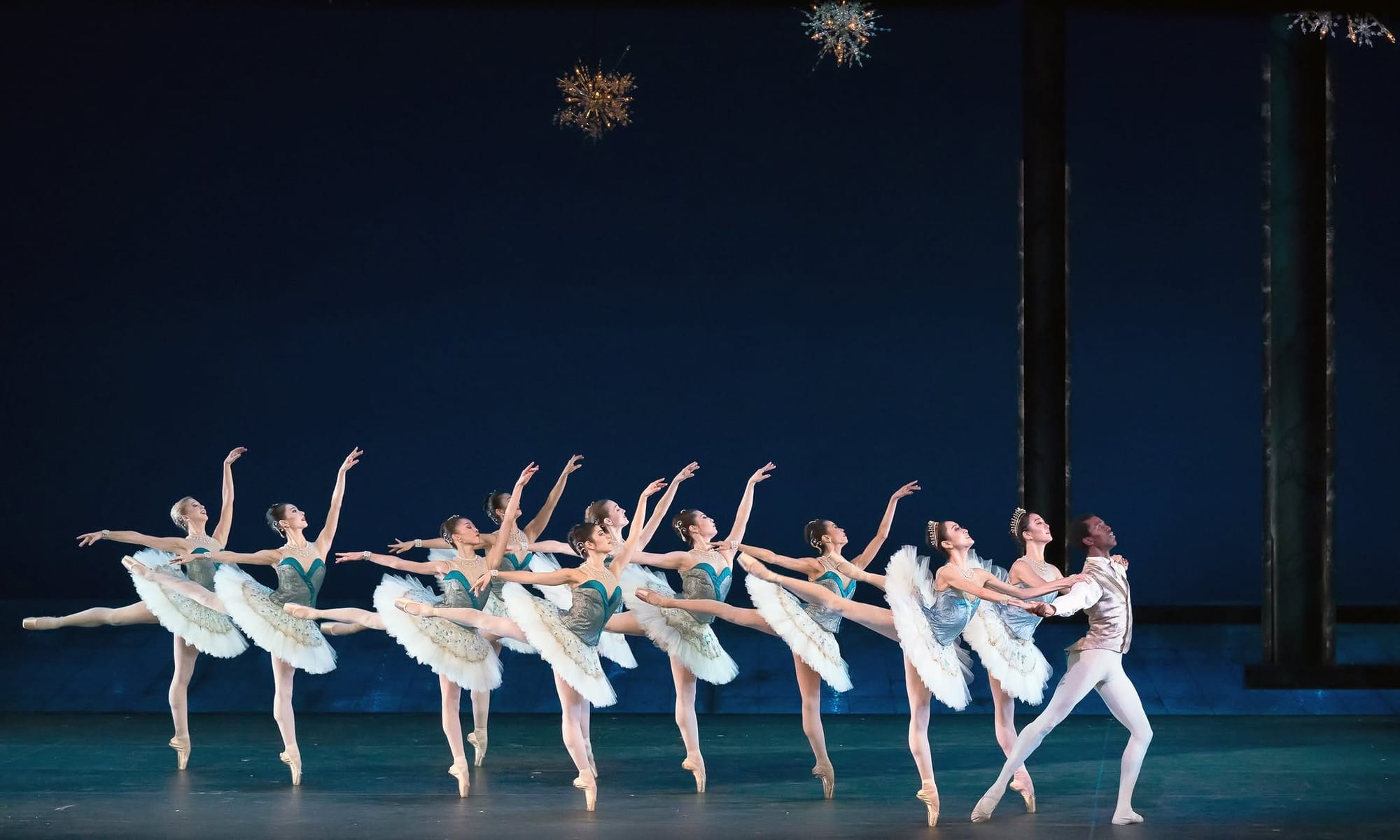
“Ballet Imperial” certianly has very danceable music, Tchaikovsky’s “Piano Concerto No. 2”, the title it is known by at the New York City Ballet. ABT also has imperial costumes, unlike the chiffon tunics NYCB dances in. These pancake tutus, designed by Jean-Marc Puissant for ABT’s 2024 revival, are flattering and certainly reflect the formal style of the choreography, though the men's grey vests hint at high class waiters (where are the tunic of old?). Puissant’s sets, though are a bit stark, with plain grey columns that look like smokestacks and floating chandeliers that rise and fall, a gimmicky and unnecessary distraction.
The dancing had no need for extraneous additions. It is one of Balanchine’s most successful after-Petipa celebrations, a scintillating précis of both “Swan Lake” and “The Sleeping Beauty”, with wonderfully geometric corps formations, a solitary prince, and an ideal of feminine beauty. Chloe Misseldine, in her debut, and James Whiteside (Oct. 23) and Sunmi Park, also a debut and Calvin Royal (Oct. 24, matinee) were the anonymous couple, with Yoon Jung Seo (Oct. 23), a debut, and Skylar Brandt (Oct. 24, matinee) as the energetic soloist.
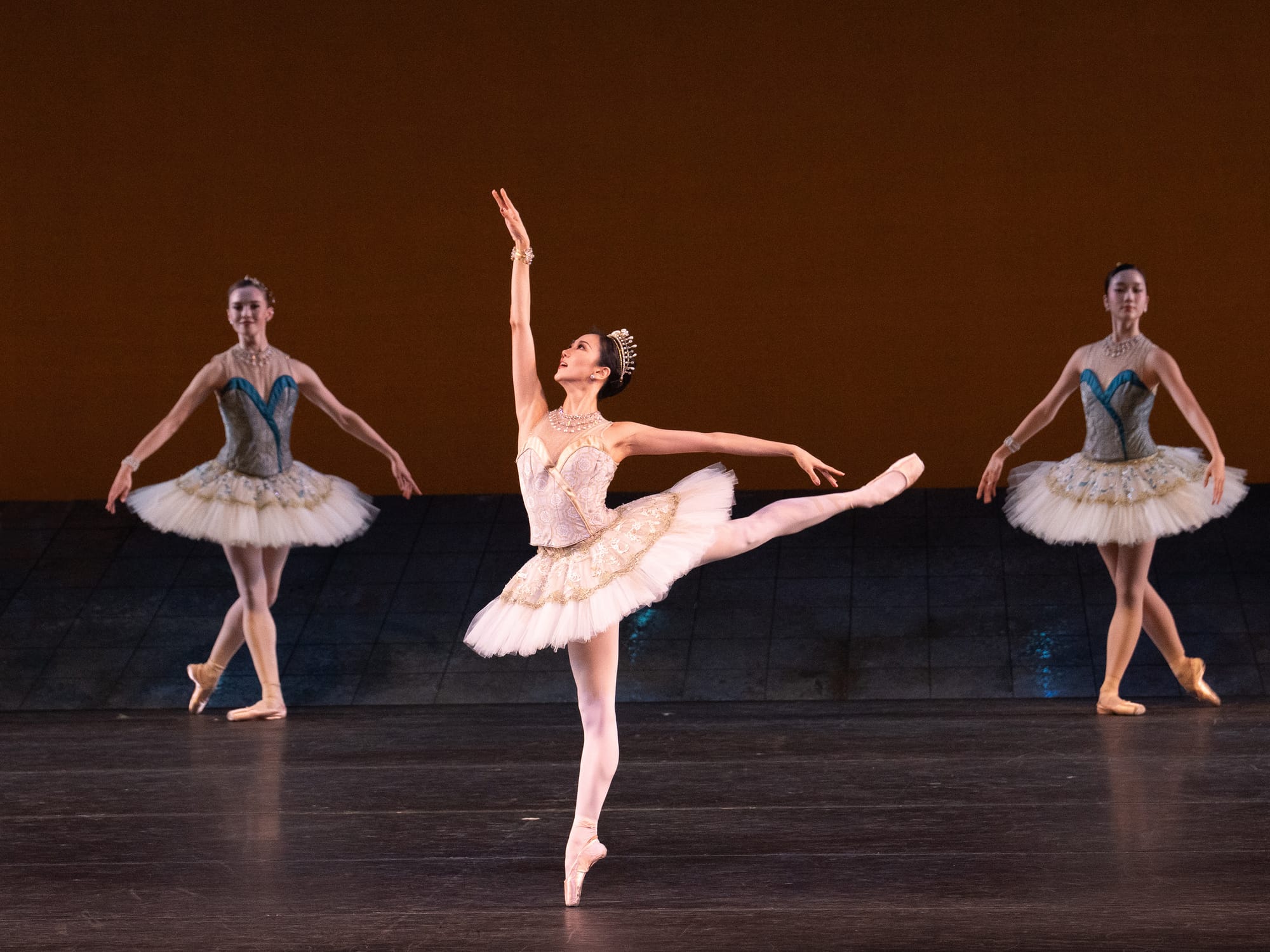
Seo sailed through the bravura jumps with a radiant ease, and gave a sense of playfulness to the pas de trois, as Sung Woo Han and Jose Sebastian partnered her. Brandt was a bit more forceful, running on as if she were in control, a fine contrast to Park, who gave her dancing a soft, lyrical flavor, moving with a quiet confidence, seeming to luxuriate in her dancing. She gave a stylized dignity to her brief “I love you” mime, acknowledging Royal with a stylized warmth, as if she was acknowledging all of those Petipa heroines of the past without having to worry about plot lines—cutting to the chase, as it were. She did, it seemed, briefly salute Odile, with her strong, steady fouettés, though they were joyful rather than predatory. It was a fine and elegant debut, supported by Royal’s eager and natural partnering.
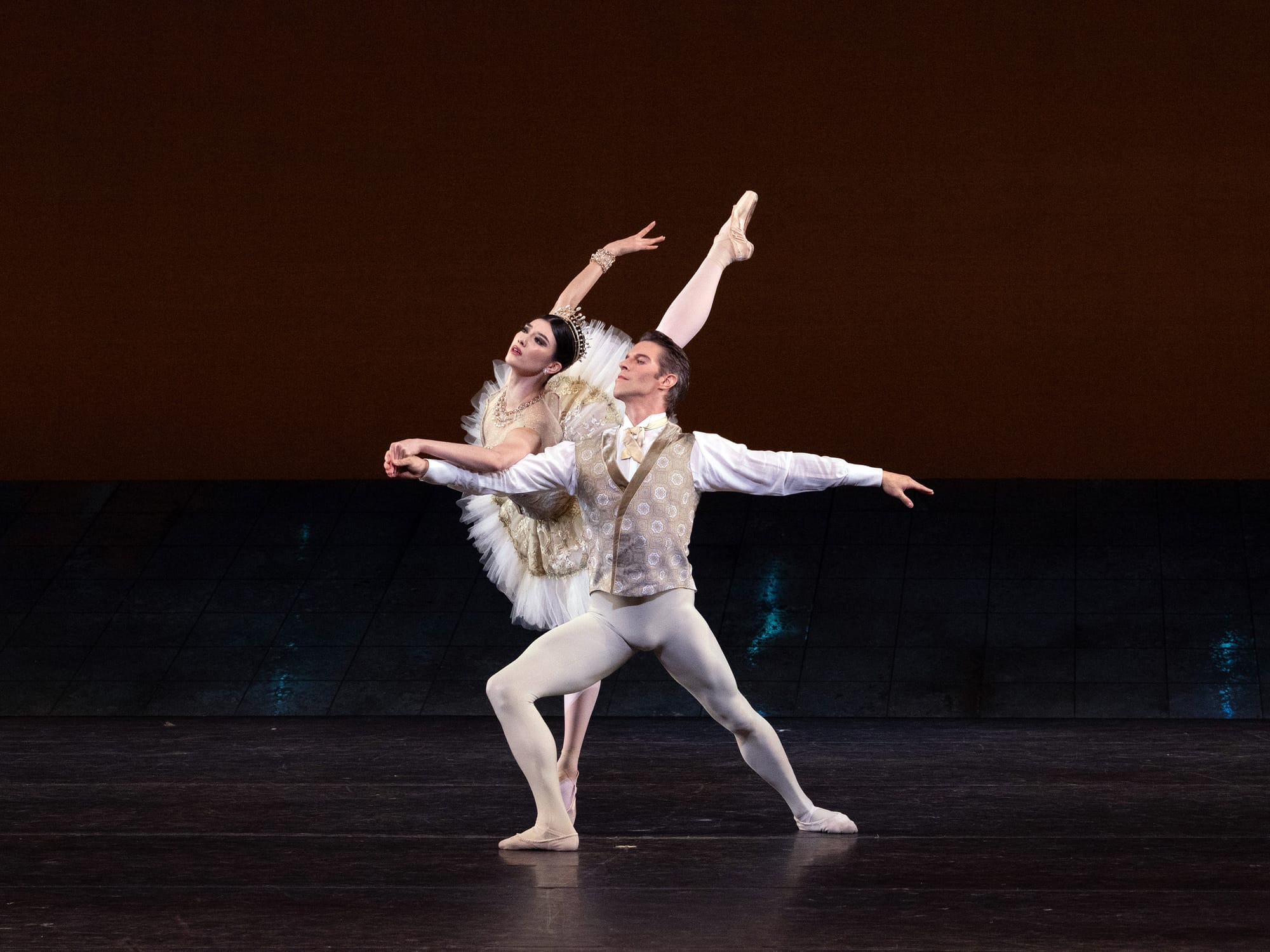
Misseldine gave her “Ballet Imperial” a more dramatic approach, entering as if she were in her own world. Her turns to the sudden stops were a bit careful, but the mystery she projected was captivating, especially in the vision scene, where she brought out so many hints of “Swan Lake”. These certainly exist in the choreography—the hints of mime, the urgent arabesques, the man being told by the corps “No, she is not here”, gentle, nestling caress as her partner folds her arms/wings in, just to mention a few. Misseldine didn’t impose the drama (there were no melodramatic, agonized expressions), she seemed to reveal it, and her rush through the allée of dancers towards Whitehead in a desperate attempt to embrace him, only to vanish in the misty corps was as moving as Odette’s farewell can be; it was a powerful and unforgettale performance. Whiteside, always a fine dramatic presence, was telling the same story, with a quiet desperation during the luminous ribbon of corps members moment, looking rather forlornly at them, and then bowing slowly to the empty stage; the epitome of all those romantic heroes lost and alone.
© 2026 Mary Cargill