Ten Years and Counting
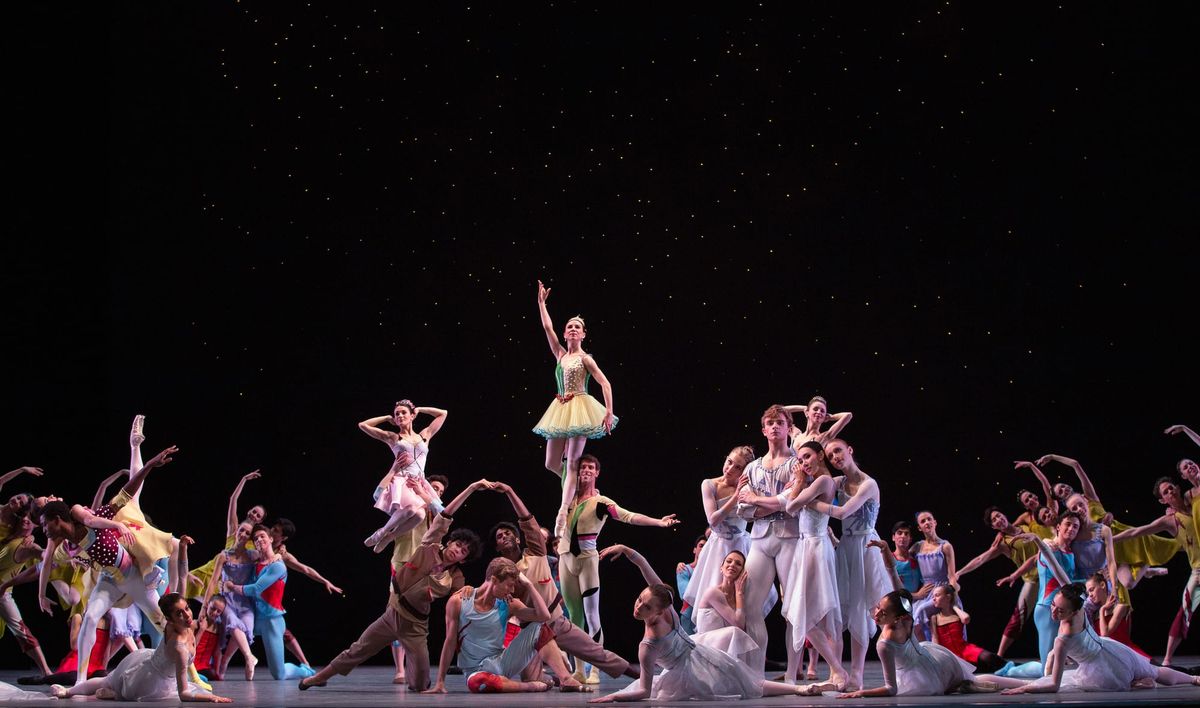
"Serenade after Plato's Symposium", "The Seasons"
American Ballet Theatre
Metropolitan Opera House
Lincoln Center
New York, New York
May 20, 2019
ABT's Spring gala saluted Alexei Ratmansky's ten year association with the company by presenting an evening of his works, opening with the dense, fascinating "Serenade after Plato's Symposium" and closing with a premiere, "The Seasons", a plotless excursion through Alexander Glazunov's eponymous score, written in 1900 for Marius Petipa. Fun fact – Glazunov was commissioned to compose the ballet currently known as "Harlequinade" and his friend Drigo was given "The Seasons" but they realized they were more suited to each other's assignment so they swapped. This season ABT audiences can enjoy both the tuneful melodic Drigo and the sweeping, soaring, lyrical Glazunov. Another interesting bit of ballet history is that Petipa's Glazunov ballet was a one-act, plotless work choreographed seven years before the premiere of the first version of Fokine's "Les Sylphides", described by many writers as the first abstract ballet. It seems that Petipa got there first.
"Serenade after Plato's Symposium", set to Leonard Bernstein's haunting, piercing music, is an abstract meditation on Plato's meditations on love. Ratmansky's seven men and one last-arriving woman (Thomas Forster, Joseph Gorak, Alexandre Hammoudi, Tyler Maloney, Calvin Royal III, Gabe Stone Shayer, Daniil Simkin, with Devon Teuscher) danced the oblique, elegant, and intriguing combinations with an individualized flair and a fluid urgency. Their upper bodies were particularly expressive and their arms flowed through the mime-like gestures (palms upraised in a shrug, as if asking a question, emphatic fists to answer) ending in musical ripples and twists.
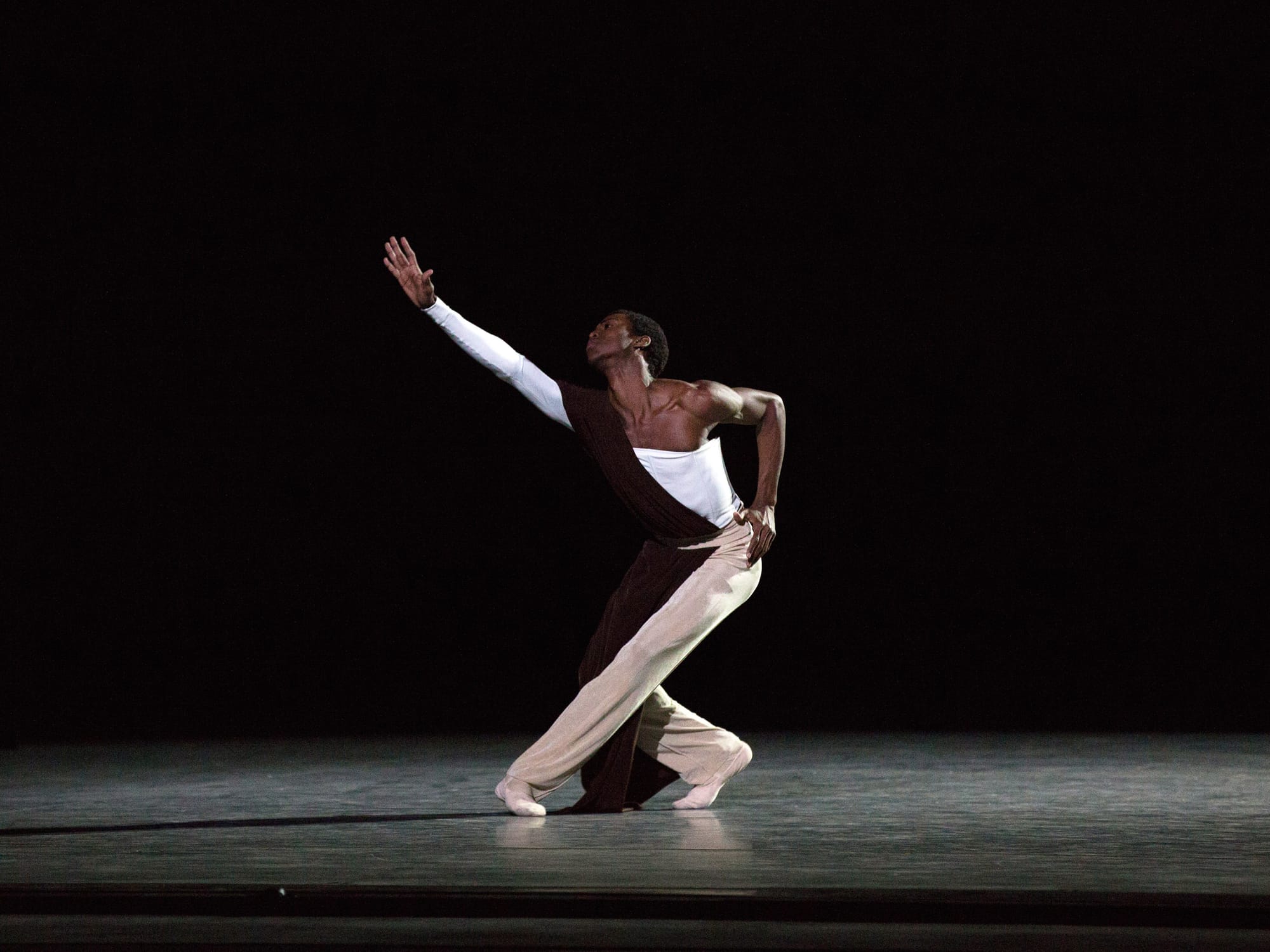
Each of the men in their various solos made distinctive impressions. Royal, with his long arms and lanky dignity, gave his dancing a melancholy, questioning feel. Simkin showed a youthful confidence, showing off his fiendishly accelerating spins and barrel turns (much applauded by the gala audience) that transformed his bravura into music. The young corps dancer Maloney, substituting for the injured Herman Cornejo, danced his explosive solo with all those quick backward jumps as if his mind were racing; he was not quite as incisive as Cornejo but it was an impressive and confident, if unexpected, debut in that role. (He had danced Stone Shayer's role previously.)
This shifting pattern, as the group moved in pairs and trios, watching, supporting, comforting, and questioning each other, was so much more than a series of solos, it was a rich and moving examination of friendship.
For many ballet goers, Glazunov's score for "The Seasons" is indelibly associated with solos, since Ashton used parts of it for his "Birthday Offering". Ratmansky's ballet certainly does have solos, but the corps work, with its intricate and shifting geometry, is the focus. Ratmansky used Petipa's plan for the ballet, with the elegant and descriptive names of the various elements (Frost, Ice, Hail, the Spirit of the Corn, etc.) and they all got their place in the sun. (The original cast, listed here https://petipasociety.com/the-seasons/ reads like a Who's Who of Imperial dancers.) Winter came first, with Mr. Winter himself danced by Aran Bell, powerful but not menacing, a true prince. Catherine Hurlin's Hail stood out for her quick turns and fancy arm work. Spring naturally followed, with a playful pas de trois for the Zephyr (James Whiteside), the Rose (Sarah Lane) and the Swallow (Skylar Brandt). Isabella Boylston, as the Spirit of the Corn, led summer and got a swooning pas de deux with Whiteside (Ratmansky followed Petipa's idea of having Ms. Corn rescued by the Zephyr from some wandering satyrs.) Finally, the various seasons drop by for a spirited bacchanal led by Cassandra Trenary and Calvin Royal III.
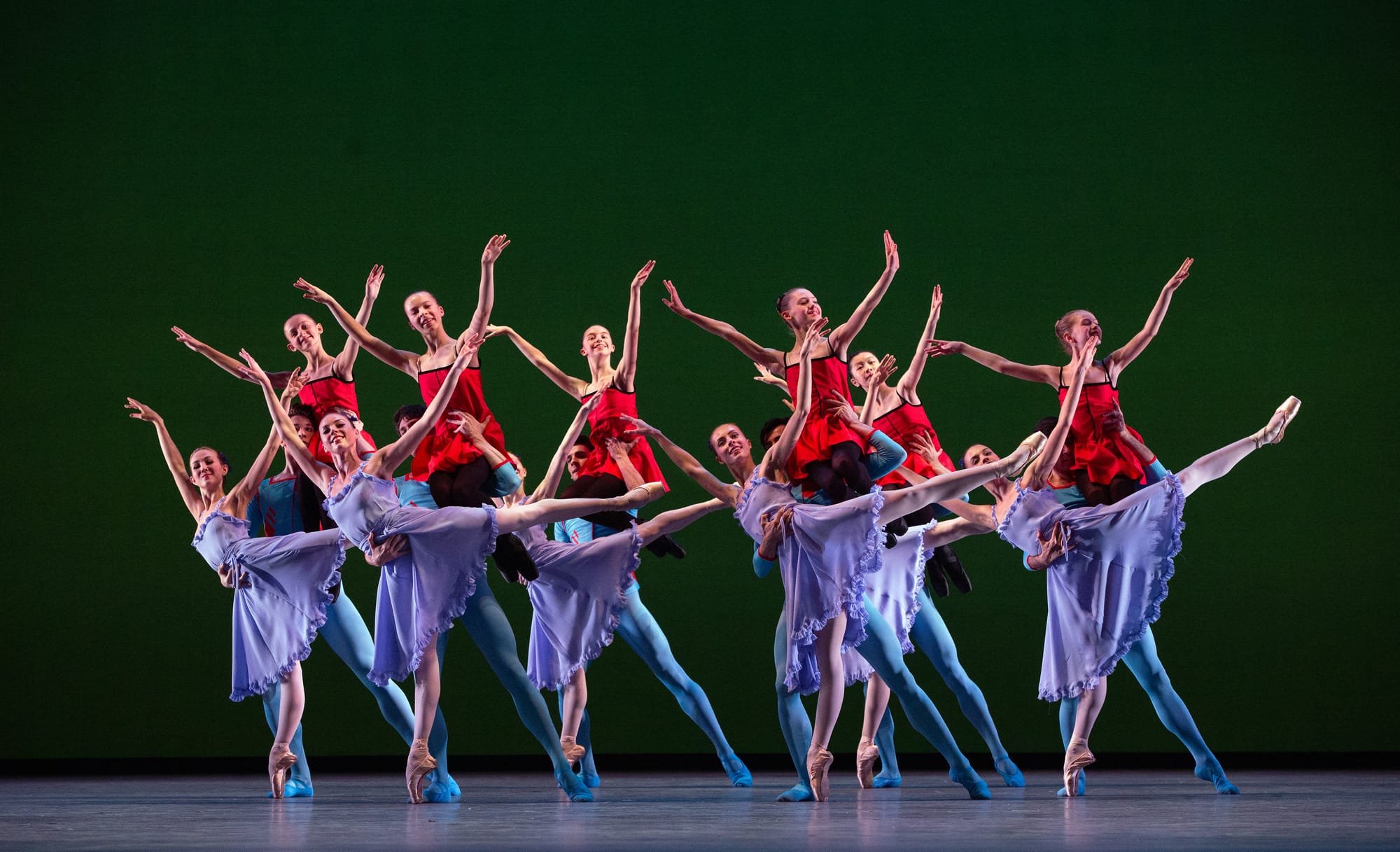
This slight libretto is a wonderful excuse for dancing, and the corps patterns and colors provided a constantly moving picture. The white snowflakes were especially elegant, and the cornflowers and poppies (corps members in blue and ballet students in red and black) were a living bouquet. The ballet is full of steps -- possibly too many in the main pas de deux, where the lush music doesn't have time to breathe, though as often happens with Ratmansky, repeated viewings will alter the feeling. Boylston had an elegant command and Whiteside was an attentive, if rather antiseptic, partner. Lane as the Rose got a series of poses while passing her hand to her six supporters -- a nod, perhaps to the Rose Adagio, yet so musical that it seemed organic. Trenary got little hops in the middle of some spirited pirouettes, as if she could not contain herself. The ballet wasn't limited to classical steps, and Ratmansky gave the audience some rousing folk-influence dancing, notably the two young winter gnomes (ballet students Lochlan Brooks and Elwince Magbitang) with their rollicking flag dance.
The only disappointment was the setting, or rather the lack of one, as the ballet was danced against a bare and somewhat dimly lit stage. Those elegant patterns deserved a more filigreed frame. But it was a wonderful tenth anniversary present.
Copyright © 2019 by Mary Cargill



