Modernity Wins
“Petal,” “Petite Mort,” “Paquita”
American Ballet Theatre
David H. Koch Theater
New York, NY
October 25, 2026
In programming Helen Pickett’s stripped-down, richly hued “Petal” and Jiří Kylián’s curious “Petite Mort” with Natalia Makarova’s tired staging of “Paquita,” ABT, perhaps inadvertently, made the best case yet for a slick (and sensual) modern direction. The dancing was most multilayered and revealing of the dancers in those works, and while the company danced the lone classical offering well enough, it was forgettable and perhaps best forgotten.
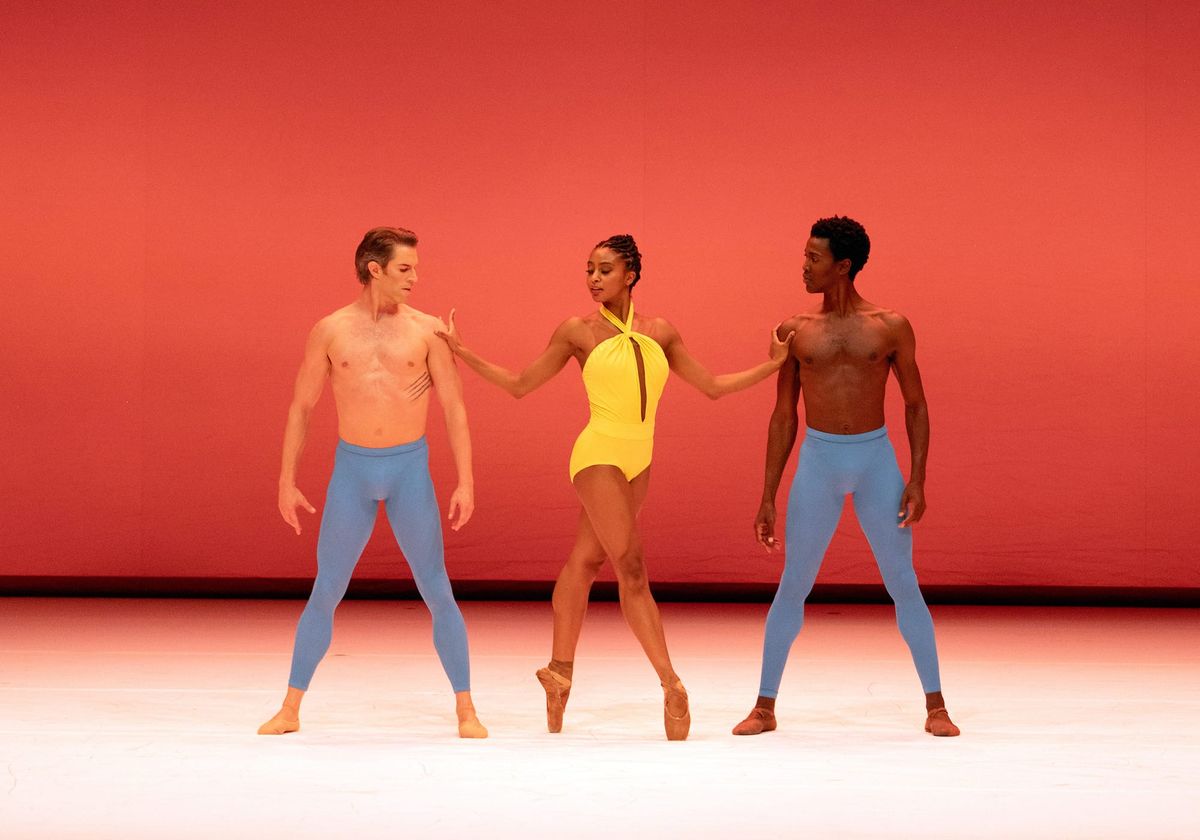
In style and execution, the new-to-the-company 2008 “Petal” felt like a warm-up piece for Wayne McGregor’s award-winning “Chroma,” which the company plans to perform come March. The faces only infrequently betrayed emotions, while the physical range expressed all corners of Philip Glass’s comfortingly repetitive score. There were deep hip dips, curves and off-center traversing for the eight dancers, and the movements looked free and refreshingly multidimensional as the cast faced all four of the stage’s sides in equal measure, erasing its traditional directional constraints. The ballet may not be new, but the interpretation made the work feel particularly energized.
Despite the title, little of “Petal” had anything to do with flowers, with the exception of a few wilting-like motions by women held by men in several moments of the work. The impetus instead was on interactions, presence and presentation of the body in a modern way that was both assertive and fragile. It was most acute in the duet between Fangqi Li and James Whiteside, as this statuesque ballerina would slow down her steps, step forward and back leaning into Whiteside’s imposing and protective frame, alternating elegance with fierceness. In other parts, Madison Brown with Whiteside and Calvin Royal III looked athletic, though the men’s throws of the ballerina into the air from an outstretched position looked effortful. She made up for the heaviness with a very articulated upper body, and a complete command of the stage and space.
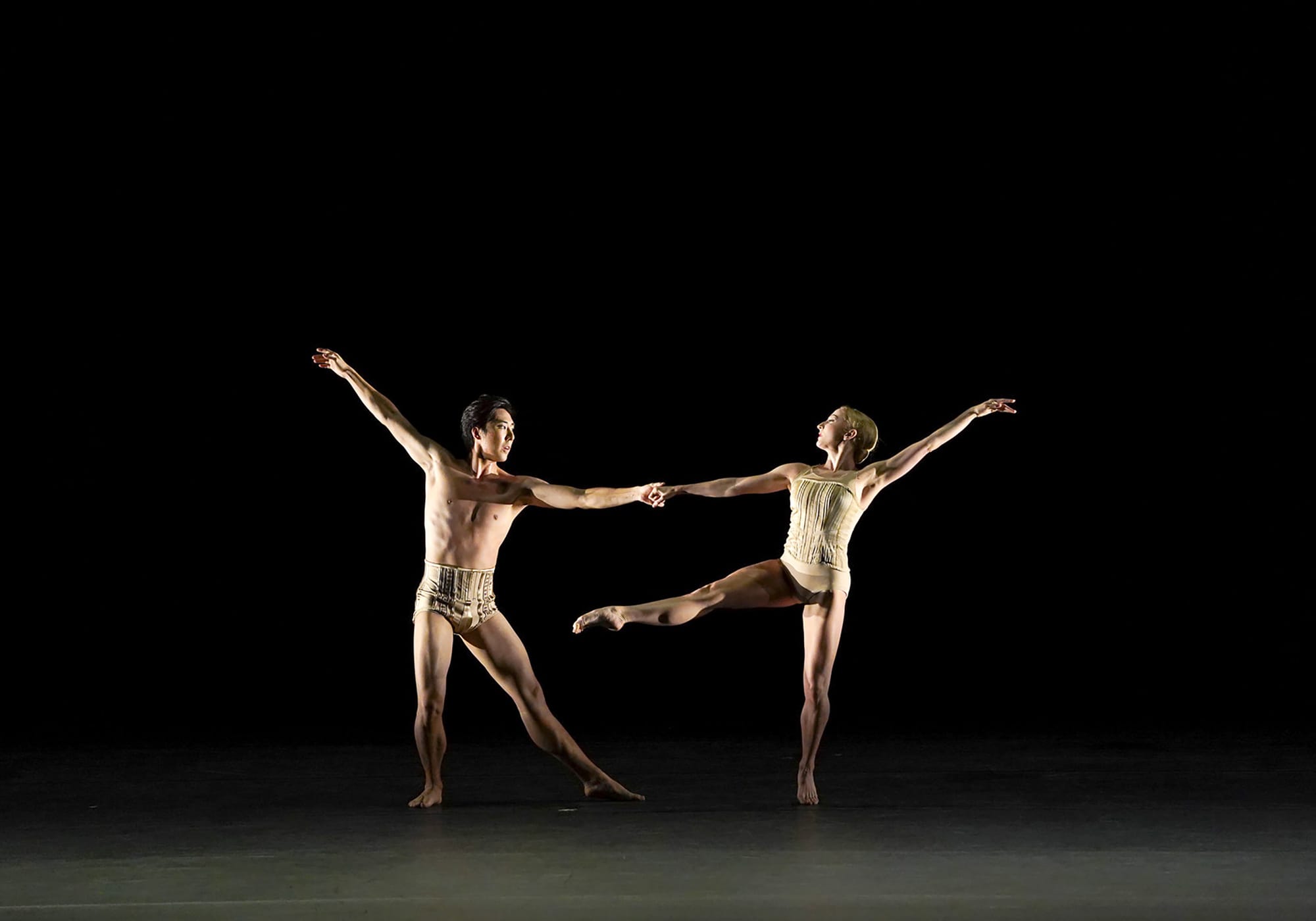
Less can be said about the 1991 “Petite Mort,” with its euphemistic title (for the francophones) and complex visuals. Beginning oddly with sword manipulations by six men, led by Herman Cornejo, the work felt uncomfortably like a collection of tricks, particularly when the men rolled the rapiers around, designed to stop precisely in a way that they could then be lifted with a foot. A miss by any of them risked breaking the magic, and while all tricks here and later were executed flawlessly, that practical fear is not one to behold when trying to enjoy a ballet. The women followed after a dramatic stage-long chiffon wave uncovered them, and while initially their dancing was stripped down (literally), they too eventually received their props – baroque-style dress forms that they wheeled around and hid behind.
Like “Petal” this ballet offered a freedom for the company’s dancers to showcase their physicality, and some even went as far as to inject personality in the many sensual duets the ballet offered once the prop-mastery was done. Sierra Armstrong offered a strong but seductive presence – limb-focused yet alive, and Jarod Curley played it cool, with an interesting, cad-like demeanor. Breanne Granlund by contrast was too jovial in the work, and Cornejo at times overdid it with projected intensity, pushing the interpretation from powerful and energetic to comical.
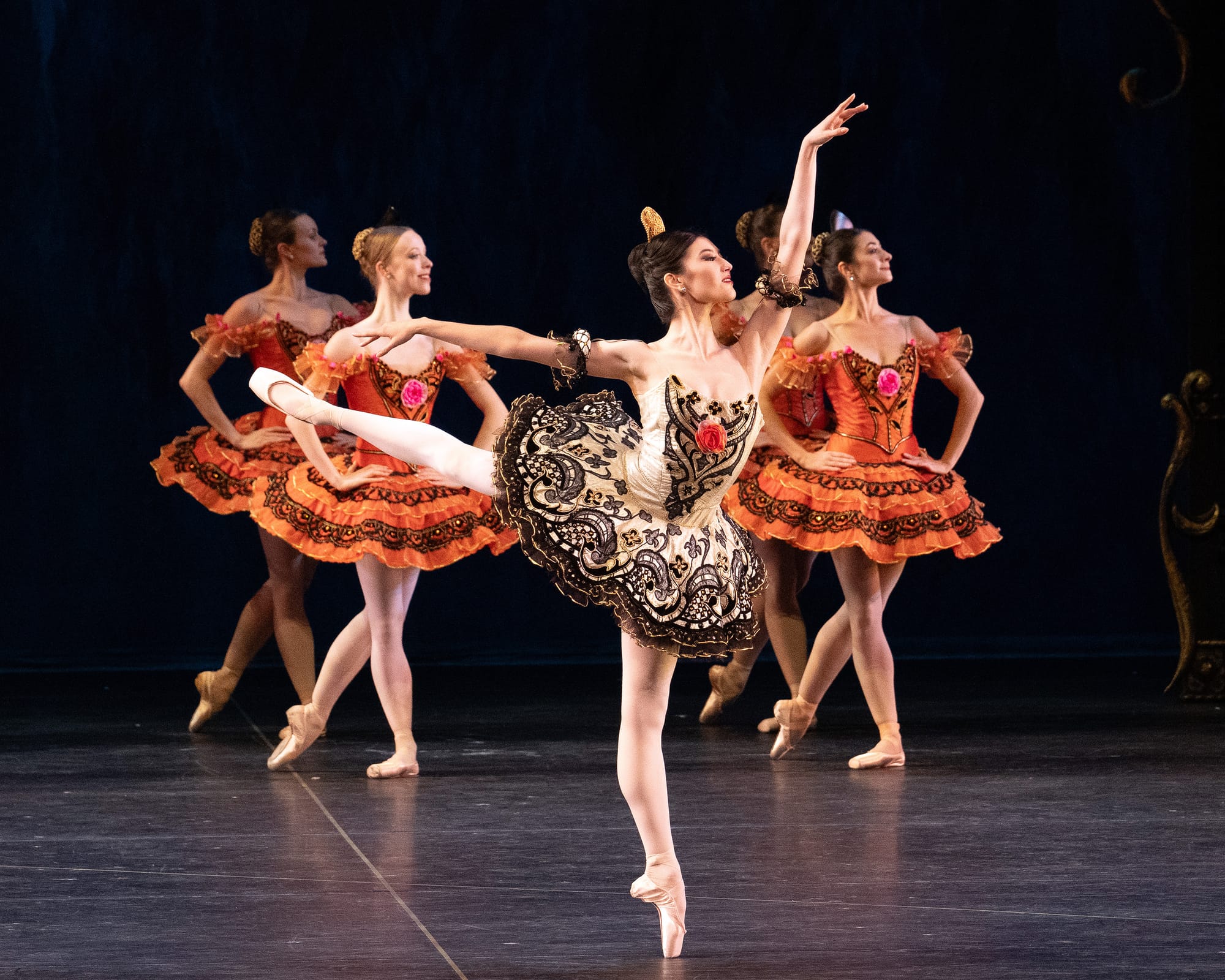
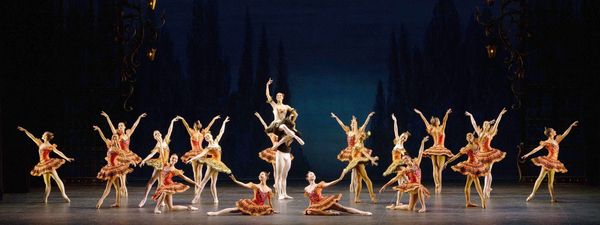
It is difficult to imagine “Paquita” as a dull ballet, but the old costumes, slowed-down pacing, and odd musical arrangement that stripped the accents and often sounded like a collection of false notes served the dancers and the company a series of disfavors. The ballet opened with over-stylized dancing that is so often present these days in ABT’s performance of old classics. The shoulders twisted too far, the accents were exaggerated in a manner that a répétiteur might use to get a correcting point across – entirely too much for the stage. Even with such care of expression, the corps somehow offered uneven dancing, notably from Elisabeth Beyer, who seemed intent on standing out, uniformity demands or not.
Amid all this, Chloe Misseldine and Aran Bell danced with their ever-growing, magnetic chemistry, though when the time came for their solos, even their dancing felt showcased through the wrong vehicle. Misseldine’s variation felt too slow, and in filling the music she over-articulated the hops with a rond de jambe, and Bell seemed to reach for an accent in his variation that the music didn’t provide. The soloist variations numbered only four, and while Fangqi Li delivered an exquisitely refined “Armida” variation, Yoon Jung Seo and Sierra Armstrong danced matter-of-factly, and Léa Fleytoux approached her variation, riddled with grands jetés, with force more suited to a male solo.
When the evening was over, a question lingered: in calling the program “Fresh Visions and Timeless Classics,” and with this, and many of its repertory classics, looking dated, is ABT in part admitting that it is these new dimensions that will soon become its timeless classics?
copyright © 2026 by Marianne Adams