Movie Time
"Femme Fatale"
Tom Gold Dance
The Goldman-Sonnenfeldt Family Auditorium
Marlene Meyerson JCC
New York, NY
October 29, 206
Tom Gold, a former New York City Ballet soloist, has been choreographing for his small pick-up company since 2008, an impressively resilient number. His insistence on live music is equally impressive, and his choice of chamber works had led to some fine and interesting discoveries. For “Femme Fatale”, he chose small violin and piano works by the famous Hollywood composers Miklós Rózsa and Franz Waxman, whose grand scores are familiar to movie goers. Films like “Sunset Boulevard” and “Ben Hur” made them famous but both were classically trained Europeans and composed concert music as well as film scores. The works Gold chose, played by Giancarlo Latta on the violin and León Bernsdorf on the piano, were “Duo, opus 7” by Rózsa, with its infectious folk-flavored themes and “Four Scenes from Childhood” by Waxman, with melodic and charming vignettes; the music was eminently danceable.
Though “Femme Fatale”, which Gold explained in the low-key and engaging question and answer session after the performance, was inspired by the dominating females of film noir, the work was not a narrative; Gold’s imaginative approach often uses concrete ideas to spark stylish and atmospheric dances. The five dancers (Sara Adams, Emily Cardea, Laura Kaufman, Tanya Trombly, and Craig Wasserman) wove in and out of the musical selections elegantly and smoothly.
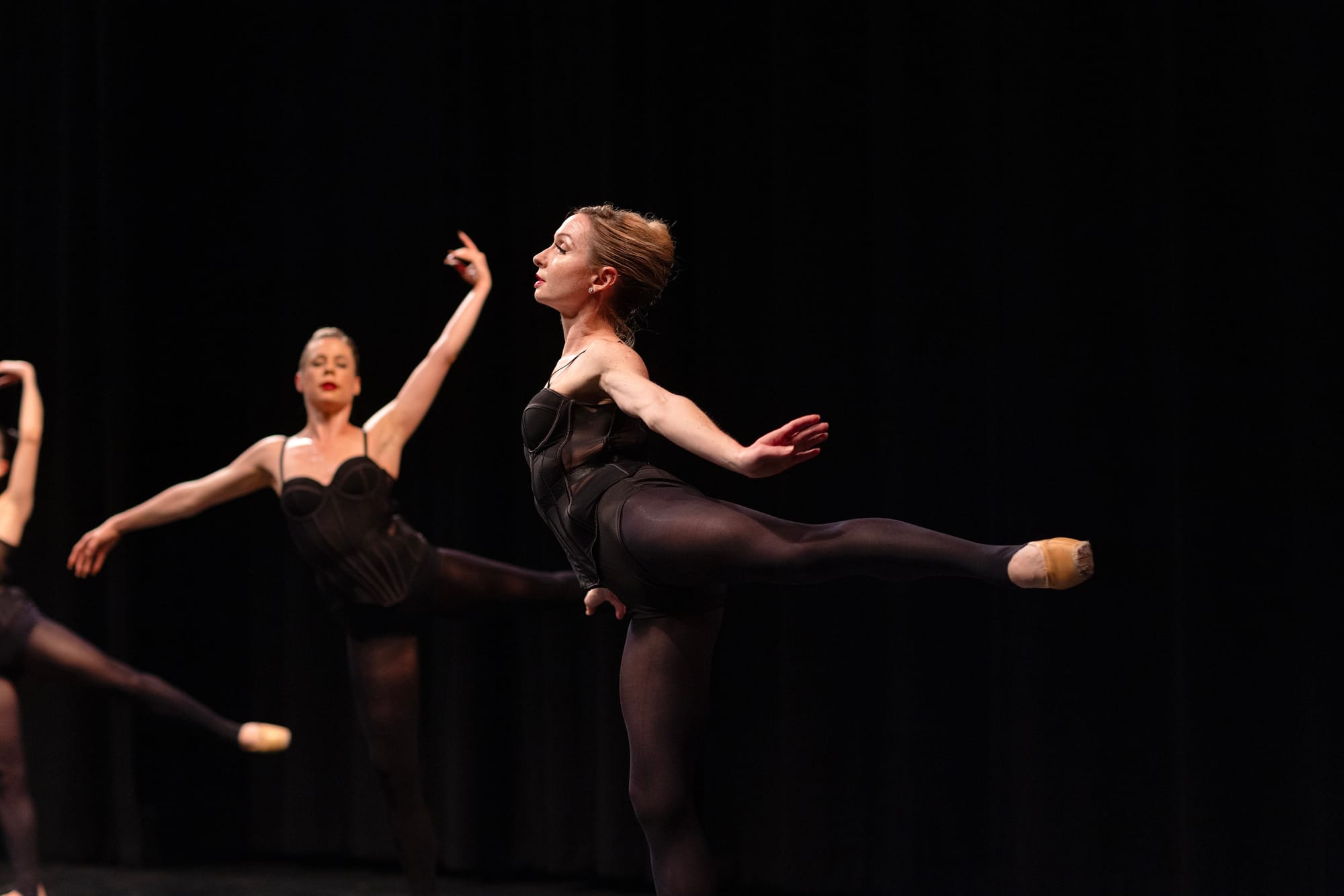
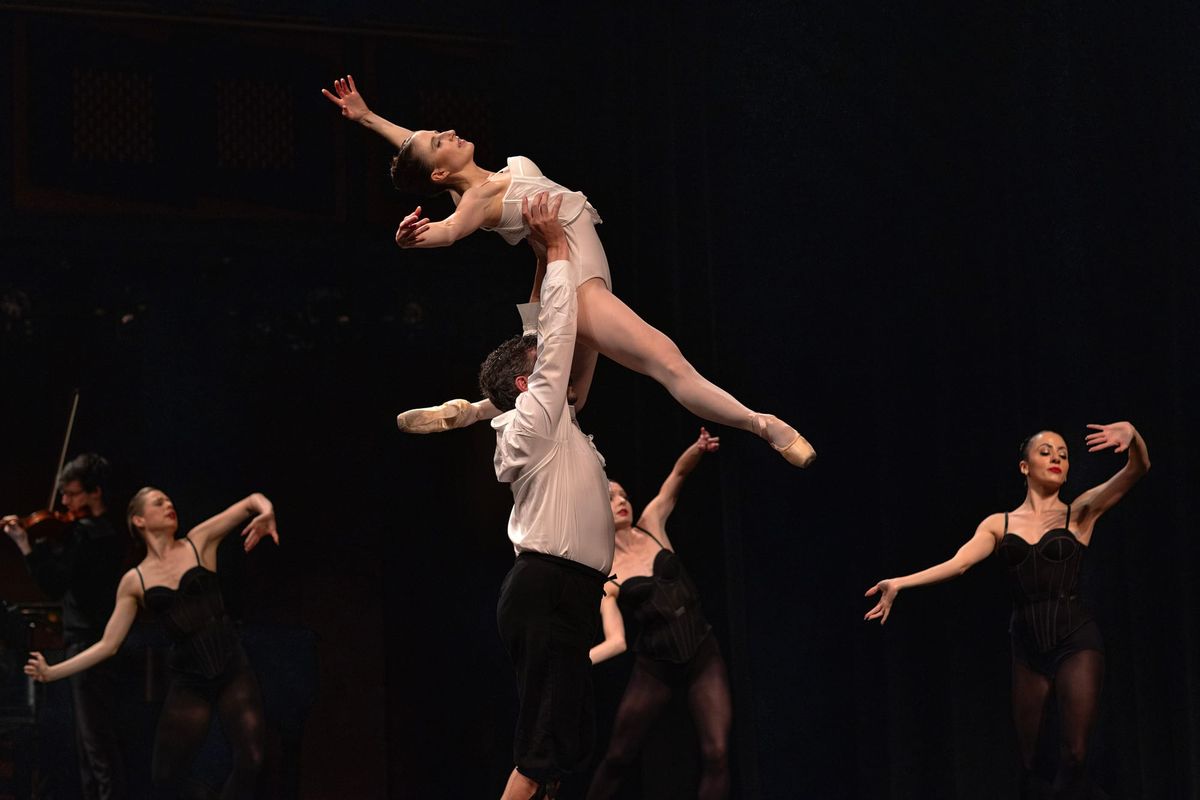
The work opened with three women (Cardea, Kaufman, and Trombly) entering, wearing black leotards with slightly risqué corseted tops, their arms waving enticingly through the folk-like rhythms. Gold has an inventive vocabulary of ballet steps, recognizable but not academic, and the three swung freely through the music. Wasserman entered after they had wafted out and danced an intricate solo, full of petite batterie, with pirouettes and fast little turns; his dancing had an innocent lilt. Adams then bourréed out in a white version of the earlier black costume, and danced a melancholy, wistful solo, with gentle arms and soft backbends—the eternal mystery woman.
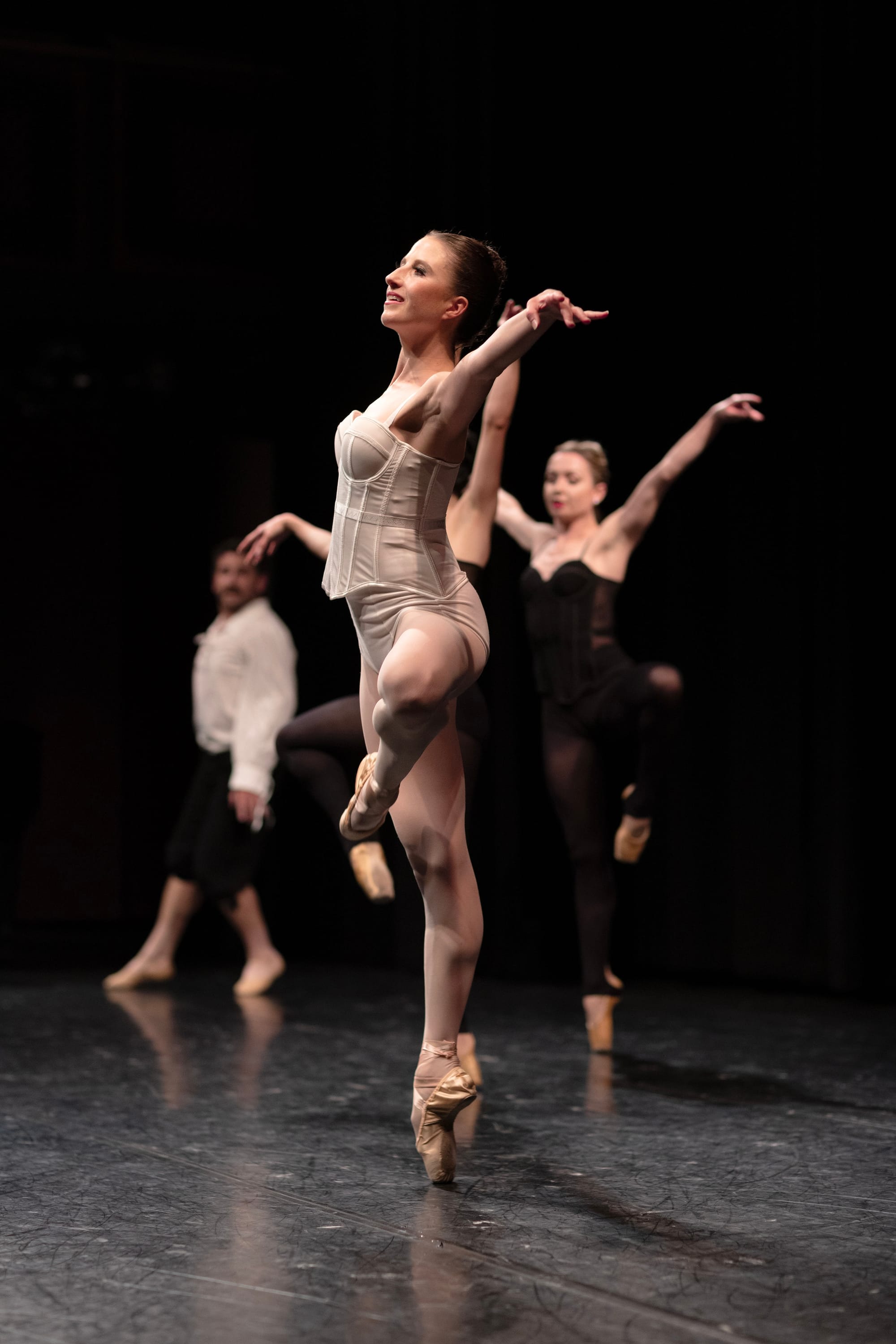
The dancers continued in various combinations through final sections; at one time, Adams and Wasserman had a shimmering pas de deux with soft lifts and supported turns, making Adams seem to float. The three women danced a wilder section, seeming to entice the deluded man, until Adams returned, now in red, and joined the other women—no man in sight.
Part of the fun of Gold’s choreography is watching it cold, so to say, and coming up with explanations or ideas about the inspiration; in the after-the-performance talk Gold did talk about his fondness for all those old film noirs with their dominating women, but was charmingly evasive about who exactly was what in his ballet, letting the audience come up with their own stories. To a question about the costume designs, he did say that, thanks to a small budget, the corsets all came from Temu. The costumes may have been cheap but the music, the ideas, and the dancing certainly wasn’t.
© 2026 Mary Cargill