Sunny Side Up
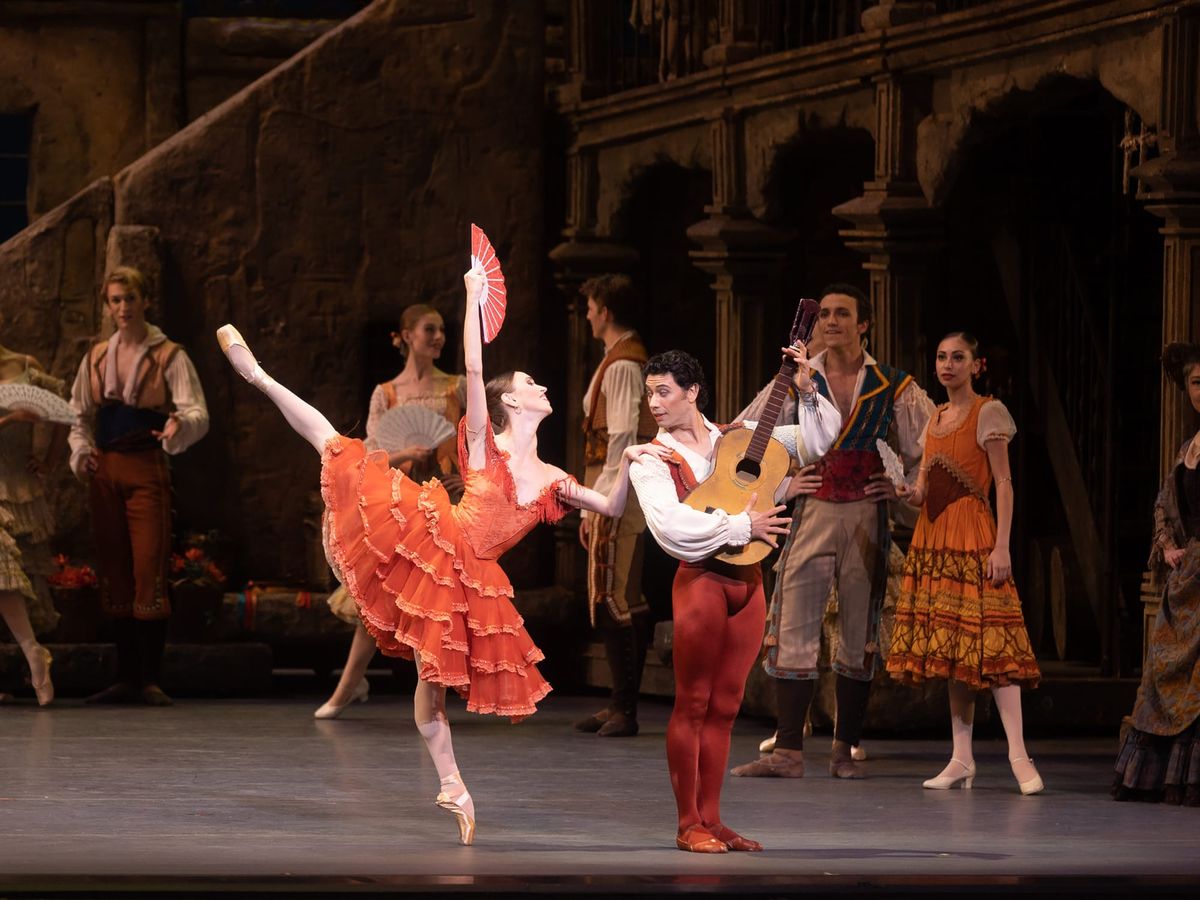
"Don Quixote"
American Ballet Theatre
Metropolitan Opera House
Lincoln Center
New York, New York
June 14, 2022
ABT's colorful version of the long-after Petipa ballet "Don Quixote" showcased three of its exciting younger dancers (Skylar Brandt at Kitri, Cassandra Trenary as Mercedes/Queen of the Dryads, and Gabe Stone Shayer as Espada), along with one of its most thrilling stars, Herman Cornejo, as Basilio. Now 40, Cornejo is not going to be dancing Basilio for much longer and the audience took this opportunity to thank him for so many sparkling, joyful performances. He responded generously, with a knowing wink and slight smile before showing off his wonderfully smooth turns, speeding up and slowing down at will, and his flashy yet stylish cabrioles. He was warm, generous, and very funny.
Brandt, in her New York debut, also seemed to be having a wonderful time. She made each act distinctive, so the frivolous but charming work had a distinctive arc. She was spunky earthy and very human in the first act, a lyrical vision in the dreamy second act, and triumphant in the wedding scene. Her reactions to her father, to Ganache (her rich, silly suitor) and to the Don Quixote were clear--she was a dutiful daughter, but there were clearly limits. Her stately dance with the poor deluded Don was warm, gentle, and very moving.
Brandt's dancing was clear and precise, and her turns were so fast and controlled, they did seem to blur. She is not the strongest jumper--there were no Plisetskaya leaps--but her powerful feet seemed to be able to do anything. Her hops on point in the vision scene floated over the stage as she etched shapes in the wry. Astounding as moments like this were, her dancing was seamless, and there was no sense of a variety show, of leaping from one trick to another.
The fouettés in the third act are one trick that any Kitri must have and Brandt's (without the fan) were fast and confident, starting with alternating singles and doubles (with a triple thrown in), switching to even faster singles and ending with a flourish and a double. The audience roared its appreciation, both for the physical triumph and because she made it all look like so much fun. The only slight disappointment was the adagio, which seemed a but guarded and I missed all of the upper body's confident warmth and grand manner of more experienced dancers.
Cassandra Trenary, as the Dryad queen, did use her upper body beautifully, and gave a commanding performance. She seemed to be about a foot taller that she did when she danced a quicksilver Amour several years ago. Her Mercedes swished her skirt vigorously in the first act and gave the character dancing in the wedding scene a warm and weighted dignity. It is not clear to me, though why ABT has decided that these two very different parts should be performed by the same dancer, when it has so many other talented dancers to show off. Gabe Stone Shayer gave Espada an infectious flourish and handled the cape with ease. His compact body though doesn't fit the slightly ironic smoldering Latin lover stereotype that some dancers add to the often thrilling mishmash of this ballet.
Minkus's bright music, which hints of Spanish sultriness, was conducted by Charles Barker with a vibrant control and provided a solid floor for the dancers as they dug into those infectious and eminently danceable melodies. The male corps, especially, were thrilling in the first act, so full of character dancing, as they pounded the floor and rattled the tambourines in glorious unison. I wasn't familiar with any of the names of the male seguidillas dancers but they certainly point to a sunny future for ABT's male contingent. Elwince Magbitang, still an apprentice, is surely part of that sunshine. He is a powerhouse, and threw himself into the convoluted gymnastics of the gypsy scene (choreographer unknown) with an astounding confidence and verve.
Copyright © 2022 by Mary Cargill



