Sugar High
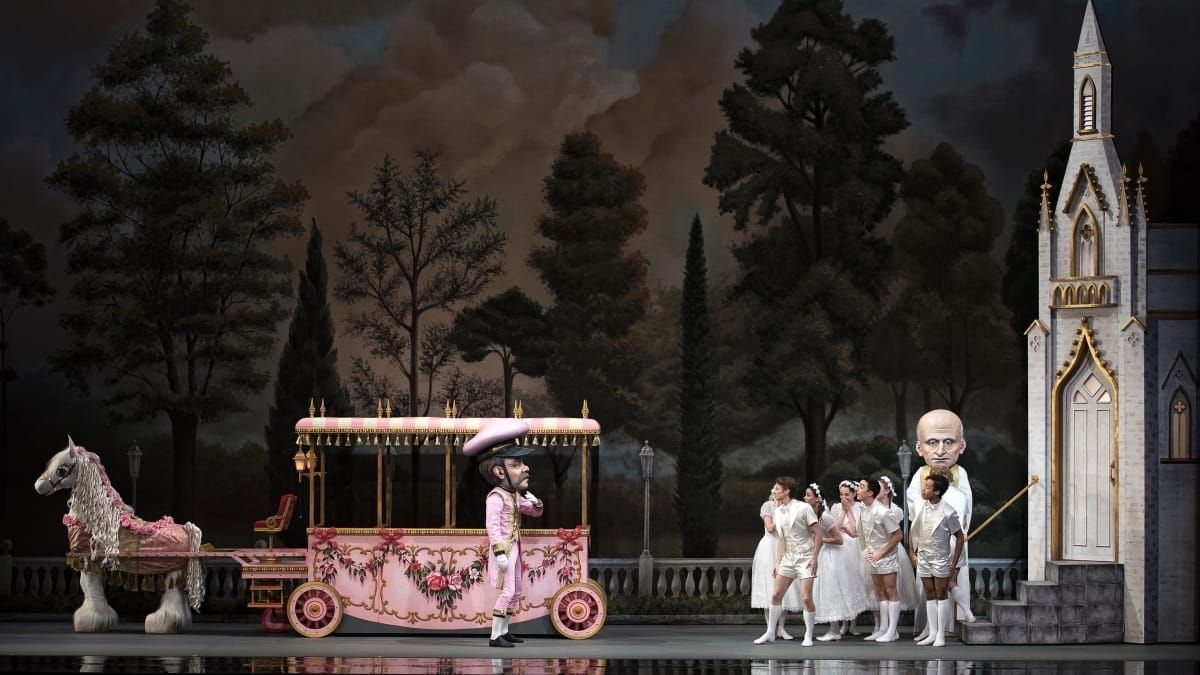
"Whipped Cream"
American Ballet Theatre
Metropolitan Opera House
Lincoln Center
New York, New York
July 4, 2018,matinee
Alexei Ratmansky's witty, frothy, and dance-filled 2017 ballet returned for the final week of ABT's spring season. The season may have been winding down but the dancers looked fresh and eager, even on a sweltering July 4 matinee. The simple story involves a young boy (Gabe Stone Shayer in his New York debut) who eats too much whipped cream while celebrating his first communion and is gloriously devoid of any deeper meaning. The lustrous music, by Richard Strauss, has lavish, overlapping melodies and dance rhythms, and though Strauss wrote it for the light, frivolous plot (such as it is), the music isn't whimsical or jokey.
Nor is Ratmansky's choreography, which grows richer at each viewing. After the Boy is carried off to the hospital with a stomach ache, the first act is a series of dances by the denizens of the pastry shop, as plotless and varied as any Petipa extravaganza. Ratmansky, though, unlike Petipa, seems to give delicate little nods to earlier ballets, as the four marzipan men, with their bows and pointed shoes battle with the sugarplum group with their baggy pants – it was like watching a fight between the Povlotsi warriors and "Scheherazade's" eunuchs. These were joined by a group of high-hatted gingerbread men and their groupings, with the overlapping, merging, and separating cohorts, were intricately sophisticated.
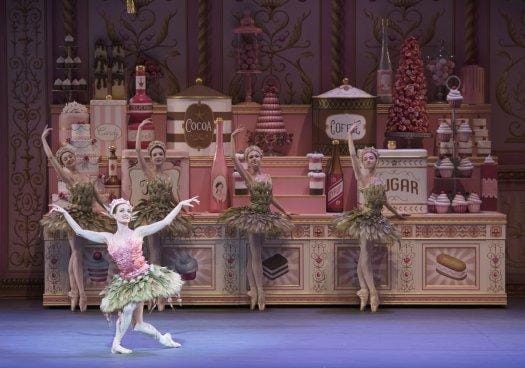
So too was the choreography for the elegant Princess Tea Flower (Gillian Murphy) as she danced to that shimmering music with its faint echoes of "Firebird". With her sculptured and clear upper body, Murphy was an exotic Tea Flower, using her head and eyes to catch gleams of light. She made the sudden stops, with her drooping arms and the quick changes of direction look like a witty dialogue with the music. She luxuriated in the sensuous moves without making them a personal statement; her dancing was a celebration of flavors, not a short story. Her Prince Coffee, too, was a flavor, as James Whiteside complemented her approach, leaning back in stylized awe at her beauty. Whiteside, at his demi-caractère best, made an elegant cup of coffee.
The Boy got his chance to shine in Act II and Shayer gave his dancing a youthful eagerness, playing up the comedy (especially with the bedpan) as he gave the Boy a slight and charming awkwardness, staring in awe at the Princess Praline (Syklar Brandt). She gave her role an equal mixture of bossiness and sweetness, telling the Boy in no uncertain terms that she had a crown so he should bow to her. Her solo had a glorious swagger and she scampered through that fast footwork with apparent glee. Stones solo, with its many changes of direction had a youthful innocence as he seemed to float from position to position with effortless ease.
Though the choreography for principal roles is certainly impressive, "Whipped Cream" is a true company work, full of delightfully characterized solos. Thomas Forster was a dapper Prince Cocoa and Luis Ribagorda was an energetic Don Zucchero, running after all the girls. Ratmansky even made the drunken trio for Mademoiselle Chartreuse (Zhong-Jing Fang), Ladislav Slivovitz (Blaine Hoven) and Boris Wutki (Marshall Whiteley as the amorous vodka bottle) witty rather than silly -- there was no obvious drunken staggering. Fang, as the Mademoiselle, showed off her expansive arabesque, elegant even when wearing a cork on her head.
The sets and costumes are a continuing delight, though, perhaps due to familiarity they did not overwhelm the dancing this year; as usual, Ratmansky's choreography rewards repeated visits. There is something both endearing and uplifting about its innocent whimsy without any saccharine aftertaste and the ballet is a true joy.
copyright © 2018 by Mary Cargill



