Strong, Feminine Lead
“Sylvia”
American Ballet Theatre
Metropolitan Opera House
New York, NY
July 10, 2025
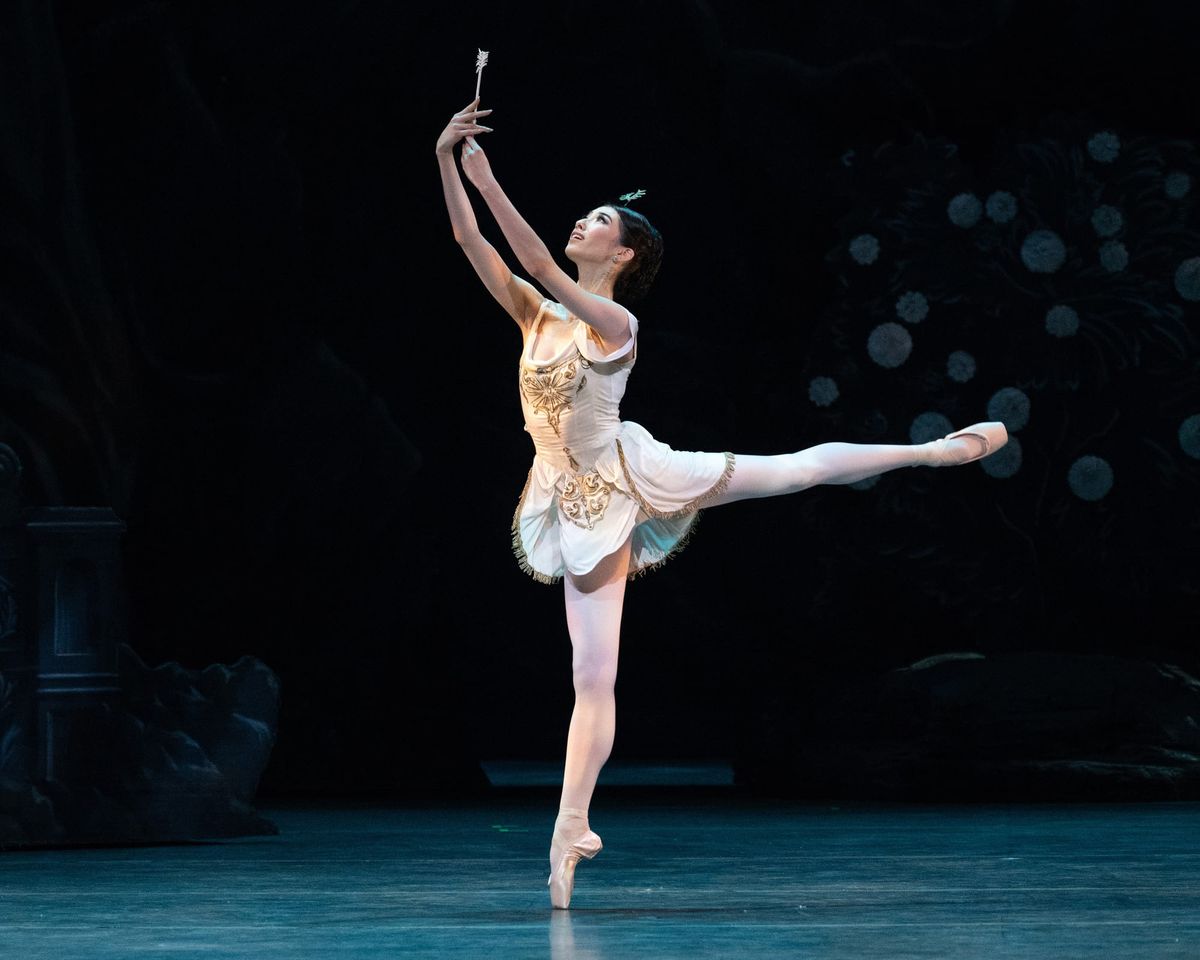
“Sylvia” was American Ballet Theatre’s marquee offering this season, at least if you were trying to draw a conclusion from the company’s marketing and the sheer saturation of this ballet across the media. Presented by ABT for the first time in almost a decade, this Frederick Ashton ballet had many debuts, some misses, and a truly mesmerizing partnership in Chloe Misseldine as Sylvia and Royal Ballet’s Reece Clarke as Aminta. Defiant, but gentle, the ballerina offered a new dimension with each scene, perfectly paired to Clarke’s nuanced acting, and the rest of the cast on this night fleshed out the ballet into a full spectacle.
Aside from a couple of minor wobbles, from her first triumphant entrance Misseldine was clean in every note. The accents, with her reached arm up to the sky holding the bow, were firm but not in the almost violently aggressive way as some of the other leads did it. For the more technical bourrées and jumps, rather than aim for crispness and tightness, Misseldine capitalized on her elongated form. She moved deliberately, and covered the ground with the breadth of those movements as well as her shape, rather than rote athleticism. The acting was superb too. When Clarke’s Aminta begged for forgiveness, this elegant beauty dismissed his pleas with an air of not wanting her time wasted, not arrogance. Then, once struck by Eros’s arrow, her bourrées back to Clarke had a magnetic quality to them – her legs taking her against her own will and reason.
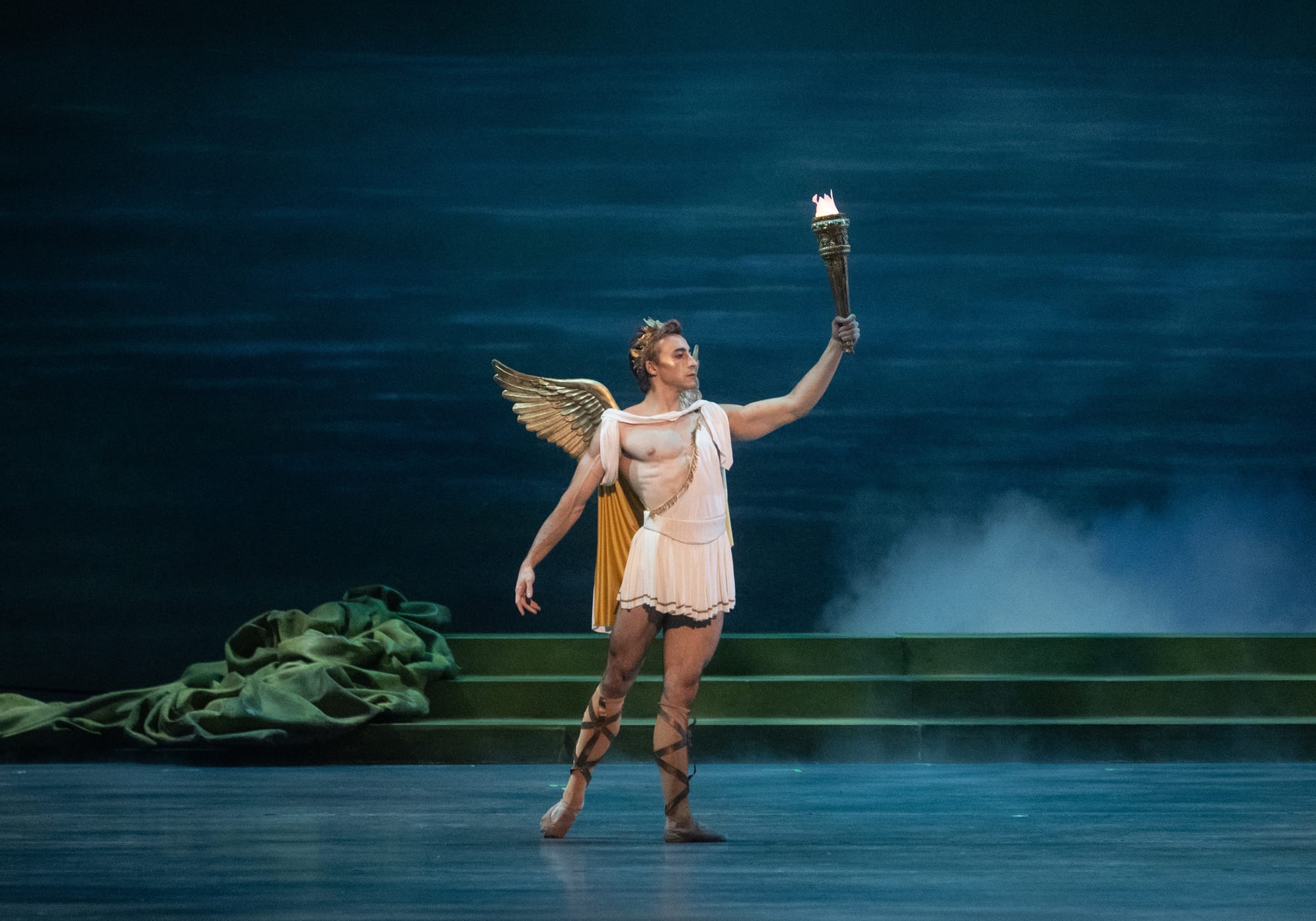
As Eros, Carlos Gonzalez left it all on the stage, expertly switching from regal stature to no-holds-barred humor as the cloaked man, to many uncontained chuckles in the audience. It was hard to believe this was the same dancer who by the second act would have an almost knightly demeanor, and his character clearly had a sense of justice and would stop at nothing to enforce it.
The second act itself was a new opportunity for Misseldine. Once in the cave, and being wooed by Jose Sebastian’s Orion, she was a soul full of sadness and depression, and even her seduction dance showed hints of deeper sadness veiled by all the showgirlship. You could not quite wait for her to escape this cave for other reasons too: Sebastian’s partnering in their duets was spotty, with Misseldine having to save quite a few balances, fortunately without breaking character. In both the dancing and the storyline, one wanted Misseldine out of his hands.
The triumphant third act, with its many duets, had all the trappings of pure classicism, and Misseldine handled both the adagio and the variation with academic precision. This act has room for less drama and more decorum, and so it seemed like by this point both Misseldine and Clarke were focused on wrapping things up rather than further character work. The one meaty scene with Claire Davison’s Diana allowed for an ombre of emotions as the lovers begged for their future, but it was mostly stolen by Davison’s very wistful recollection scene of her own past love, energetically prompted by Gonzalez. Rightfully so.
Still, the evening belonged to Misseldine, whose interpretation was the product of clear artistic intention – a Sylvia with nuanced femininity that elevated the role far beyond its usual woodland huntress archetype.
copyright © 2025 by Marianne Adams



