Fouetté Fever
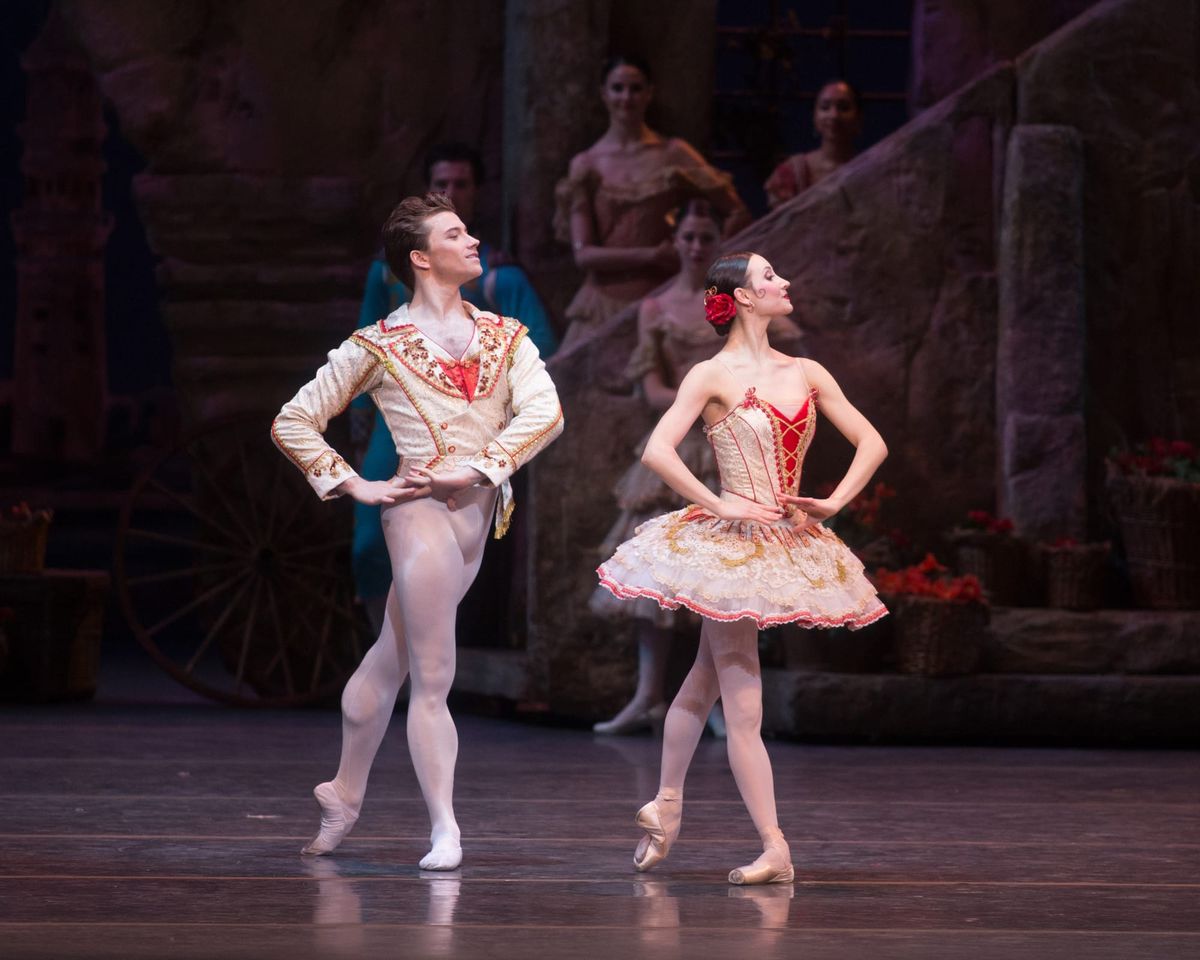
"Don Quixote"
American Ballet Theatre
Metropolitan Opera House
New York, New York
May 17, 2017, matinee.
"Don Quixote" will probably never appear on anyone's list of all-time great ballets, but it hasn't survived for nearly 150 years only on the strength of its gala-worthy pas de deux with those applause-generating fouettés. The evergreen comedy of a spunky girl who outwits a greedy parent to find true love has, underneath the frivolity, a real heart, the music by the underrated Minkus has a simple melodic charm, and Petipa's inevitable vision scene is a gift of pure beauty. ABT's version is sturdy, though the gypsies in their red stretch velour and bare chests would be laughed off any respectable operetta stage.
There were three debuts in the Wednesday matinee, as ABT gave some of its incredibly talented soloists a chance to shine. (Fortunately, ABT seems to have discarded its all-guest star policy for the spring season.) Christine Shevchenko debuted as Kitri, Devon Teuscher as Mercedes/Dryad Queen, and Blaine Hoven as Espada. Alban Lendorf, from the Royal Danish Ballet, and now an ABT principal, was Basilio.
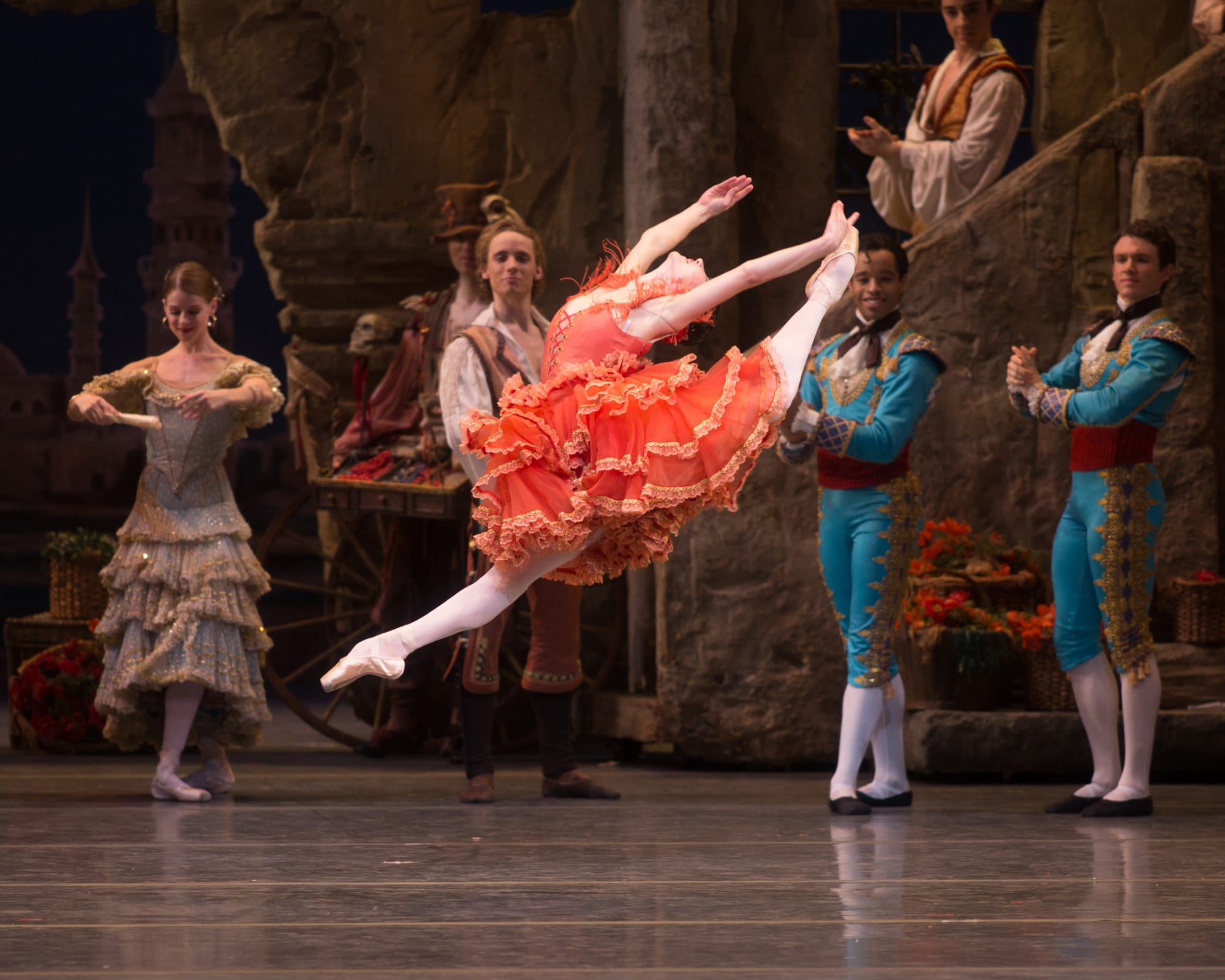
Shevchenko is a tall, beautiful dancer with a steely and secure technique, though she does favor the scratch-her-nose-with-her-foot extensions which can distort her line. Her head-whacking Plisetskaya leaps were fearless and majestic and her fouettés were simply phenomenal -- fan held high, impeccably centered, frequently doubled, and blazingly fast. (I think she ended with a triple but it was a blur.) But she tended to demonstrate rather than perform and I missed much of the charm and warmth that can radiate through the bravura. The first act's formal dance with the poor deluded Don (Clinton Luckett) can be quite moving, as Kitri gently tries to keep his illusions intact. Shevchenko just rolled her eyes and kept smiling, as if she were used to being admired. Though her dancing was translucent, she smiled her way through the vision scene as well and didn't give it the mystery that Petipa's dream needs--he was so fond of showing off all facets of his ballerinas, and they need souls as well as fouettés.
Lendorf, with his Danish training, understands character and his Basilio was a natural charmer with a plush jump, clear mime, and a generous presence. His Danish modesty, though, isn't explosive and his smooth, elegant technique with its brilliant footwork seemed too refined for the Bolshoi bravura. It was like watching a Rolls Royce engine in a souped up convertible.
For the past few years ABT has doubled up Mercedes and the Dryad Queen, though few dancers are equally at home in Mercedes' High Fauxmenco style and the Dryad Queen's pristine classicism. Teuscher, however, is a versatile and commanding dancer, and she made a strong case for the practice. Her Mercedes was warm and sensuous; I especially enjoyed the character dances at the beginning of Act III, with her smoldering snap and fast footwork. She used her upper body with a sculptural grandeur; she may have been a street dancer but that street was clearly Fifth Avenue. Her Dryad Queen had a magnanimous nobility as she led the Don into his dream with a gentle grace. She made the Italian fouettés, with their tricky balance shifts, smooth and steady, but she also shaped them by starting low and building intensity in a way that was both musical and thrilling.
Hoven was a dignified Espada, throwing his cape with an accurate flair. He didn't quite convey the devil-may-care, tongue-in-cheek attitude that can flavor the role and he looked like he would be more comfortable facing a baseball than a bull, but he danced clearly and powerfully and had a real rapport with Teuscher.
Zhiyao Zhang as the energetic gypsy was also powerful, throwing in a lot of acrobatic leaps and kicking his head with a cheerful, nonchalant abandon; he fully deserved his ovation. Alexei Agoudine (Gamache) and Roman Zhurbin (Lorenzo, Kitri's father) are fine and imaginative mimes and seemed to be having a wonderful time. I especially enjoyed Agoudine's prissy delicacy, which never descended into slapstick. Performances like these, in addition to those inevitable fouettés, have really kept the old Don going.
Copyright © 2017 by Mary Cargill



