Ballet's Beautiful Ghosts

“Mephisto Waltz,” “Soon,” “Quiet City,” Ghost Light”
London City Ballet
The Joyce Theater
New York, NY
October 27, 2026
London City Ballet returned to the Joyce Theater two years after its first New York tour as a reconstituted company, and on opening night it made its case in a program of beautifully haunting works. The troupe once called Sadler’s Wells home and counted Princess Diana among its supporters, then vanished in 1996. Christopher Marney revived it in 2024 with a simple mission: bring distant audiences great ballet, and not only the classics, but modern works they might never otherwise see. This program more than delivered on that promise.
Two of the four works were U.S. premieres, and a third was a revised version of John Neumeier’s pandemic-era “Ghost Light.” Set in the middle was a gift to New York: Jerome Robbins’s “Quiet City,” a ballet born here in 1986 and unseen in the city in decades.
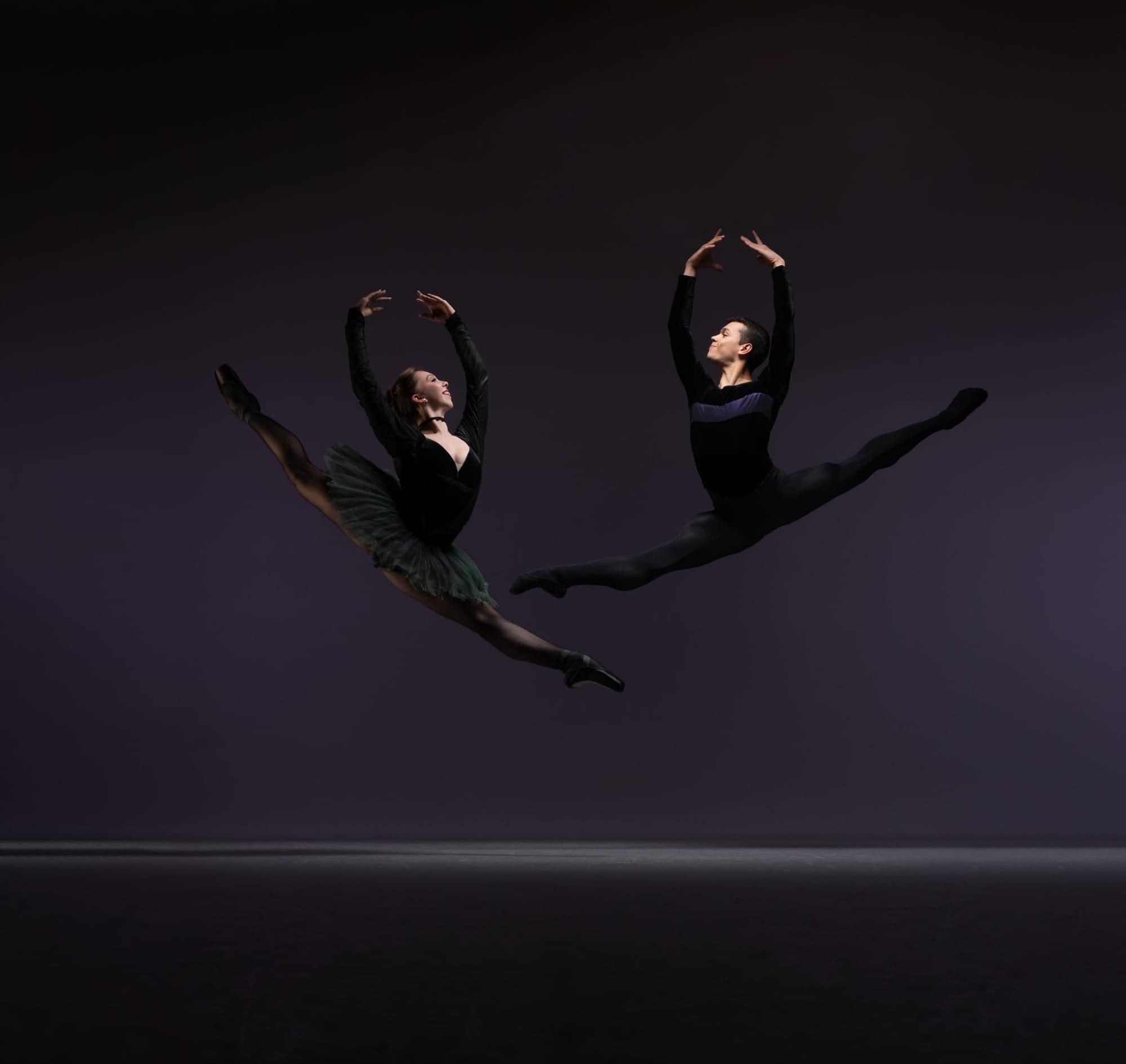
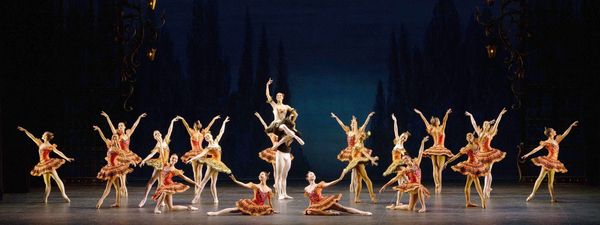
The evening opened with Ashley Page’s “Mephisto Waltz” to Strauss, a brisk technical showcase for five couples, created in 2021 for third-year students of the Royal Ballet School. It read exactly as you’d expect from its original cast: a ballet that shows off skill, musicality, and a keen sense of the stage and one’s partners. Couples rushed in with grand jetés, while pliés punctuated the pace and reset the flow. Lifts, with the back leg raised to meet the outstretched front leg as the ballerinas got spun, broke up the classical cadence, and each duo got a moment alone. There was no story, and that may have been the point: before the company took us anywhere emotional, it reminded us that these dancers are first and foremost excellent classicists, with precision, powerful jumps, and turns that stopped on a dime. Ellie Young shone brightest, with a stage presence that carried to the back of the house.
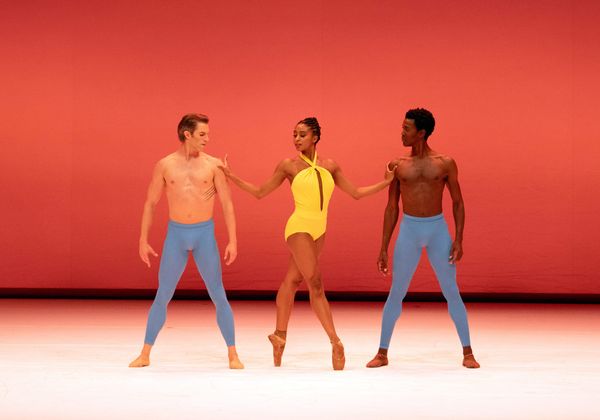
Then the evening turned inward. Tasha Chu’s “Soon,” to music by Sam Robinson and Gavin Bryars, explored anticipatory grief, with full depth of the ache of knowing that the worst is coming. A man in a white coat delivered bad news to a couple in the opening scene with impaling landing and left, leaving the woman, danced piercingly by School of American Ballet-trained Sahel Flora Pascual, to collapse onto a chair, barely held up by Siméon Sorange-Félicité. She turned for comfort to three other dancers, Arthur Wille, Samuele Barzaghi, and Josue Gomez, as the ballet worn on, but no matter how fast she ran to them, her questions went unanswered and her pain couldn’t be bargained away. Her desperation made one feel just as hopelessly yearning for answers to questions unknown – it was unsettling, and almost classically cathartic.
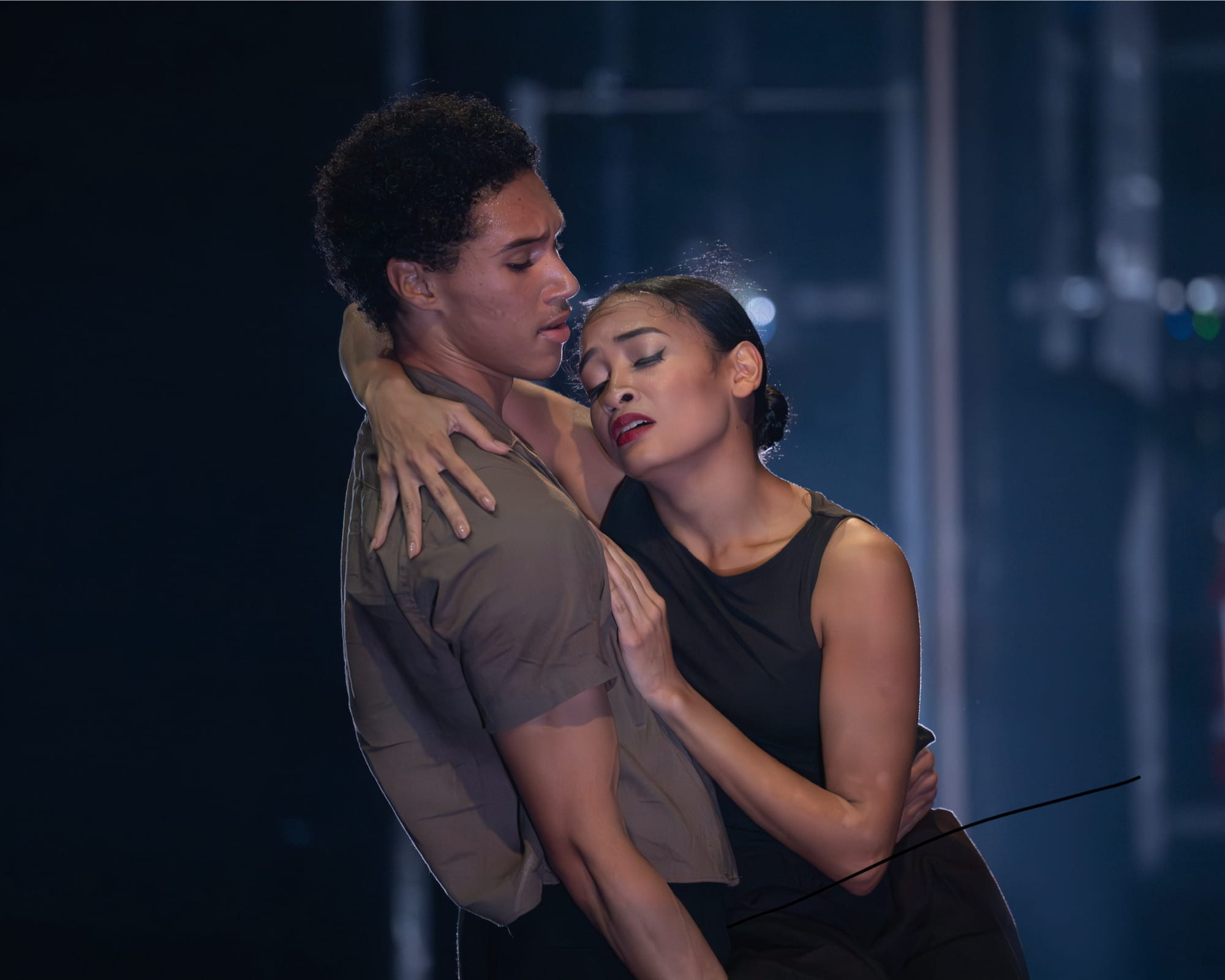
The dancing carried forward in fluid turns and swerves through space, as if sidestepping ghosts. Wille was remarkable, with a spine that seemed to have no bones and floor work like backward somersaults – a physical marvel of a reprieve from the emotional journey. Then, in the final section, Pascual leapt into a ring of Sorange-Félicité’s arms and wrapped herself around his waist – the final reaches for comfort. As Bryars’s voice sang “Jesus’ blood never failed me yet,” it was equal parts acceptance and refusal to give up, until Sorange-Félicité lay down the floor, ending the work. Perhaps, the bad news was his.
“Quiet City” offered a gentler way through grief. Robbins made it for New York City Ballet in 1986 as a tribute to the company dancer Joseph Duell, whose life ended abruptly. It’s the second ballet from City Ballet’s past to resurface after decades away this fall, following the company’s own revival of Balanchine’s “Pithoprakta,” and a reminder of how much repertory sits unseen. It opened on silhouettes, then a trio emerged, with Joseph Taylor as a leading vision. Rich with lovely arabesques and careful supports by Barzaghi and Wille through repeated tours lents, the movements were a careful give and take of nurture. A step, then another, landing in plié in fifth and opening into a degage. Then, after many moments of lilting lyricism, Taylor lay down while the other two men danced on. When he finally rose, his face registered the faintest first smile. The two men lifted him, carrying him back, and the silhouettes returned. Grief here wasn’t something to be solved, but just embraced with love.
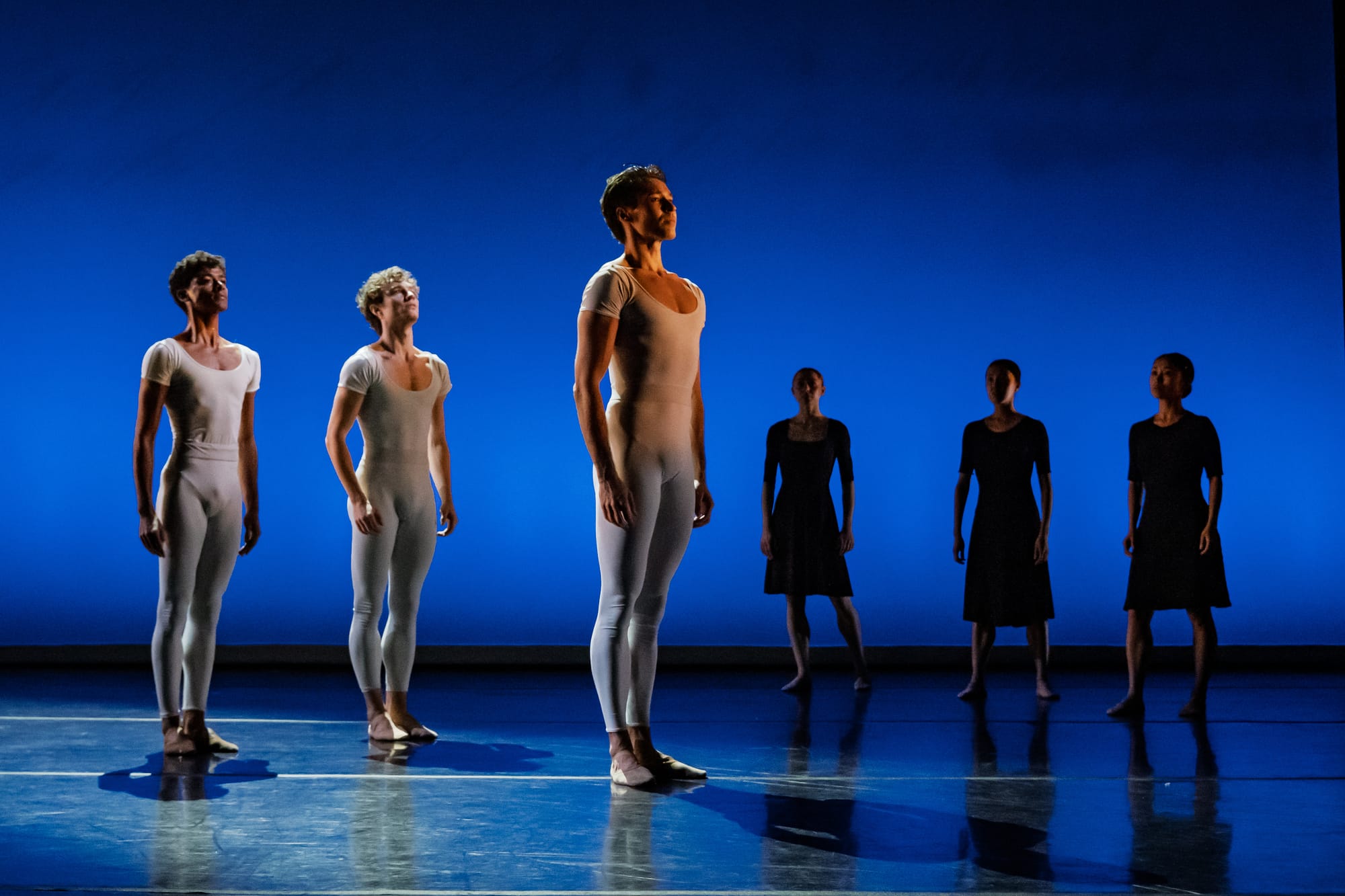
After an intermission, an updated and restaged “Ghost Light” led the audience down a mesmerizing path of artists’ thoughts. A ghost light is a solitary light left to illuminate a stage when a theater isn’t in use, and so, with theaters world over shut down in 2020, the ballet was born and brought to the audience in 2021 to honor the dancers who waited, longed, and wandered through their craft until the houses filled again. Set to music by Schubert, it is a meditation on dance that was and may be again, in scenes of dancers comforting one another through lilting introspection.
Alina Cojocaru appeared at the outset in an Odette-like tutu, performing the Swan Lake queen’s entrance with hesitation and confusion. She stumbled over a chair and discovered her hair being loose. Distressed, she muttered in English and Russian about everything that must be put together to dance, wondering where everyone is, and finally insisting, "Нам нужно танцевать!" (“We need to dance!”).
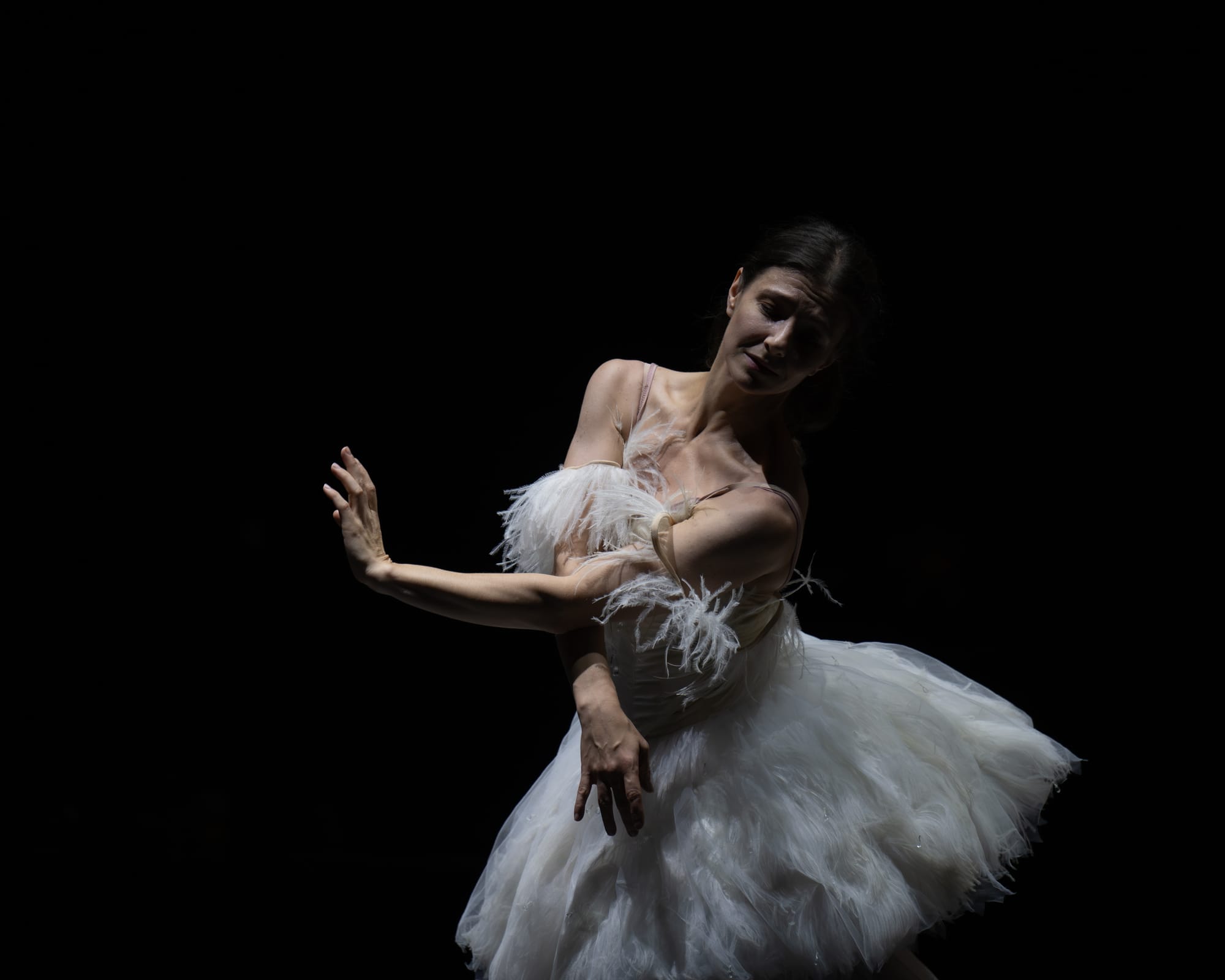
Dance she did, and soon the company’s other dancers joined her a few at a time, eventually with all sixteen having graced the stage. Duets and solos gave way to echoes of other performances: a pas de deux with distinct Romeo and Juliet motifs, a rehearsal-clothes run at a technical gala, a Sylphide floating across the back of the stage. The ballet may have begun in Ivanov’s vocabulary but soon slipped fully into Neumeier’s own, with its accentuated minimalism and inventive steps. Wille’s solo had jerky leg movements and double ronds de jambe, the leg retracting and extending. Elsewhere there were straight falls forward and jump tours in sixth position. There was no stated message, just streams of consciousness, the roles these dancers might have danced if freed from the ghost light and stepped into the limelight.
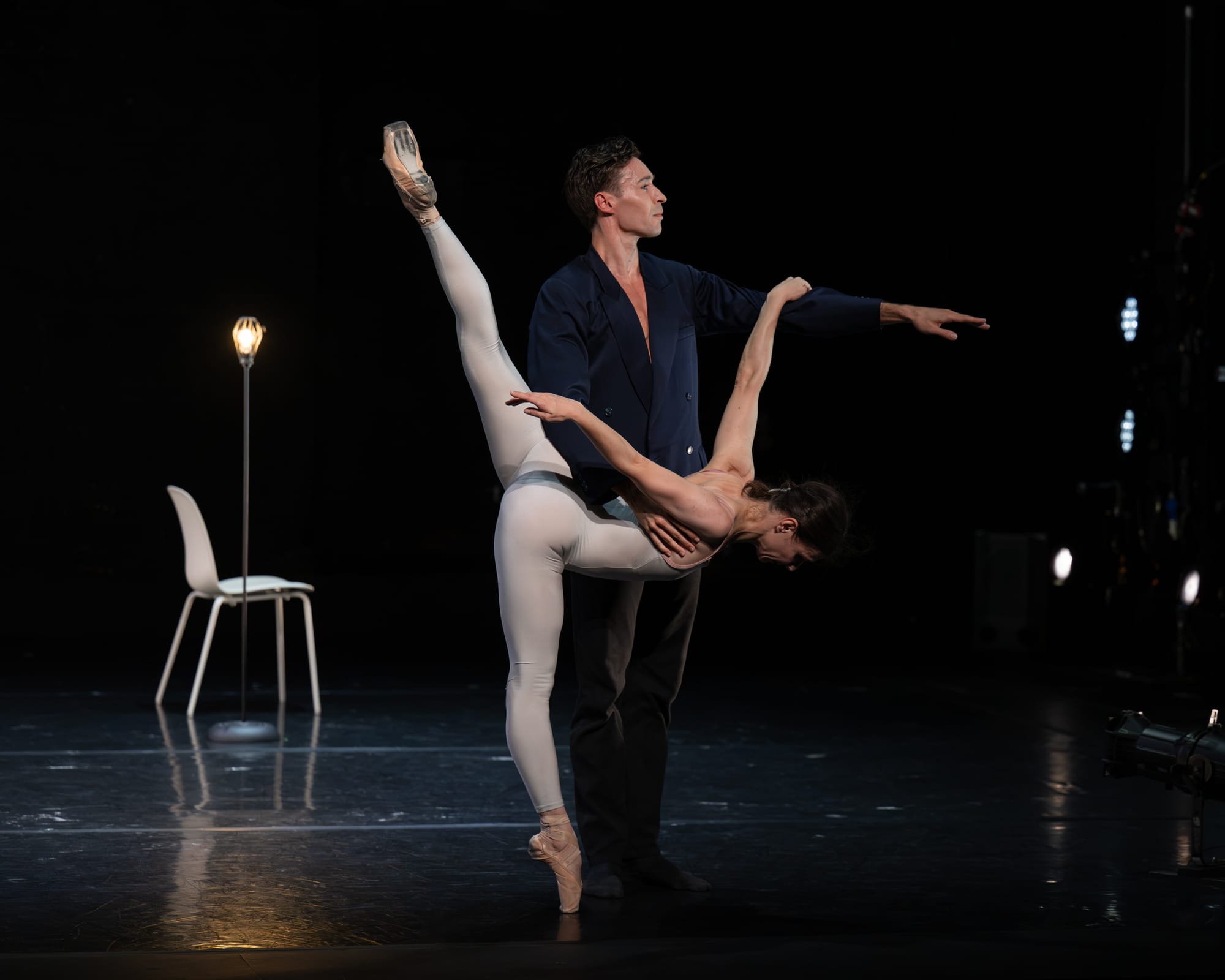
Cojocaru’s presence mattered. A guest star and one of the great ballerinas of her generation, with a long working relationship with Neumeier, she lent the ballet gravity and made a newly-young company’s New York return feel like an occasion. And she was generous, never upstaging the ensemble. When she reappeared, she was ready to shed the tutu. Leaving it on the floor, she crossed the stage into a duet with Taylor, both intimate and liberated. There were the many arabesques and an inventive lift with Cojocaru in a split, spread across Taylor’s outstretched arms as he spun her to stage left. Elsewhere he cradled her head, comforting a dancer lost in performance limbo. When the duet ended, she sat on the chair by the ghost light as the others spoke their piece through dance. For all her star power, there were no real leads in this ballet, only the stories, each dancer a focal point of her own. When at the bows Neumeier himself came out to join the dancers, it was a fitting sight for a ballet about the ones who never really leave the stage.
Amid the big institutions and the small experimental troupes, London City Ballet is in a class of its own: a small collective of fine dancers, with a carefully curated mission of revival, preservation, and emotional beauty. The works were different, but their message was the same. Great art endures, and so do the ghosts that haunt it.
copyright © 2026 by Marianne Adams