Food Fight
"Like Water For Chocolate"
American Ballet Theatre
Metropolitan Opera House
Lincoln Center
New York, New York
June 24, 2023, matinee
Balanchine once famously said that there are no mothers in law in ballet, but that is certainly not true, as his revered "The Sleeping Beauty" proves; no one has trouble figuring out the relation of the Queen to the Prince in Act III. But his point that ballet is not suited to complex plots is certainly valid, and Christopher Wheeldon's new "Like Water For Chocolate", inspired by the Mexican writer Laura Esquivel's novel and the subsequent film, while physically striking, does seem at times like it could use a flow chart of relationships, what with all the sisters and the cousins and the aunts, not to mention the ghosts and the lovers and the babies. It tells the story of Tita (Devon Teuscher), the youngest daughter of Mama Elena (Zhong-Jing Fang), and her thwarted love for Pedro (Joo Won Ahn), who marries the eldest sister Rosaura (Betsy McBride) to be near Tita, who is turn is loved by the kindly Dr. John Brown (Jarod Curley). Text projected onto a scrim help explain some of the plot elements, but careful and repeated study of the synopsis is required to follow the twists and turns, which include Mama Elena's back story (her lover was stabbed by her brothers), various weddings and funerals, the Mexican revolution, and demonstrations of bread making.
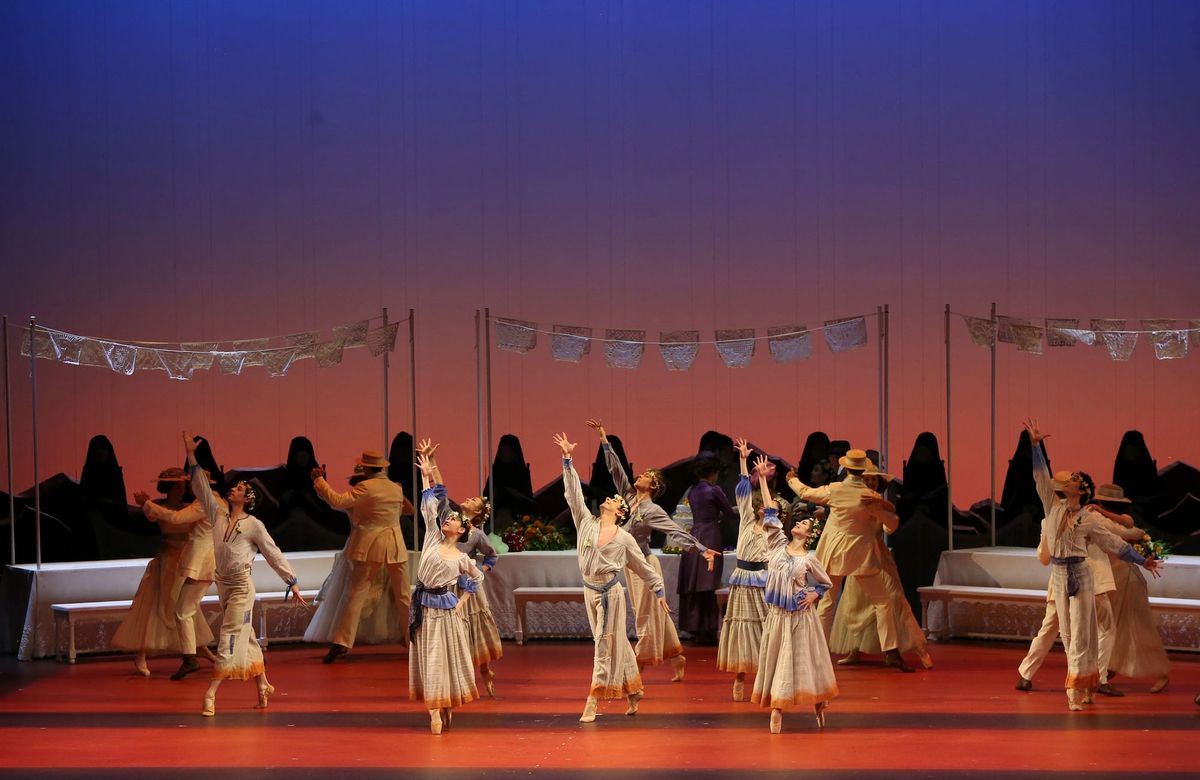
The performance was preceded by a short promotional video, with interviews by Esquivel praising the ballet, and by a very appealing Wheeldon, who radiated love of Mexico. The music, an original score by his frequent collaborator Joby Talbot, uses traditional Mexican instruments and is atmospheric in a film score sort of way; it is pleasant and unobtrusive without being welded to the steps. The beautiful, atmospheric sets by Bob Crowley allow the frequent scene changes to flow smoothly, with hints of Mexico in the projections and some dramatic special effects.
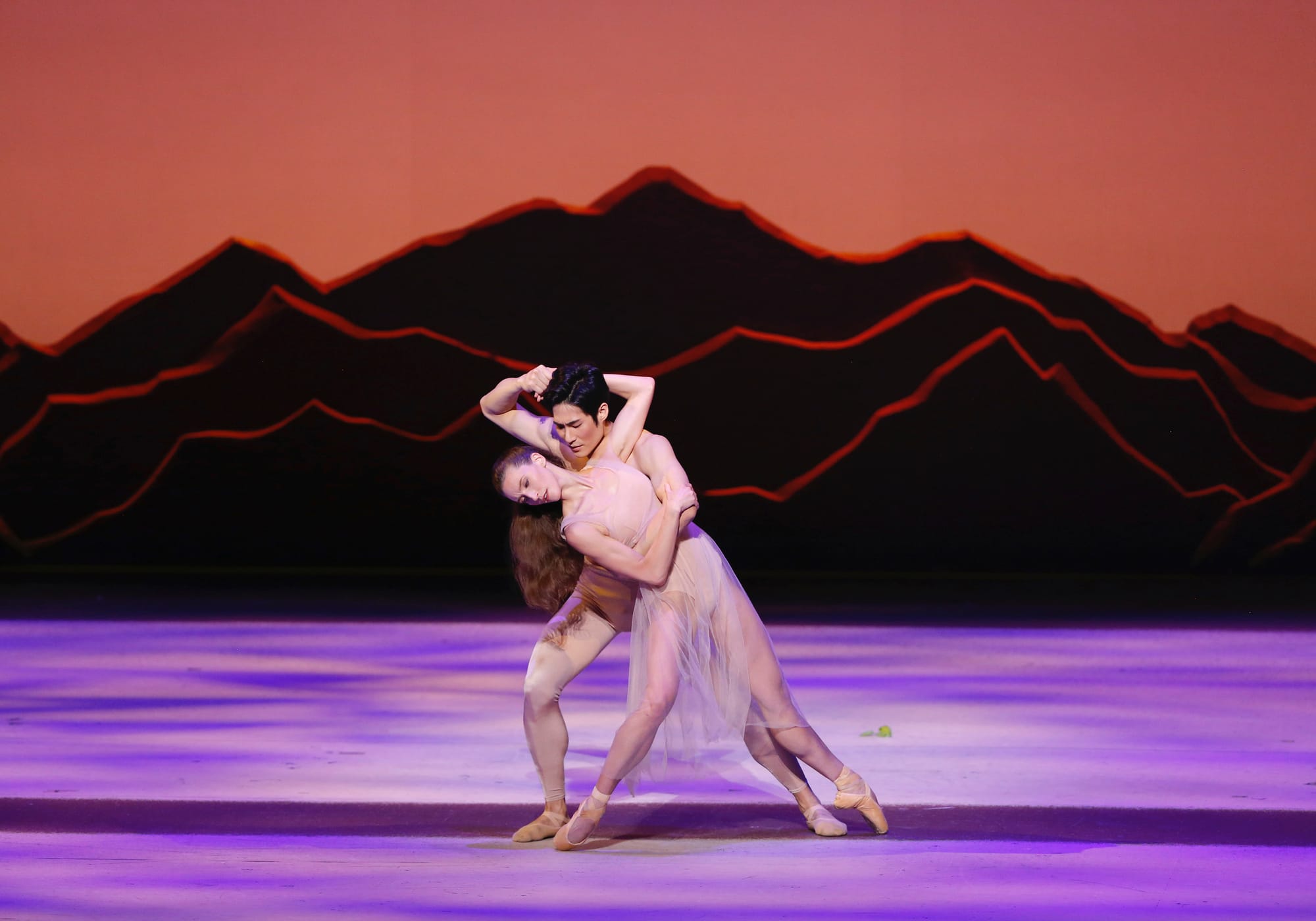
The ballet though, especally in the very long first act, focused on the details of the complicated story, while the characters, for all the dancers' commitment and enthusiasm, often remained flat, performing extremely repetitive choreography. Teuscher, a dignified and regal dancer, was a youthful Act I Tita, and a graceful, if often despondent woman later in the ballet, though the choreography varied little from act to act. She spent much of the ballet in complicated and ungainly lifts, pointing and flexing her feet while riding an invisible bicycle. Tita, doomed to spinsterhood by her mother, is the cook of the family, whose meals causes the diners to feel the emotions she had while making the meal. At least in the first act; she pretty much gives up cooking in Acts II and III. Wheeldon takes a very literal approach to events, and to demonstrate Tita's anger and despair at Pedro's and Rosaura's wedding (the wedding feast was prepared by Tita) he has the guests line up facing the audience and vomit; he is too often a choreographer of prose and not poetry. Ahn danced energetically as Pedro; he is a graceful and powerful dancer. One especially lovely moment was a light jump where he seemed to float up to the table, but most of the time when he wasn't hoisting Teuscher, he was rolling on the floor. The dances with Teuscher were both athletic and erotic, but the constant twitching and rolling didn't allow for much genuine emotion to show through and their mutual attraction had to be taken on faith. It is hard to convey "I love you" with your partner's feet wrapped around your neck and your face inches from the floor.
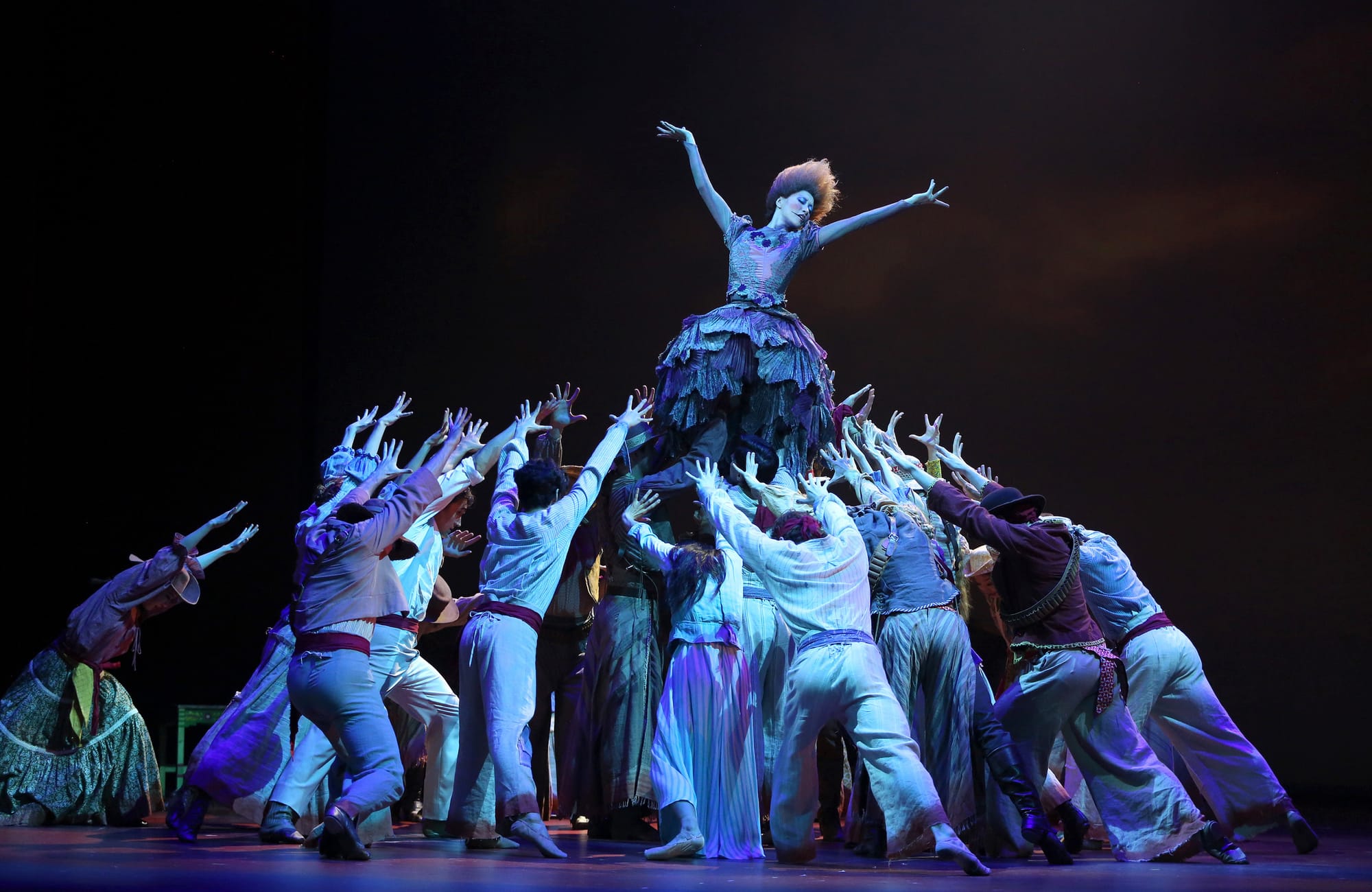
When she joined ABT in 2004, Fang was an impressively lyrical dancer, oozing moonlight and grace. Unfortunately a series of injuries interrupted her career for a number of years, but she has become a powerful dramatic dancer, and she was a domineering Mama Elena, though again her performance was sometimes undercut by the repetitive choreography. Wheeldon used Antony Tudor-like gestures to characterize her fierce determination, but more as a series of paragraphs than an exclamation point, which made her look a bit like a mechanical doll whose batteries were misfiring. Her return as the ghost of frustrated hopes was an impressive work of lighting and costuming design.
Rosaura (Betsy McBride) and Gertrudis (Zimmi Coker in her debut) were Mama Elena's elder daughters, and each made a distinctive impression. The bitter McBride, distraught over Pedro's love for Tita, got a mad scene worthy of Giselle. Coker was inflamed by one of Tita's meals (flavored with petals from a rose that Pedro had given Tita) and after a graphic orgy involving a horse, ran off with Juan Alejandrez (Michael de la Nuez) to join the revolution. Coker threw herself into the role, dancing like a little dynamo. Coker and de la Nuez returned late in Act II to lead their comrades in the most vivid of Wheeldon's dances, evoking an exuberant folk dance (no hats though), with de la Nuez whipping through some brilliant and exciting turns.
Jarod Curley, in his debut, was a lyrical and sympathetic Dr. John Brown. He is a tall, elegant dancer with a beautiful line and an impressive stage presence, and he made the Doctor one of the most interesting and complex characters in the ballet, a loving, generous, and understanding man. It is too bad, though, that Wheeldon didn't realize that no doctor over the age of two should spend time rolling on the floor, especially when wearing a stethoscope.
The final scene, when the two lovers ascend in a visual pillar of fire was both magnificent and disappointing; the stage effect was stunning, but that pillar was a poignant reminder of the Tudor ballet, where steps were used so creatively and concisely to portray repression, passion, and love without having to resort to gimmicks or ice dancing's complicated and ungainly lifts. Wheeldon's ballet generates much of its emotion and power from the striking scenery and special effects, and its flavor from the music. It remains to be seen whether the enthusiastic audience will come back, or whether it is another Broadway show.
© 2023 Mary Cargill



