Early Fireworks
"Don Quixote"
American Ballet Theatre
Metropolitan Opera House
New York, NY
July 3, 2026
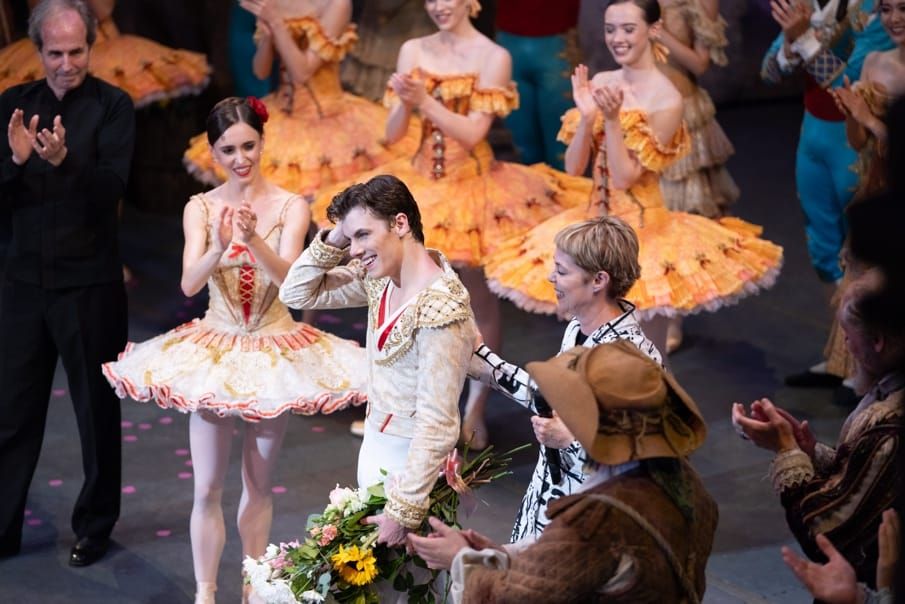
It was only July 3rd, but the audience seemed primed for an evening of fireworks when Jake Roxander made his highly anticipated complete “Don Quixote” debut—he had danced Act III in the all-hands-on-deck emergency “Don Quixote” the previous Wednesday. The applause began during the overture (so great to hear Minkus getting his due for the wonderfully danceable score) and continued all through the performance; the audience was cheering any chance it got, and it got a lot of chances. The excitement continued during the curtain calls, when Susan Jaffe arrived on stage to announce his promotion to principal dancer—a well deserved promotion.
His Basilio was funny, detailed, and of course phenomenally danced. There were so many comic highlights—the way he carefully spread his cloak on the ground, arranging it just so, his little dismissive “you ain’t seen nothin’ yet” glance at Espada before beginning the up dance, combined with the way he just carelessly dropped the cups after his riveting turns in the solo, and his huffy outrage at Kitri’s Act I flirtations helped to create a warm, engaging, and believable Basilio, a bit of a lad sincerely in love with his Kitri (Skyler Brandt).
His partnering looked flawless, as he carefully set Brandt on point for some of her incredible balances. The lifts were strong as he held Brandt up with one hand, while she rattled her tambourine; the second one even out Vasileved Vasiliev, as he rose up on demi-point with grace and ease, as if it were the most natural move in the world. His solos were full of memorable moments; flying through some very fast turns à la seconde with the outstretched leg corkscrewing into a blur, bursting on stage with high, easy horizontal split jumps (his jumps have an astounding hang time), tossing in double tours into pirouettes with astonishing ease, and ending every jump as if he were landing on a cushion so securely that his legs seemed to be attached to the stage by magnets.
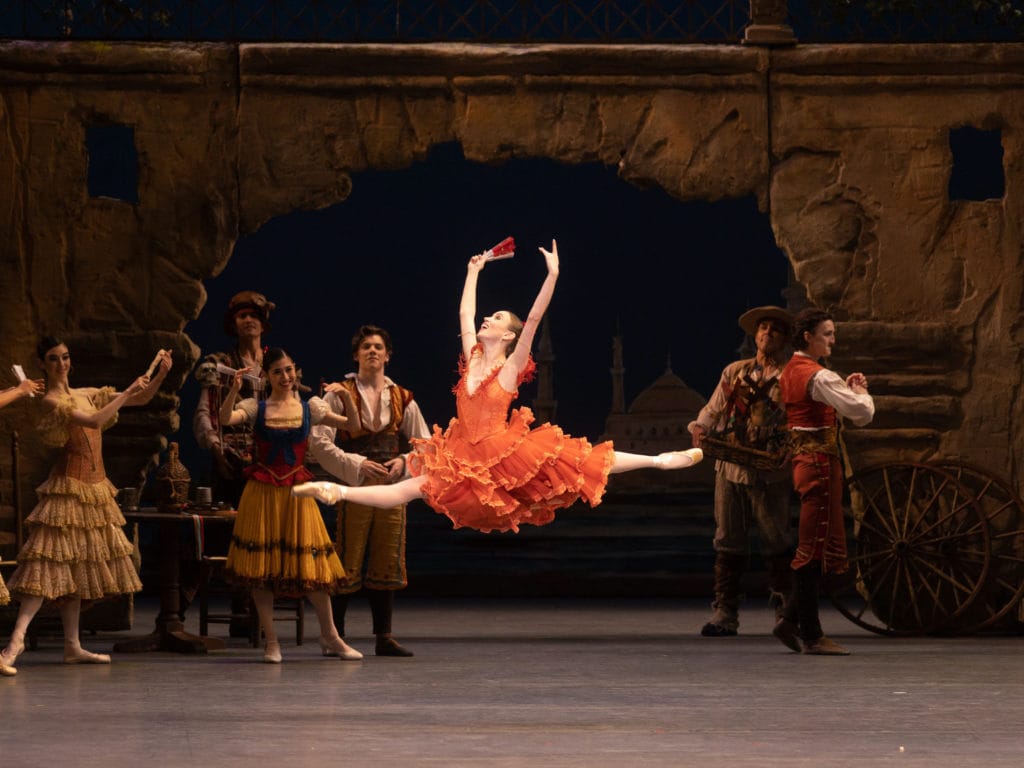
Brandt’s Kitri was a fine match. She was an especially spicy Kitri, making it clear that her father could never control her. Her mime was vivid, rolling her eyes in derision at Gamache (a very active Sung Woo Han), sulking delicately at Basilio’s supposed infidelities, and putting her nose firmly in the air when the Don asked her to dance. Her Plisetskaya jumps was a bit sketchy in her Act I castanet solo, but the final diagonal turns were fast and sharp and so rhythmic that some in the audience started to clap along in the best Russian fashion.
She went Russian in her Act III solo as well, substituting the familiar fan solo with the delicately pawing feet with the energetic footwork one the Bolshoi often does, though she left the fan in the wings. The solo was electric, with sparkling footwork and sharp, clear unexpected balances, though I miss the Spanish tinge that the shoulder moves as Kitri plays with the fan gives. There was no fan with her fouettés either; she did very solid fast singles and doubles. She did travel straight downstage, but made it seem as if she were being pulled forward by the enthusiastic applause—actually the hoots and hollers—of the audience. There were no hoots and hollers in the dream scene, as Brandt seemed to turn to mist. Her hops on point traversed the stage with insouciant ease.
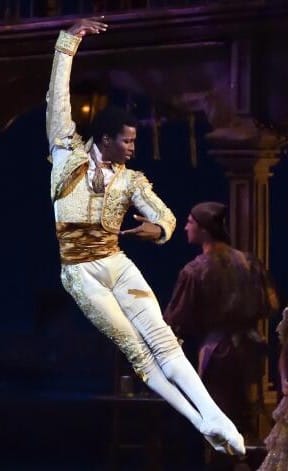
Takumi Miyake gave the Roma boy’s solo an equally insouciant ease, as he flaunted his tambourine as if he were claiming the stage. At one moment his pirouettes were so fast and secure he appeared to be drilling a hole in the ground, and then the next moment he was floating in the air. He did occasionally give the impression of a gymnast preparing for a tumbling run, but it was a first class demonstration. Calvin Royal III was a less ostentatiously fiery Espada, but his proud, elegant carriage and beautifully controlled legs gave the choreography a distinctive and powerful aura. His infectious joy was irresistible, and he got a cheer just by tossing his matador’s hat clear across the stage.
Though the men had most of the fireworks, the women got their share of the applause too. Betsy McBride danced a sultry Mercedes, a fine compliment to Royal’s haughty Espada. Elisabeth Beyer had great control as the Queen of the Dryads, with very solid Italian fouettés and thrilling jumps. Her upper body, though, seemed a bit rigid, and I missed some of the radiant and generous nobility that a Queen needs; she seemed to be hiding behind her phenomenal technique. Zimmi Coker’s Amour too had technique to burn and there was no hiding her joy in the bouncy, luscious solo as she flew around the stage. The two flower girls (Breanne Granlund and Yoon Jung Seo) seemed radiant; even a minor slip didn’t dampen Granlund’s solo, and her slow turns were beautifully controlled. Seo’s light, soaring jumps were one of the many highlights. The main hero, of course, was Roxander's magnificent performance and the joy that his promotion received from everyone on stage and in the audience; it was an honor to be there.
© 2026 Mary Cargill