Speculative Fiction
"MADDADDAM"
The National Ballet of Canada
Four Seasons Centre for the Performing Arts
Toronto, Canada
June 18, 2026 (evening)
The return of Wayne McGregor’s “MADDADDAM” 4 years after its world premiere was a welcome one. The complex work based on Margaret Atwood’s dystopian trilogy (“Oryx and Crake”, “The Year of the Flood” and “MaddAddam”) has many layers and rewards repeat viewings. There were not a lot of debuts during this run. Rather, dancers who created roles in 2022 were given an opportunity to revisit and deepen their understanding of the characters. Most notably, this run of performances was marked by the news that beloved principal dancer Siphesihle November who created the role of Jimmy will be leaving the company at the end of this season (he will join the Dutch National Ballet as a soloist in August).
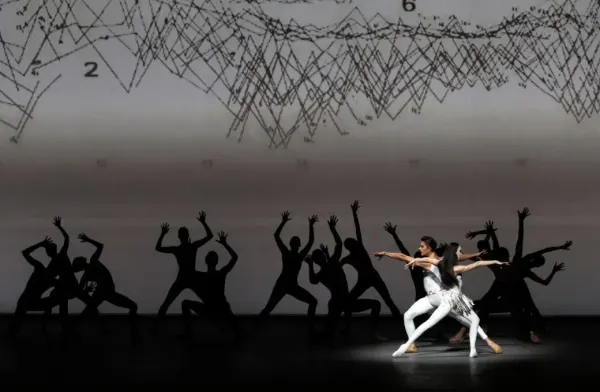
The experience of watching “MADDADDAM” this time felt smoother and more cohesive. The dancers look more confident in the material and the coordination of all its elements (sets, lighting, film projections) really came together. The ballet’s visual impact and emotional core remain consistent throughout the three acts. The production is a collaboration between the talented McGregor, famed composer Max Richter, We Not I design, costume designer Gareth Pugh, film designer Ravi Deepres, lighting designer Lucy Carter and dramaturg Uzma Hameed. The production value is impressive (the $2 million budget for creating this work was shared between the NBoC and the Royal Ballet) and reflects the epic nature of this immersive work. “MADDADDAM” travels through time and inhabits a future where genetic engineering and climate change have transformed human existence. The themes that felt timely at the 2022 premiere (in an example of art imitating life, the first act features a global pandemic) are even more so now, as society grapples with the role of artificial intelligence and the environmental cost of rapid technological advances.
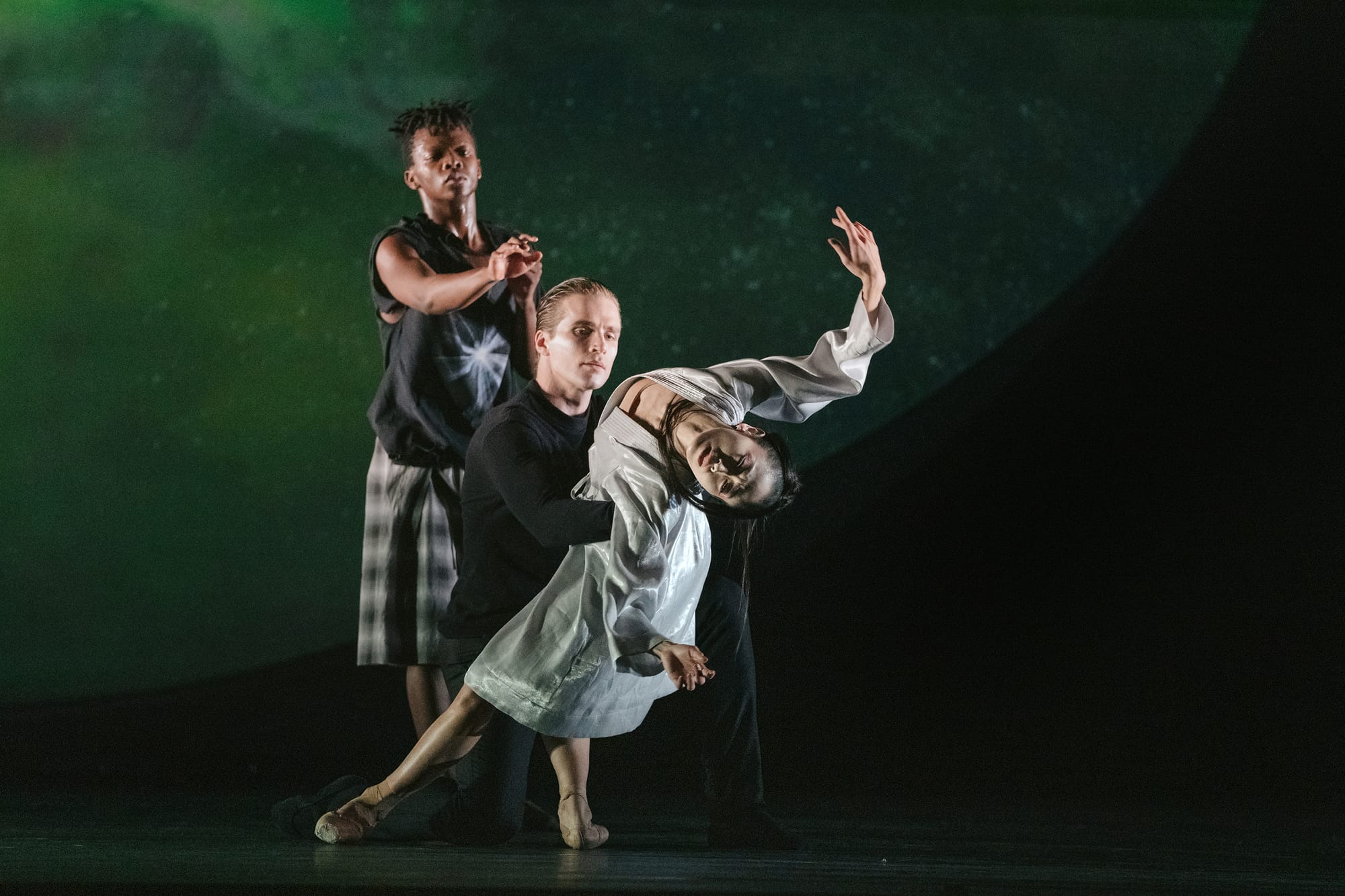
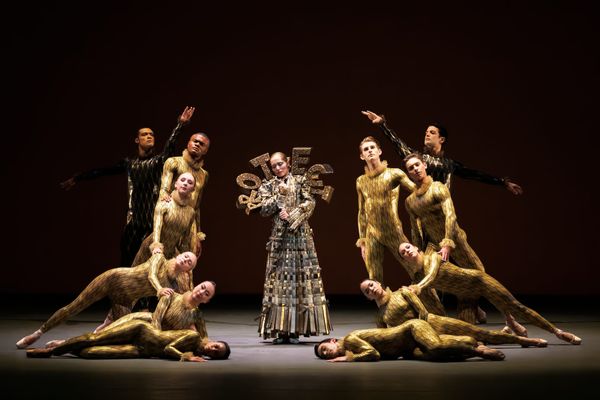
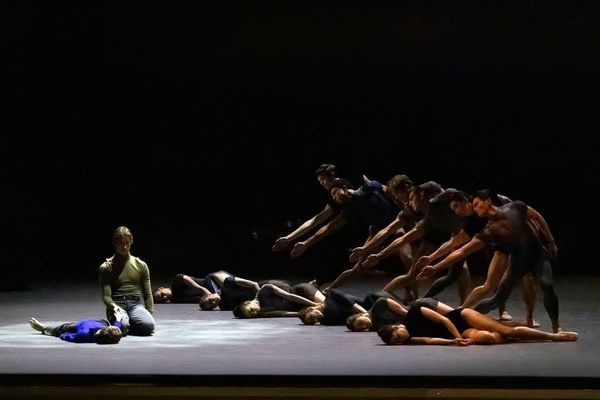
The first act takes place after a plague has driven humanity into extinction and a new society of Crakers (bioengineered humans) emerges. A voiceover refers to this event as a “great rearrangement”. The protagonist, Jimmy, is one of the few survivors, haunted by memories of the before times. The second act takes the viewer back in time to show how the pandemic and mass extinction came to be. Crake (Harrison James) is Jimmy’s childhood best friend who grows up to become the prototypical mad scientist. He creates the BlyssPluss drug that wipes out the human population and allows his robotic Crakers to proliferate. The third act takes place in a more distant future, a few generations after the pandemic. In contrast to the previous acts, this future world is calm and peaceful. The human traits that led to conflict, war, sexual violence and competition have been eliminated through Crake’s genetic splicing. Despite this, the Crakers revere their flawed human ancestors, creating scriptures and rituals to honor them. Despite Crake’s best efforts, the legacy of human shortcoming could not be erased.
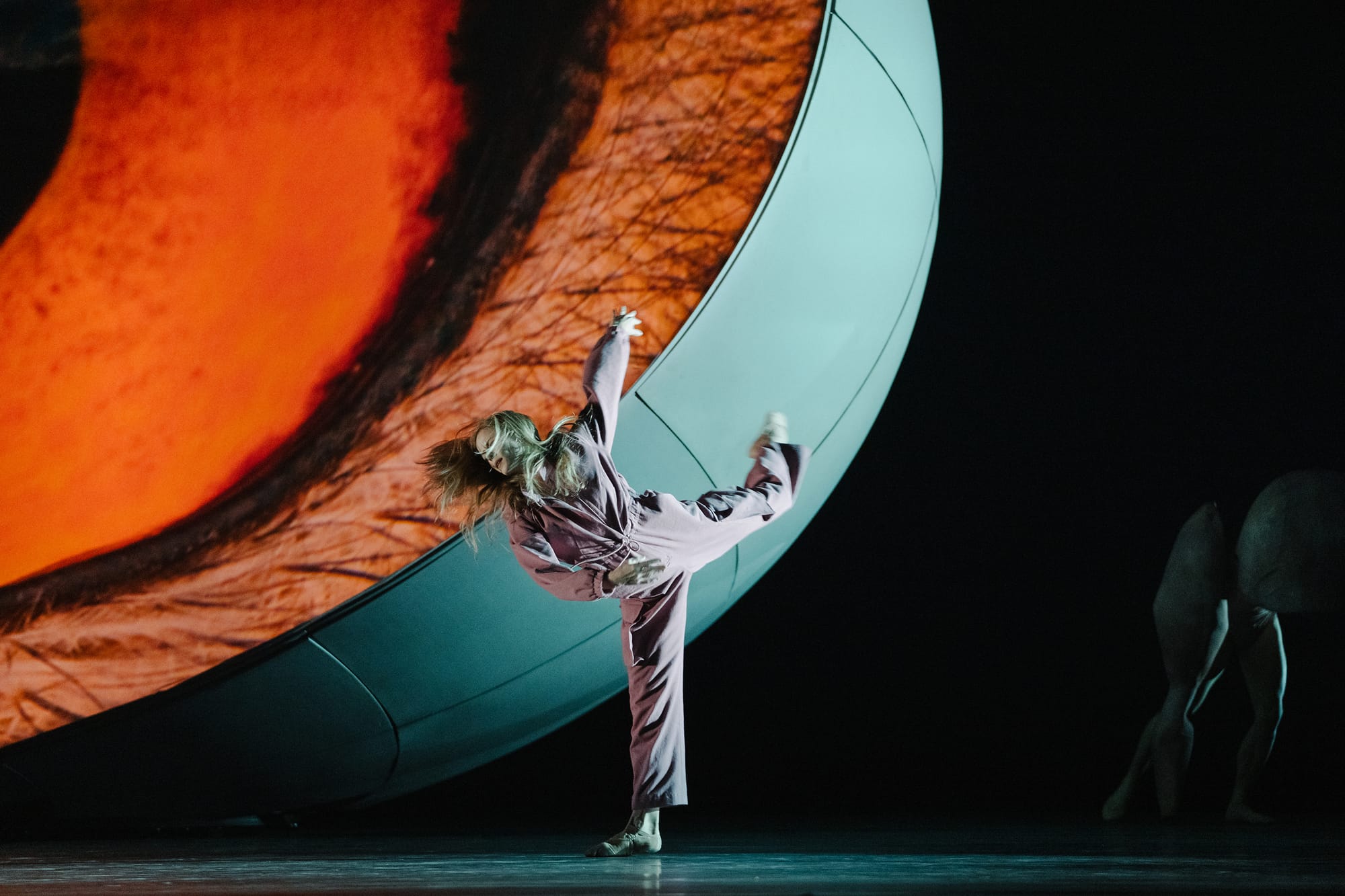
In addition to its timely themes, much of the ballet’s success can be credited to its powerful visual identity. A giant orb in the first act rotates and shifts, with different images and videos projected onto it. The designs are rich in symbolism. What starts as an egg marking a creation story, shifts into a mirror reflecting different urban and rural settings and then scenes of unrest and of civilization burning. Later, the orb becomes a giant eye of omnipresent surveillance. Richter’s stunning and eclectic score is another strength of “MADDADDAM”. The instrumental theme that returns at different points is sweeping and emotional, swelling in a dramatic crescendo at just the right moments. In other scenes, electronic and techno music provide contrast, as do text passages including a voiceover narration by Tilda Swinton.
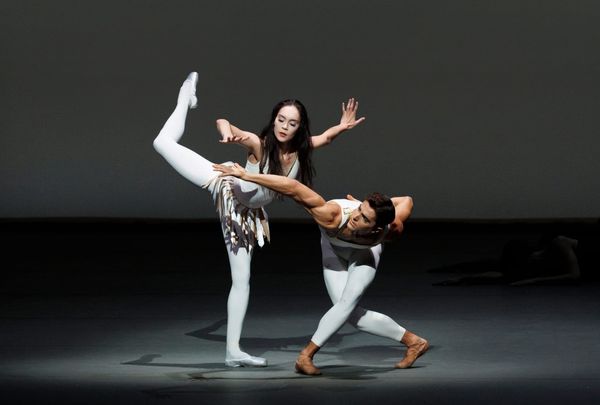
November really inhabited the role of Jimmy, moving with suspension, fluidity and clarity. His solo in the first act traveled over a large swath of the stage with renversés that floated and jumps that sailed. His dancing leaves a lasting image in the viewer’s mind. Equally strong was his dancing with the corps who at one point lift him up overhead and his pas de trois with Crake and the woman they both adore, Oryx (Koto Ishihara). Ishihara was perfectly cast as the goddess-like figure. She maintained an ethereal aura throughout challenging and intricate choreography, which featured a lot of slow, controlled extensions and lifts. It was a treat to see James as Crake, as he has been spending more time as principal dancer at San Francisco Ballet and did not appear in some of this season’s programs at NBoC. Dressed all in black with hair slicked back, he cut a striking and sinister figure and moved with power and conviction.
Other notable performances included Ben Rudisin as one of the criminal Painballers, who danced an athletic solo in the second act. Heather Ogden reprised the role of Toby, who like Jimmy is one of few surviving humans. Her character arc takes her from being an eco-pacifist who endured an abusive partner to someone who develops the strength to defend herself and ultimately get vengeance against her abuser. Tirion Law made her debut as the dancer Ren, a friend of Toby’s.
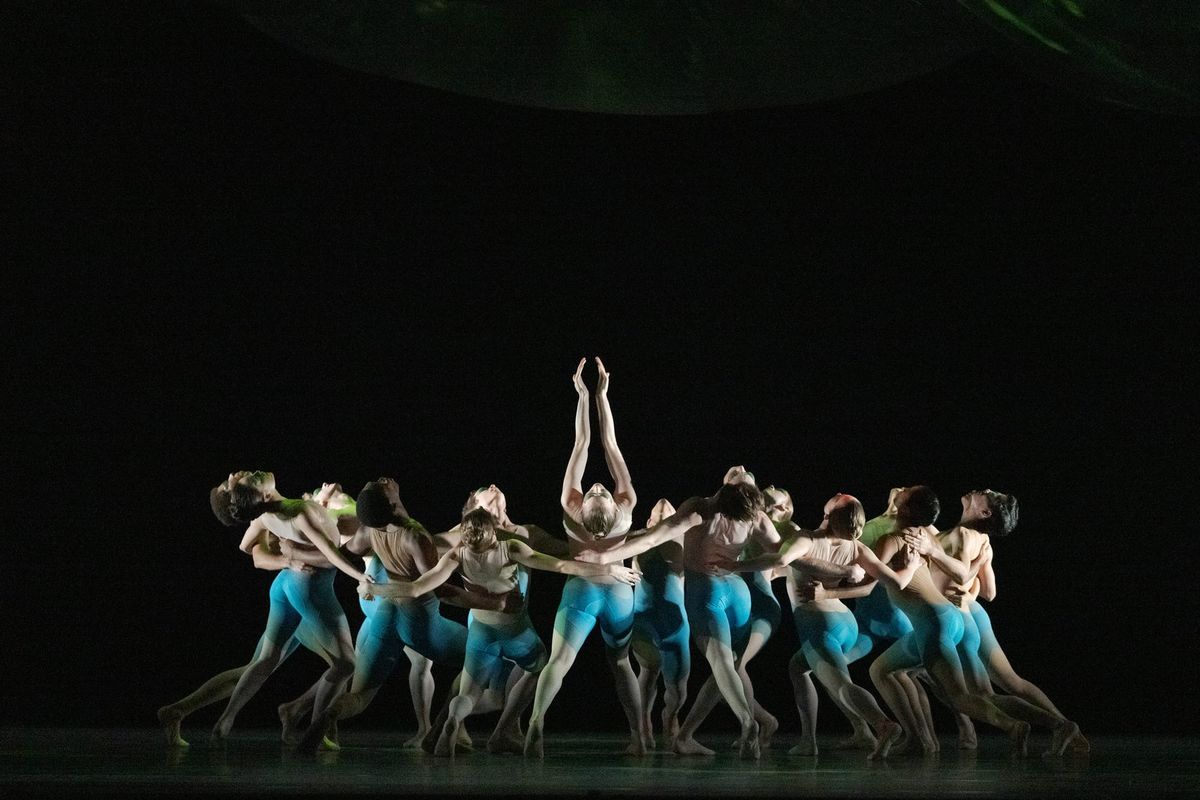
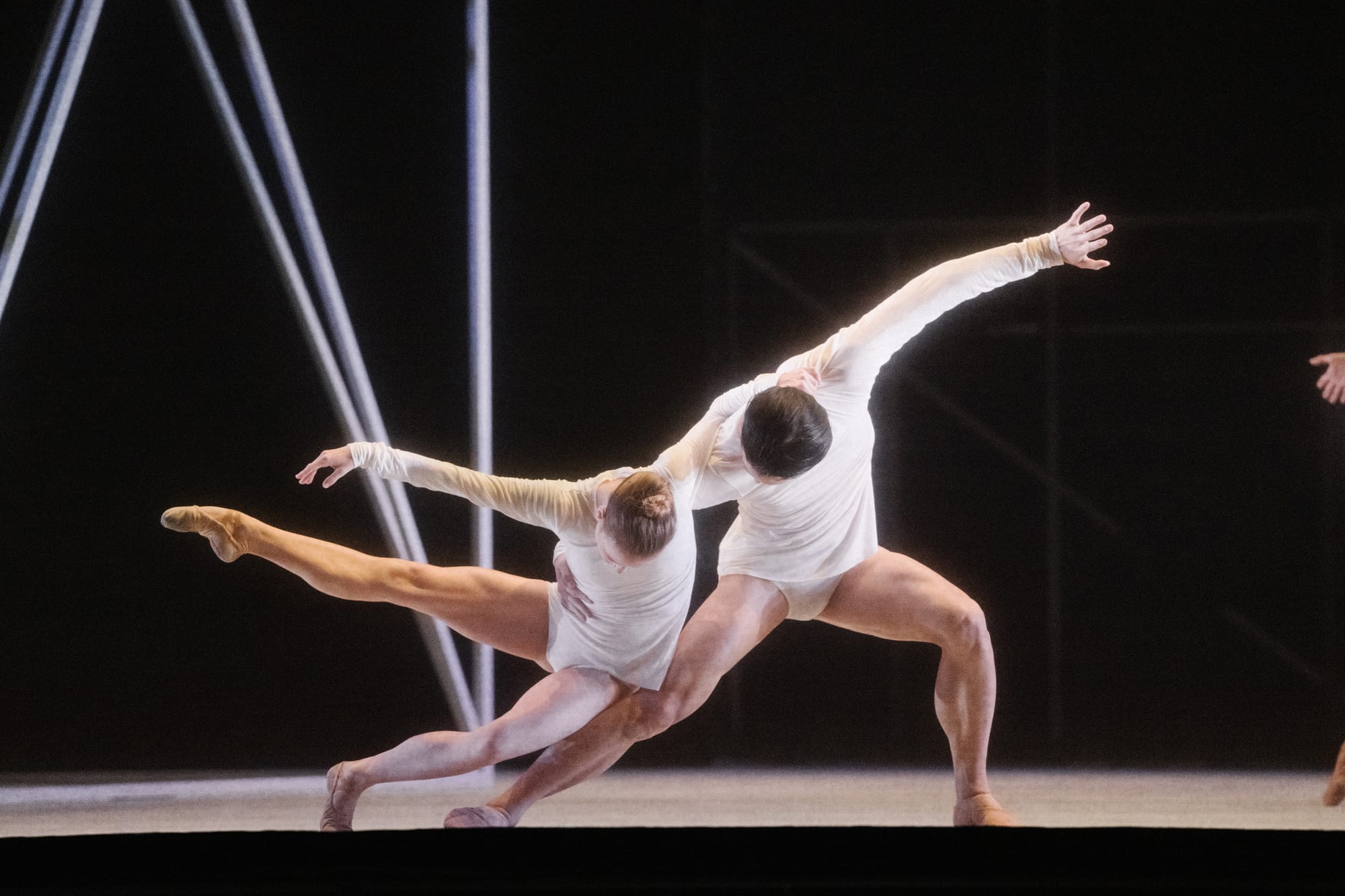
While there are many dramatic soloist roles in “MADDADDAM”, perhaps some of the strongest sections in the ballet are McGregor’s pure dance scenes. The second act features an extended sequence for the God’s Gardeners, a hippie eco-religious group, dressed in simple white long sleeve tops and shorts. The dancers flow seamlessly in and out of geometric formations and the choreography features distinct shapes, such as a tendu derrière with the torso pitched forward in a hinge or off-kilter attitude derrière. The clean lines and minimalist costumes are reminiscent of McGregor’s “Chroma”, which is also in the NBoC repertoire. Equally memorable is the club scene when people experience the high of the BlyssPluss pill (perhaps a sort of dystopian version of ecstasy). The dancers thrash and shake to the pulse of techno beats and strobe lights. The final act features beautiful choreography for a corps of Crakers in aquamarine biketards with running motifs and undulating arms moving hypnotically in canon. A lot of newer narrative works that the NBoC has acquired focus heavily on stage effects at the expense of quality choreography, so the choreographic rigor in “MADDADDAM” is a refreshing change.
It is a prophetic and philosophical work that succeeds in creating lasting images and mixes darkness and hope with ambiguity. Rather than taking a moralistic or didactic tone, “MADDADDAM” lays bare universal truths about human nature and lets viewers come to their own conclusions.
Copyright © 2026 by Denise Sum