The Ghost at the Banquet
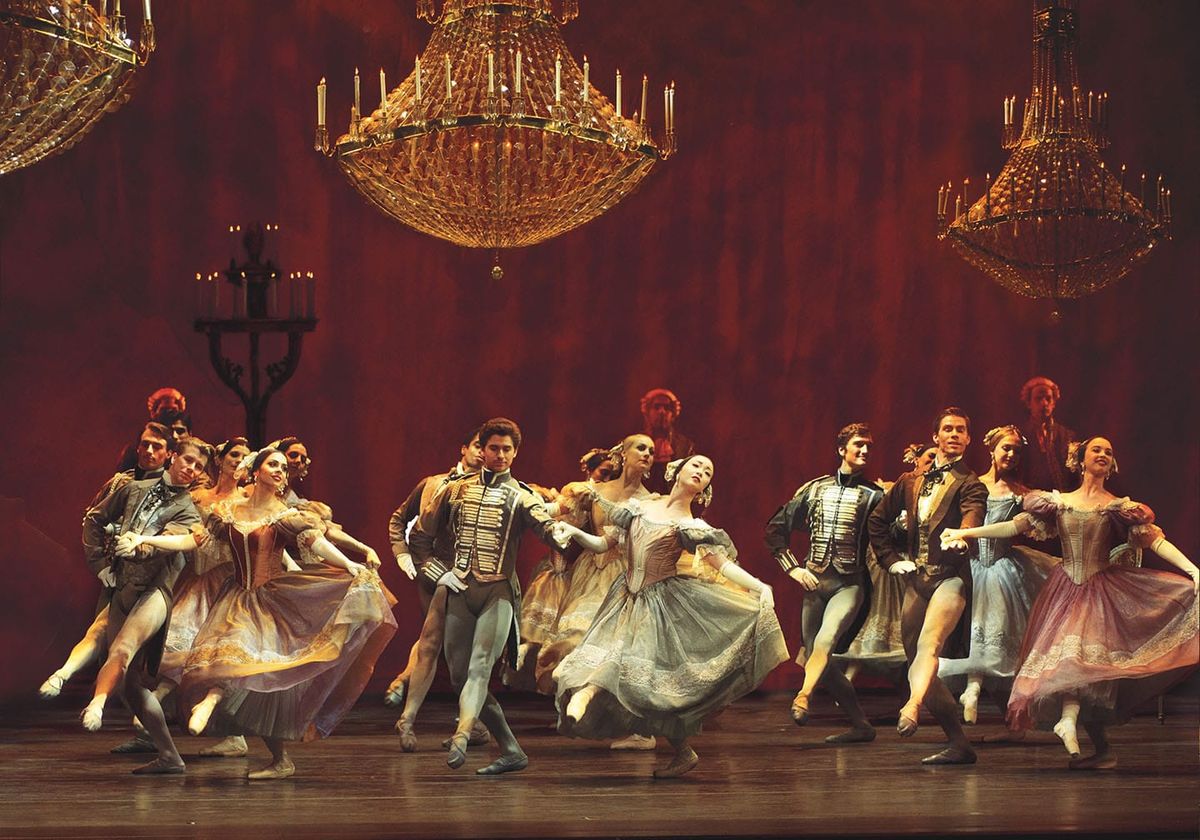
"Onegin"
American Ballet Theatre
Metropolitan Opera House
New York, NY
June 27, 2026, evening
ABT’s final performance this season of John Cranko’s “Onegin” , based on the poem by Alexander Pushkin, was a feast of fine dancing, with Christine Shevchenko as Tatiana, Zimmi Cocker as her sister Olga, Jake Roxander as Lensky, and Jarod Curley debuting as the tortured Onegin. This was a bitter-sweet debut, since the program was originally scheduled as Cory Stearns’ farewell before an injury forced him to cancel. Memories of Stearns’ earlier performances were impossible to ignore; his unforced elegance and dramatic conviction, his range, and his steady partnering were always solid. I particularly remember his Siegfried, looking at Odette with such loving care, his slightly petulant but ultimately penitent Albrecht, and his swaggering Conrad. Fine as he was in the classical repertoire, he was equally at home in the twentieth century. His Oberon in Ashton’s “The Dream” showed off his smooth, pure line and otherworldly, slightly dangerous elegance, a combination he, and few others, shared with Anthony Dowell, the role’s originator. His villains were never one-note; he was a malevolent spider as the Astrologer in Ratmansky’s dark and cynical “The Golden Cockerel”, a lasciviously creepy Kaschei in Ratmansky’s “Firebird”, and lasciviously funny Orion in Ashton’s luxurious “Sylvia”. He was cool and controlled as the anti-hero Onegin, until his final despairing plea for forgiveness.
Time, of course, is not forgiving, and the audience did not get a chance to thank him, though, perhaps in recompense, we did get a chance to see Curley’s debut. Curley, a young dancer who was promoted to soloist in 2024, was a rather callow, self-absorbed Onegin, which suited the choreography—at his entrance Cranko makes him seem more interested in his turns and his tail-coat than in anyone else (Pushkin’s original hero was a teen-ager when he first met Tatiana). Curley’s dancing was impressively controlled, with strong, high, and elegant jumps. His partnering seemed effortless, and he negotiated Cranko’s difficult and occasionally ungainly lifts with apparent ease; the torch lift at the end of the letter scene was a triumphant exclamation point as Shevchenko floated upwards.
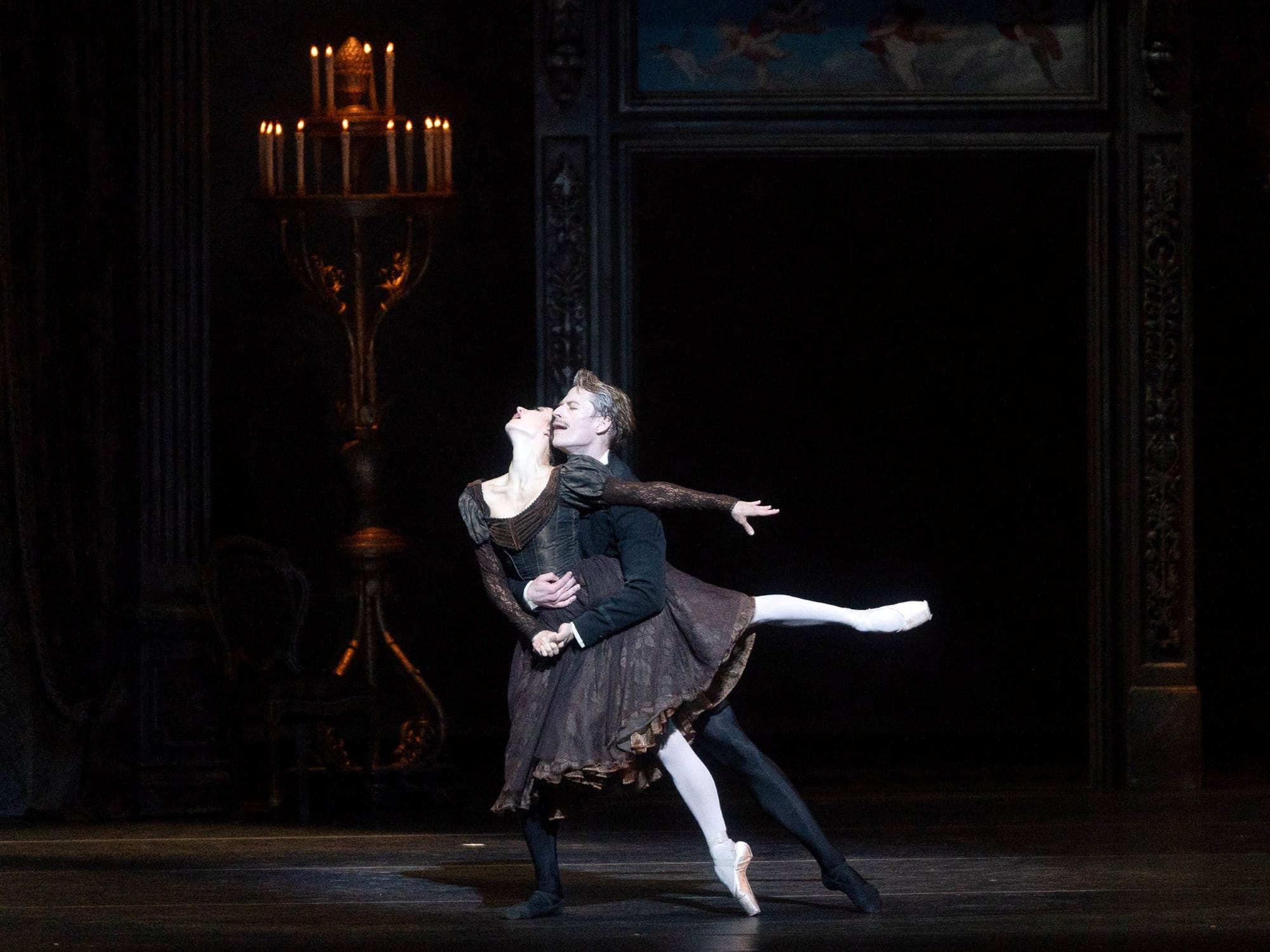
Cranko does make it difficult to build much sympathy for Onegin—worldweary boredom and slow-burning anger at being tricked into attending a raucous party full of country bumpkins is not easy to convey with slow arabesques and hand to forehead gestures, but Curley’s innate dignity and cold curtesy helped. He did have brief flashes of anger as he sat playing solitaire, hoping no one would bother him, but was tactful enough to wait until he was alone with Tatiana to return her letter, only to let his irritation get the better of him. Curley made it clear that he really didn’t want to duel with Lensky, but was trapped by his honor and his stunned horror at Lensky’s death seemed to emerge from his earlier brittle self-control.
He seemed deflated in the final scene, a pathetic remnant as he sank to his knees, pleading with Tatiana. The brief hope when she struggled with her feelings didn’t last long, and left him shattered. It was a detailed and vivid performance.
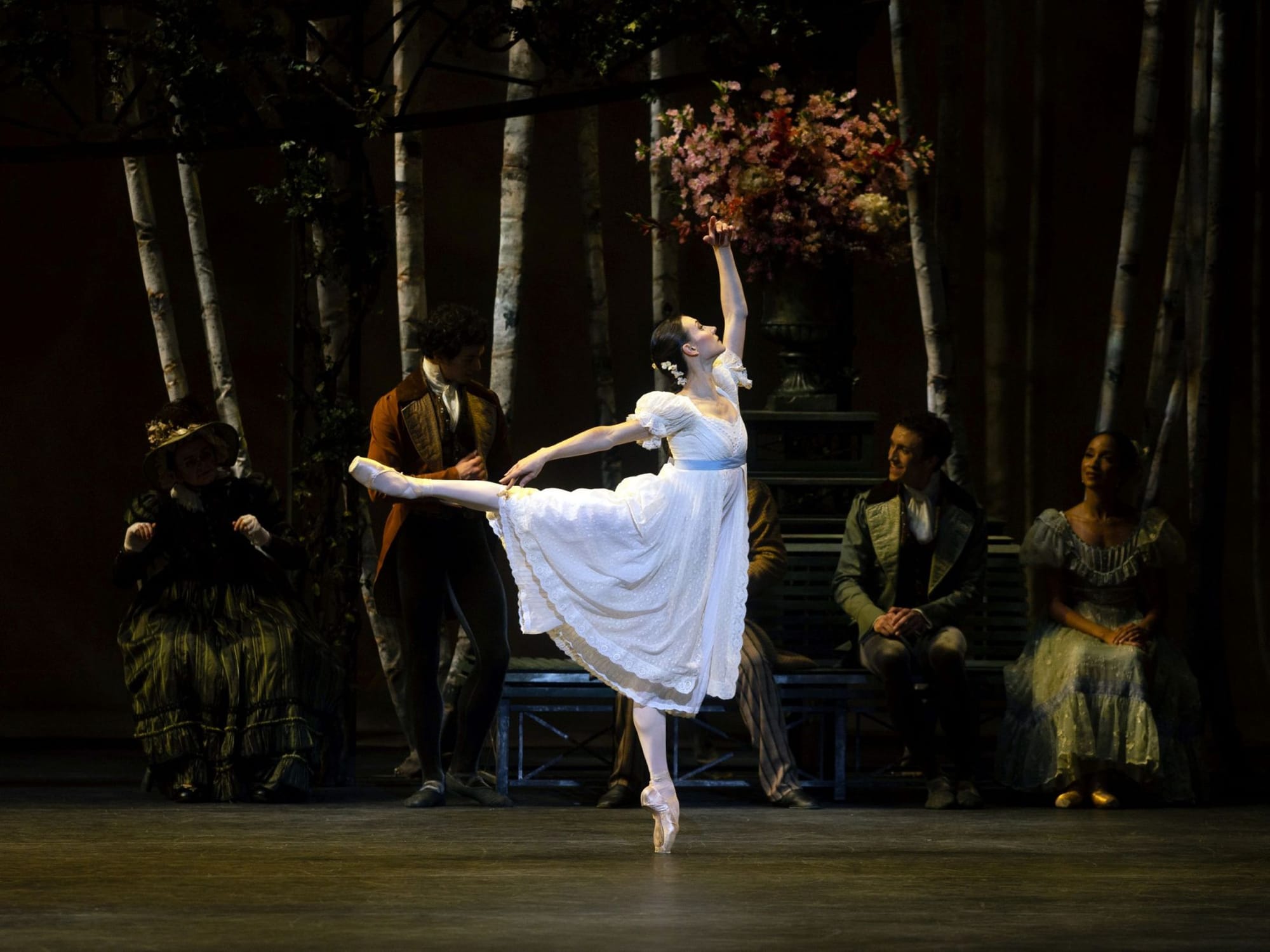
For all of Onegin’s anguish, the ballet really belongs to Tatiana, focusing on her feelings and reactions. Shevchenko, who can be cooly precise in more classical roles, gave a rich and nuanced performance. Her Act I Tatiana was a youthful, romantic dreamer, though one not given to overwrought hysterics—she loved her family and was genuinely happy for Olga. Her backbone seemed to strengthen visibly after Lensky’s death as she stood up and glared at Onegin with a combination of distain and contempt, her youthful illusions shattered.
Her contented pas de deux with Gremin (a solid, kind Roman Zhurbin) was warm and believable—she really had found a warm security with him. The choreography certainly helped, as Zhurbin supported her gently (no acrobatic lifts for once). They moved in tandem, almost conversationally, a moving portrait of maturity.
This contentment, of course, was disturbed by Onegin’s return, and the emotional highpoint of the final scene. Shevchenko was overwhelming, fighting, and conquering, her youthful dreams with a stunned and desperate insistence. She tore up the letter as if she were angry both at Onegin for returning and at herself for her feelings for him.
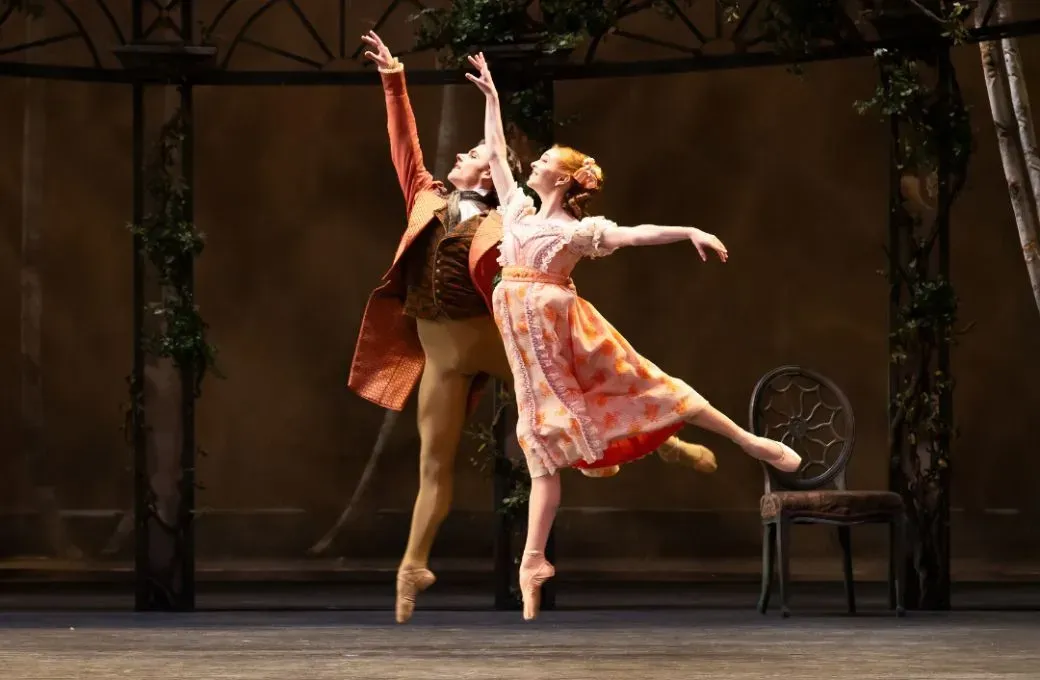
Though it was clear that Tatiana had won and could continue her secure life, the audience has no idea what happed to poor Olga. Cocker’s Olga, for all her flightiness, was charm personified, and certainly deserved some happiness. Her dancing had a bright clarity—such crisp bourrées and elegant jumps—and her eagerness to captivate Onegin had an irresistible if dangerous naiveté. Her Act I pas de deux with Lensky, with little skimming lifts, had a melting lyricism that made the duel seem all the more tragic.
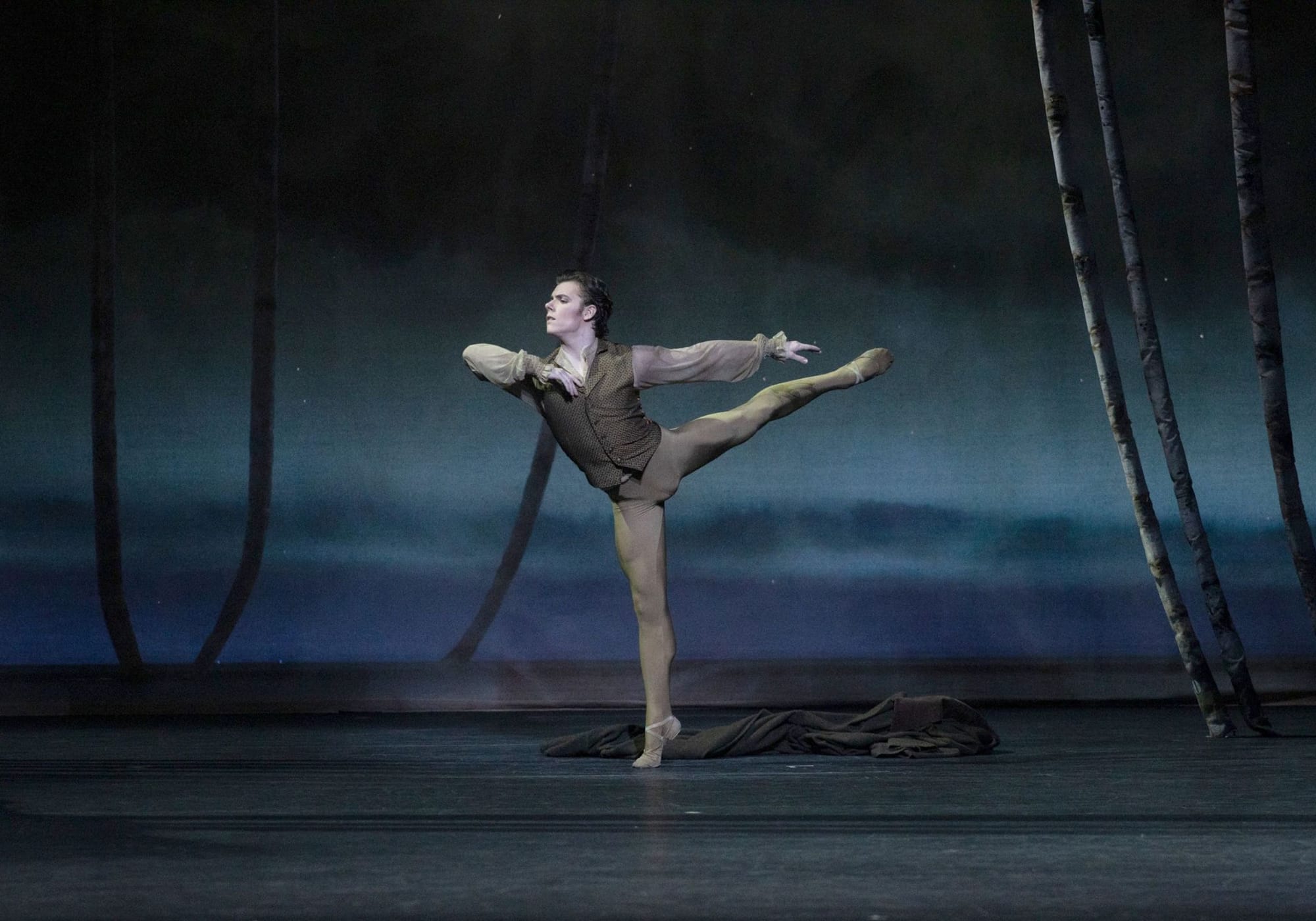
Roxander was a magnificent Lensky, all heart and impetuous emotion, which he combined with beautifully controlled soft jumps and immaculate turns. He reacted like a hurt child to Olga’s flirtation, lashing out blindly, understandable if tragic. His Act II solo was beautifully danced, full of stretched arabesques and solid turns; it was almost too beautiful, as some of the raw emotion was lost in the awe his dancing evoked. Not his fault of course, as Cranko’s choreography kept him on the move. In ballet, sorrow doesn’t aways need steps—Albrecht’s final pose holding that flower is far more eloquent that any amount of jumping, no matter how high, would be. But a banquet of fine dancing is certainly nothing to complain about.
© 2026 Mary Cargill