Dream Girls
"Les Sylphides", "Gala Performance", "Rodeo"
American Ballet Theatre
New York City Ballet
David H. Koch Theater
October 23, 2025
ABT helped celebrate its 85th anniversary with the program entitled “A Retrospective of Major Choreographers” whose works (Michel Fokine’s “Les Sylphides”, Antony Tudor’s “Gala Performance”, and Agnes de MIlle’s “Rodeo”), though long associated with ABT, were all created for different companies. Though they have very different styles (lyrical, satirical-technical, and American rowdy respectively), they all have a dreamy background; “Les Sylphides” is a Romantic vision, “Rodeo” is every rejected girl’s dream come true, while “Gala Performance” can be seen as every ballerina’s nightmare performance.
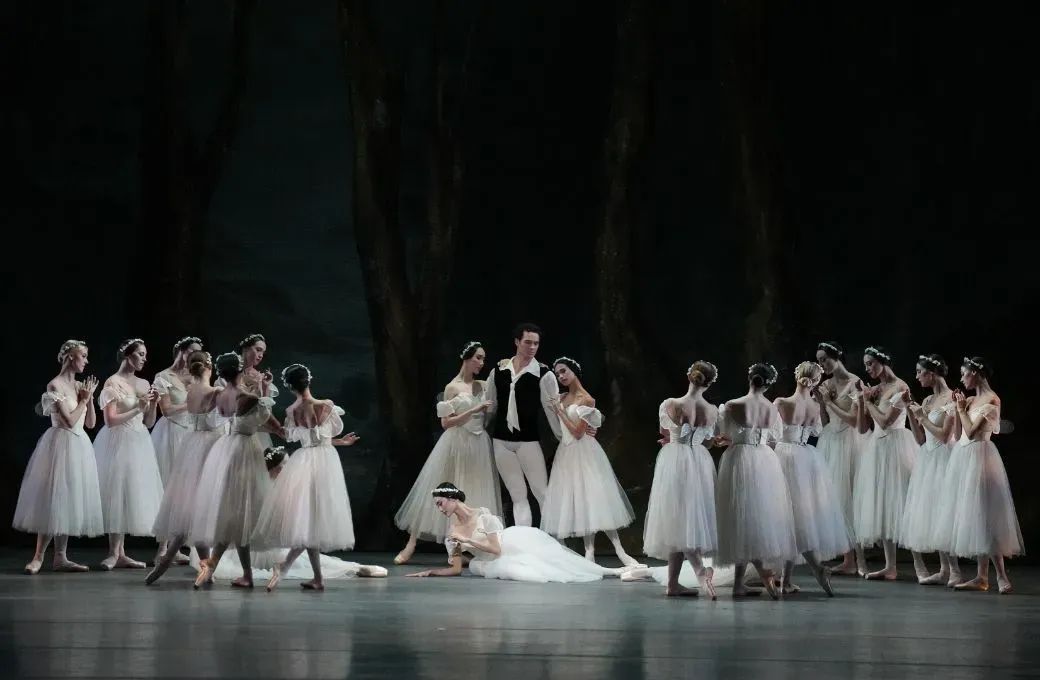
“Les Sylphides”, Fokine’s evocation of the white-clad creatures of the Romantic ballet, was first seen in the West in 1909 during the Diaghilev Ballet’s first season, and it has been performed by many companies every since; it was the opening ballet at the first performance of ABT in 1940, and has been danced by the company regularly. It is disappointing that ABT has dropped the Alexandre Benois set with its misty ruined chapel for the rather spare Peter Cazalet trees, which look like the wolf is about to leap on Little Red Riding Hood, but the dancers (Hee Seo in the prelude with Cory Stearns in the pas de deux, Léa Fleytoux in the waltz, and Fanqi Li in the mazurka) provided enough style and atmosphere to create their own mist.
Seo was luminous, floating in a world of her own and using her arms as if they could float on their own. She made the little Romantic accents—a tilt of her head, the slightly forward torso, the rippling fingers—seem organic; it was style without artifice. Stearns too, with his soft arms, fluid torso, and soft landings, captured the refined elegance of the work (fortunately, the long blonde wig that Nijinsky originally wore has been dropped). He also gave a dancing a gentle urgency, reaching for Seo, yearning for her, and listening to her whispered secrets.
Though her shoes did clatter a bit, Fleytoux was light and airy in her waltz, with beautiful control, balancing on point as if she could fly away at any moment. Li, too, in the mazurka, had expansive jump and a lyrical, boneless quality; she made being a sylph look like fun. And so, despite the rather languid tempo, did the corps, whose soft, lilting moves captured the magical style of that beautiful ballet.
“Gala Performance” is all about style as well, the styles of three different dancers (a Russian— Skylar Brandt, an Italian—Hee Seo, and a French dancer—Léa Fletoux) competing for applause at a gala in their own special ways. It is too bad that the program just identifies their nationalities rather than the original inflated descriptions, La Reine de la Danse (from Moscow), La Deesse de la Danse (from Milan) and La Fille de Terpsichore (from Paris), which gives an idea of what their partners were up against.
In comedy, often less is more, and Seo, gliding around with a frozen face and perfect posture crowned by an imposing monument to dead birds while still managing to capture all the bouquets was both dignified and ridiculous, witty and funny. Fleytoux danced her bouncy, frilly little solo, full of little jumps and kisses to the audience, almost straight, her mask slipping now and then to glare at her rivals or insult her partner, the hapless (and very funny) Melvin Lawovi. Brandt, though, let the audience see that she was in a Comedy, exaggerating her mishaps and awkward positions. Her coda, though, when she finally got to show off her turns and milk the applause dry, was razor sharp portrait of the indulgent, pseudo-humble (“all this for little old me?”) Russian curtain calls.
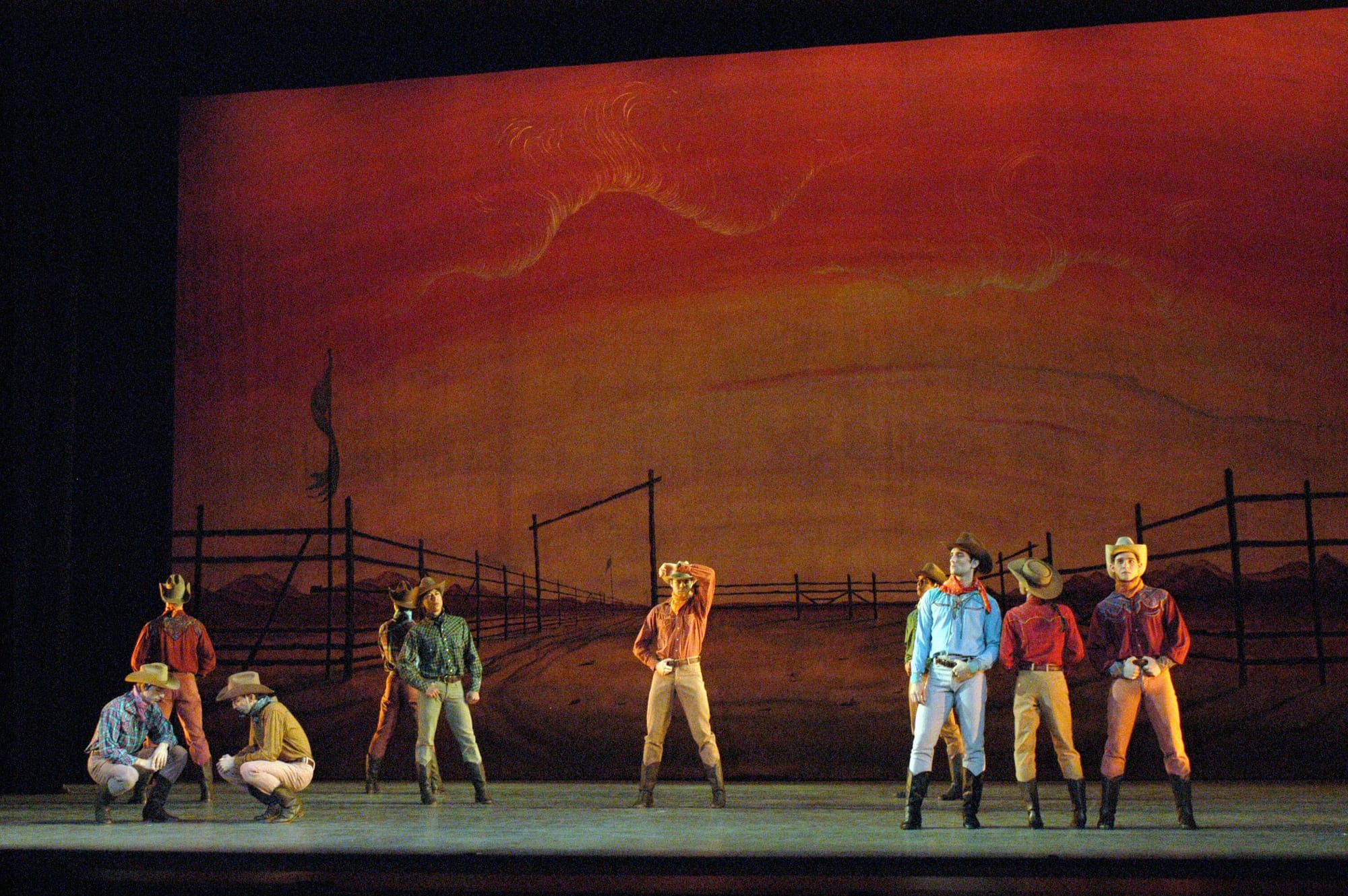
There were plenty of genuine curtain calls at the 1942 premiere of Agnes de Mille’s “Rodeo”, choreographed for the Ballet Russe de Monte Carlo, twenty-two of them, according to the record. The simple story of a rough and tumble cowgirl who yearns for love and finally gets it when she puts on a dress and dances nicely is not one to make current American audiences stand up and cheer, but Aaron Copeland's music and the Oliver Smith sets exemplify the wide open West, where everything is possilbe. De Mille’s emotional honesty and vulnerability (she was the original Cowgirl) shine through the choreography, and the work can be quite moving.
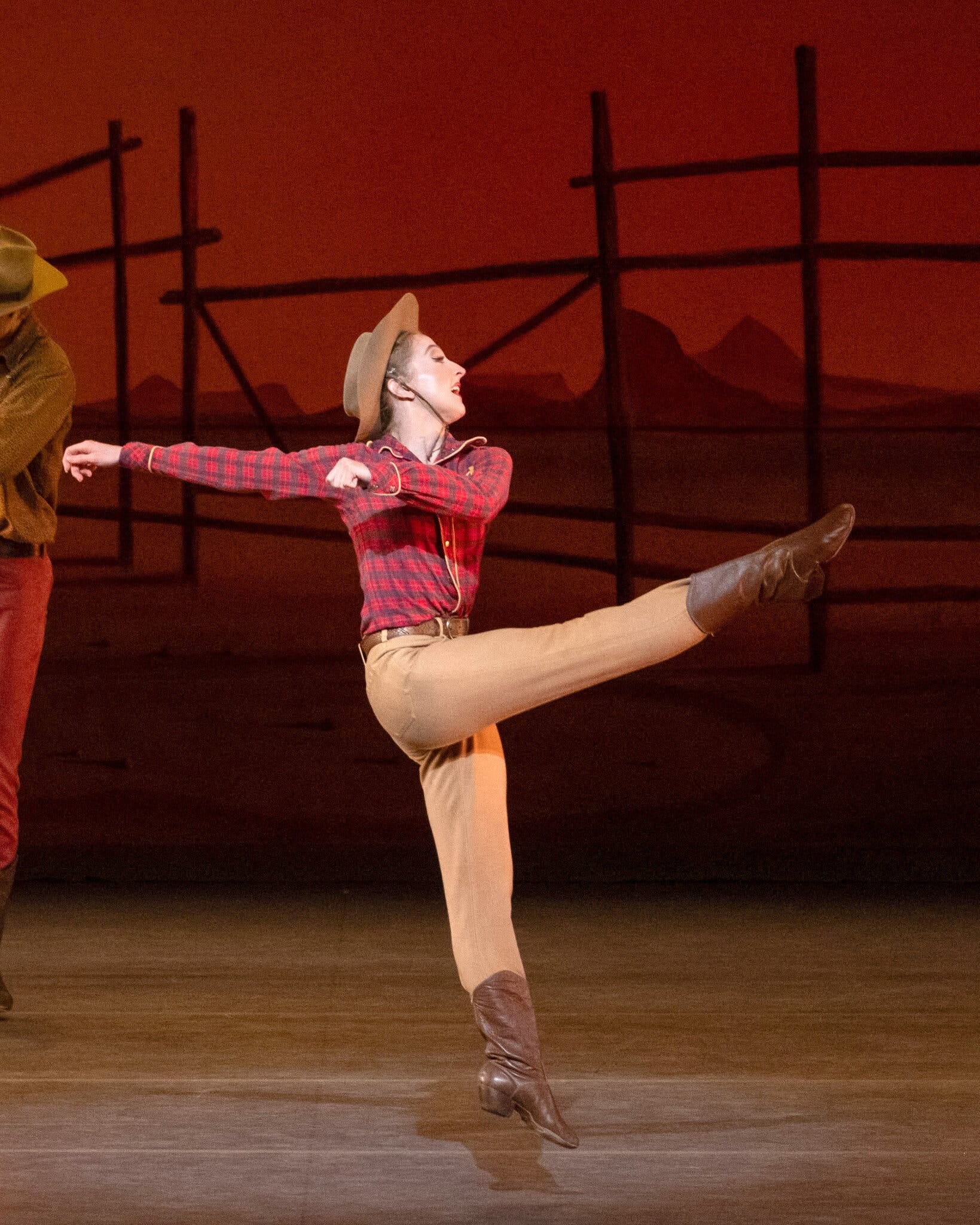
Breanne Granlund, with Carlos Gonzales, danced the Cowgirl and the Champion Roper, the heroine’s eventual Mr. Right, both only for the second time. Granlund had a shy sweetness without a trace of coyness and had the audience rooting for her; she did seem to enjoy her horseback rides. I did miss some of the pain in her inarticulate struggle and embarrassment as she struck out at the Head Wrangler, hitting him in the chest in frustration, but she avoided making the gesture look cute. “Rodeo” has plenty of laughs but it isn’t a rom-com. Gonzales was sympathetic Champion Roper and a game tap dancer, though it did look a bit like he was dancing in a foreign language.
Patrick Frenette was a dashing Head Wrangler, a handsome fellow who knows the ladies love him. His brief interest in the little Cowgirl once she changed into a dress, though, does feel a bit like a de Mille daydream. Paulina Waski, the Head Wangler’s real interest, was a sweeter girl than the traditional dimpled darling with the stuck-up Eastern friends and her brief pas de deux with Frenette had a passionate lyricism. But most of the attention was on the little Cowgirl and her dream come true.
copyright © 2025 by Mary Cargill



