Different Notes
"Her Notes", "Symphonic Variations", "Other Dances", "Thirteen Diversions"
American Ballet Theatre
David H. Koch Theater
New York, New York
October 22, 2017, matinee
ABT's Sunday matinee showcased four ballets choreographed to concert music, music which was originally intended to stand alone. The choreographers all faced the challenge of improving, so to speak, the original works of art, and though all works were very well danced and had impressive moments, only Ashton's "Symphonic Variations" melded the steps, the atmosphere, and the music indelibly.
Jessica Lang's "Her Notes" used rarely heard piano music by Fanny Mendelssohn Hensel, Felix's sister, selected from her "Das Jahr", a musical monthly diary of a year's journey with her husband. Lang's work had a few faint feminist undertones, as Stella Abrera opened the piece staring out of a window while a small group, dressed in tasteful grayish shades, hovered behind a gauzy scrim; she could have been Fanny, longing for more than a piano as convention reined her in, or Everywoman looking out at remote possibilities. Abrera, all long, melancholy, wafting limbs, posed decoratively but ambiguously, sometimes leading a group on women onward and sometimes submitting placidly to James Whiteside's manhandling. In the end, she returned peacefully to the window, now tilted to enclose her, a vaguely symbolic gesture, effect without content.
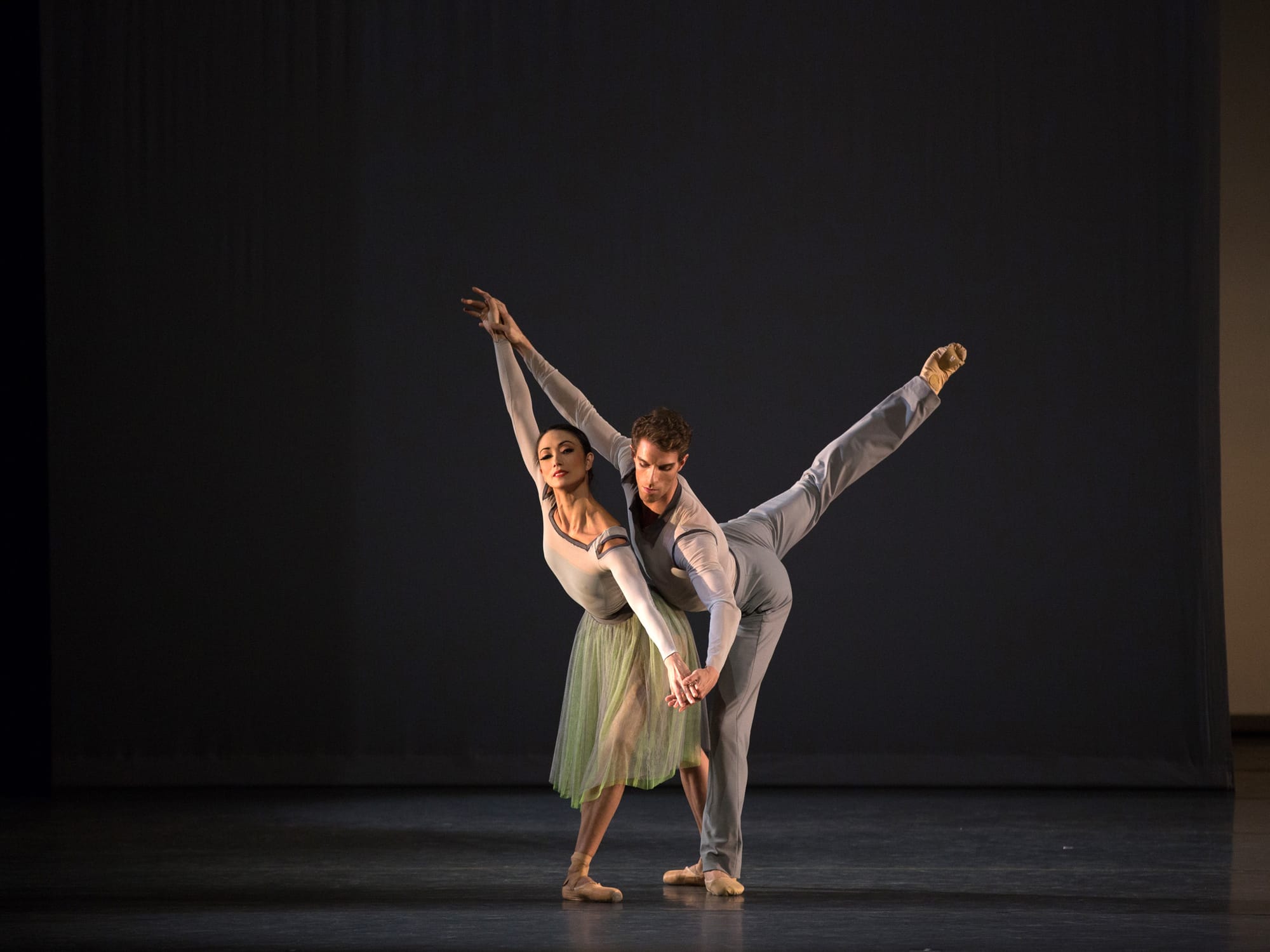
The cast that accompanied her journey back to the window included Sarah Lane and Arron Scott, who danced a bright, lilting pas de deux, and Lane, with Skylar Brandt and Catherine Hurlin twirling like autumn leaves, but these were just generically pleasant moments while the piano played in the background.
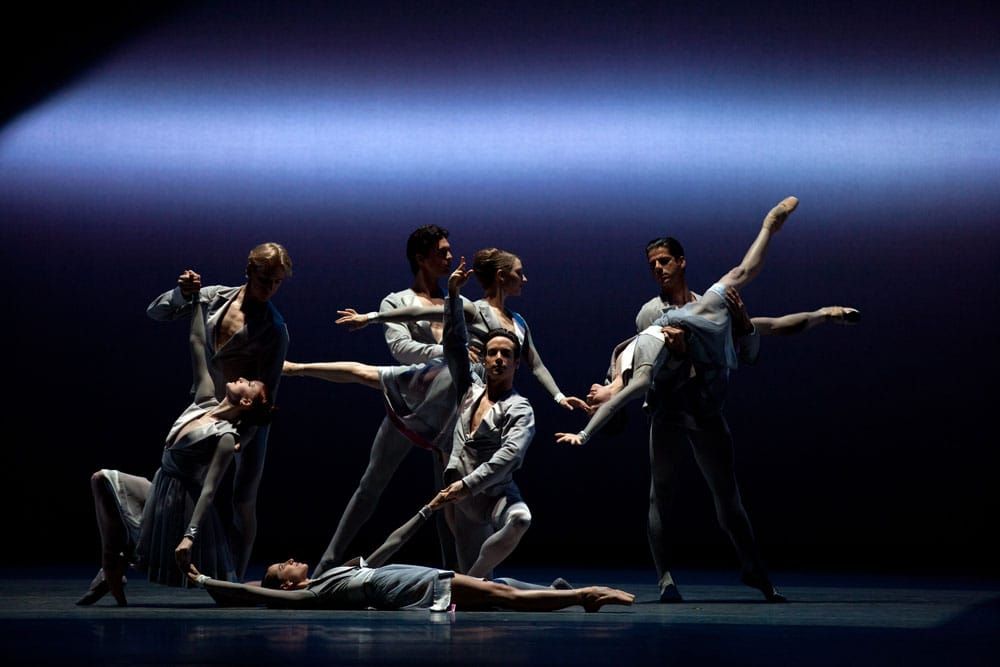
"Symphonic Variations", set to César Franck's score, is one of Ashton's limpid, abstract glories, with a potent emotional undertone; it was Ashton's first work for Covent Garden after the post-World War II move to that theater, and celebrated both the hard won peace and his belief in the power of pure dance. The six dancers (Devon Teuscher, Cassandra Ternary, Betsy McBride, James Whiteside, Cameron McCune, and Joseph Gorak) never leave the stage and even while facing away from the audience must remain alert and engaged, captured in stillness -- it is, I have been told by a dancer, for all its surface serenity, one of the most physically exhausting pieces in the repertoire.
This cast, led by a radiant and statuesque Teuscher and a strong but occasionally too self-aware Whiteside, looked well-rehearsed and made the unusual port de bras look natural, though their energy did seem to flag a bit towards the end, as their legs didn't always line up in perfect harmony. But the magical connection to the music and to each other, most notably in Trenary and McBrides' fast, sparkling little dance, was rich and satisfying.
So too were Hee Seo and David Hallberg in Jerome Robbins' "Other Dances", set to Chopin--four mazurkas and one waltz. Robbins choreographed it as a gala piece for Natalia Makarova and Mikhail Baryshnikov but its irresistible combination of Chopin and chiffon has kept it alive. Robbins, of course, had used that combination before, and his choreography, charming though it is, doesn't supplant the memories of his own "Dances at a Gathering" or Fokine's "Les Sylphides".
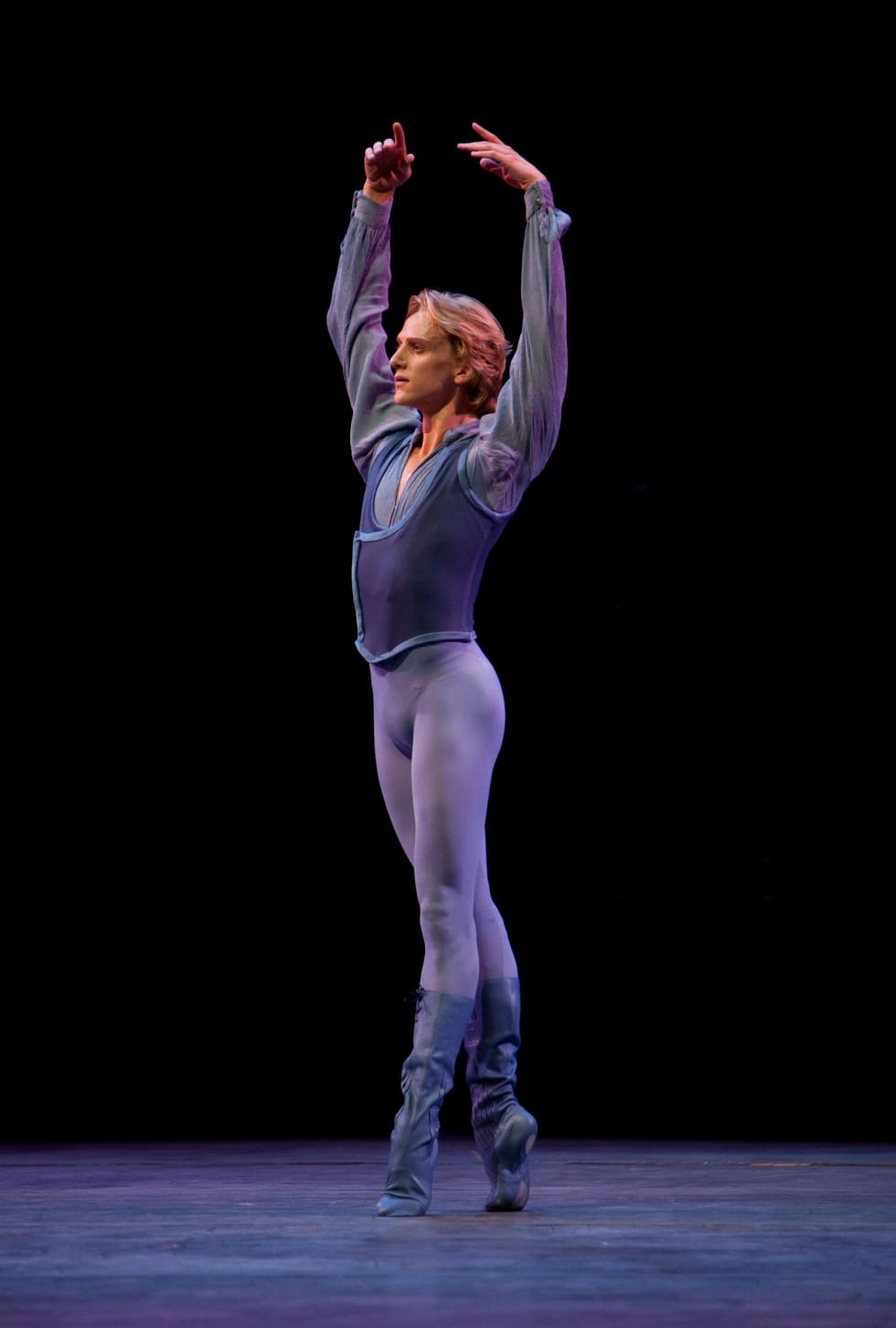
The two dancers began by walking on hand in hand to look at the piano (yes, another piano ballet) before breaking into a lot of hand-behind-the-head folk idioms. Hallberg got to show off his beautiful demi-point and seemed to be having a wonderful time, almost laughing at himself in the little "Oh, I am getting dizzy" joke. His second solo had a meditative, improvisational feel, with a slight hesitation before moving, as if waiting for the music to tell him what to do.
Seo gave her two solos a subtle difference, the first she danced with a wistful, lyrical quality, with ribbons for arms and the second had beautifully controlled point work, as she leaned into the music. Watching them was like seeing a brief and convincing advertisement for "Dances at a Gathering".
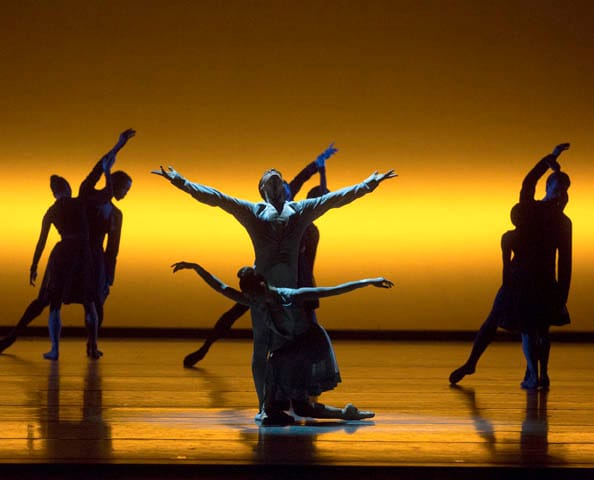
Christopher Wheeldon's "Thirteen Diversions" was more of an advertisement for the music, Benjamin Britten's "Diversions for Piano and Orchestra". Despite some stunning visual effects (especially the black silhouettes against a golden glow) and the energetic dancers (Zhiyao Zhang stood out for his noble and liquid dancing) the energetic frenzy of the four couples and large corps could not match the blazing energy of Britten score.
Copyright © 2017 by Mary Cargill



