Creme Fraiche
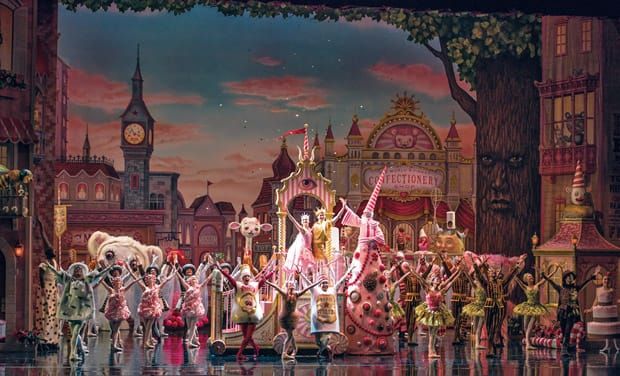
"Whipped Cream"
American Ballet Theatre
Metropolitan Opera House
Lincoln Center
New York, New York
May 27, 2019
Alexei Ratmansky's "Whipped Cream" is a multi-layer confection, full of surprising treats, among them the opportunity Ratmansky gives to some of ABT's explosion of young talent. This performance highlighted this, with one principal (Devon Teuscher as Princess Tea Flower), two soloists (Cassandra Trenary as Princess Praline and Thomas Forster as Prince Coffee) and a corps dancer as the Boy (Jonathan Klein, making his New York debut in the role). Klein, who joined ABT in 2013, with his teen hearth throb good looks could more properly be called the Youth, and there was a hint of romantic possibility between Klein the Trenary's sweet-natured, charming, and very feminine Princess Praline.
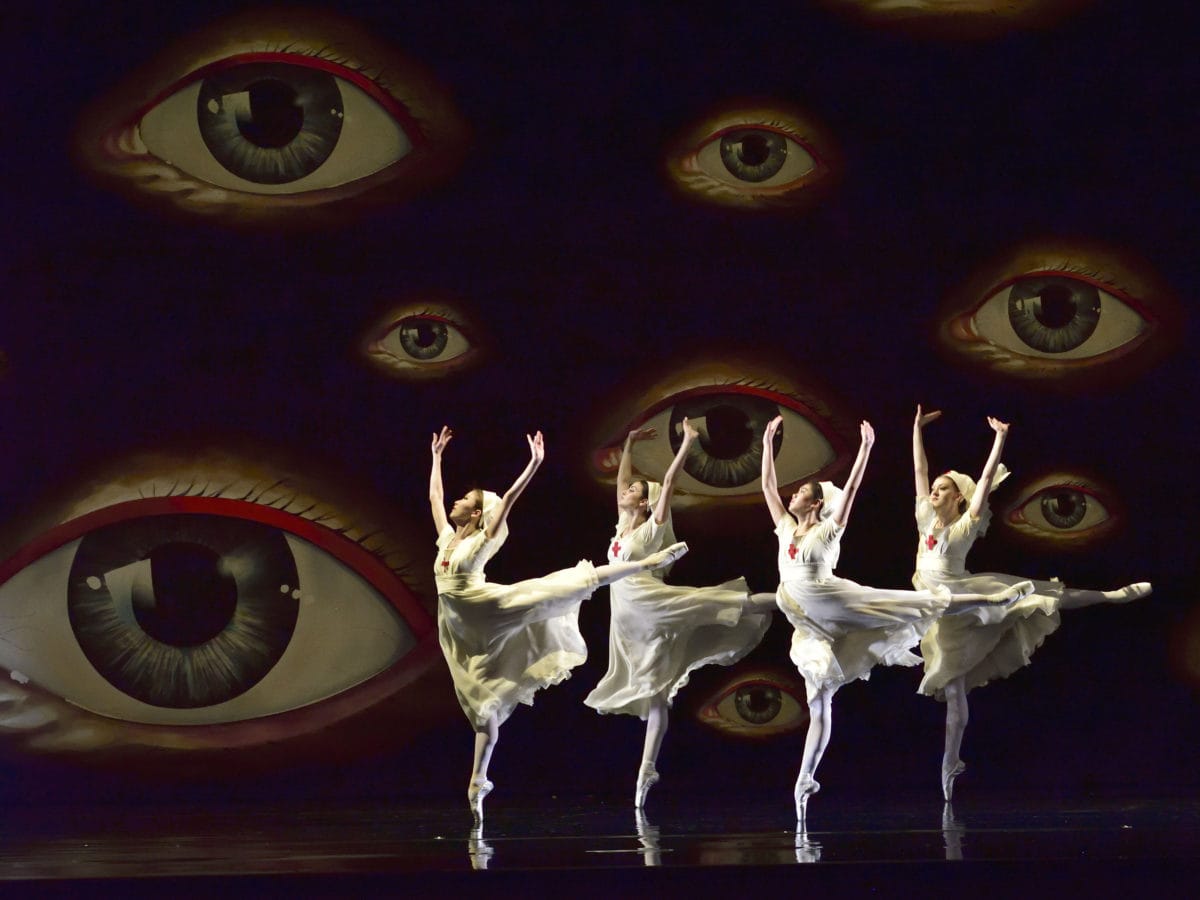
The Boy barely gets a look in the first act, but Klein managed to give his dancing and his gluttony an impetuous edge. He comes into his own in Act II and Klein's hallucino- genic fears while lying in the hospital bed had an unexaggerated depth. It was clear that the miraculous transformation from the dark room in the glorious Candy land started as a dream, which made it all the more triumphant when he eventually and so triumphantly got to remain. Klein was so confident in his dancing that he wasn't afraid to make the beginning of his pas de deux with Princess Praline a bit awkward, as if he had to learn to grow up. (I hadn't noticed before that the Boy briefly sucked his thumb until gently admonished by Ms. Praline.) His partnering became more complex and confident, a gentle metaphor for growing maturity. Though of course the Boy doesn't leave childhood completely behind, and he does get his whipped cream, as well as his girl, at the end.
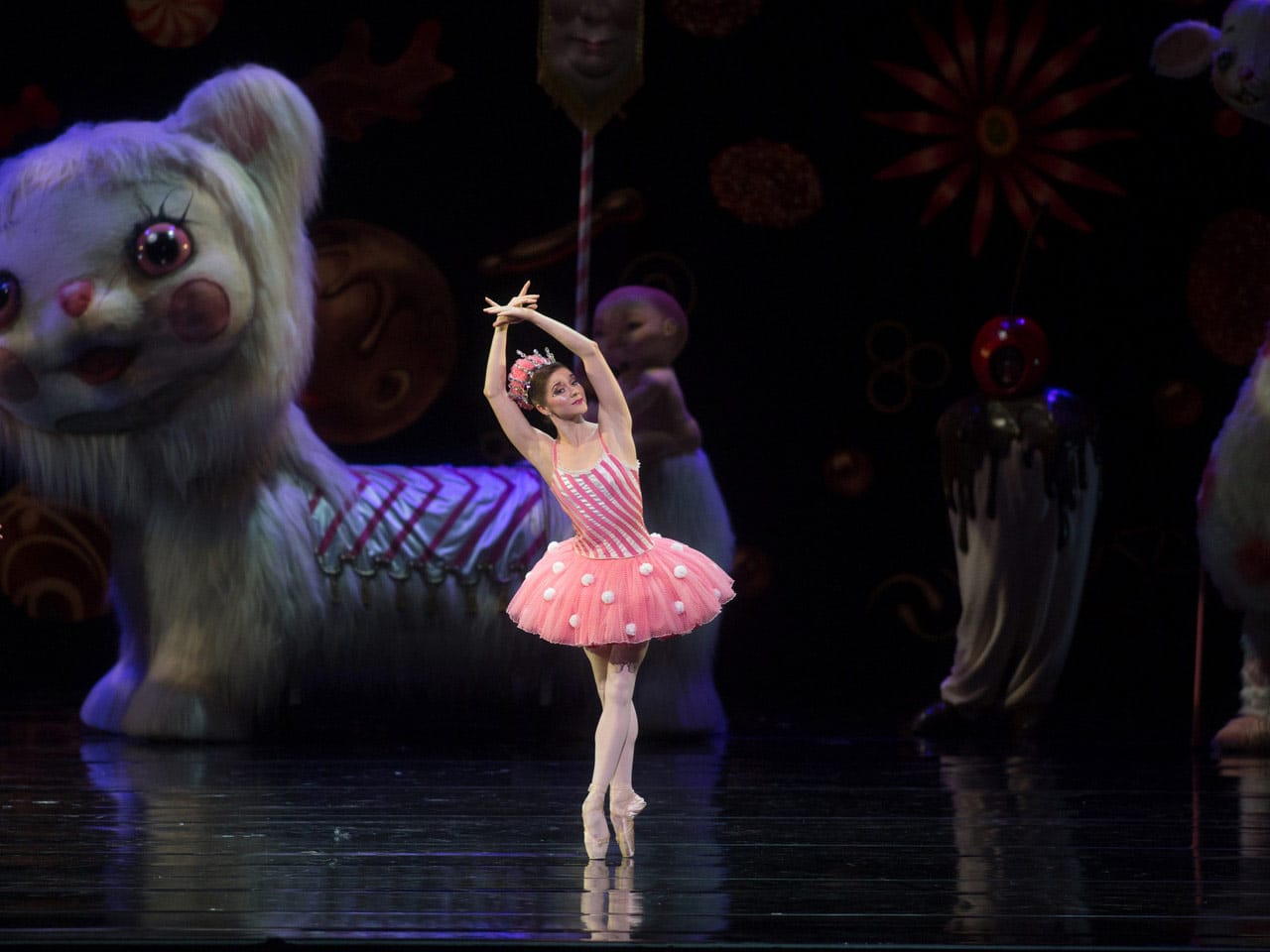
Trenary gave Princess Praline a charming swagger, beginning with her "Why, of course I am a Princess" mime. She gave her solo, with its heel and toe footwork, a folk dance-like flair while her upper body sailed along without a ripple of effort, and her final fouettés ended with a musical flourish. That Princess had spunk.
Teuscher, as the languorous Princess Tea Flower, did not have spunk, but she gave the role an unusual warmth -- she was more of an emotion that a vapor. Forster as Prince Coffee complimented her approach and their pas de deux had, like their younger cohorts, an undercurrent of feeling. He was very funny, swirling his cape with a dramatic flourish as he emerged from his container, and then becoming obviously smitten at the sight of Tea Flower. Teuscher teased him at first, pulling back, but gradually melting; their pas de deux had an emotional arc. She made the little gesture of backing away and touching her face after he kissed her seem like a triumphant surrender.
Their intimate and emotional take was helped immeasurably by the music, conducted with fervor and nuance by David LaMarche, who seemed to revel in Richard Strauss's soaring melodies and sparkling rhythms. He seemed to urge the dancers on, and the group dances, especially the opening candy battles, had an urgent and impressive coordination as the men leapt and turned in perfect unity. The comic vignettes, too, from the futile bombast of Prince Cocoa (Joseph Gorak, Mr. Suave himself) and Don Zucchero (Arron Scott, running so hopelessly and so musically after the girls) to the scheming liquor bottles had an impressive musical snap. The bottles (Katherine Williams as Marianne Chartreuse, Blaine Hoven as Ladislav Slivovitz, and Connor Holloway as Boris Wutki) had a delightfully triumphant little strut, and a very modern fist bump, when they outwitted the doctor, pushed along, it seemed, by that wonderful music.
Copyright © 2019 by Mary Cargill



