Cream Puff
"Whipped Cream"
American Ballet Theatre
David H. Koch Theater
Lincoln Center
New York, New York
October 21, 2022
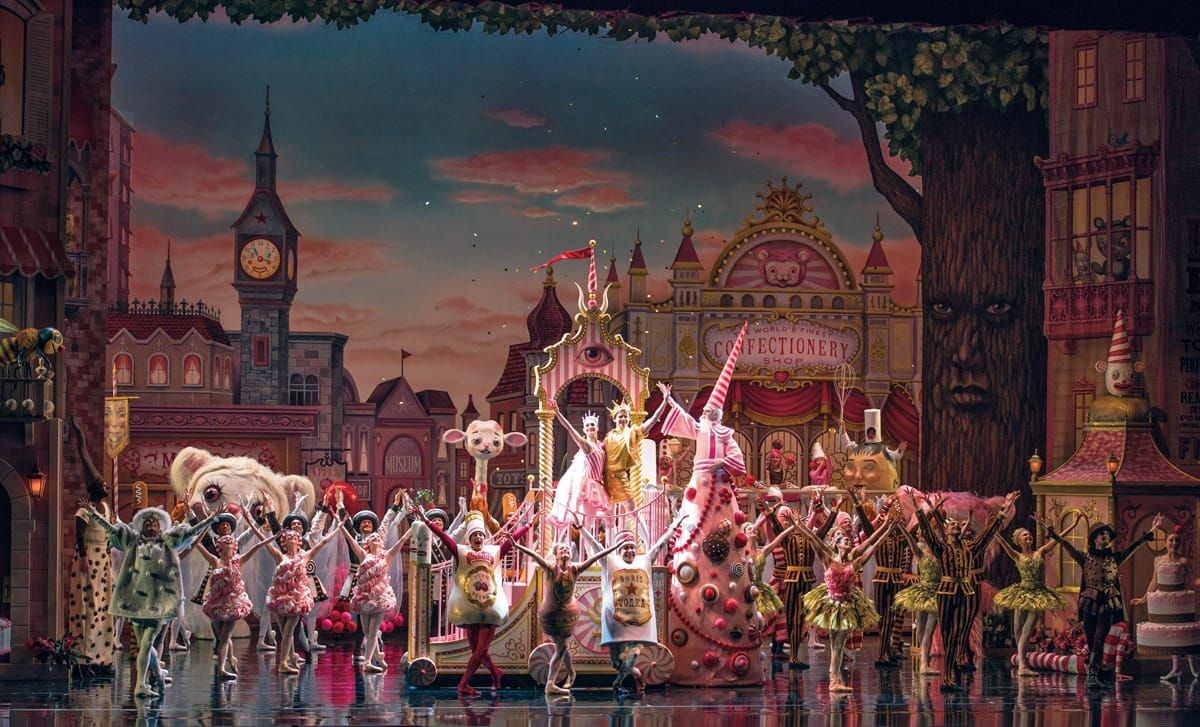
Alexei Ratmansky's deceptively frivolous "Whipped Cream" got a bracing performance, led by guest artist Daniil Simkin, the original Boy with the insatiable sweet tooth. The wisp of a story of a boy celebrating his first communion by sucking up so much whipped cream that he ended up in a hospital where he hallucinated a magical kingdom with a beautiful Princess Praline, only to find, after being threatened by a tipsy doctor, that he could return to that land and eat all the sweets he wanted does not seem like a solid foundation on which to build a complex, full-length ballet. But Ratmansky, using the original libretto (slightly modified--the rioting proletarian cakes were dropped), the long-neglected Richard Strauss ballet score, and elaborate, detailed sets and costumes by the pop-surrealist Mark Ryden, has created a wonderfully layered, densely choreographed, and captivating extravaganza. Unlike "The Sleeping Beauty", whose grandeur it nods to, there is no uplifting message, but there is a gentle understanding of childhood, of its confusion and helplessness when faced with authority. Obviously, watching a boy rewarded for his greed is not going to make anyone a better person, but watching him enjoy himself in such a colorful world certainly makes people happier and the ballet is an innocent, rapturous joy.
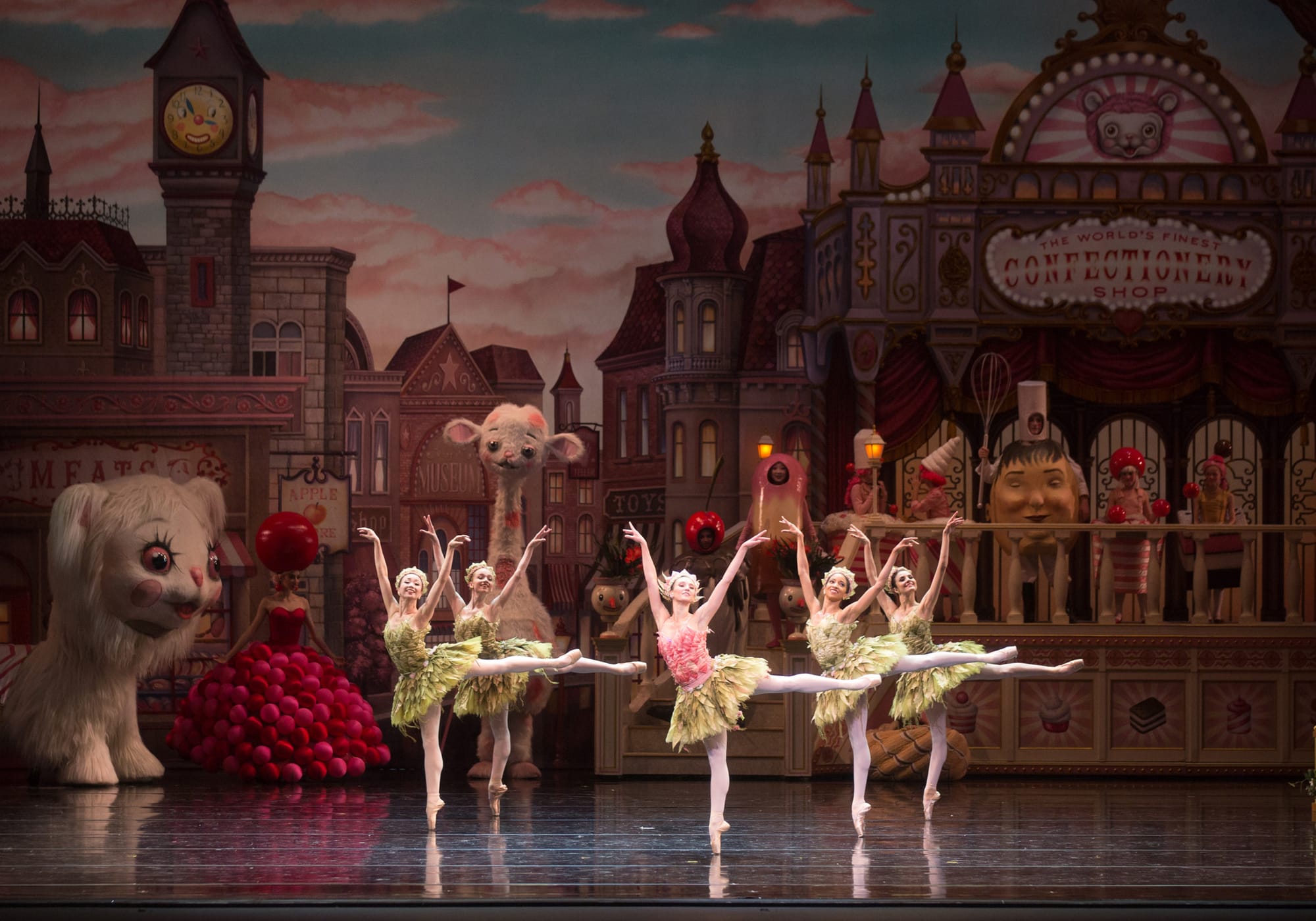
The Boy is quickly whisked off to the hospital at the beginning of Act I, leaving the stage to the various candies and drinks in the grand sweetshop. The highlight is the long and inventive dance for the Princess Tea Flower (Devon Teuscher) and Prince Coffee (Cory Stearns). Teuscher was a languorous, elegant Tea Flower, slightly sultry, with luxuriously rippling arms and hints of Fokine in her poses. (One of the glories of the ballet is the many subtle and witty references to earlier works, making is a ballet lover's playground.)
Stearns, one of ABT's most noble dancers, transformed himself into a softer, rounded, cheerful cup of coffee, with a great deal of cream--his jumps seemed to float down and melt into the ground. Their pas de deux was not the typical ardent love story, it was more sophisticated and subtle; there were distinctive aromas merging and blending.
The Boy gets to shine in Act II, and Simkin gave a charming, extroverted performance, full of impossible jumps (plenty of sideways splits) and convoluted turns, stopping on a dime. It was not the most nuanced of interpretations, and others have made more of the Boy's fear and youthful hesitation; he was out to impress Princess Praline from the get go and at times it seemed as if his aim in life was to be Basilio. His joy and enthusiasm, not to mention his pristine technique, were irresistible.
Breanne Granlund made her debut at Princess Praline, riding in on her snow yak with a spunky confidence, and her mimed "Of course I am a Princess" had an unaffected charm. She danced her difficult solo, with its rapid point work, with a lyrical swagger, though she lacked some of the superhuman crispness of some dancers. Her final fouettés did falter a bit, though she recovered quickly, adit was a warm and lively performance.
The ballet, like the grand nineteenth century ballets is honors, is filled with supporting roles, and everyone, from the five delightful Cupcake Children on up, looked engaged and invigorated. Eric Tamm gave Prince Cocoa's Spanish grandee an elaborately filagreed courtesy combined with elegant dancing, and Sung Woo Han's Don Zucchero was a raucous counterpoint, puffing and turning as he chased the ladies. Zhong-Jing Fang (Mademoiselle Chartreuse), Blaine Hoven (Vladislav Slivovitz) and João Menegussi (Boris Wutki) were very funny as they conspired against the Doctor, Alexei Agoudine, who, even with his face hidden by the gigantic mask, was alternately chilling as he menaced the poor Boy, and weak-kneed as he succumbed to the enticing liquors.
The candy men in the first act (Marzipan, Sugarplum, and Gingerbread) have some of the most layered and complex choreography in the ballet, and the three color-coded groups fly through their non-stop petite batterie holding their various weapons (which much make their balance tricky) as they merge and separate, sometimes dancing the same steps and sometimes dancing different variations to the same music. The men, some of ABT's most talented younger dancers, hurled themselves into the play fight, brandishing their weapons without missing a beat.
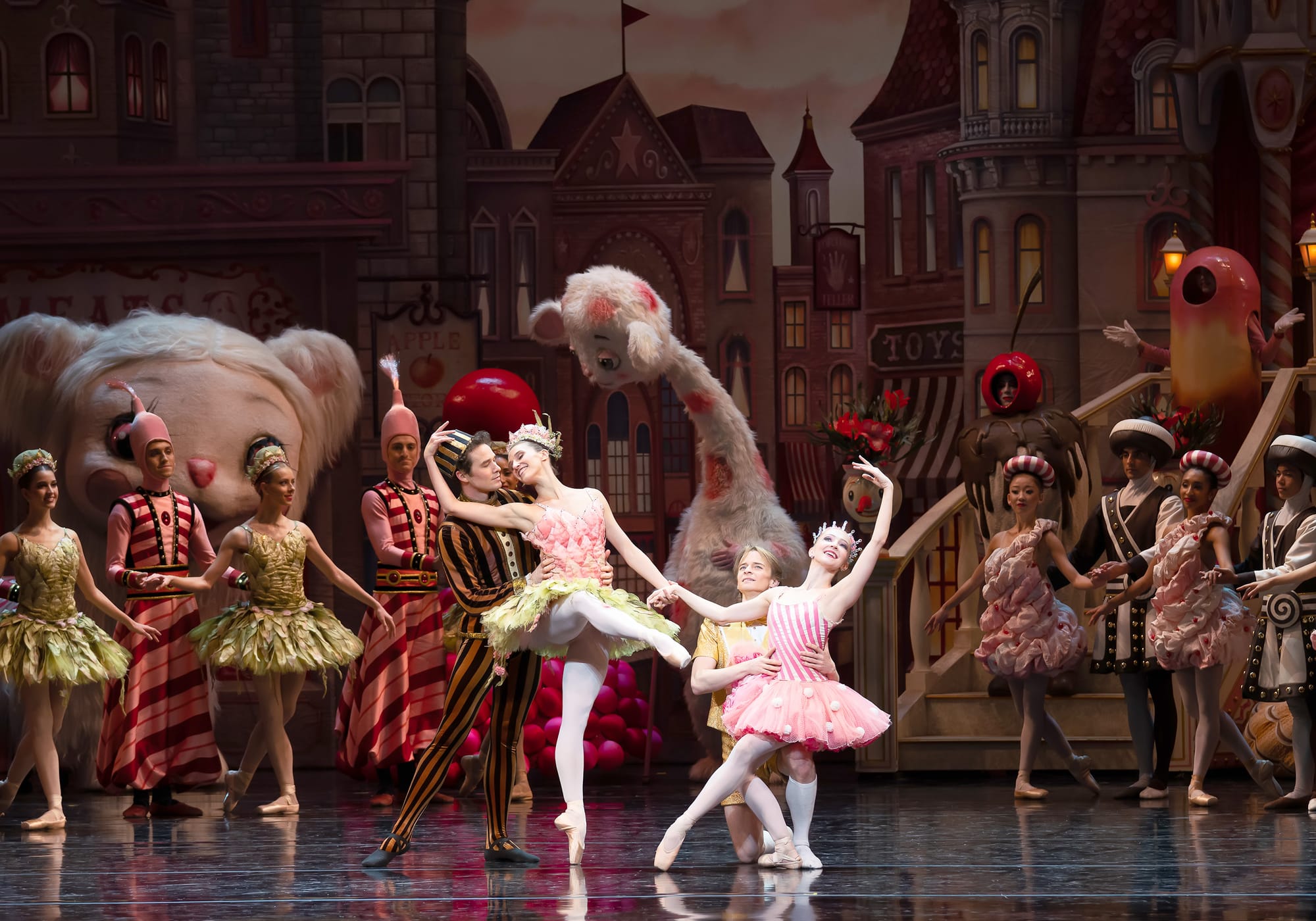
For all its sugar highs, though, for me one of the most memorable moments is the finale's serene pas de quatre for Tea, Coffee, the Boy, and Princess Praline, which ends as they stand in a huddle, friends forever in that magical, beautiful world, as if Dorothy got to stay in Oz, a dream the grownups can appreciate. "Whipped Cream" is a ballet children can revel in, but it is not a childish ballet.
© 2022 Mary Cargill



