All the New Things, In All the Wrong Places
“Don Quixote”
American Ballet Theatre
Metropolitan Opera House
New York, NY
July 7, 2026
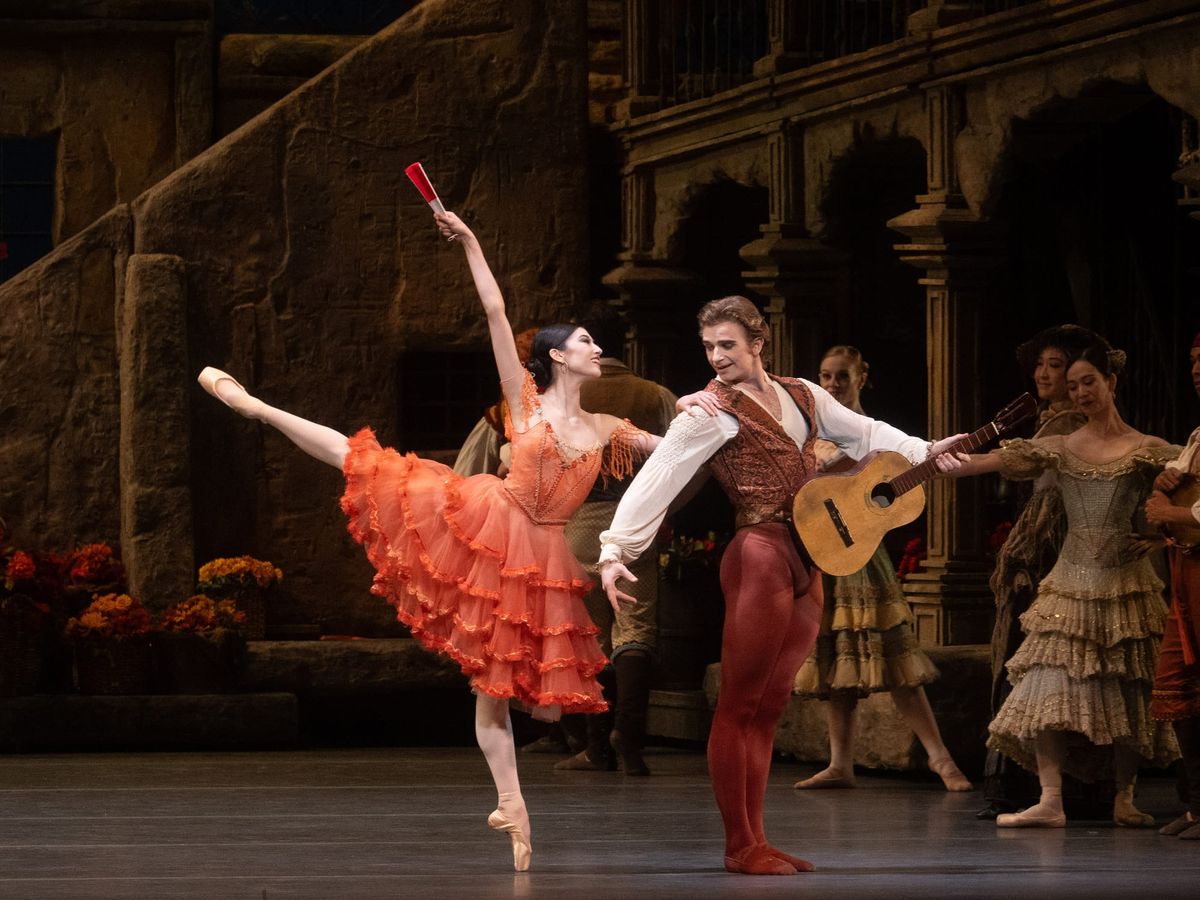
Though it was promoted as a new production, Susan Jaffe’s new staging of “Don Quixote” for American Ballet Theatre proved to be more of a touch-up, and mostly in the wrong spots. It may have tied the ballet more closely to its titular character – something no one had really complained was missing over the last century – but Jaffe, working together with Susan Jones, missed any real opportunities for improvement. The leads for this last performance of the run, Chloe Misseldine and Aran Bell, were talented dancers in the wrong parts.
Remarkably, the set, the tired, sun-bleached looking costumes, and nearly all the choreography stayed put. If anything, the ballet lost some of its Spanish flavor with the disappearance of character shoes for the corps. The real overhaul was Don Quixote himself: danced here by Cy Doherty, with Luis Ribagorda a comic delight as his sidekick Sancho Panza, both now woven far deeper into Kitri and Basilio's love story. Gone was the tired old man who shuffles on and off to bookend the plot. In his place was a constant, hovering presence — a distraction that followed the dancing everywhere it went. Even in the dream scene, our retired knight didn't drift through bewitched by Amour. Instead, he trudged across the stage like a man in the way of someone else's fantasy.
The other big change was in the Gypsy section, retitled Romani, where Jaffe now gave us a fleshed-out duet, albeit still to the borrowed Valery Zhelobinsky music that was folded into the ballet many decades ago alongside a remarkable storytelling solo by the legendary character-dance choreographer Kasyan Goleizovsky (one of its most iconic interpreters, Tamara Varlamova, can be seen dancing that immortal choreography here). Aleisha Walker and Takumi Miyake as the leads matched the music's spirit well enough, but where Goleizovsky built a story and deep character exposition in three minutes, this version offered none. What was their interaction about? What was their relationship? The impassioned exchange left a range of possible interpretations from lovers to fellow community members, despite program billing of “Romani Couple.”
What then of the main leads? ABT clearly (and rightfully) sees a rising star in Misseldine, and her chemistry with Bell is real, but the casting needed more thought behind it than it got. Her entrance lacked the usual storm of energy and tracked more like a curtsy — dignified, and just as dignified in her flirting. This wasn't Kitri the strong-willed daredevil; it was Kitri the finishing-school graduate who happens to know her own mind. So when the plot called for her to rebel against her father's choice of the buffoonish Gamache (a humorously gallant Duncan Lyle) as a husband, the outrage registered as overplayed. Bell, meanwhile, made an alluring, faintly mysterious Basilio, flirting with the other women just enough to warmly needle his Kitri — pitched exactly to her register, for better or worse.
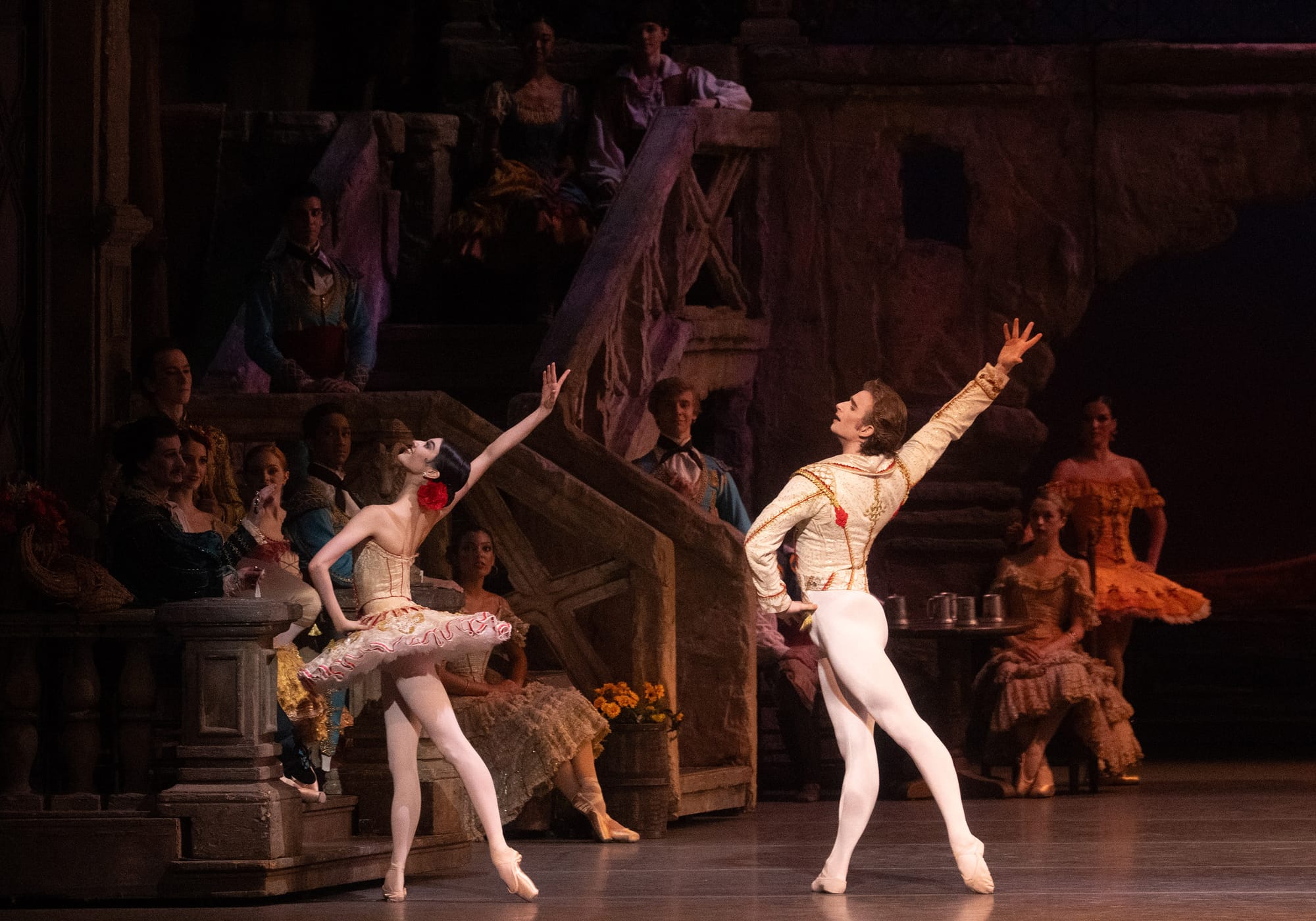
The Dream act suited Misseldine far better – less fire required, more polish, which is her strength. Her Dulcinea was sublime: she settled into rock-solid, effortless arabesques and attitudes and drifted back out of them with a crystalline ease. Ingrid Thoms brought a similar, possibly even more fully realized quality to the Dryad Queen, dancing with a poetic upper body, though her Italian fouettés wobbled. By contrast, Breanne Granlund had a tougher path as Amour, tasked with navigating the ever-present Don Quixote. Her attempts at playfulness read more unsettling than charming, and between her frame and a wig with none of the cherubic softness, she was less "Cupid" and more… something else. An impression she doubled down on by jumping aggressively into the piqué turns of her variation's closing diagonal.
As Mercedes and Espada, Virginia Lensi and Joseph Markey fared better, and looked like they knew it — his mystique and strength paired with her lush dancing, though it was clear both were holding something back so as not to outshine the leads. Kitri's friends, Madison Brown and Elizabeth Beyer, made no such calculations: Brown reached for commanding and landed on muddy and overcooked, while Beyer's energy and technique never quite cohered into character, both gaps that opened in Act One and never closed, straight through the grand pas de deux.
The climax of the ballet was less a jubilant wedding and more a technical showcase, with Misseldine over-relying on balances for balances’ sake, rather than making them the accent points of joy and vastness of celebrating spirit, and Bell still searching for the full contours of his character. And so, as the leads and corps receded toward the archway upstage, and Don Quixote wandered across, transfixed by his vision of Dulcinea, I wondered if these high-potential and star-power dancers will keep landing on casting sheets without due consideration, and when and if the ballet might get a real overhaul.
copyright © 2026 by Marianne Adams