Island Living

First Program: "Spindrift", "Last Look", "Brandenburgs"
Second Program: "Arabesque", "Last Look", "Esplanade"
Paul Taylor Dance Company
David H. Koch Theater
Lincoln Center
New York, NY
November 11, 2026 (first program) and November 18 (second program)
Paul Taylor chose the famous John Donne phrase “No man is an island…” as a the program note for his 1993 “Spindrift”. These two all-Taylor programs) could all, in their various ways, be explorations of this idea; “Spindrift’s” lead, John Harnage, ended up in a happy group, “”Last Look’s” tormented soldiers and bar girls finished in an exhausted heap, connected but also isolated by their individual suffering, “Brandenburg’s” nine dancers dance together in a magical, orderly paradise, “Arabesque’s” hints of an archaic world could be set on a Greek isle, and “Esplanade’s” bounding abundance leaves no one, including the audience, behind.

Taylor choreographed “Spindrift”, which means ocean spray, to Arnold Schoenberg’s “String Quarter Concerto”, which he based on music by Handel, and he seemed to model with dance on two opposing attitudes. The first half of the dance broke up calm, elegant positions into hunched or ominous moves (the Schoenberg approach, perhaps) and the second is more lighthearted, a happy Handel celebration.
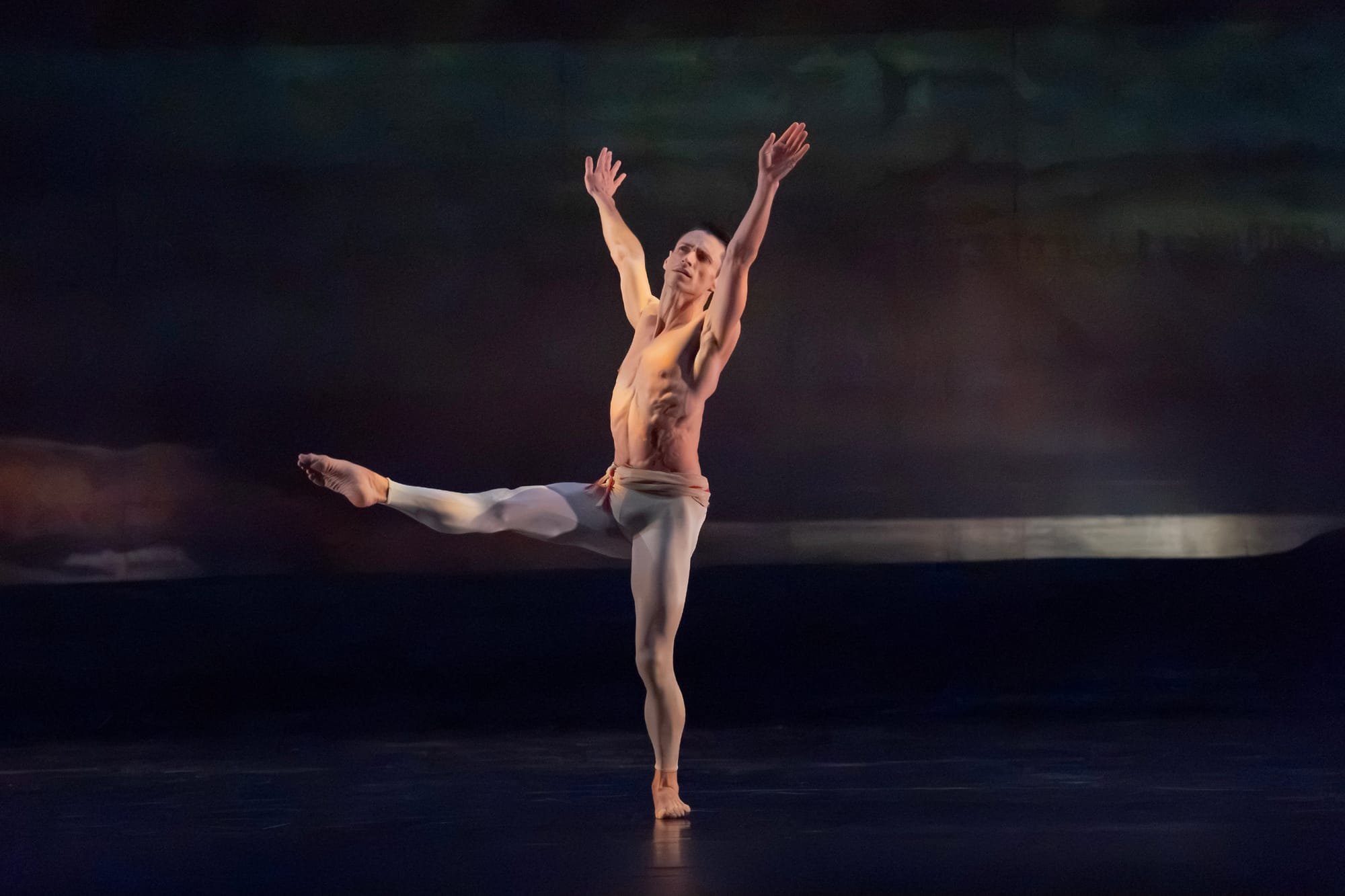
It opened in the dark, with sounds of wind blowing, and gradually the light showed a darkly impressionistic background with hints of a stormy seashore, designed y Santo Loquasto and luminously lit by Jennifer Tipton. The dancers surrounded Harnage, dancing with a controlled chaos with sharp, clear movements, almost attacking him at times with fierce stag leaps. Elizabeth Chapa, a golden presence, ranged through the group like a guardian angel. Harnage dance alone, balancing on one leg with open, expansive arms only to crumple to the ground; his movements were both lyrical and awkward. His dancing was powerful, with smooth, controlled movements, but I missed some of the heroic nobility combined with a raw vulnerability that some earlier have performers had; his solo had grace and strength, but was a bit impersonal.
Harnage, though, gave his interactions with the other dancers a sad and urgent immediacy. His dance with Kenny Corrigan seemed to degenerate into an animal like scuffle as Harnage tried to join the group, and Alex Clayton’s fierce jumps made their wary duel a gripping drama as Harnage tried in vain to connect with him. Then, finally, it happened, as the group circled Harnage in a glow of golden light, swirling around in singles and pairs in a glorious series of inventive jumps; he was no longer alone on that island.
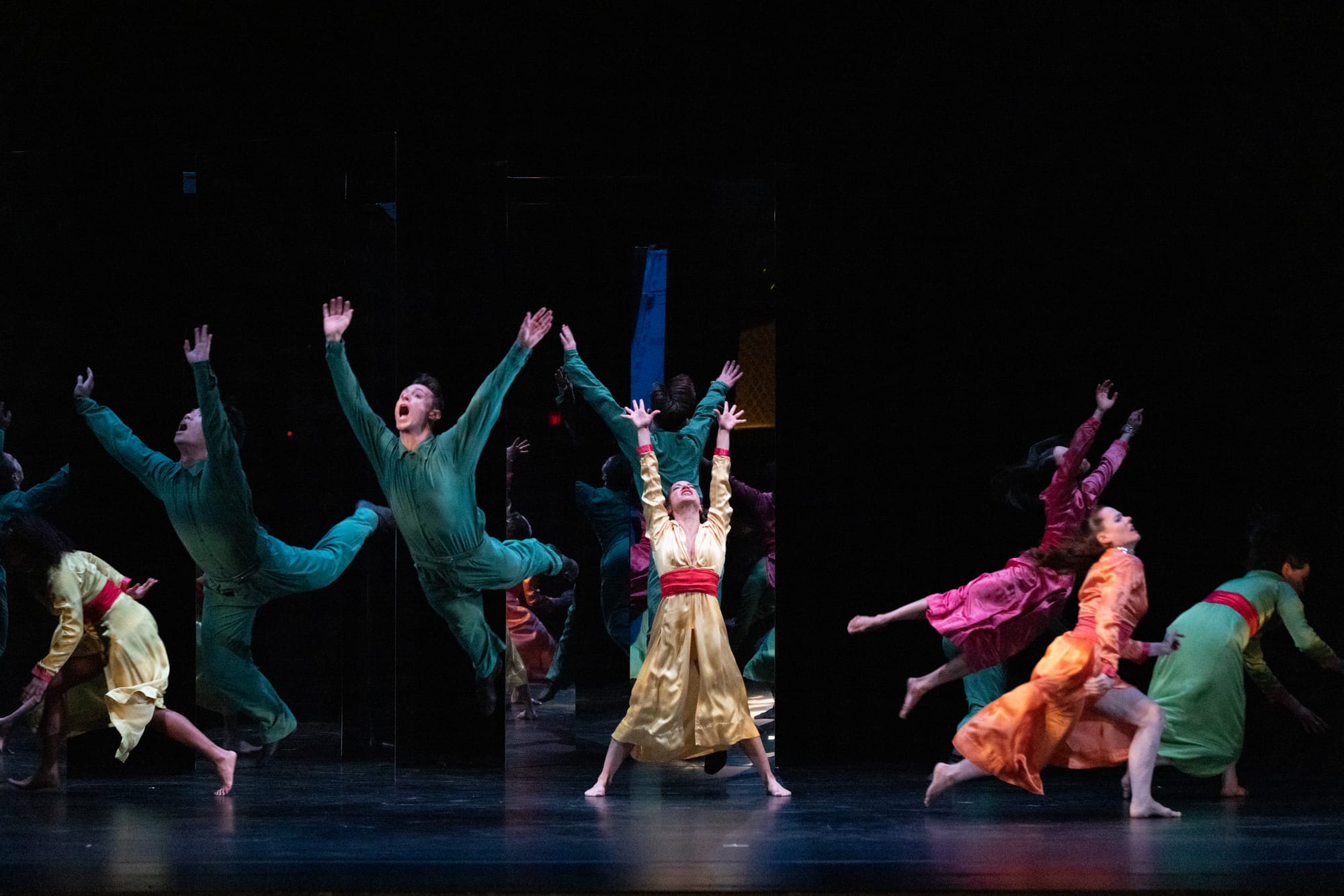
The nine dancers in “Last Look”, from 1985, were locked in hopeless isolation; the costumes (by Alex Katz) hint at soldiers as the men were dressed in military green overalls, while the women’s shiny, loose kimono-like wraps flapped suggestively. They were reflected in the dark mirrored set (again by Alex Katz) with nightmarish intensity.
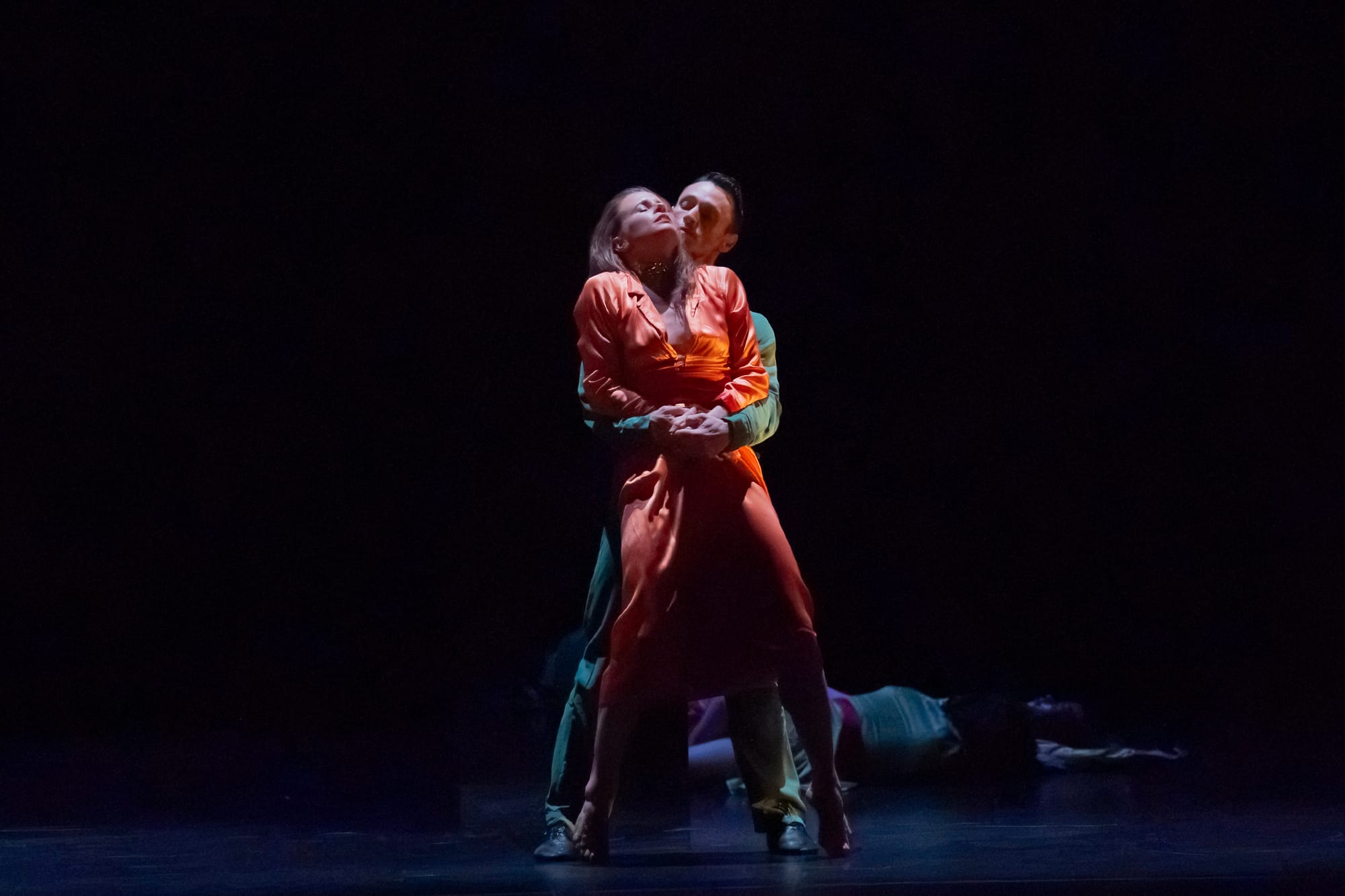
“Last Look” opened with the dancers piled on top of each other, writhing to Donald York’s harsh, eerie music. The men crawled out of the huddle, shaking and falling, as if reliving the battles they had fought and the bullets they had taken; a vivid picture of what used to be called shell shock. Clayton, in a wiry frenzy, was especially powerful. The women, too, were caught up in the terror, as Madelyn Ho, looking tiny and fragile, mingled anger and terror as she was tossed from soldier to soldier. Kristin Darker tried to both resist and submit to Harnage’s grotesque, grasping approaches in one of Taylor’s most harrowing and tragic pas de deux. It was a picture desperate need, as both staggered helplessly, Harnage in an off balance stance reaching for her as she squatted down, so damaged she could barely stand.
Both the men and the women were destroyed body and soul, and Harnage’s final look in the mirror had a terrible recognition of the inevitable destruction of his humanity as he crawled back to the pile of bodies while Draucker emerged at the top, her hand flopping lifelessly down.
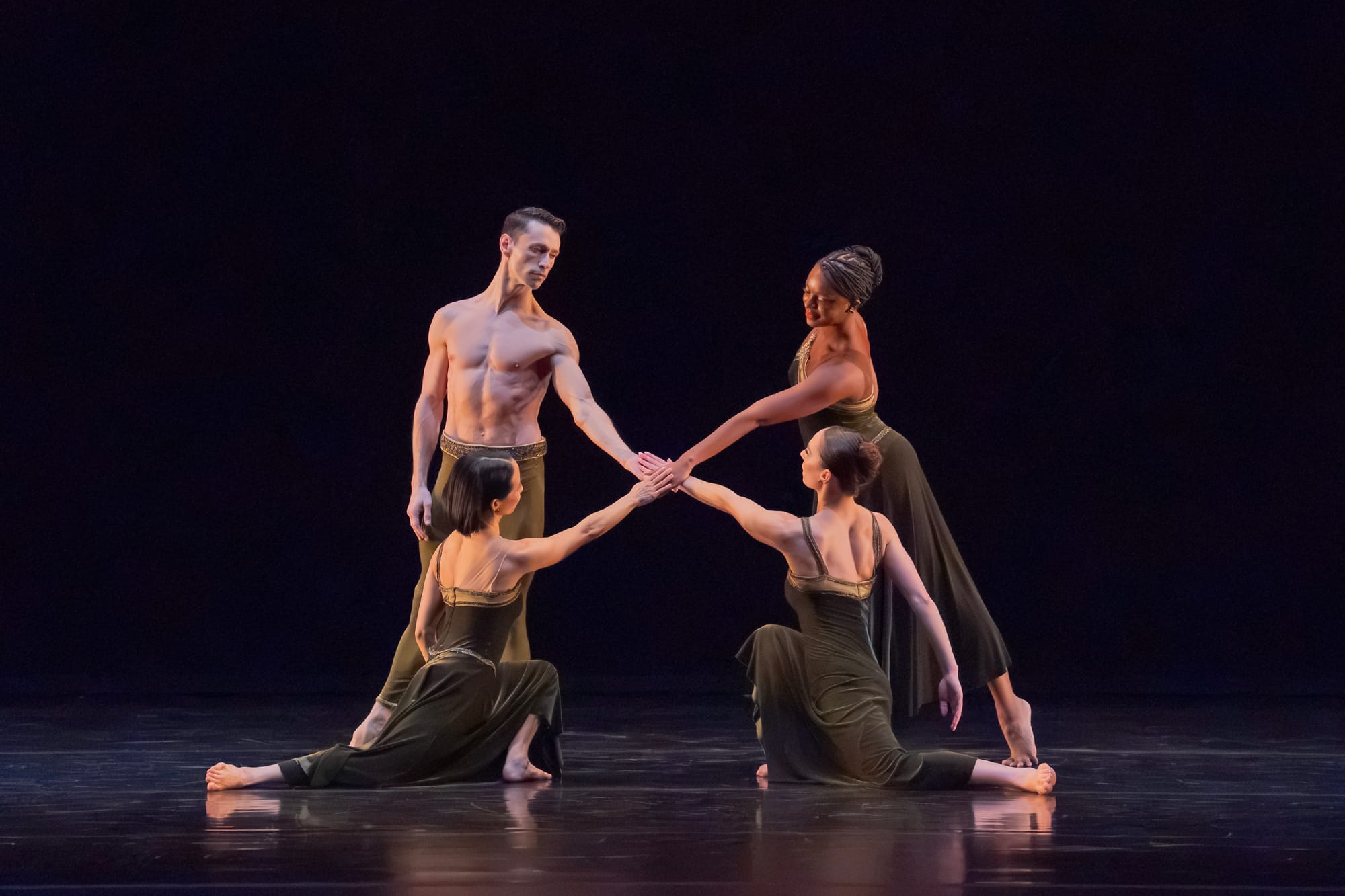
Harnage got to crawl out to a more peaceful and serene place as the lead in “Brandenburgs”, Taylor’s elegant salute to Bach and classicism. It seems to nod to the balletic hierarchy, with a supporting corps of five weaving decorously around the lead, Harnage with three women (Madelyn Ho, Jessica Ferretti, and Gabrielle Barnes), who opened the work with a stately pose, almost lithographic in its elegance. But Taylor upended ballet’s convention of frisky little corps girls and gave the supporting role to five strong men (Lee Duveneck, Alex Clayton, Devon Louis, and Austin Kelly) who roamed through the work with fast, fluid jumps and a bright warmth. Louis especially, looked like dancing was the most wonderful thing in the world.
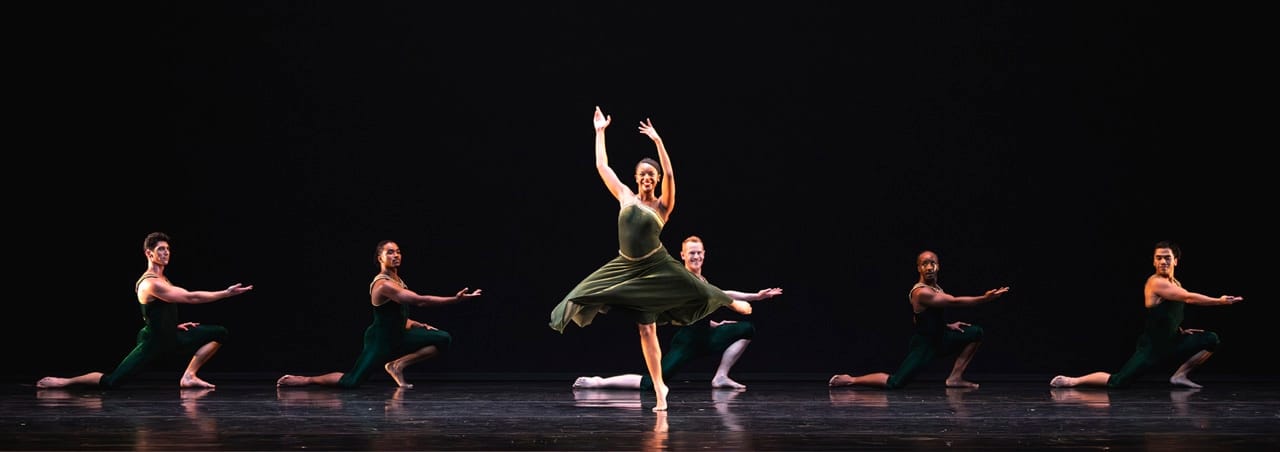
Taylor gave each woman a brief introductory solo; they could have been Apollo’s muses or Paris’s goddesses, though Harnage didn’t have to choose between them. Barnes danced with a steady, secure grace, revolving in arabesque like a radiant statue on a pedestal. Ferretti, with her curving little hips swivels, was elegantly flirtatious with “come, follow me” arms, and Ho had an electric energy, with quick, sharp turns.
Harnage got another solo, with statuesque yearning within a circle of golden light. It was full of noble shapes and tricky balances; Harnage’s moves were secure and strong, but, like his solo in “Spindrift”, there were few secrets revealed. Once the bright finale started, however, he looked confident and joyful, dancing with each woman with a courteous dignity. Clearly he and everyone else had found their place on that island.
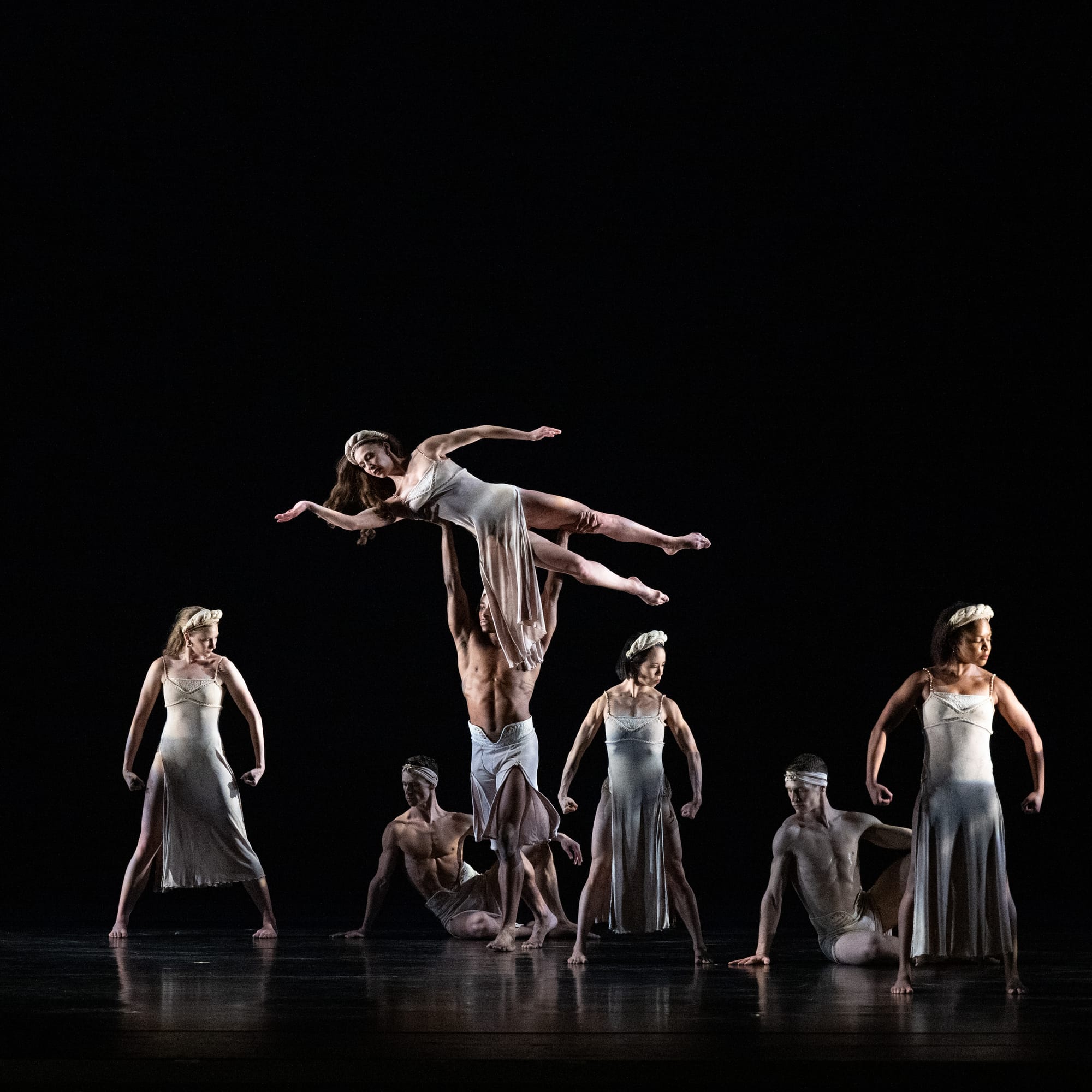
Taylor set “Arabesque” (1999) to music by Debussy; it is one of Taylor’s white works, with vaguely classical outfits by Santo Loquasto—diadems and chiffon for the women and loose white fringed shorts for the men. It opened with a striking pose which looked like a piece of a long-lost frieze from a pre-classical Greece, with stylized arms and bent legs. Taylor’s choreography played with the arabesque shape, bending and curving the bodies, catching the currents in the music. The dancers seemed to be part of a ritual, led by the fierce Ferretti, who, perhaps summoning memories of Oedipus, blinded Kenneth Corrigan, who staggered off. She had a strong, slightly predatory solo, with clawing hands and pawing the floor as if pulling power from the ground; even her hair seemed alive.
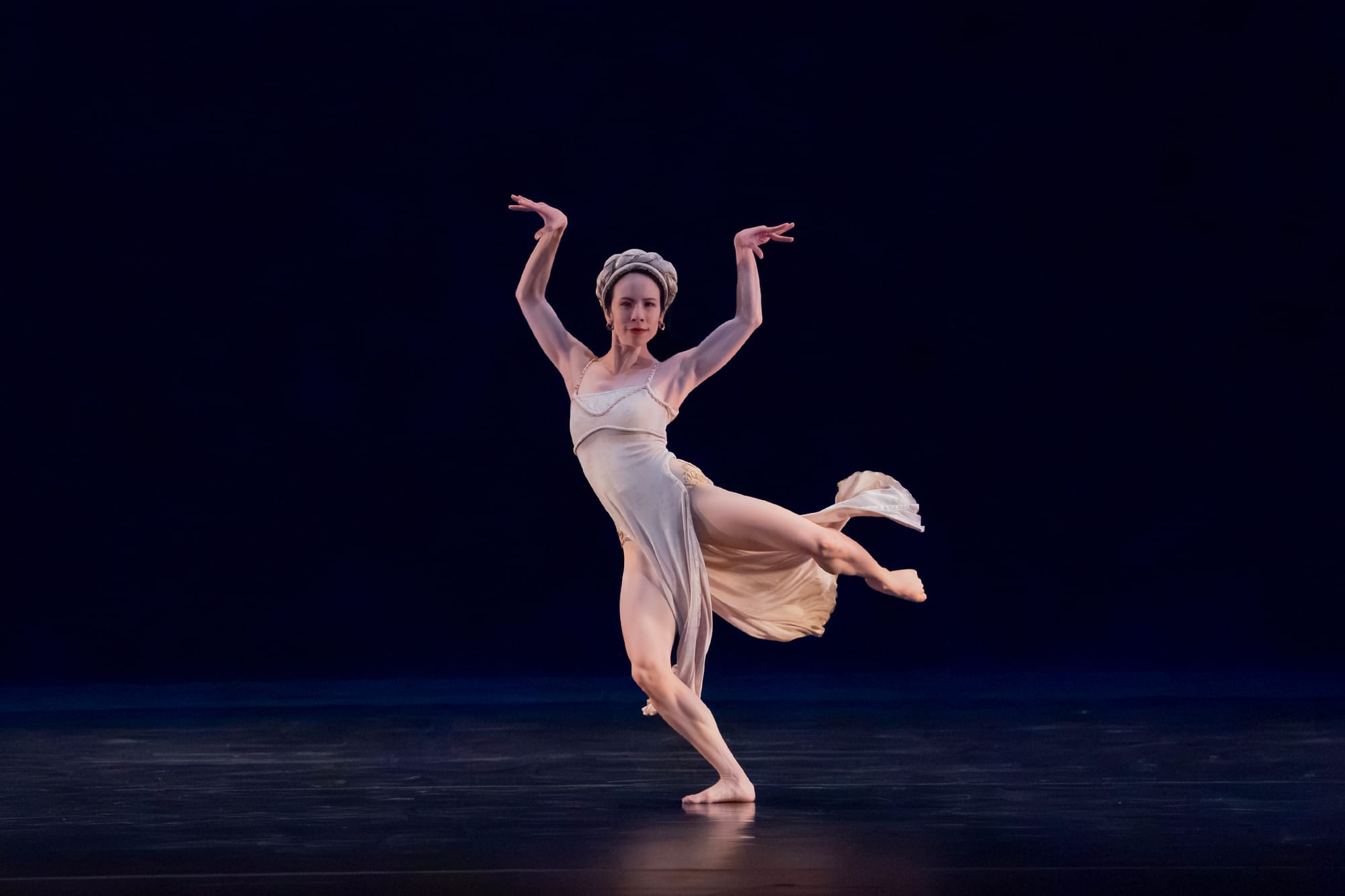
The other women (Madelyn Ho, Jada Pearman, and Elizabeth Chapa) seemed to be enchantresses, with curling arms; Chapa’s moves seemed suggest an underwater feel, a slightly dangerous water nymph. The work, while always engaging, was a bit episodic, and the bits of narrative weren’t cohesive; Corrigan returned triumphantly at the end to blind Ferretti, who in turn staggered off, only to return to expose her palm to Devon Louis as if she were a gypsy revealing a secret. This secret may have remained hidden, but the musical magic of Taylor’s steps were clearly on view.

“Esplanade” has its secrets too, as the quiet, eerie second movement interrupts the cheerfulness with a little surrealistic interlude; a small family drama/ghost story in the middle of a party. Elizabeth Chapa was a strong mother figure, supporting Alex Clayton and their daughter, Payton Primer before the ghostly figures of Madelyn Ho and Jada Pearman wafted around and through the group, lost or longed for children, perhaps. Chapa, surrounded by crawling figures, ended the scene with silent sobs. These simple movements were completely captivating, a reminder that darkness may be near.
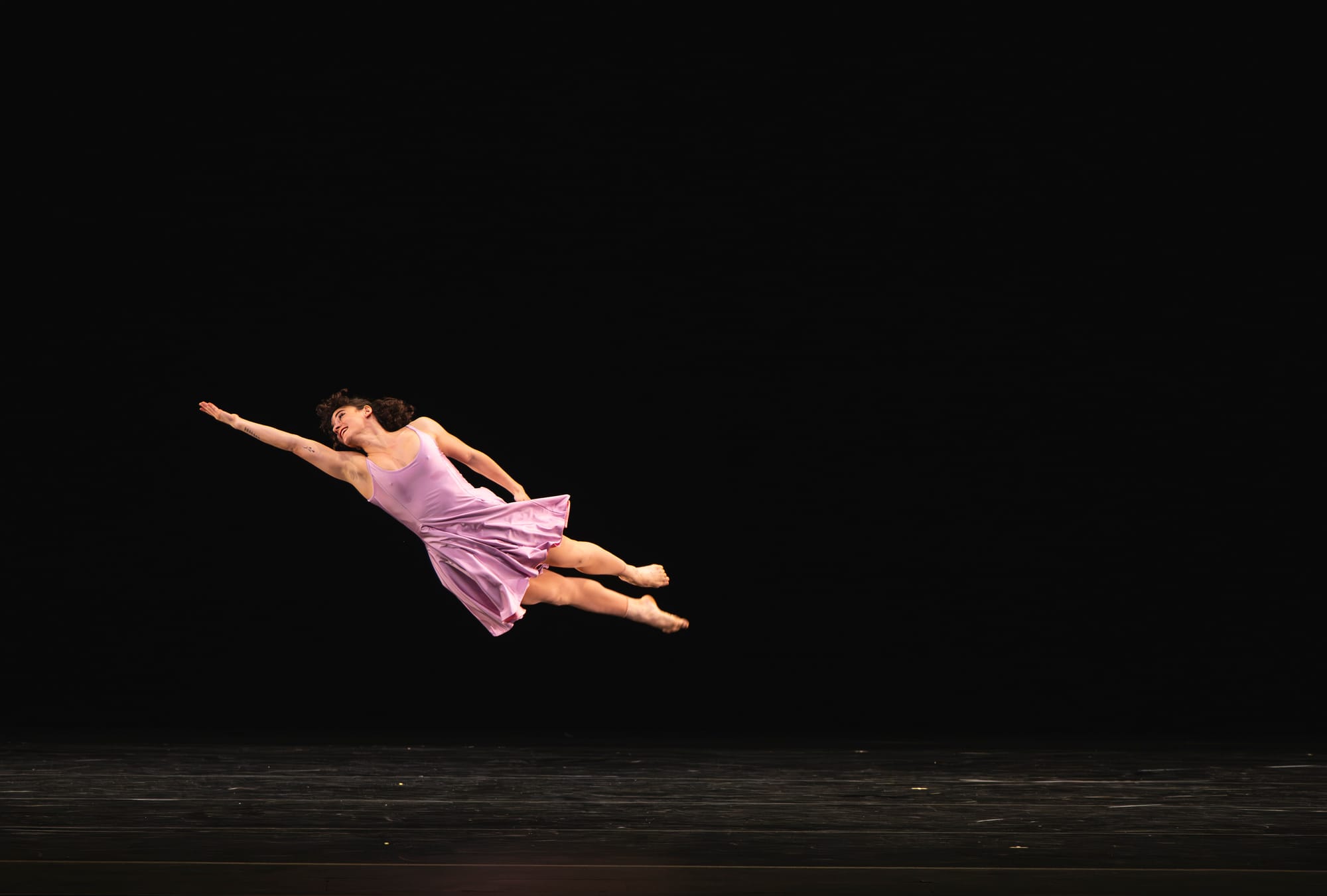
But so may light, and the ever popular work, made in 1975, is a stupendous dance without any dance steps—it is full of walking, running, jumping, and sliding to sublime Bach music, culminating in the daring final section, inspired, according to Taylor, by the idea of baseball players diving towards the bases. But baseball players don’t have to look happy, while the dancers seemed to burst with joy; Ho and Clayton were especially explosive. And the final moment, as Pearman stood alone of the stage, opening her arms to embrace the audience, was a luminous invitation to join the community.
© 2026 Mary Cargill