Young Love

“Romeo and Juliet”
The National Ballet of Canada
Four Seasons Centre for the Performing Arts
Toronto, Canada
October 31, 2026
After a 2025-2026 season that leaned heavily into contemporary works, the National Ballet of Canada kicked off its 75th anniversary season with an homage to its past. In its early years under the direction of founder Celia Franca, the NBoC acquired John Cranko’s “Romeo and Juliet”. This raised NBoC’s profile, as it was the first North American company to stage the work, and marked the beginning of a fruitful relationship with Cranko. It also marked the beginning of the company’s residence at the O’Keefe Centre (now Meridian Hall). Cranko’s “Romeo and Juliet” was a beloved touchstone for company artists and Toronto balletomanes alike from its NBoC premiere in 1964 to its most recent run of performances in 2009. In 2011, the company unveiled a new version of “Romeo and Juliet” choreographed by Alexei Ratmansky, which had its own merits and was quite different in style and approach to Cranko’s. However, for this milestone anniversary, reviving Cranko’s version which has such a storied history with the company was a fitting choice.
The set and costume designs by Susan Benson (created after Jürgen Rose’s originals were damaged in a costume department fire in 1976) immediately convey a sense of time and place with warm, autumnal hues, sumptuous textiles and elegant Renaissance architecture and interiors. The capes and flowing scarves, especially, move beautifully and lend drama to the various comings and goings of each character. There are no high tech special effects or projections, but they are not needed here. This is Cranko at his best with clear, effective storytelling that perfectly reflects Sergei Prokofiev’s masterful score.
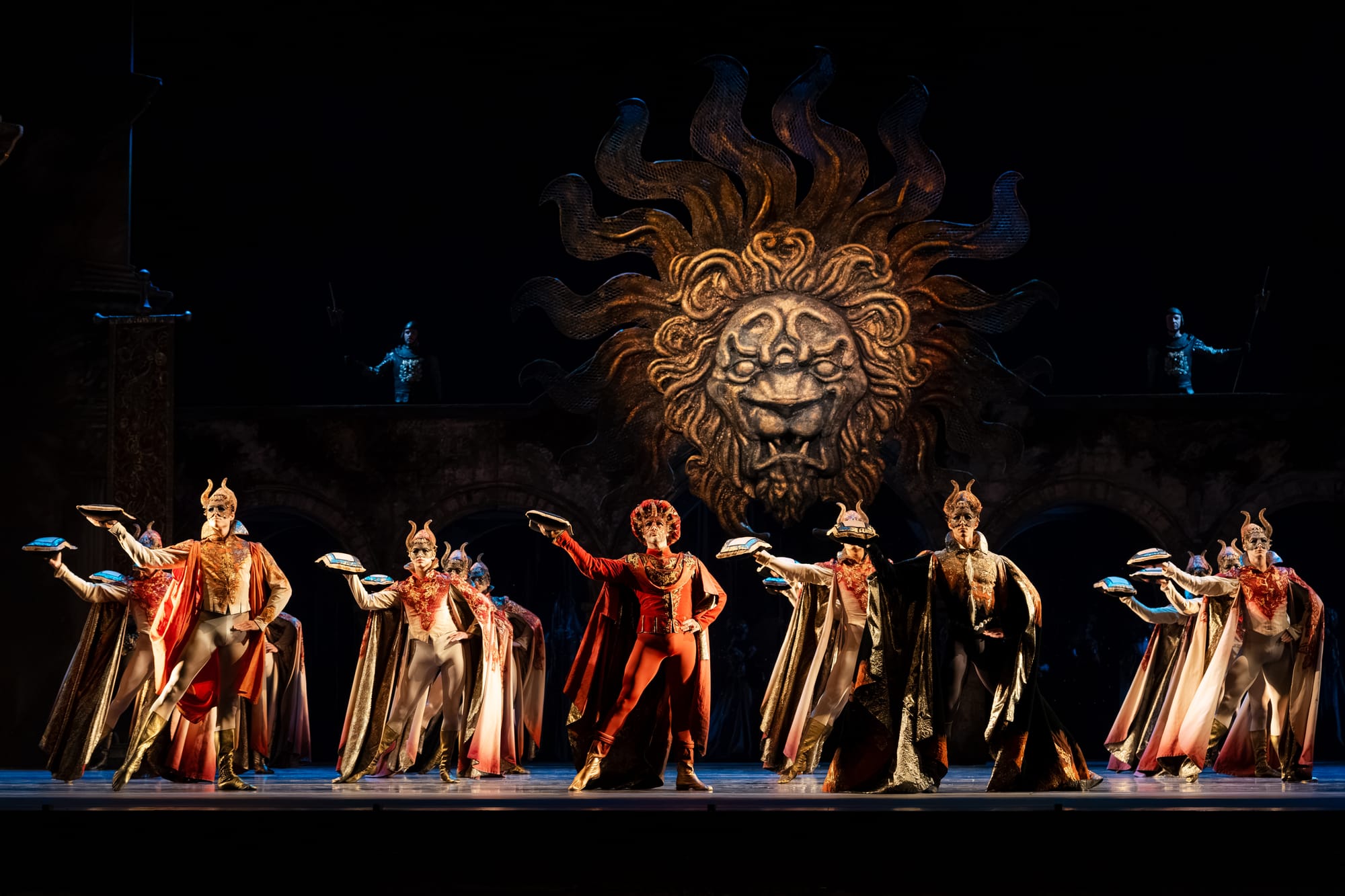
The music and classically-based choreography are both given space to breathe. Cranko wisely resisted the urge to pack in too many steps to match the music note for note. He left room for stillness, mime and acting. For instance, the “Dance of the Knights”, probably the most recognizable section in the score, consists mainly of walks. The tempo, epaulment and formations change but the actual steps are remarkably simple. The effect is hypnotic and brings an appropriate formality to the scene. The street scenes are busier, but use repeated sequences or motifs to avoid sensory overload. The cheeky pas de trois of Romeo, Mercutio and Benvolio before they sneak into the Capulet ball and the acrobatic Carnival dancers in Act 2 bring some levity amidst the tragedy. The depiction of the Romas with stereotypical dress and overly sexualized gestures, however, has not aged well and feels dated. In Act 3, the use of the Pietà pose is quite powerful as Lady Capulet cradles the sleeping Juliet in bed and later Juliet holds Romeo’s lifeless body in a similar manner.
The buzz of opening night was around the young pair of dancers cast in the title roles. Isabella Kinch was promoted to second soloist last year and has danced a handful of leading roles, most notably Hermione in “A Winter’s Tale”. Her Romeo was Oliver Yonick, a corps de ballet member, appearing here in his first principal role. They both rose to the occasion, with believable acting and particularly strong partnering work. They brought a youthful energy to the ballet that perfectly framed the coming of age that underscores the plot. Together, they gave a nuanced and emotionally affecting performance far beyond what one might expect from such young dancers.
Kinch has a strong technical base. She is not afraid to play with shifts in weight and pull off her axis because she can confidently re-centre or catch herself. It makes for exciting dancing that is so engaging to watch. Her movements can vary from delicate and weightless, to rapid and powerful. At the end of the balcony pas de deux, she bourrées back so quickly that Yonick has to sprint to catch her as she throws herself backwards in a trust fall. Most importantly, her interpretation of Juliet’s journey from an innocent and playful girl to a strong-willed woman changed by love and loss is fleshed out and makes dramatic sense. The moment she decided to drink the sleeping potion was chilling. Kinch clearly expressed Juliet’s intense fear of it, before showing us her determination to swallow it anyway.
Yonick was a revelation as Romeo. He is tall and strong enough to make the difficult, lift-filled pas de deux look smooth and fluid. He is a well-rounded dancer with brilliant technique and a generous, noble stage presence. His double tours en l’air are consistently crisp and fully rotated (he does several in the trio with Mercutio and Benvolio). He can make a clean quintuple pirouette look effortlessly musical. He effectively conveyed the tenderness of Romeo’s affection in the way he did a chin up from Juliet’s balcony edge to kiss her goodnight, or the way he twirled her hair in bed (and later, on her grave). He was also able to contrast it with Romeo’s impulsive and destructive side when he killed Tybalt and later Paris.
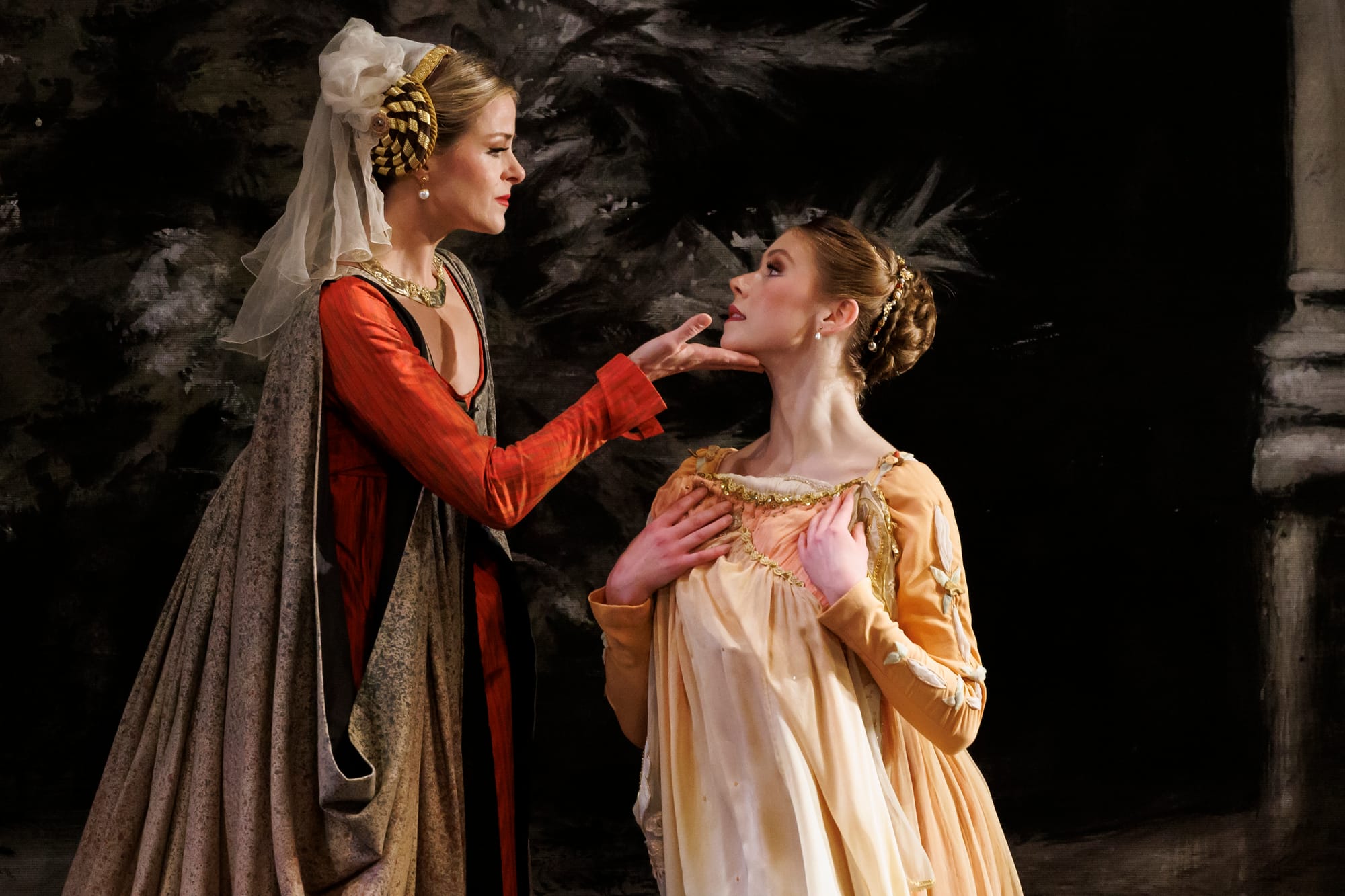
In the character roles of Juliet’s nurse and Lady Capulet respectively, Stephanie Hutchison and Heather Ogden both are quite young compared to casts in previous runs. This brought a different physicality to their interpretations. Hutchison did not lean too hard into the gestures or movements to make her look frail or unsteady on her feet, as this would not be believable. At the scene of Tybalt’s death, Ogden reacted dramatically – almost to the point that one wondered if she may have had romantic feelings towards her nephew. She tore open her bodice, and undid her hair (à la “Giselle” mad scene) before crawling on top of him as he was carried off. Kneeling, she arched her back so her head was mere inches from her heels (like a camel pose in yoga). Her rather tame reaction to later finding Juliet unresponsive, feels somewhat incongruent in comparison. There was shock for the briefest moment, and then she just became still, holding Juliet’s head in her lap and stroking her hair as if she accepted her daughter’s demise just like that. The lilies that she dropped on the floor upon discovering Juliet’s deathlike appearance told more than her facial expression.
Ben Rudisin was a menacing Tybalt – hotblooded and volatile. He made good use of earlier scenes to build up tension between Tybalt and Romeo. For instance, in the opening scene, after the brawl between to Capulets and Montagues, the Duke of Verona orders members of both families to shake hands and reconcile. When Yonick offers his hand, Rudisin aggressively slaps it away. He was always looking for an excuse to confront Romeo, long before Romeo gave him one by sneaking into the Capulet ball and dancing w/Juliet. Donald Thom brought a flamboyant flair to the role of Mercutio.
It was quite special to see a new generation tackle these timeless roles and bring Cranko’s production to life. The revival, performed for an audience that included around 200 NBoC alumni (who were asked to stand at the start of the show and greeted with warm applause), was certainly one for the history books.
Copyright © 2026 by Denise Sum