A Foggy Day
"The Kingdom of the Shades", "Sylvia Pas de Deux", "Pas de Deux from Great Galloping Gottschalk", "Neo", "In the Upper Room"
American Ballet Theatre
David H. Koch Theater
Lincoln Center
New York, New York
October 26, matinee 2024
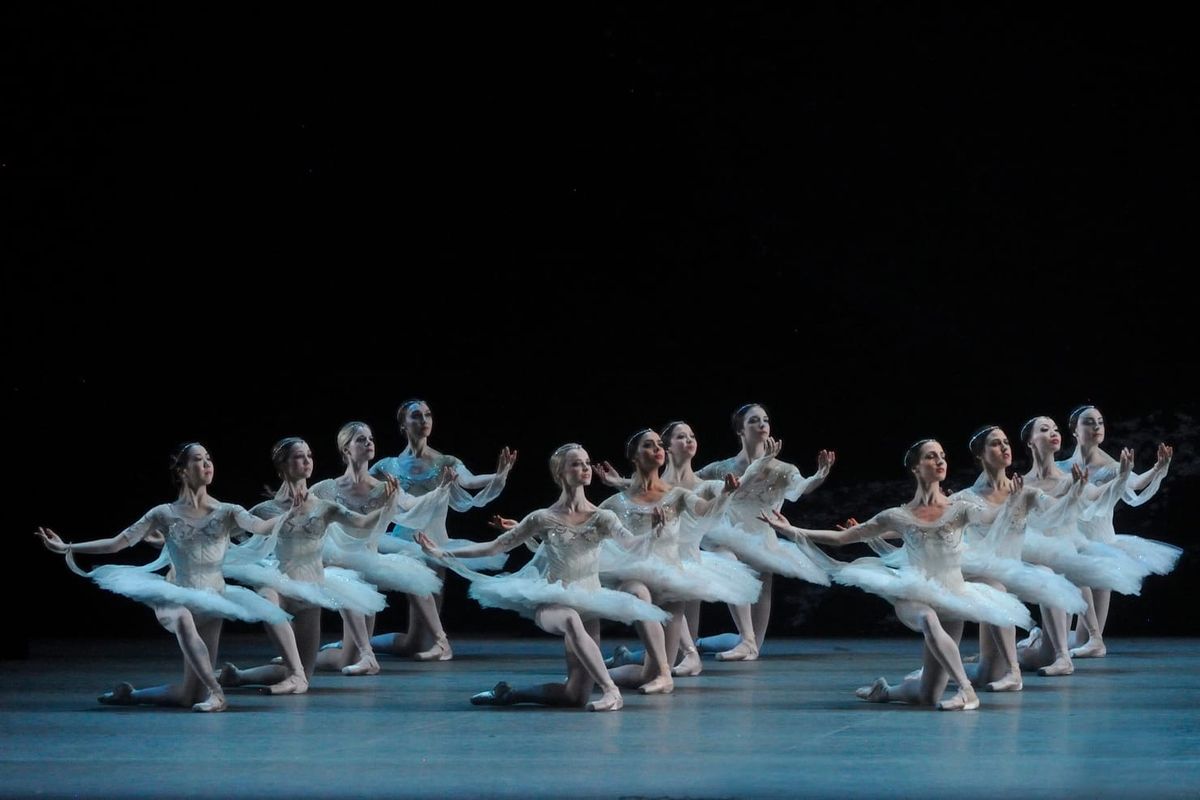
The theater’s dry ice machine got a good workout during this matinee as three of the five works used the fog machine to great effect. “The Kingdom of the Shades”, the white act from the full length nineteenth century Petipa extravaganza “La Bayadère”, has a bit of atmospheric mist to haunt the ghostly dancers, Alexei Ratmansky’s “Neo” has lights projecting through some smoke to create some amorphous triangular shapes, and Twyla Tharp’s “In the Upper Room” dancers appear and disappear in a cloud of smoke. The two unadorned works, both pas de deux (an excerpt from Lynne Taylor-Corbett’s “Great Galloping Gottschalk”, 1982, and Balanchine’s “Sylvia Pas de Deux”, 1950) both held their own among the mist.
Petipa’s shades scene from “La Bayadére” has one of the most beautiful and challenging openings in ballet, as the corps emerges from the shadows onto a ramp with arabesque following arabesque in hypnotic harmony. ABT’s corps made it seem almost effortless, with their arabesques seeming to float up in a magical harmony. The radiant shimmering simplicity of Petipa’s straight lines and the straightforward melodic Minkus music never gets old and it was a beautiful performance. The corps certainly deserved its rapturous applause.
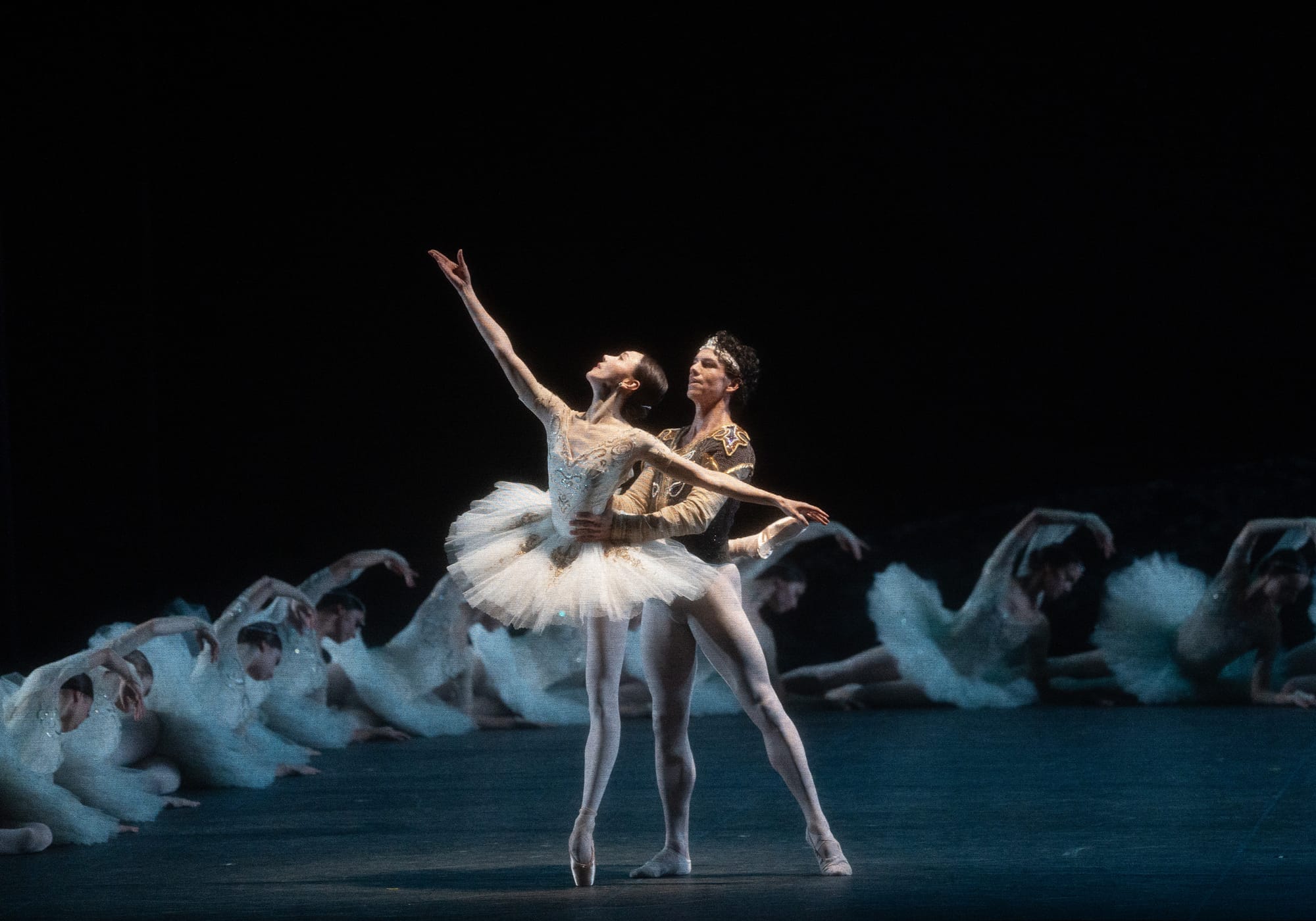
Hee Seo and Isaac Hernández danced poor Nikiya and Solor; in this excerpt, they did get a final resolution, as instead of Solor standing alone as the visions disappeared, Nikiya reappeared with the scarf leading him back, accompanied to the soaring finale music, to the nook where she first appeared for one last moment in the spotlight accompanied by the soaring finale music. Seo and Hernández looked well together. He is a convincing and committed actor, and gave his soaring jumps an urgency that went beyond acrobatics. Seo was a light and ghostly Nikiya, with soft, elegant dancing; I loved her opening sideways jump, which had a flowing arc rather than the current determined straight legs out effort that always ends with a thump. Though her final melange of turns were not as whirl-windy as some, she timed them well, so that they built to an impressive climax, and her dancing had a lyrical power that was very moving.
Lea Fléytoux, Fangqi Li, and Breanne Granlund danced the pas de trois. Li was hampered by the exceedingly slow tempo and had to fight to hold on to the exposed positions; she won, but it was a close call. Granlund’s explosive cabrioles were a triumphant finale. Fléytoux was absolutely astounding, with expansive arabesques, a light, effortless jump, and pirouettes that just kept revolving, while her soft upper body seemed to say it was all so very easy.
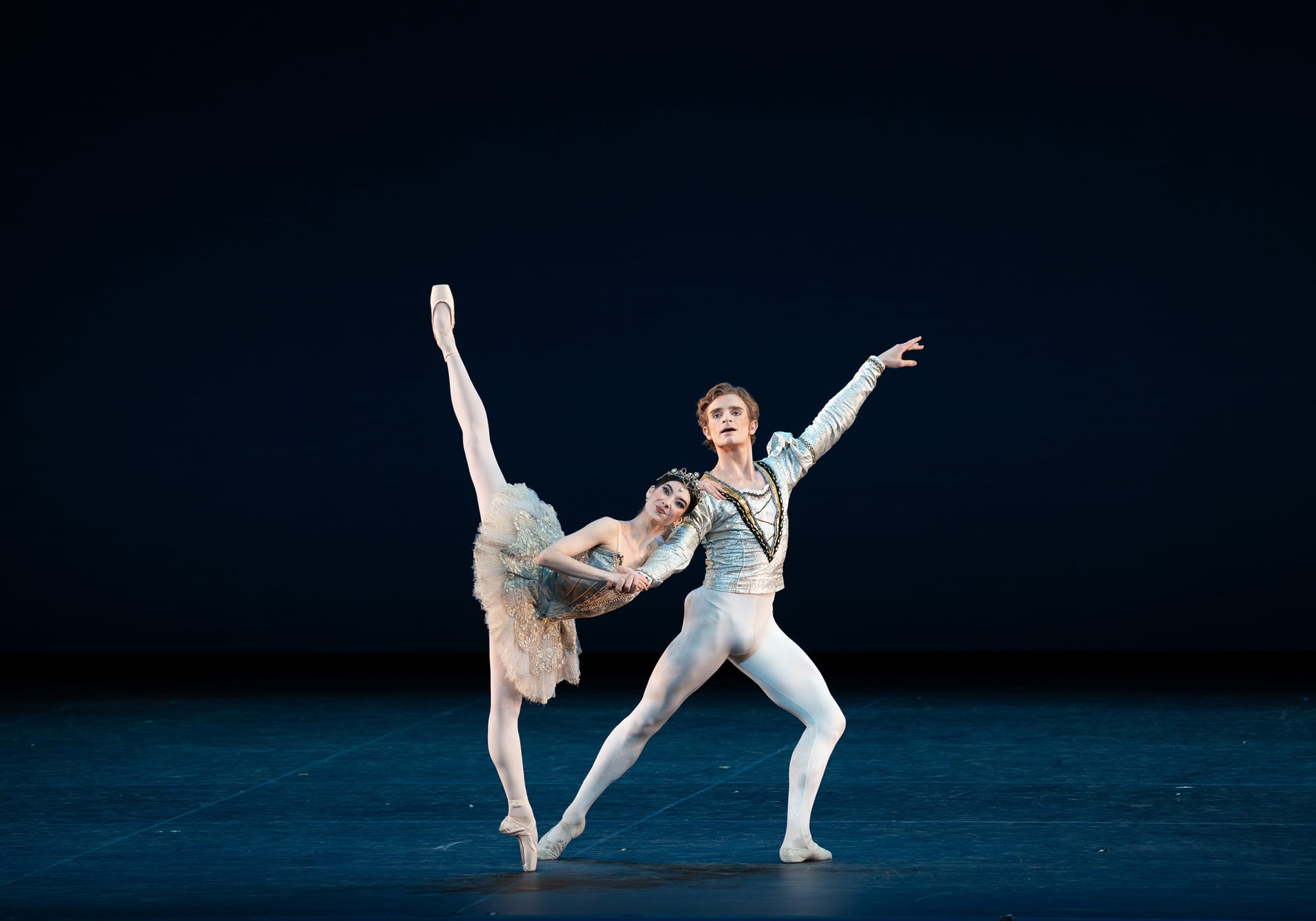
Chloe Misseldine and Aran Bell made the “Sylvia Pas de Deux” look so very easy too. It is one of Balanchine’s homages to Petipa, with the traditional format—adagio, variations, and sparking coda—which gives the dancers a chance to show off a glorious variety of skills. It is less expansive than most Balanchine choreography, and has an air of effortless perfection, rather than daring off-centered energy; I found the delicacy and sumptuous luxury of the work entrancing. In the opening adagio the pair's long lines complimented each other, a picture of perfect harmony. They danced with a light, slightly playful air, which matched the lyrical beauty of the Delibes music. Misseldine’s balances and slow, controlled turns gave the adagio a heart stopping flow. She made her pizzicato solo, full of little hops, sweeping arms, and elegant pirouettes look like a glass of champagne, full of bubbles; you wanted it to last forever.
Balanchine borrowed music from this pas de deux for his 1974 version of “Coppélia”, and included some of Aminta’s (to give Sylvia’s partner his original name) steps—if you are going to borrow, you may as well borrow from the best. Bell flew through the diagonal of cabrioles, and looked elegant in those turns landing in second position. It was a thrilling performance.
There aren’t many thrills in Taylor-Corbett’s pas de deux from “Great Galloping Gottschalk”, danced by Sunmi Park and Calvin Royal III. It is a playful, floppy romp with a teen-age tinge. The dancers certainly aren’t teenagers, but both, especially Royal, have an irresistible charm which made me happy to spend some time with them.
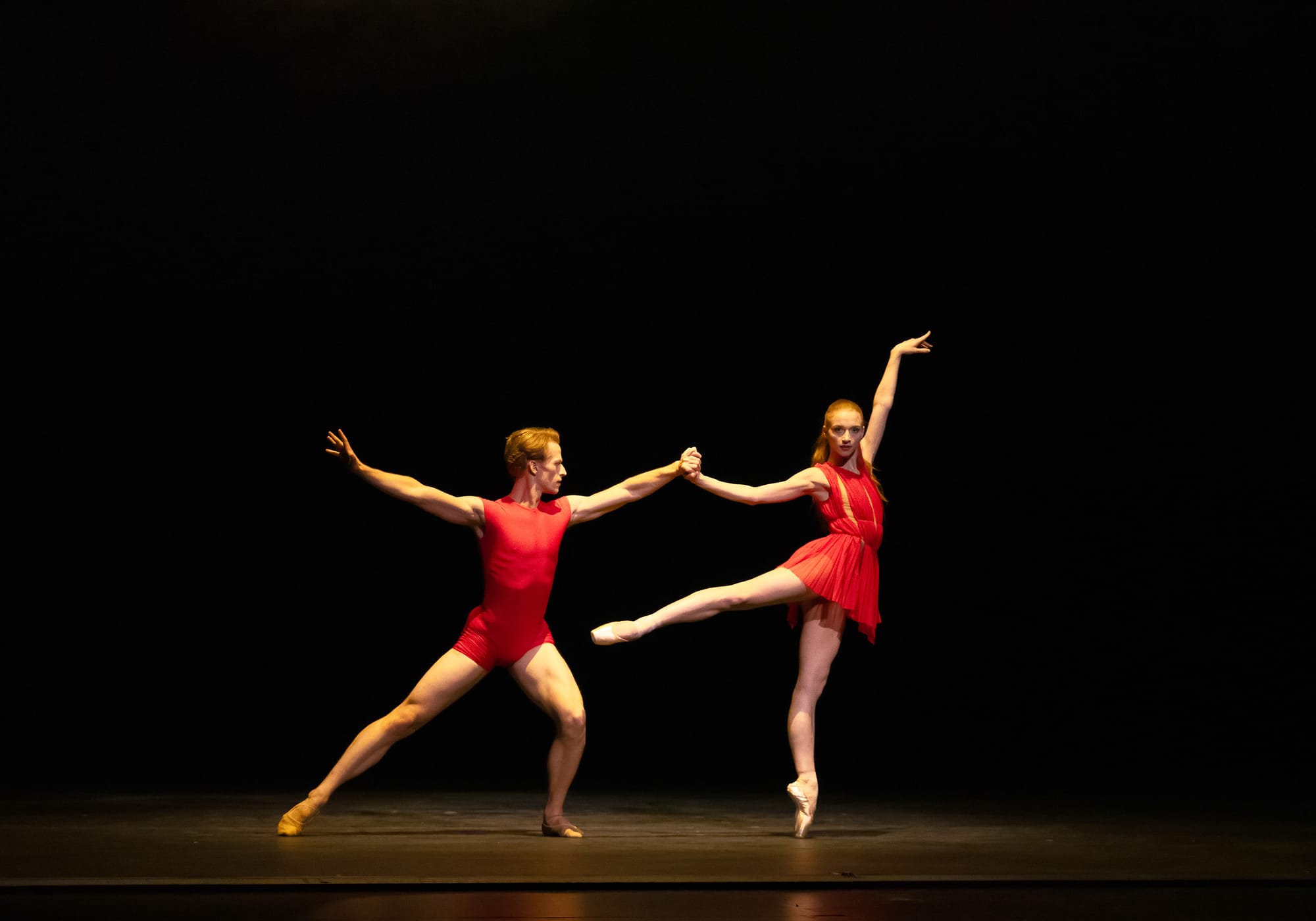
Ratmansky’s “Neo” has a slightly darker, more ironic feel, though it has a wry wit. It is set to music by Dai Fujikura, played on a shamisen (a Japanese stringed instrument) performed live by Sumie Kaneko who was dressed, like the two dancers (Catherine Hurlin and Jarod Curley), in vibrant red. The throbbing, plucking sounds wove In and out of the dancing. The set was created by lights shining through the haze which created odd, Art Decoish red, black, and grey triangles, going the stage an unexpected and extremely effective depth.
The choreography, which included Hurlin’s lively pony tail, was full of odd shapes and moves, some witty (Curley strumming Hurlin’s leg) and some mysterious (Hurlin flopping down as if exhausted). Hurlin was silken, smooth and strong, almost electric, and Curley was a confident and graceful partner. As usual with Ratmansky, there is more detail than can be absorbed in one viewing, but it is a fascinating work.
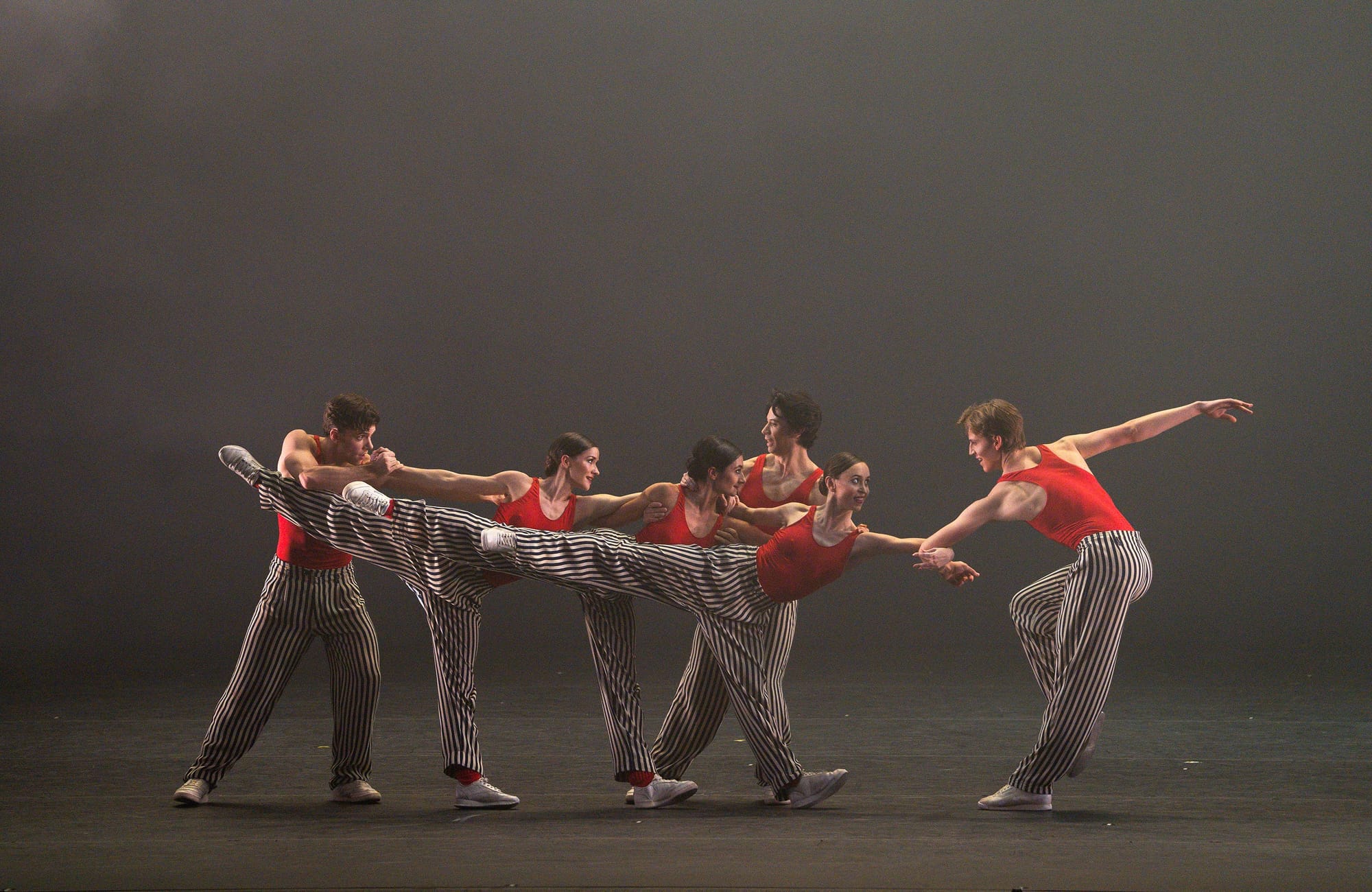
Twyla Tharp’s “In the Upper Room”, first performed by ABT in 1988, had had many viewings. It is an energetic, no holds barred explosion of movement, set to Philip Glass. (It used recorded music and showed that the theater’s sound system can certainly blast out sound.) The dancers, wearing black and white stripped Norma Kamali jumpsuits with vibrant touches of red which they shed during the dance, look casual and comfortable as they rocketed through the steps. Skyler Brandt and Cassandra Trenary, as the opening and closing stompers, started with a deadpan floppiness and then erupted, Brandt cool and sharp, and Trenary absolutely hypnotic, her every shoulder shake seeming to come from the music.
It was strongly cast but it is really a company work, everyone moving at top speed with complete control. Its fearlessly athletic energy, punctuated now and then with soaring music, makes it seem as if these dancers were hyperkinetic angels, but rather than overthink things, the audience just let the movement flow, and got absorbed by the fog.
copyright © 2025 by Mary Cargill



