A Child's Eye View
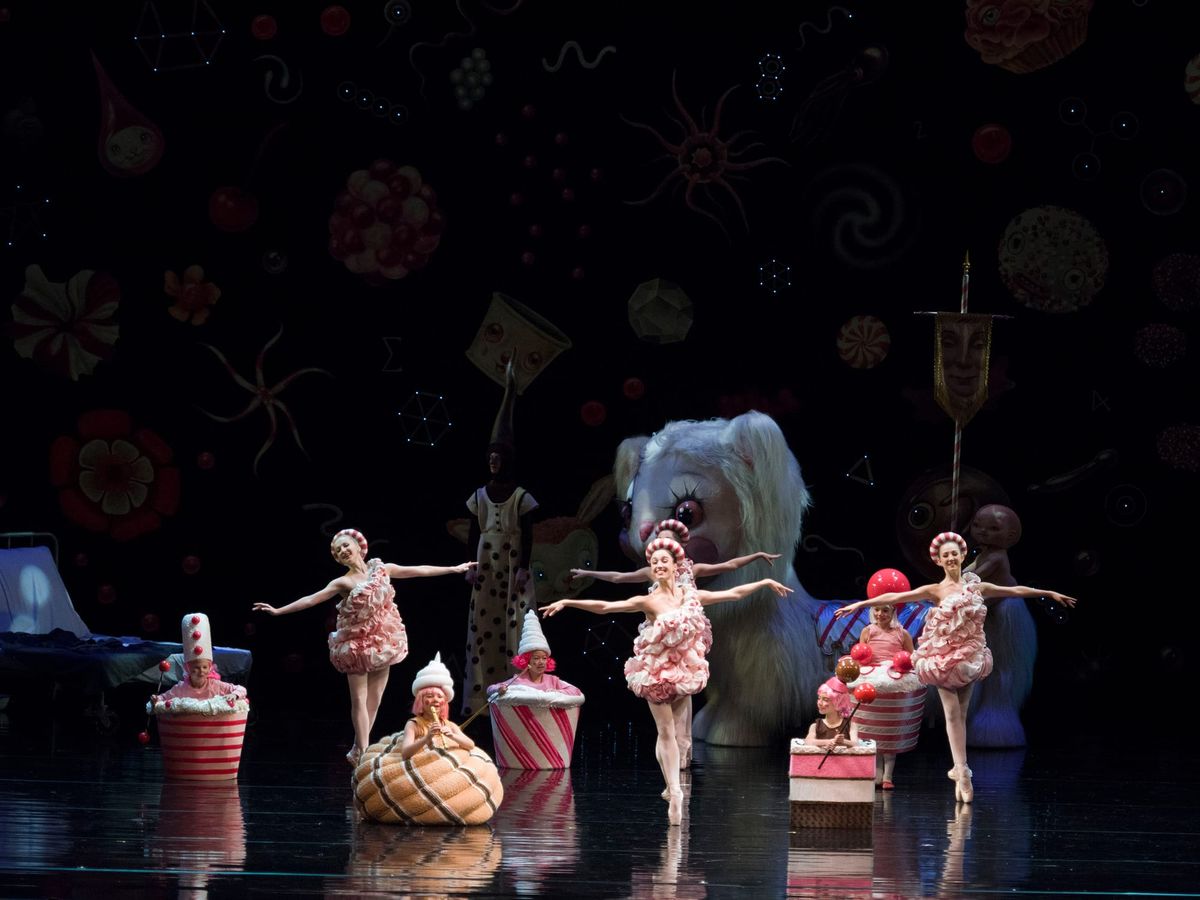
"Whipped Cream"
American Ballet Theatre
Metropolitan Opera House
Lincoln Center
New York, New York
May 25, 2019 matinee
Alexei Ratmansky's colorful extravaganza "Whipped Cream" returned for the third year, looking vivid and fresh; the dancers, it seems, have become at home in their roles and have added individual touches and comic flourishes. The many roles, from the Worm Candy Man to the leads, were danced with a snap and vigor, combined with fine comic timing which created a sort of parallel universe. The ballet is a sympathetic but unsentimental view of childhood, with its dreams (who wouldn't want all the sweets in the world, even if they made you sick?) and fears (all those powerful grownups with their giant heads). And it stays fearlessly in that world, ignoring any moralistic tut-tutting as the boy gets both Princess Praline and all the whipped cream he can eat as the curtain falls. As Mark Twain wrote about "Huckleberry Finn" “Persons attempting to find a motive in this narrative will be prosecuted; persons attempting to find a moral in it will be banished; persons attempting to find a plot in it will be shot."
Tyler Maloney, who joined the corps in 2016, made his New York debut as the boy who likes whipped cream too much. His dancing was full of elegant leaps, flashing turns, and secure partnering, which he combined with an eager but not pushy presence and a quiet confidence. As he showed in "Harlequinade", his youthful exuberance was irresistible; he is having a terrific season. Skylar Brandt was his playmate, Princess Praline. She gave the role a hint of tartness, a dream princess who liked to call the shots. Her solo, with its elegant footwork and musical fouettés, seemed to set speed records as she swaggered through her role as if she had fireflies for feet; no human could possibly move that quickly or quietly. The role suits her fresh, crisp, and pristine style.
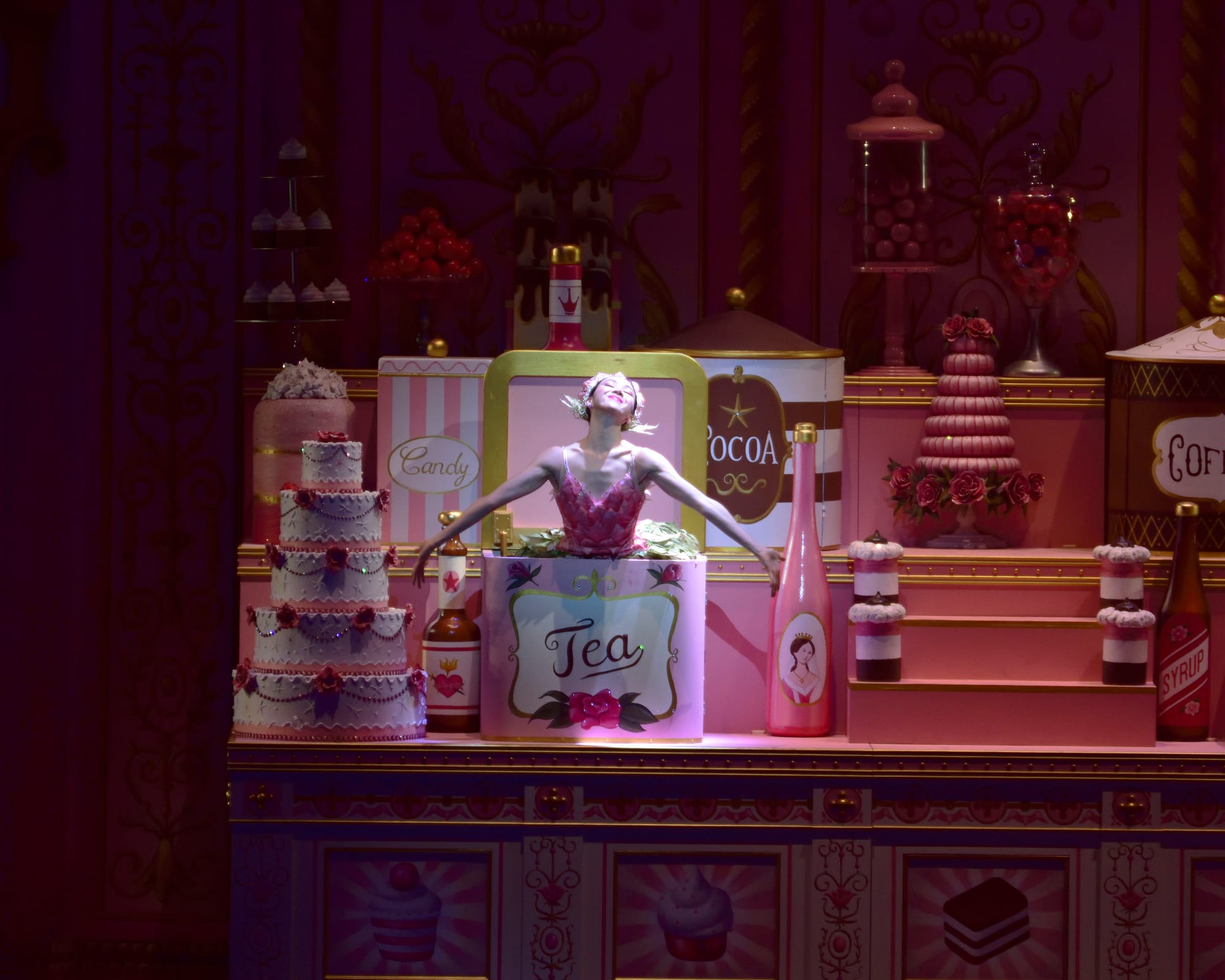
Hee Seo as Princess Tea Flower was also exceptionally good but her dancing had a soft and exotic flourish as her boneless arms wafted through the Fokine-like choreography. She was feminine without being coy, warm without being overtly flirtatious, and enticing without being truly human; she danced like she was an expensive aroma served in the finest china. Her Prince Coffee was Cory Stearns, who downplayed some of the more overtly comic angles and emphasized the smooth grace of the choreography. There were no double takes with Mickey Mouse hands when he first saw the Princess, just a slight exotic swagger which was a perfect foil for Seo's witty elegance.
The other soloists gave equally fine and distinctive performances, playing up the comedy without veering into slapstick. Prince Cocoa (the always elegant Joseph Gorak) and Don Zucchero (a brash Luis Ribagorda) huffed and puffed through their vain attempts to attract Princess Tea Flower with rollicking vigor. Katherine William as Madame Marianne Chartreuse danced with a loose-limbed and leggy grace, certain that she was irresistible to her fellow liqueurs (Blaine Hoven and Connor Holloway). Roman Zhurbin as both the friendly chef and the overbearing doctor mimed his characters through those huge masks by using his body -- a model of subtle comic timing.
"Whipped Cream", though, is much more than a comic romp, though children love the colorful surrealism of Mark Ryden's sets. It provides a wonderful game of spot the reference – the twanging bows of the Polovtsians (aka the Marzipan Men), the "Firebird" poses of Princess Tea Flower, the Bayaderes sliding down the ramp, the Swirl Girls' emboîtés bounding in from so many of Petipa's ballets, the magical transformation scene so important for those grand nineteenth century ballets, and doubtless more that I haven't noticed. The choreography, especially for the corps, has a rare musical sophistication, especially the opening battle among the Marzipan, Sugarplum, and Gingerbread men, where the three groups dance in their distinctive styles to the same music. "Whipped Cream" may be a young boy's dream but it is also a dance lover's delight.
Copyright © 2019 by Mary Cargill



