Youth Has Its Day
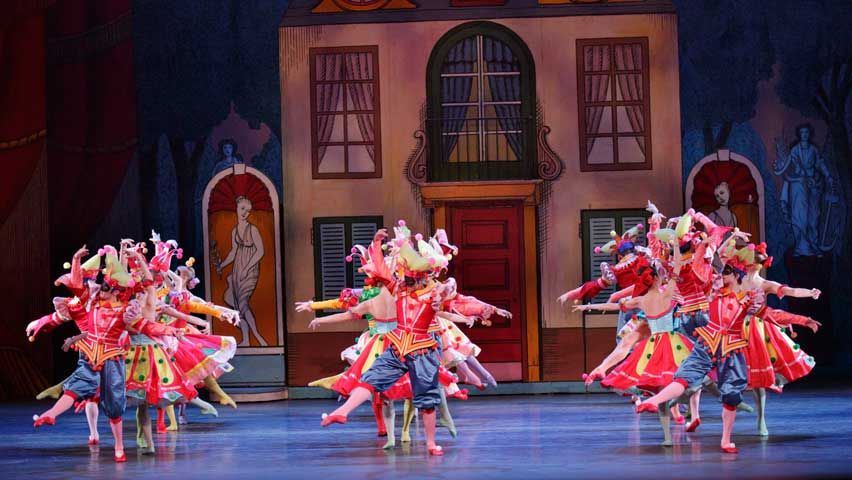
"Harlequinade", "N.Y. Export: Opus Jazz"
New York City Ballet
David H. Koch Theater
New York, NY
October 17, 2015, matinee
New York City Ballet's Saturday matinee celebrated youth with works by two venerable choreo- graphers: Balanchine with his 1965 "Harlequinade", a reworking of Petipa's 1900 ballet, and Jerome Robbins' 1958 "N.Y. Export: Opus Jazz". "Harlequinade" retells the old story of young love outwitting the grownups using several Commedia dell'arte characters. Columbine's doddering old father is trying to marry her off to a rich, ridiculous suitor. I suppose there is some sociological explanation for all those rich, foolish failures of nineteenth century comedy who are always bested by poor young heroes, though perhaps it is proof of Oscar Wilde's observation that "The good end happily. That is what Fiction means."
Balanchine had danced in the original when he was a student and once the plot its tied up, he brings on masses of children who prance musically (and at great length). It is a salute to the ballet students and their professionalism but it does tend to look like an infomercial for the ballet school, and it was a relief when the grownups took over. Ashley Bouder was a charming and musical Columbine, combining wit with grandeur. (Matilde Kschessinskaya was Petipa's original heroine, so the role needs more than just spunk.) Bouder luxuriated in the magnificent final solo with her melting backbends, showing a woman giving herself up to complete happiness. Her final kisses blown to the audience seemed to be a heartfelt blessing; it could also have been a farewell, since this was her final performance before maternity leave.
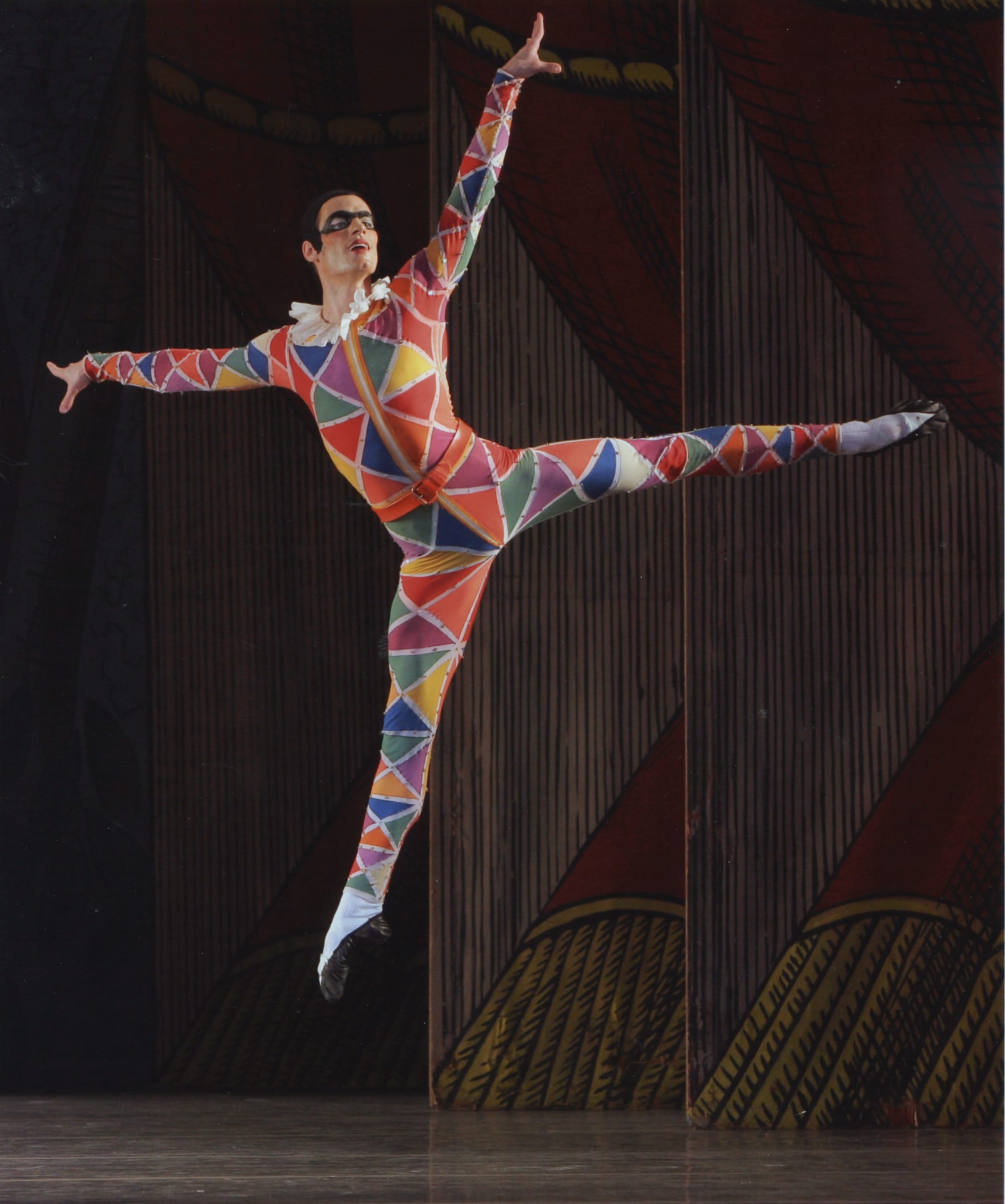
Her Harlequin, Andrew Veyette, is not a natural comic and he didn't convey all the anarchic joy of the Commedia character; at times he looked as if he couldn't wait to take off his ruff. His dancing, though, sparkled, as he showed off his sharp, clear beats and crisp turns.
Anthony Huxley looked more at home at the downtrodden Pierrot and his first act mime was detailed and natural. His Pierette -- the blonde, leggy Claire von Enck -- was crisp but a bit bland. Her second act solo to the sparkling pizzicato showed neat and precise footwork but that music is there to be played with.
Aaron Sanz did play with the rich fop Léandre, using his long legs to prance around like a mincing pelican. He added a certain dignity to his serenade, sighing with love. He wasn't a tragic figure (despite Harlequin's unmerciful bullying) but he wasn't a one-dimensional one either.
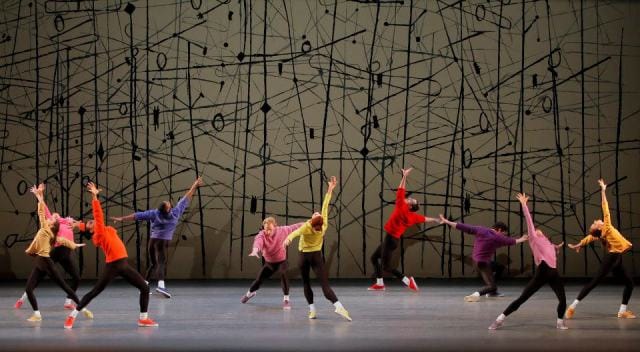
Robbins' "N.Y. Export: Opus Jazz" is a bit one-dimensional, a visit with 1950s teenagers all consumed with urban angst. Its jazzy score, everyday clothes (black jeans, colorful tops and matching tennis shoes) and James Deanish demeanor were a novelty in the ballet world of 1958 though now its "West Side Story" atmosphere is almost as dated at the television antennas of the opening backdrop.
The dancers, from the corps with a few soloists, slouched and slunk with verve, staring at the audience with a "too cool for school" sneer. There were some powerful vignettes, especially from Georgina Pazcoguin as the brutalized girl tossed from a roof. She moved with a combination of seductiveness and hunger, enticing yet vulnerable; it was a powerful and electric performance.
Emily Gerrity and Taylor Stanley were the couple who met on the lonely street and tried to connect, but Gerrity's aimless waif could not satisfy Stanley's inarticulate longing; it was as if Tony and Maria were having their own Afternoon of a Faun.
copyright © 2015 by Mary Cargill



